
Mind map
Diabetes type 1

Map content
Diabetes type 1
Risk Factors
- Environment
- Viral infection
- Enteroviruses, coxsackie virus B
- Trigger autoimmune responses via structural homology between viral structures and B-cells antigens
- β-cell destruction
- Lack of insulin production
- β-cell destruction
- Direct cytolytic effect
- Trigger autoimmune responses via structural homology between viral structures and B-cells antigens
- Enteroviruses, coxsackie virus B
- Viral infection
- Genetic
- Risk genetic loci
- Lymphocyte-defined HLA-D antigens
- HLA-DRB1
- HLA-DR4
- DQB1*0302
- HLA-DRB1*04
- HLA class II DR3
- HLA-DRB1*0301
- DQB1*0201
- Lymphocyte-defined HLA-D antigens
- Family History
- Risk genetic loci
- Birth Weight
- >4500 g
- Environment
Complications
- Short term
- Hypoglycemia
- Low blood glucose (< 60 mg/dl) due to high insulin intake or use of certain oral medications
- Sweaty, confuse, dizzy, light headedness, double vision
- Fruit juice, dextrose, hard candies, honey or IV D50 (If unconscious)
- Sweaty, confuse, dizzy, light headedness, double vision
- Low blood glucose (< 60 mg/dl) due to high insulin intake or use of certain oral medications
- Ketoacidosis (DKA)
- Lack of insulin production causes liver to break down fat for energy
- Ketones accumulation and acid-base imbalance
- Nausa & vomit, excessive thirst, hyperglycemia, & Kussmaul breathing (deep long rapid breath)
- Ketones accumulation and acid-base imbalance
- Lack of insulin production causes liver to break down fat for energy
- Hypoglycemia
- Long term
- Microvascular complications
- Induce by chronic hyperglycemia via production of advance glycation end products (AGEs), creation of a proinflammatory microenvironment, & induction of oxidative stress
- Retinopathy
- Regular comprehensive eye examination and dilation
- Retina blood vessels are damaged
- Blindness, Cataracts, Glucoma
- Nephropathy
- Annual screening for microalbuminuria Treatment: ACE inhibitor or ARB (Antiotensin II receptor blocker)
- Damage of tiny blood vessels that filter waste from blood
- Dialysis and/or kidney transplant
- Neuropathy
- Excess sugar injures the wall of capillaries that nourish nerves
- Tingling, numbness, burning or pain in limbs
- Annual screening for distal symmetric polyneuropathy
- Excess sugar injures the wall of capillaries that nourish nerves
- Retinopathy
- Induce by chronic hyperglycemia via production of advance glycation end products (AGEs), creation of a proinflammatory microenvironment, & induction of oxidative stress
- Macrovascular complications
- Atherosclerosis
- Narrowing of arterial walls via large blood vesseles plaque build up
- Cardiovascular disease, Stroke
- Regular blood pressure monitoring (goal <130/80 mmHg), Lipid testing annually (goal LDL < 100 mg/dl, HDL < 50 mg/dl, fasting triglycerides < 150 mg/dl ) , Asprin therapy (75-162 mg/day)
- Cardiovascular disease, Stroke
- Narrowing of arterial walls via large blood vesseles plaque build up
- Atherosclerosis
- Microvascular complications
- Short term
Pathogenesis
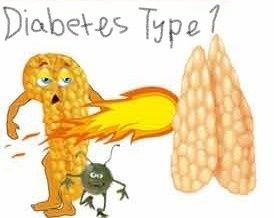
- Islet cell autoantibodies attack pancreatic β-cells
- β-cells destruction
- Little or no insulin production
- No glucose entering cells
- Blood glucose control is lost
- Increase glucose in blood and urine
- Hyperglycemia
- Increase glucose in blood and urine
- Blood glucose control is lost
- No glucose entering cells
- Little or no insulin production
- β-cells destruction
- Islet cell autoantibodies attack pancreatic β-cells
Diagnosis
- Fasting plasma glucose (FPG)
- >126 mg/dL (7.0 mmol/L)
- Glycated hemoglobin (A1C) test
- greater preanalytical stability, no fasting required
- Limited availability in certain regions
- A1C level >6.5%
- 2-h plasma glucose (2-h PG) value after a 75-g oral glucose tolerance test (OGTT)
- >200mg/dL(11.1mmol/L)
- Random blood sugar test
- Blood sugar level >11.1mmol/L)
- Fasting plasma glucose (FPG)
Treatments
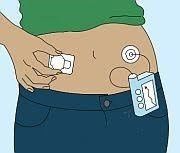
- Insulin pump
- It is a device to deliver rapid acting insulin to the body through the catheter
- Advantages: Increase blood sugar control- reduction of hypoglycemia- ease of adjusting insulin doses with exercise or travel
- Disadvantages: skin infection, ketoacidosis (due to pump dysfunction), expense, weight gain
- It is a device to deliver rapid acting insulin to the body through the catheter
- Insulin injection
- Rapid acting (Lispro)
- Onset 15 Mins, peak at 30-60 mins, last for 5 hrs
- Short acting (Regular)
- Onset 60 mins, Peak at 2-3 hrs, last for 6 hrs
- Intermediate acting (NPH)
- Onset 1-4 hrs, peak at 8-12 h, last for 18-24 hrs
- long acting (Glargine)
- Onset 6 hrs, peak at 14- 24 hrs, last for 36 hrs
- Side effect
- Allergic respond to animal derived insulin
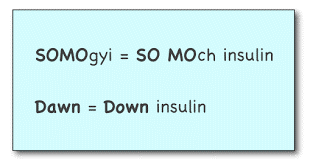
- Somogyi phenomenon
- Taking too much insulin before bed leads to hypoglycemia
- In the early morning Hyperglycemia may occur due to hormonal secretion such as glucocorticoid according to circadian rhythms
- More food intake in the evening, less insulin dose at bedtime
- In the early morning Hyperglycemia may occur due to hormonal secretion such as glucocorticoid according to circadian rhythms
- Taking too much insulin before bed leads to hypoglycemia
- Hypoglycemia
- Dawn phenomenon
- Abnormally early morning (2 am-8 am) increases in blood glucose due to the random release of cortisol & growth hormones
- Less carb intake at bedtime, adjust insulin dose or medication
- Abnormally early morning (2 am-8 am) increases in blood glucose due to the random release of cortisol & growth hormones
- Lipodystrophy
- Atrophy of subcutaneous tissue which may result in poor absorption of insulin
- Rotation of insulin injection site
- Atrophy of subcutaneous tissue which may result in poor absorption of insulin
- Rapid acting (Lispro)
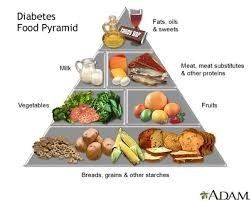
- Nutritional therapy
- Fat intake less than 7% & sugar intake less than 10%
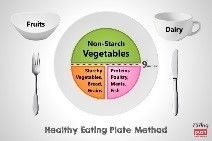
- Plate Method
- Helps patient see the proportion of vegetable, starch and meat that should fill a 9” inch plate
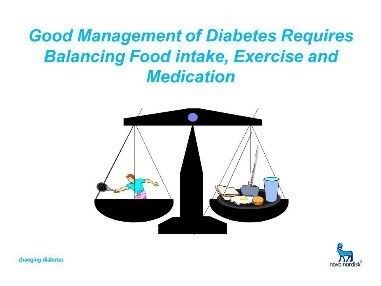
- 25% protein + 25% grain and starchy food + 50% non starchy vegetable
- Helps patient see the proportion of vegetable, starch and meat that should fill a 9” inch plate
- Higher intake of fruit & vegetable > 5 serving a day decrease the risk of CV
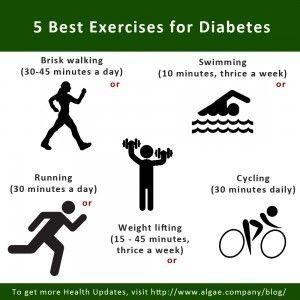
- Exercise
- Increase insulin receptor site
- Decrease blood sugar level
- Help loss weight
- Best done after meal, small carb snack can be eaten every 30 mins, monitor blood glucose before, during and after exercise
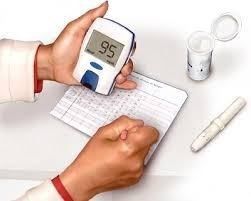
- Self monitoring of blood glucose
- Early detection on episodic hyperglycemia and hypoglycemia
- Adjustment of a therapeutic regimen in respond to blood glucose level ( between 4 to 6 mmol/L) by altering dietary intake, physical activity & insulin doses intake
- Insulin pump
Clinical manifestations
- Polyuria
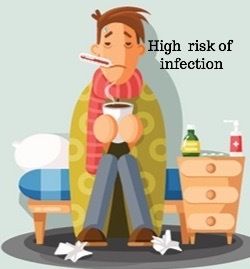
- High risk of infection
- Hyperglycemic environment favors immune dysfunction and encourage bacterial survival
- Unexplained weight loss
- Polydipsia
- Fatigue/weakness
- Blurred vision
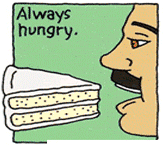
- Polyphagia
- Slow healing of cuts and grazes
- Ketoacidosis- first manifestation of the disease in some patients
Images and files in the map












Information
- Description
- This Mind Map outlines how you can easily create your study aid using GoConqr
- Created by
- Parisa HG
- Views
- 83
- Tags
- History
-
- Created by PatrickNoonan · Nov 15, 2012
- Copied by Parisa HG · Feb 22, 2018
- Rating