
Mind map
Biology (level 0 part 2)
Map content
Biology (level 0 part 2)
Properties of Matter
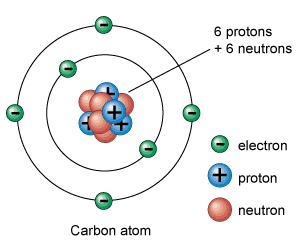
- Atoms
- Basic unit of matter; everything is made of atoms
- Protons
- Positive charge
- Positive charge
- Neutrons
- Negative charge
- Combine to form nucleus
- Negative charge
- Electrons
- Negative charge
- Surrounds nucleus
- Negative charge
- Protons
- Basic unit of matter; everything is made of atoms
- Elements
- pure substance that consists of one type of atom
- More than 100 elements are known
- Isotopes
- Atoms of the same element that differ in the number of neutrons they contain
- All isotopes of the same element have same number of electrons
- Atoms of the same element that differ in the number of neutrons they contain
- pure substance that consists of one type of atom
- Chemical Compounds/Bonds
- Chemical Compounds
- Substance formed by the chemical combination of two or more elements in definite proportions
- Shown as chemical formula
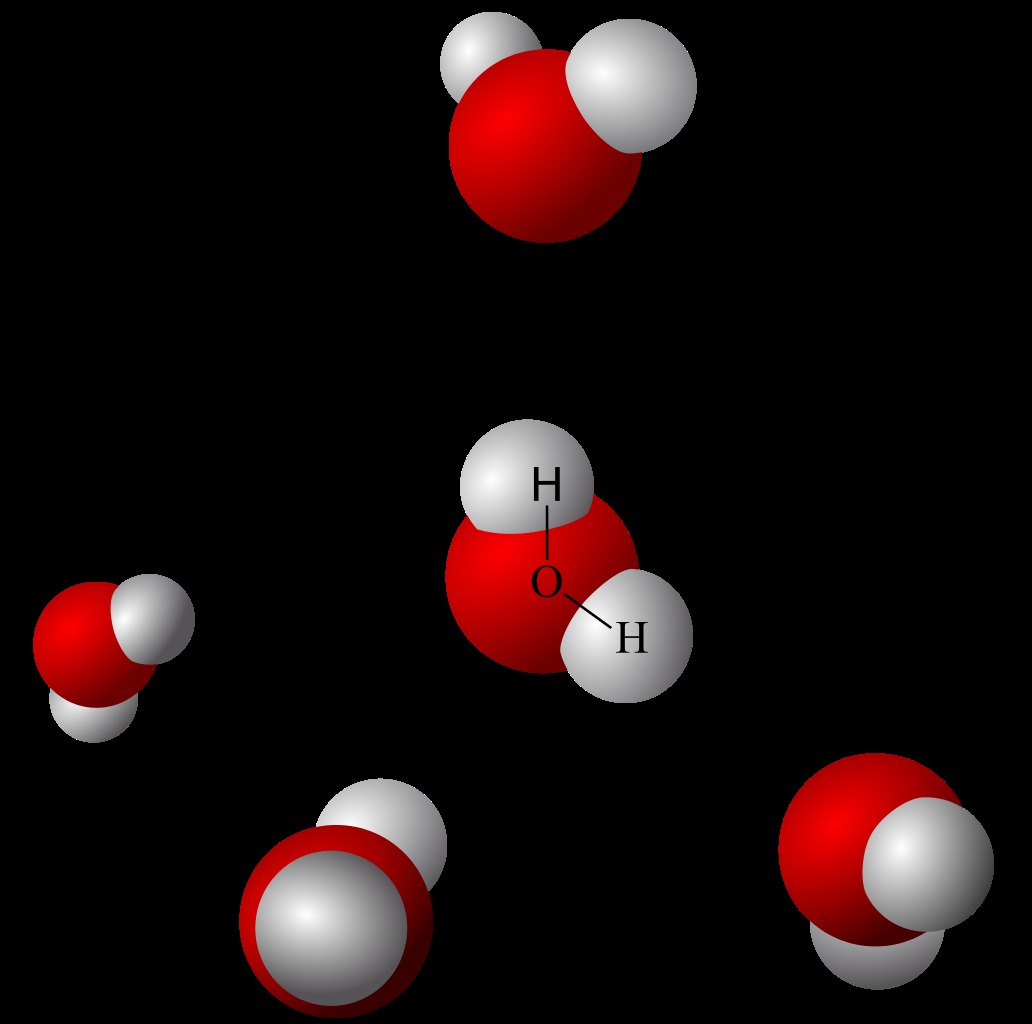
- Example: water is H20
- Example: table salt is NaCl
- Physical properties of a compound are usually different from those of the elements from which it formed
- Shown as chemical formula
- Substance formed by the chemical combination of two or more elements in definite proportions
- Chemical Bonds
- Atoms in compounds are held together by chemical bonds
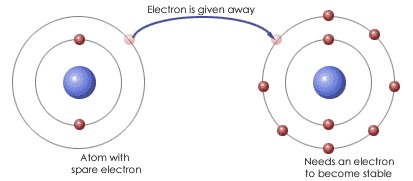
- Ionic bonds
- Formed when one or more electrons are transferred from one atom to another
- Ions
- An atom that loses or gains electrons
- Ions
- Formed when one or more electrons are transferred from one atom to another
- Covalent bonds
- Formed when electrons are shared by atoms
- Molecule
- The structure that results when atoms are joined together by covalent bonds
- Molecule
- Formed when electrons are shared by atoms
- Ionic bonds
- Atoms in compounds are held together by chemical bonds
- Chemical Compounds
- Atoms
Properties of Water and Suitabilty for Life
- Polarity
- A molecule in which the charges are unevenly distributed
- similar to a magnet with two poles
- Hydrogen Bonding
- Solvent
- Substance in which the solute dissolves
- Water expands slightly upon freezing
- Makes ice less dense than water
- That's why ice floats
- Makes ice less dense than water
- Attraction between a hydrogen atom with a partial positive and another atom with a partial negative charge
- Heat Capacity
- Takes large amount of heat energy to cause the molecules to move faster
- Solvent
- Polarity
Importance of Carbon to Life
- Carbon has four valence electrons, allowing them to form strong covalent bonds with many other elements
- One carbon atom can bond to another which gives carbon the ability to form chains that are almost unlimited in length
- Macromolecules
- Carbohydrates
- Living things use carbohydrates as their main source of energy; sometimes used for structural purposes
- Lipids
- Can be used to store energy. Some are important parts of biological membranes and waterproof coverings
- Nucleic Acids
- Store and transmit hereditary, or genetic, information
- Proteins
- Control rate of reactions and regulate cell processes. Some form important cellular structures, while still others transport substances into or out of cells or help fight disease
- Carbohydrates
- Macromolecules
- One carbon atom can bond to another which gives carbon the ability to form chains that are almost unlimited in length
- Carbon has four valence electrons, allowing them to form strong covalent bonds with many other elements
Chemical Reactions and Enzymes
- Chemical Reactions
- Process that changes, or transforms, one set of chemicals into another
- Chemical reactions involve changes in the chemical bonds that join atoms in compounds
- Chemical reactions that release energy often occur on their own
- Chemical reactions that absorb energy will not occur without a source of energy
- Chemical reactions involve changes in the chemical bonds that join atoms in compounds
- Process that changes, or transforms, one set of chemicals into another
- Enzymes
- Speed up chemical reactions that take place in cells
- Temperature, pH, and regulatory molecules can affect the activity of enzymes
- Speed up chemical reactions that take place in cells
- Chemical Reactions
Images and files in the map
Information
- Description
- Assignment for Mr. Fisher's class (level 0)
- Created by
- jmlari12
- Views
- 282
- Tags
- Rating