
Mind map
Stomach Cancer
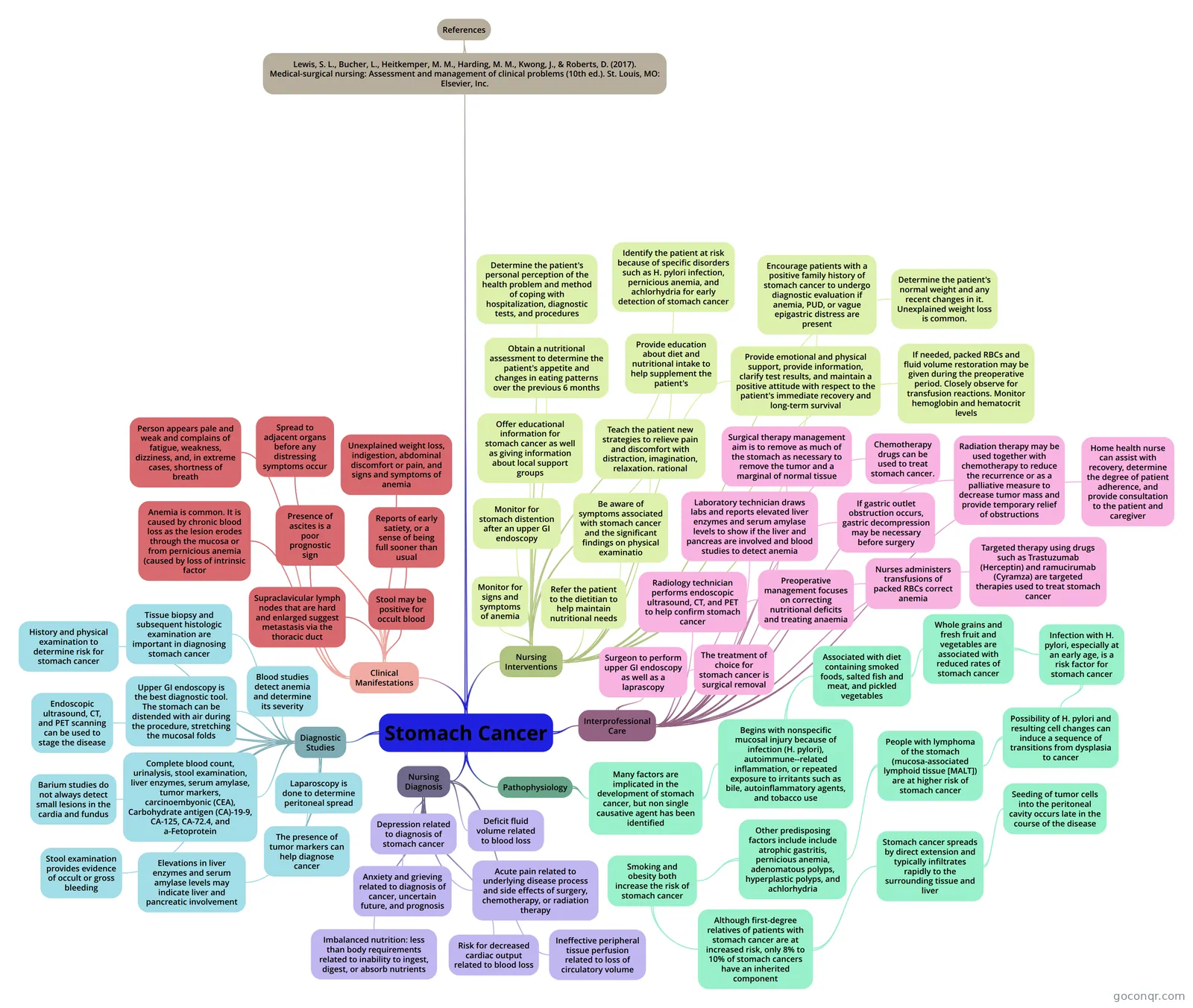
Mind map: Stomach cancer
Map content
Stomach Cancer
Pathophysiology
- Many factors are implicated in the development of stomach cancer, but non single causative agent has been identified
- Begins with nonspecific mucosal injury because of infection (H. pylori), autoimmune--related inflammation, or repeated exposure to irritants such as bile, autoinflammatory agents, and tobacco use
- Associated with diet containing smoked foods, salted fish and meat, and pickled vegetables
- Whole grains and fresh fruit and vegetables are associated with reduced rates of stomach cancer
- Infection with H. pylori, especially at an early age, is a risk factor for stomach cancer
- Possibility of H. pylori and resulting cell changes can induce a sequence of transitions from dysplasia to cancer
- People with lymphoma of the stomach (mucosa-associated lymphoid tissue [MALT]) are at higher risk of stomach cancer
- Other predisposing factors include include atrophic gastritis, pernicious anemia, adenomatous polyps, hyperplastic polyps, and achlorhydria
- Smoking and obesity both increase the risk of stomach cancer
- Although first-degree relatives of patients with stomach cancer are at increased risk, only 8% to 10% of stomach cancers have an inherited component
- Stomach cancer spreads by direct extension and typically infiltrates rapidly to the surrounding tissue and liver
- Seeding of tumor cells into the peritoneal cavity occurs late in the course of the disease
- Stomach cancer spreads by direct extension and typically infiltrates rapidly to the surrounding tissue and liver
- Although first-degree relatives of patients with stomach cancer are at increased risk, only 8% to 10% of stomach cancers have an inherited component
- Smoking and obesity both increase the risk of stomach cancer
- Other predisposing factors include include atrophic gastritis, pernicious anemia, adenomatous polyps, hyperplastic polyps, and achlorhydria
- People with lymphoma of the stomach (mucosa-associated lymphoid tissue [MALT]) are at higher risk of stomach cancer
- Possibility of H. pylori and resulting cell changes can induce a sequence of transitions from dysplasia to cancer
- Infection with H. pylori, especially at an early age, is a risk factor for stomach cancer
- Whole grains and fresh fruit and vegetables are associated with reduced rates of stomach cancer
- Associated with diet containing smoked foods, salted fish and meat, and pickled vegetables
- Begins with nonspecific mucosal injury because of infection (H. pylori), autoimmune--related inflammation, or repeated exposure to irritants such as bile, autoinflammatory agents, and tobacco use
- Many factors are implicated in the development of stomach cancer, but non single causative agent has been identified
Clinical Manifestations
- Spread to adjacent organs before any distressing symptoms occur
- Unexplained weight loss, indigestion, abdominal discomfort or pain, and signs and symptoms of anemia
- Reports of early satiety, or a sense of being full sooner than usual
- Anemia is common. It is caused by chronic blood loss as the lesion erodes through the mucosa or from pernicious anemia (caused by loss of intrinsic factor
- Person appears pale and weak and complains of fatigue, weakness, dizziness, and, in extreme cases, shortness of breath
- Stool may be positive for occult blood
- Supraclavicular lymph nodes that are hard and enlarged suggest metastasis via the thoracic duct
- Presence of ascites is a poor prognostic sign
Diagnostic Studies
- Upper GI endoscopy is the best diagnostic tool. The stomach can be distended with air during the procedure, stretching the mucosal folds
- Tissue biopsy and subsequent histologic examination are important in diagnosing stomach cancer
- Endoscopic ultrasound, CT, and PET scanning can be used to stage the disease
- Barium studies do not always detect small lesions in the cardia and fundus
- Laparoscopy is done to determine peritoneal spread
- Blood studies detect anemia and determine its severity
- Elevations in liver enzymes and serum amylase levels may indicate liver and pancreatic involvement
- Stool examination provides evidence of occult or gross bleeding
- The presence of tumor markers can help diagnose cancer
- History and physical examination to determine risk for stomach cancer
- Complete blood count, urinalysis, stool examination, liver enzymes, serum amylase, tumor markers, carcinoembyonic (CEA), Carbohydrate antigen (CA)-19-9, CA-125, CA-72.4, and a-Fetoprotein
Interprofessional Care
- Surgeon to perform upper GI endoscopy as well as a laprascopy
- Laboratory technician draws labs and reports elevated liver enzymes and serum amylase levels to show if the liver and pancreas are involved and blood studies to detect anemia
- Radiology technician performs endoscopic ultrasound, CT, and PET to help confirm stomach cancer
- The treatment of choice for stomach cancer is surgical removal
- Preoperative management focuses on correcting nutritional deficits and treating anaemia
- Nurses administers transfusions of packed RBCs correct anemia
- If gastric outlet obstruction occurs, gastric decompression may be necessary before surgery
- Surgical therapy management aim is to remove as much of the stomach as necessary to remove the tumor and a marginal of normal tissue
- Chemotherapy drugs can be used to treat stomach cancer.
- Radiation therapy may be used together with chemotherapy to reduce the recurrence or as a palliative measure to decrease tumor mass and provide temporary relief of obstructions
- Targeted therapy using drugs such as Trastuzumab (Herceptin) and ramucirumab (Cyramza) are targeted therapies used to treat stomach cancer
- Home health nurse can assist with recovery, determine the degree of patient adherence, and provide consultation to the patient and caregiver
Nursing Diagnosis
- Acute pain related to underlying disease process and side effects of surgery, chemotherapy, or radiation therapy
- Anxiety and grieving related to diagnosis of cancer, uncertain future, and prognosis
- Deficit fluid volume related to blood loss
- Imbalanced nutrition: less than body requirements related to inability to ingest, digest, or absorb nutrients
- Depression related to diagnosis of stomach cancer
- Risk for decreased cardiac output related to blood loss
- Ineffective peripheral tissue perfusion related to loss of circulatory volume
Nursing Interventions
- Be aware of symptoms associated with stomach cancer and the significant findings on physical examinatio
- Monitor for signs and symptoms of anemia
- Monitor for stomach distention after an upper GI endoscopy
- Refer the patient to the dietitian to help maintain nutritional needs
- Offer educational information for stomach cancer as well as giving information about local support groups
- Teach the patient new strategies to relieve pain and discomfort with distraction, imagination, relaxation. rational
- Provide education about diet and nutritional intake to help supplement the patient's
- Obtain a nutritional assessment to determine the patient's appetite and changes in eating patterns over the previous 6 months
- Determine the patient's normal weight and any recent changes in it. Unexplained weight loss is common.
- Determine the patient's personal perception of the health problem and method of coping with hospitalization, diagnostic tests, and procedures
- Identify the patient at risk because of specific disorders such as H. pylori infection, pernicious anemia, and achlorhydria for early detection of stomach cancer
- Encourage patients with a positive family history of stomach cancer to undergo diagnostic evaluation if anemia, PUD, or vague epigastric distress are present
- Provide emotional and physical support, provide information, clarify test results, and maintain a positive attitude with respect to the patient's immediate recovery and long-term survival
- If needed, packed RBCs and fluid volume restoration may be given during the preoperative period. Closely observe for transfusion reactions. Monitor hemoglobin and hematocrit levels
Lewis, S. L., Bucher, L., Heitkemper, M. M., Harding, M. M., Kwong, J., & Roberts, D. (2017). Medical-surgical nursing: Assessment and management of clinical problems (10th ed.). St. Louis, MO: Elsevier, Inc.
- References
Information
- Description
- Nursing Mind Map on Stomach Cancer, created by Kayla Allery on 10/15/2018.
- Created by
- Kayla Allery
- Views
- 2
- Rating