
Mind map
6.4 - Analysing Financial Performance
Map content
6.4 - Analysing Financial Performance
keywords
- income statement - financial statement showing business's revenue and costs and thus its profits or loss over period of time
- balance sheet - sets out assets and liabilities that a business has on a particular day
- gross profit - a business's sales revenue minus its cost of sales over a period of time
- net profit - business's sales revenue minus its cost of sales, its overheads and other costs over time
- liability - sum of money owned by a business to another business or an individual
- financial ratio - compares two figures from a business's financial statement
- stakeholders - individuals and organisations that are affected by and affect the business
why prepare financial statements?
- businesses prepare financial statements as the law requires them to do so e.g. Companies Act
- they are also prepared to help business make decisions such as how to improve performance and to help investors see how safe an investment would be
components of income statements
- revenue - income received from sale of goods e.g. clothes or food
- cost of sales - costs directly involved in supplying the good or service
- these include wages pf employees selling the goods, buying products which are sold in shops and energy costs such as gas
- Gross profit (keywords)
- overheads - costs that do not alter when production changes e.g. salaries, interest on loans and maintenance of buildings
- operating profits - calculate by subtracting overheads from gross profits
- net profit (keywords)
components of a balance sheet
- non-current assets - type of asset business keeps for many years e.g. buildings and vehicles and enable business to make profits
- current assets - those which are likely to be kept for less than one year such as cash and raw materials
- non-current liabilities - debts that will be paid back over many years e.g. mortgages on a factory
- current liabilities - debts need to be paid within one year e.g. money owned to suppliers and tax
- total equity - part of business that belongs to shareholders and is money left after company has sold non current assets and paid liabilities
balancing assets and equity
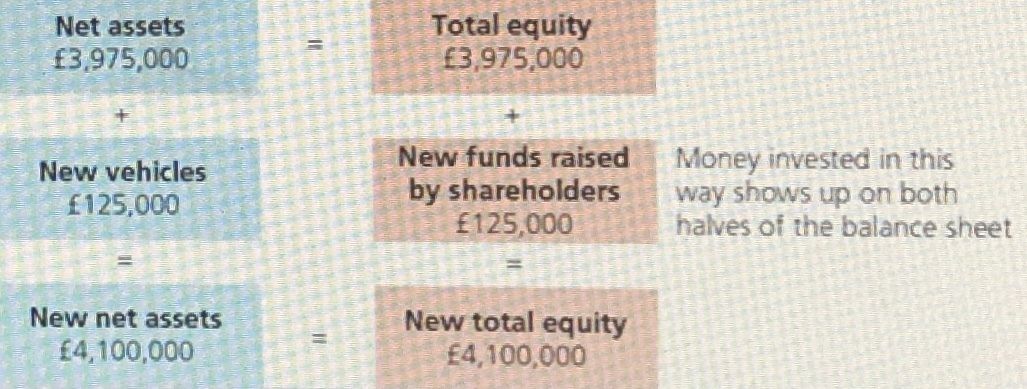
- both sides of the balance sheet should equal each other
- the value of assets owned by the business once it has paid its liabilities are called net assets employed and will equal the amount of money put into business by shareholders
- net assets = total equity
- net assets = total equity
- the value of assets owned by the business once it has paid its liabilities are called net assets employed and will equal the amount of money put into business by shareholders
- both sides of the balance sheet should equal each other
how to interpret financial statements
- managers, suppliers and owners look at trends in profits to see if the business is doing better
- or they look at net assets employed to see if this value increases
- managers, suppliers and owners look at trends in profits to see if the business is doing better
comparison
- with previous years
- key indicators from income statement include revenue from sales of goods and gross and net profits
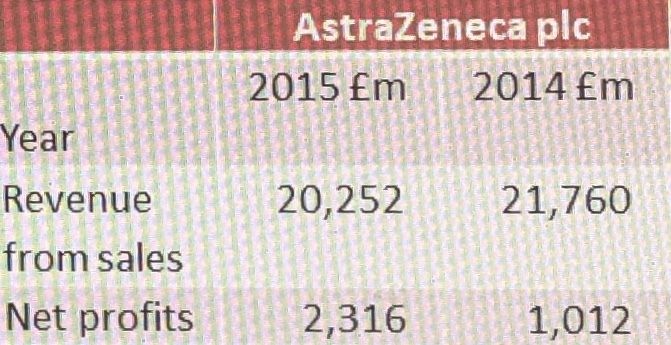
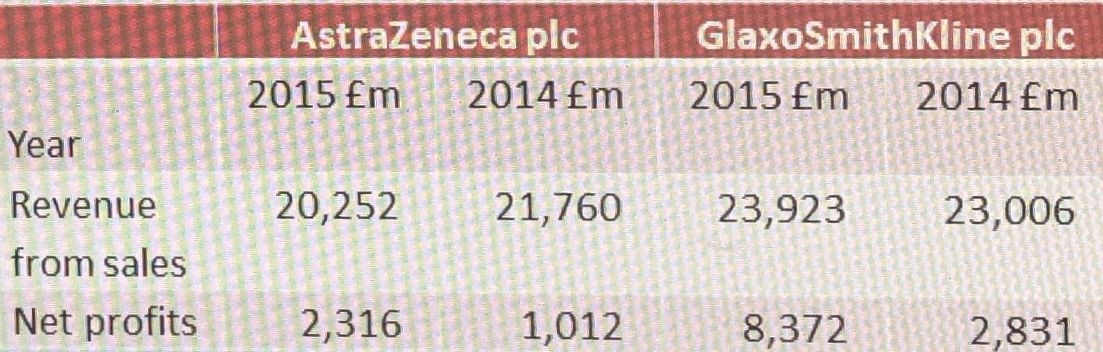
- revenue was lower in 2015. however net profits were double in 2014 meaning the business reduced it overheads
- key indicators from income statement include revenue from sales of goods and gross and net profits
- with competitors
- comparing performance with competitors from income statement can be more realistic way of measuring performance e.g. if profits grow quicker than rivals that means strong performance
- GSKs revenue rose in 2015 and was higher than AstraZeneca's. More importantly GSK's net profits were four times higher than Astra's suggesting they managed costs better
- comparing performance with competitors from income statement can be more realistic way of measuring performance e.g. if profits grow quicker than rivals that means strong performance
- with previous years
using profit ratios
- profit ratios compare business's profits to another figure form business's financial statement e.g. revenue
gross profit margin
- compares business's gross profit for a trading period with revenue from same period
- gross profit margin = gross profit/ revenue x 100
- compares business's gross profit for a trading period with revenue from same period
net profit margin
- compares business's net profit from a trading period with revenue
- net profit margin = net profit/ revenue x 100
- compares business's net profit from a trading period with revenue
judging financial performance
- shareholders and owners - interest In business's profitability as they have taken a risk investing in it e.g. income statement shows level of sales achieved, costs and profit or loss made
- balance sheet - shows if value has increased with shareholders comparing financial performance with other businesses to see if the business is doing better over time
- managers use financial statements to help make effective decisions and compare performance over time and with competitors
- suppliers interested in income stamens to see if business is making profits and can see if they're likely to get paid
- employees interested in income statements e.g. if profit sharing it will show how much refit is to be shred or if a loss whether there will be job losses
importance of financial statement
- assessing business performance can show trends for business e.g. whether profits are rising compared to competitors
- using ratio analysis allows better assessment of business finical performance so better judgements can be made
- helps managers to make effective decisions e.g. give reasons for lower profits and allow mangers to take appropriate action and measure success
- using ratio analysis allows better assessment of business finical performance so better judgements can be made
- assessing business performance can show trends for business e.g. whether profits are rising compared to competitors
Images and files in the map
Information
- Description
- Year 10 Business Studies (Section 6) Mind Map on 6.4 - Analysing Financial Performance, created by Rhianna Nicoll on 31/12/2018.
- Created by
- Rhianna Nicoll
- Views
- 11
- Rating