
Mind map
PROTEIN FOLDING
Map content
PROTEIN FOLDING
Proteins roles
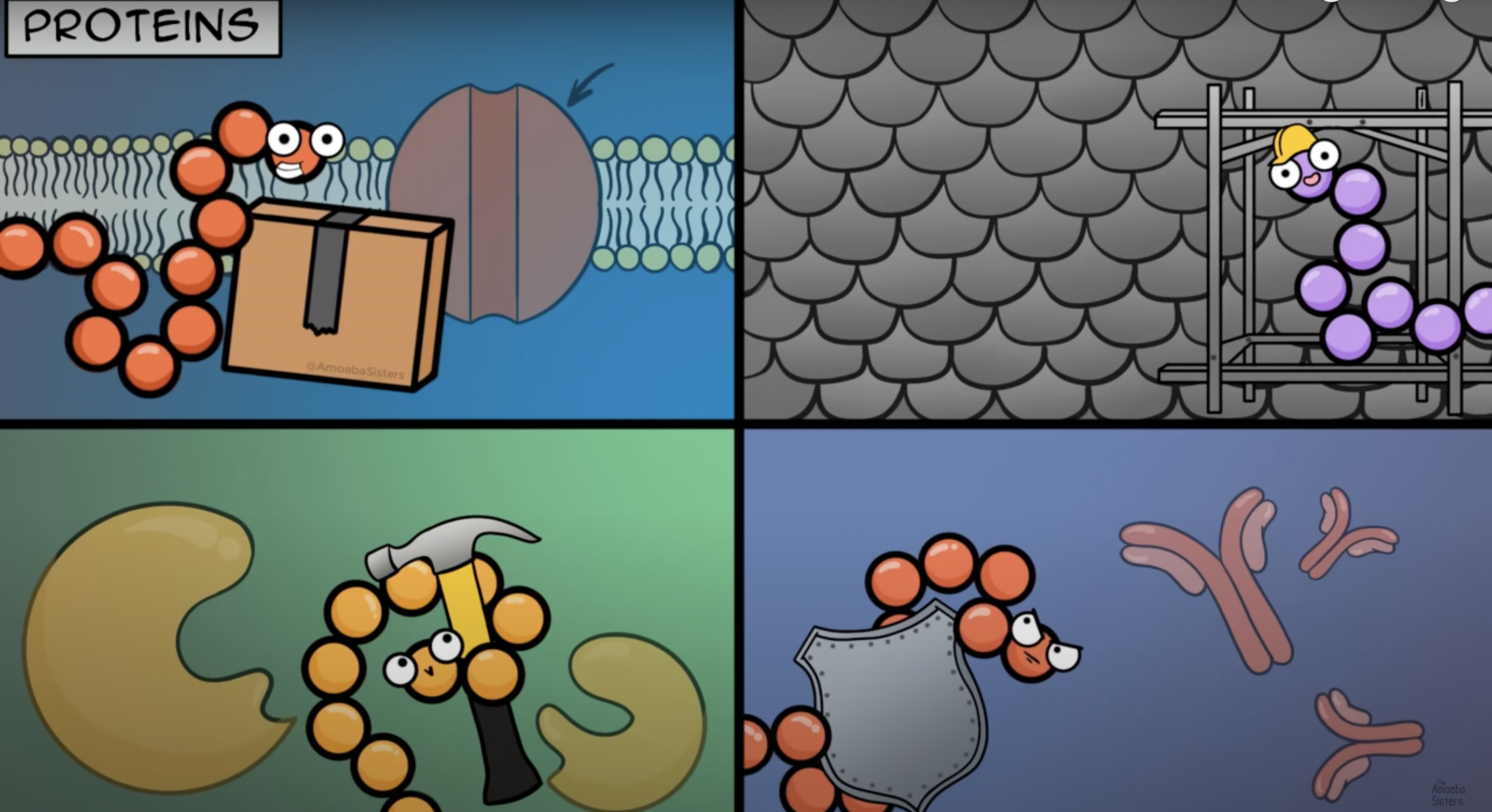
- Be involved with protecting the body
- Be part of a structure
- Sereves as enzimes for important biological processes
- Make up channels
Structural levels
- Primary structure
- This is the sequence of amino acids that make up a protein.
- In protein synthesis, amino acids are added to form a polypeptide chain and proteins are made of 1 or more of these polypeptide chains.
- Amino acids are the monomer (which means the building block) of a protein.
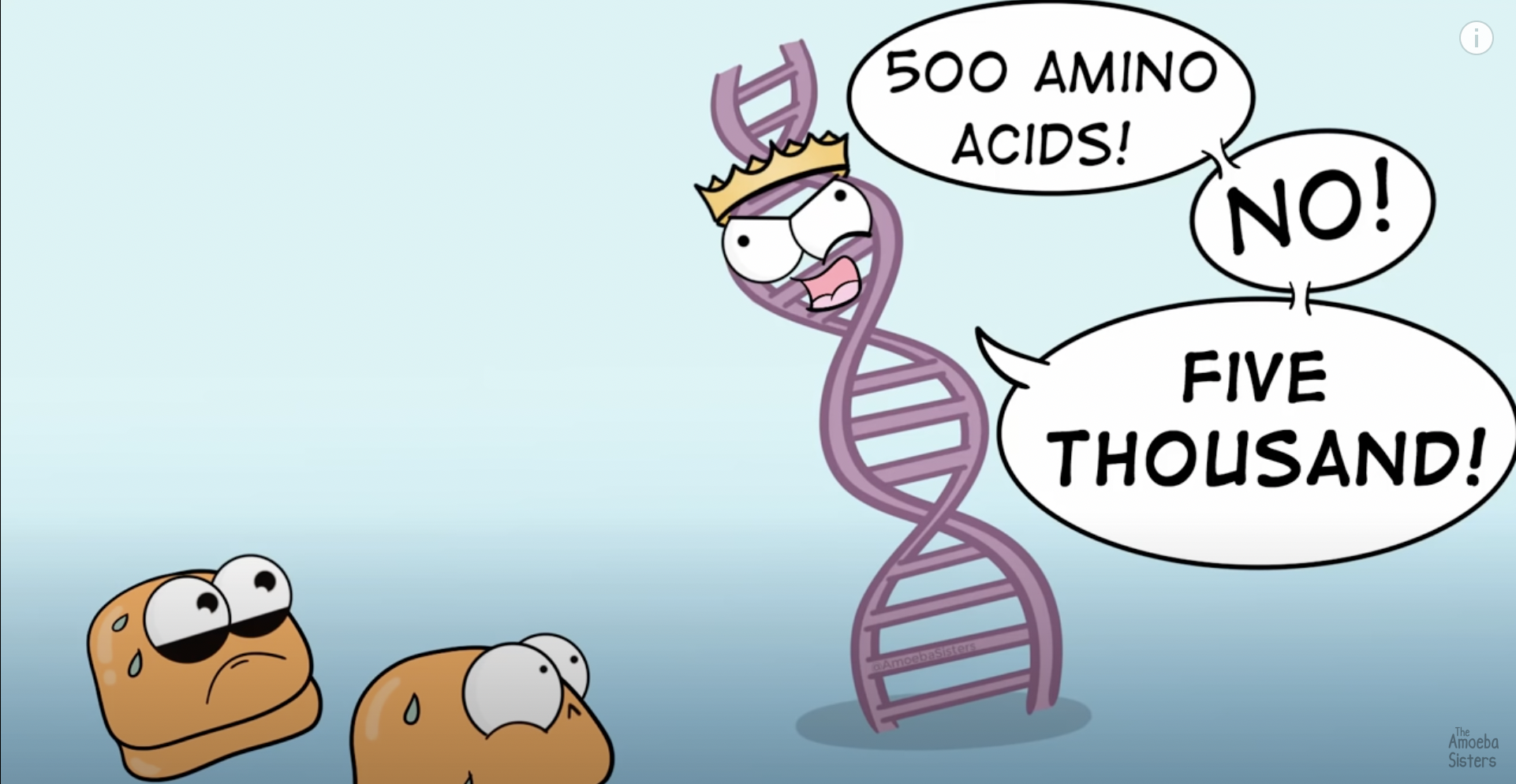
- Genes, which are made of DNA, determine the order and number of these amino acids.
- One amino acid can be changed sickle cell disease
- This is the sequence of amino acids that make up a protein.
- Secondary Structure
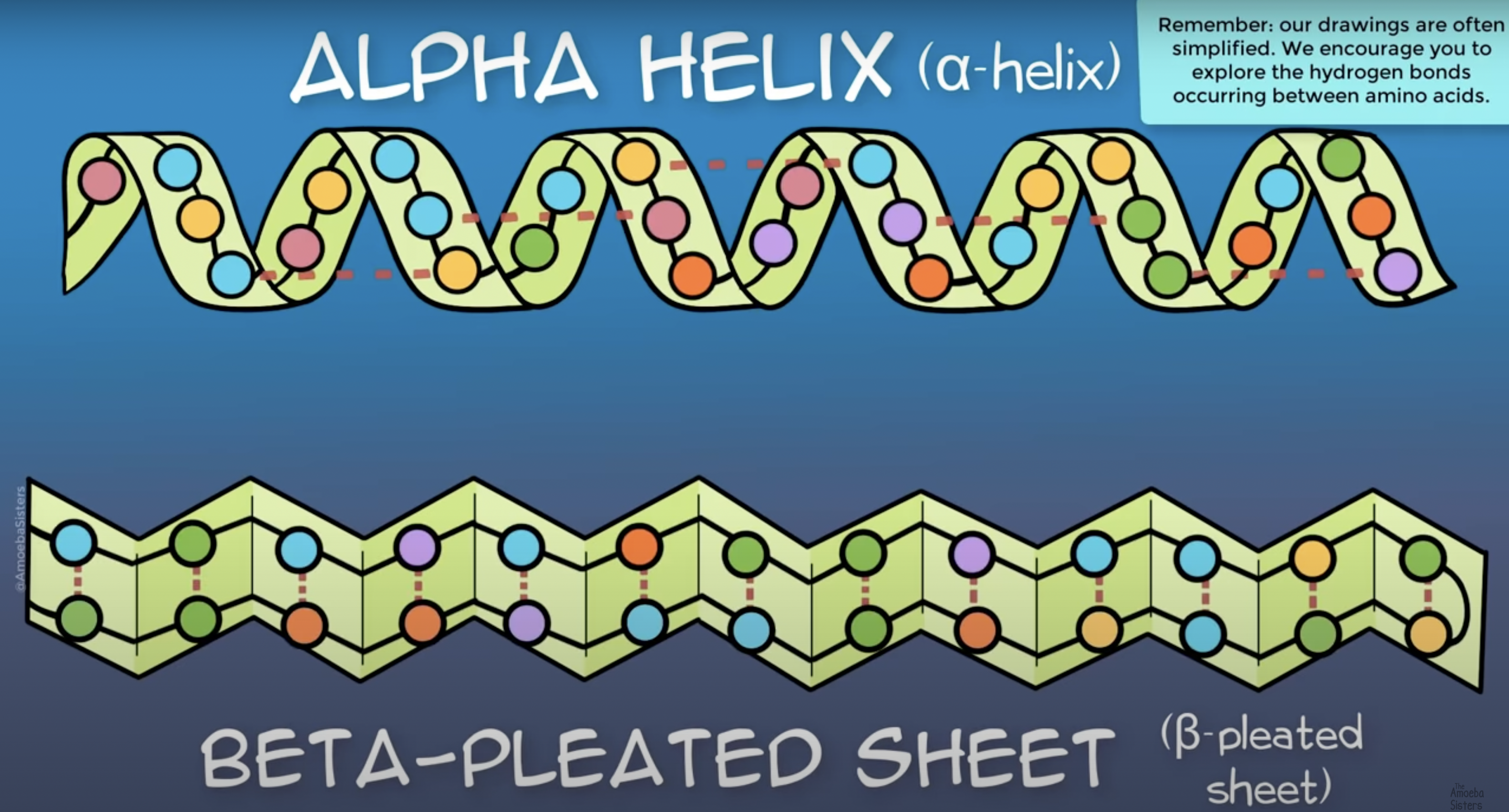
- The sequence of amino acids that we mentioned in primary structure, can fold in different ways
- The most common ways are the alpha helix and the beta pleated sheet and which one of these folding the protein does depends on the amino acid arrangement it has.
- Those hydrogen bonds can occur at specific areas of the protein’s amino acids.
- Both of these shapes are due largely in part to hydrogen bonds.
- The sequence of amino acids that we mentioned in primary structure, can fold in different ways
- Tertiary Structure
- This looks more folding that occurs in the 3D shape of a functional protein.
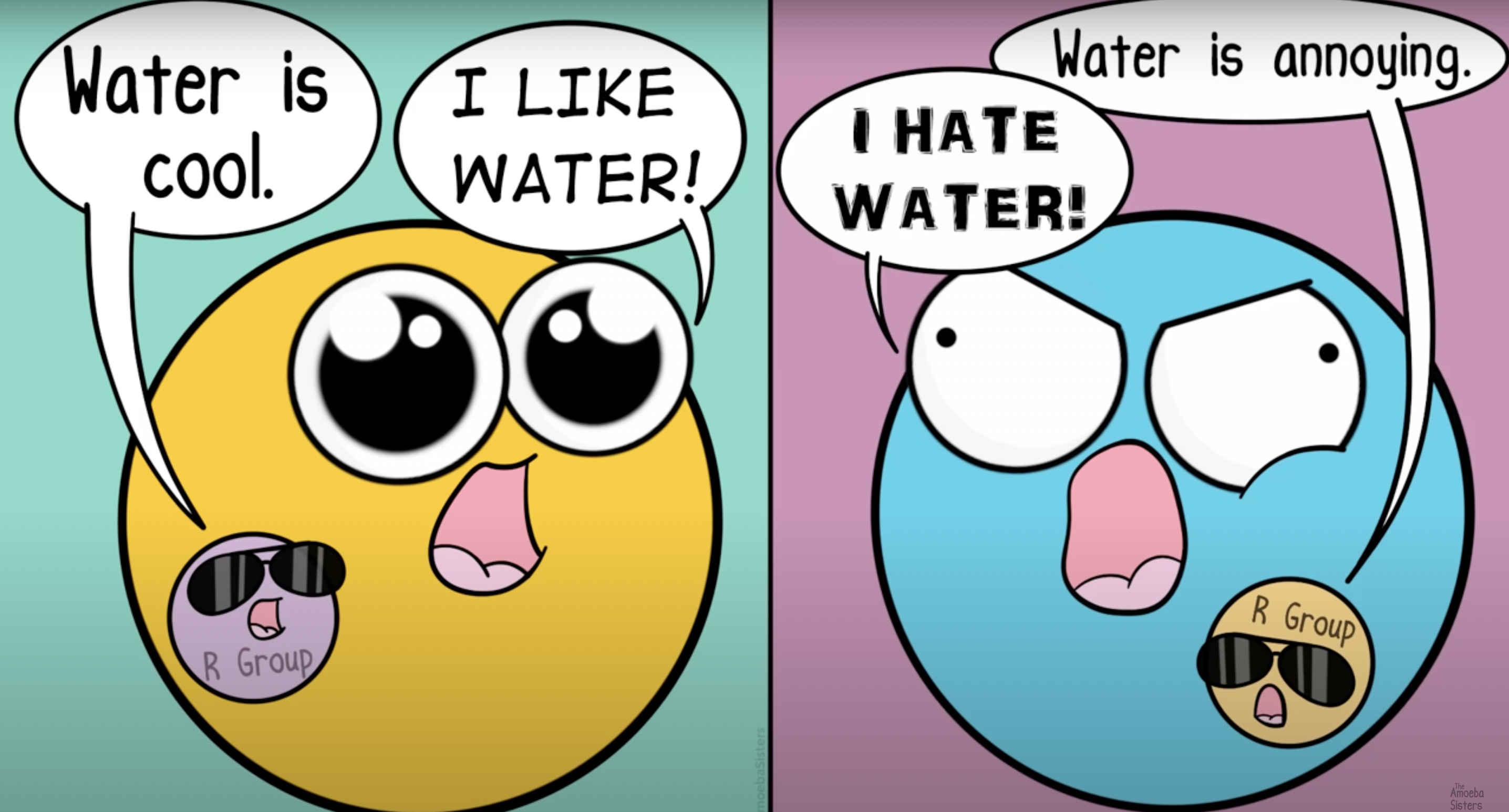
- And a lot of this is due to something we called the R groups, also called side chains
- The amino group and the carboxyl group are generally standard parts of an amino acid, although the R group found in amino acids can vary among different amino acids.
- proteins contain many amino acids which can contain different R groups and so different areas of the protein can therefore be impacted based on those R groups.
- This looks more folding that occurs in the 3D shape of a functional protein.
- Quaternary Structure
- Proteins can be made of 1 or more polypeptide chains in quaternary structure
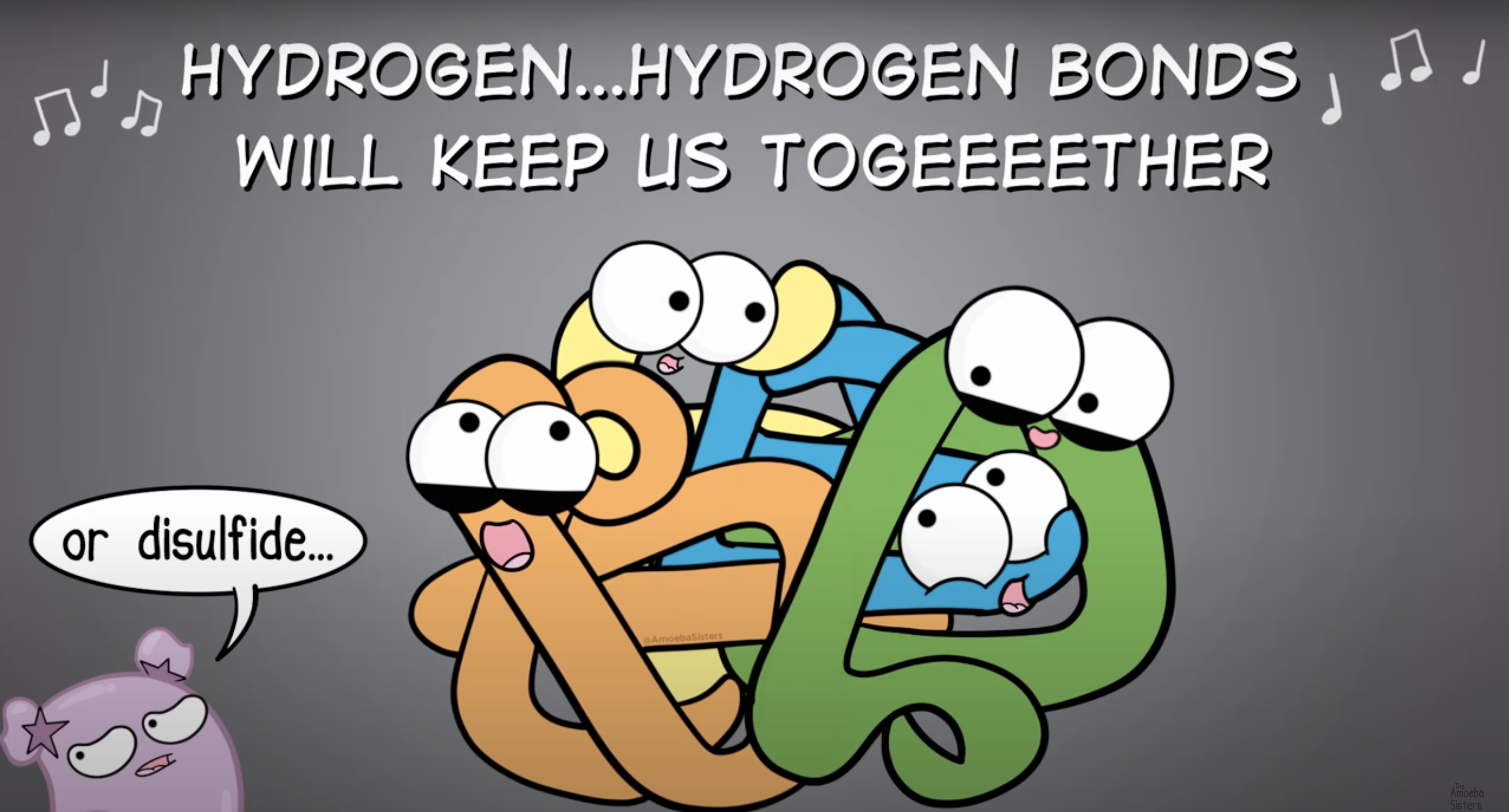
- Each of these polypeptide chains can be a subunit and interactions between them such 05:19 as hydrogen bonds or disulfide bonds can keep them together.
- The interactions mentioned like hydrogen bonds and R group interactions are occurring depending on the protein’s own amino acids.
- Primary structure
Proteins have help in folding
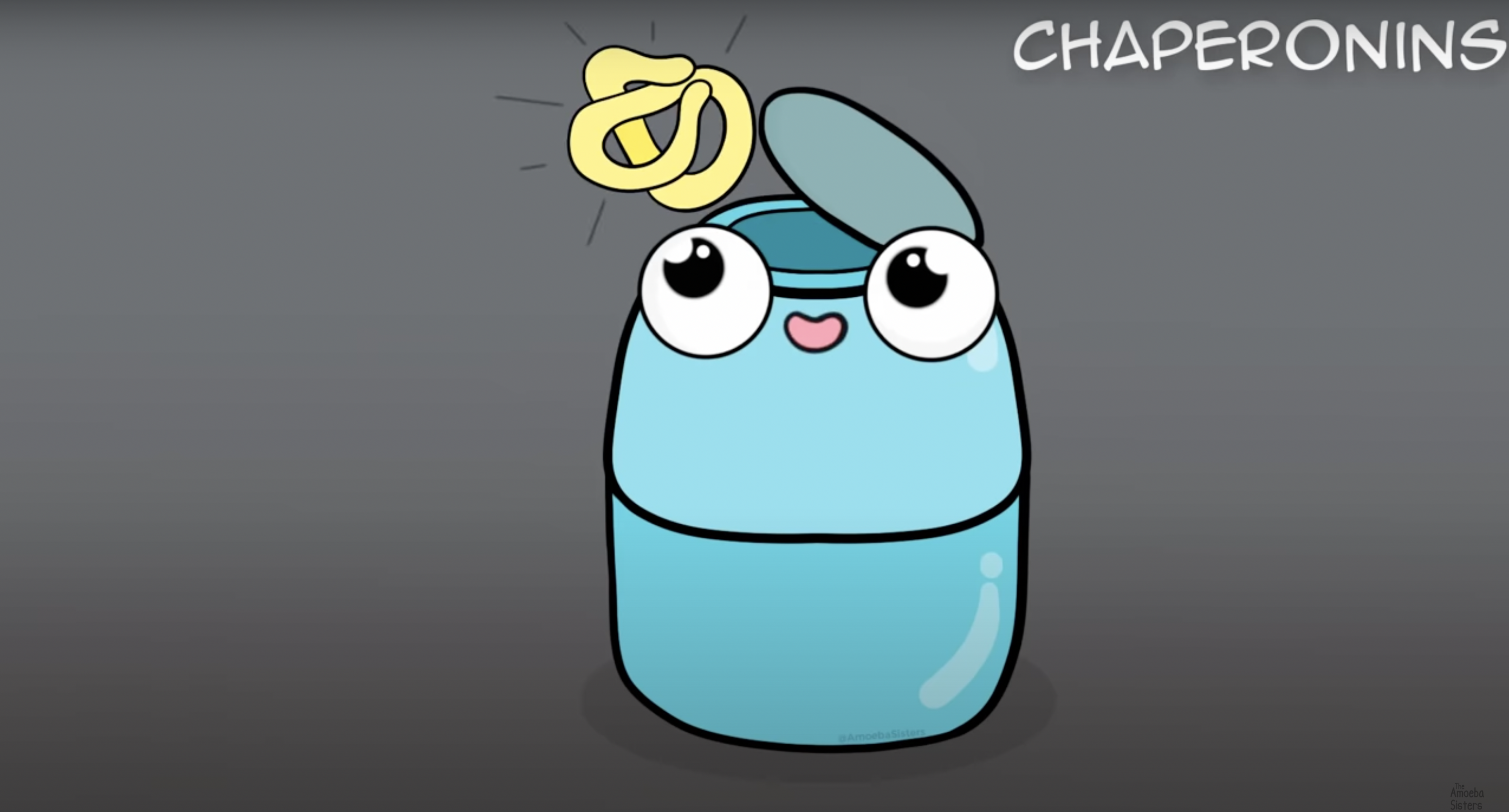
- Chaperonins, for example, are proteins that can help with the folding process.
- They have almost a barrel shape.
- Proteins go into them, and the chaperonin tends to have an environment that is ideal for the proteins’ folding.
- This can help the protein to be folded correctly so it’s functional.
- There are many diseases that are related to protein misfoldings.
- Chaperonins, for example, are proteins that can help with the folding process.
Denaturing proteins
- each protein has an ideal environment for functioning which might include a certain temperature or pH range.
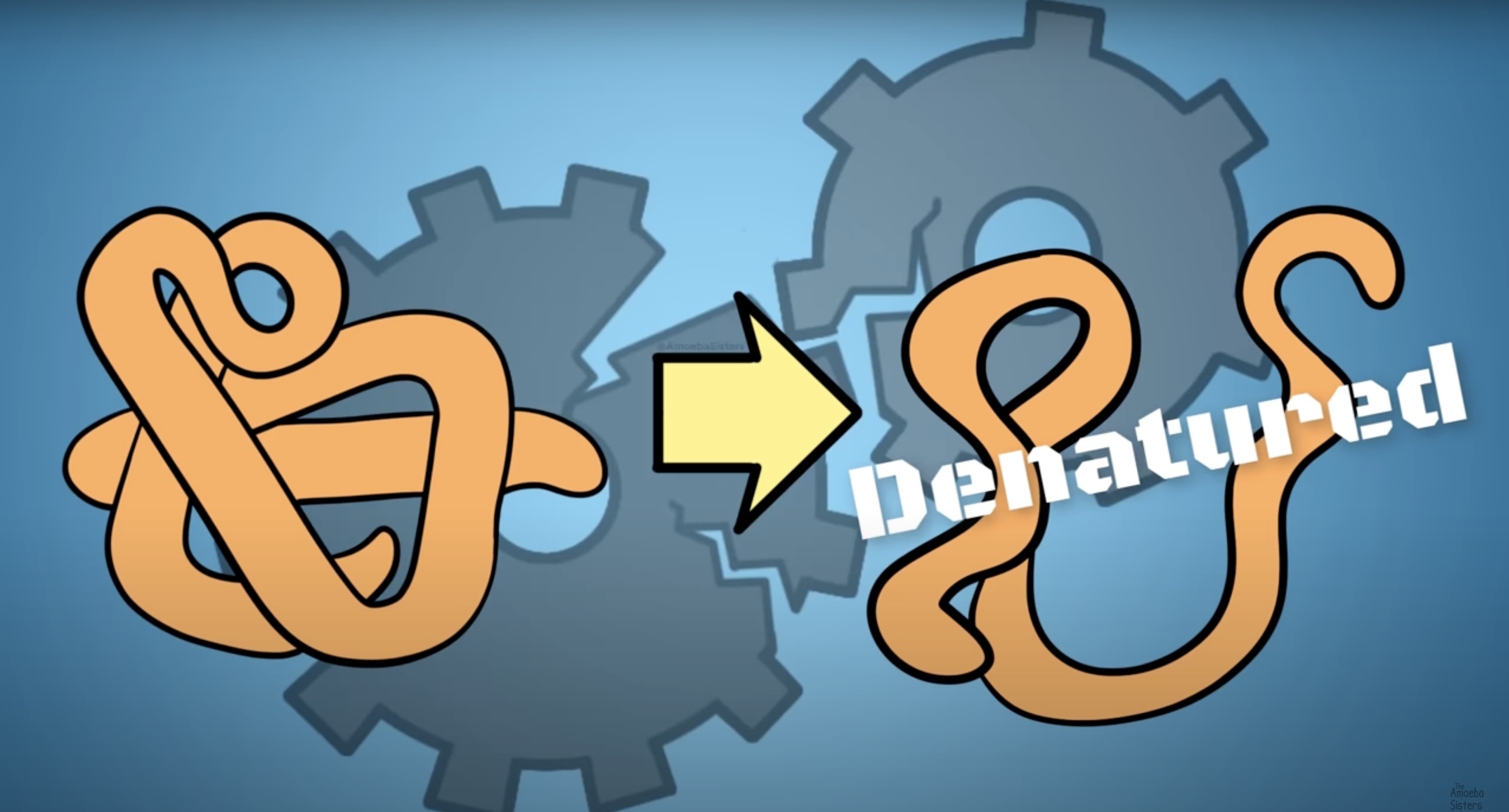
- If the protein is exposed to something outside of its ideal temperature or pH range- exposed to high heat for example- you can disrupt the interactions that we have talked about taking place at the different structural levels.
- This can denature the protein, which disrupts its shape.
- Depending on what caused it to be denatured, sometimes you are interfering with many levels of protein structure
- The environment that a protein is in definitely matters for its functioning.
Images and files in the map

Information
- Description
- Octavo Biología Mind Map on PROTEIN FOLDING, created by Laura Sofia Prieto Trujillo on 08/03/2021.
- Created by
- Laura Sofia Prieto Trujillo
- Views
- 4
- Rating