
Mind map
Tissues : Epithelial, connective, muscular, nervous
Map content
Tissues : Epithelial, connective, muscular, nervous
Intercellular Junctions
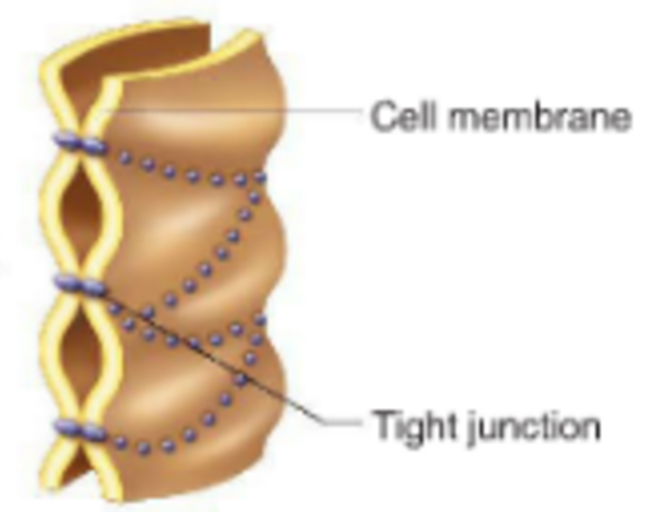
- Tight Junctions
- Close space between cells by fusing cell membranes Ex. Cells that line the small intestine
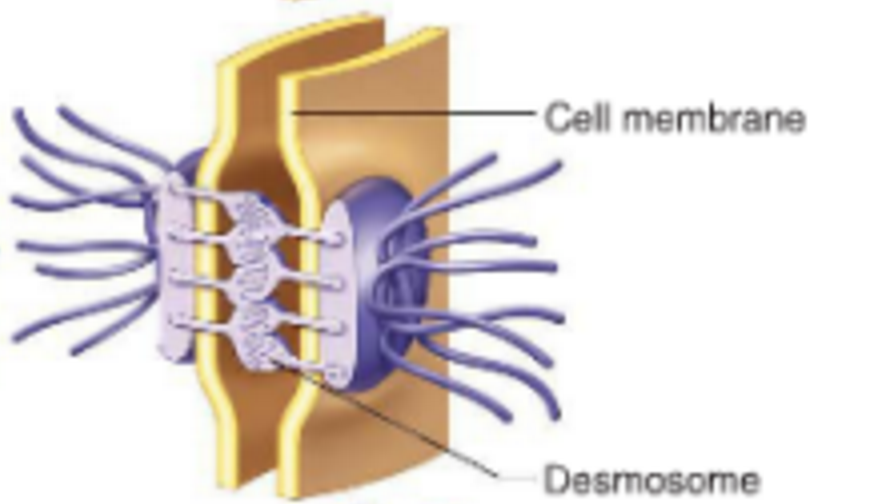
- Desmosomes
- Bind cells by forming “spot welds” between cell membranes Ex. Cells of the outer skin layer
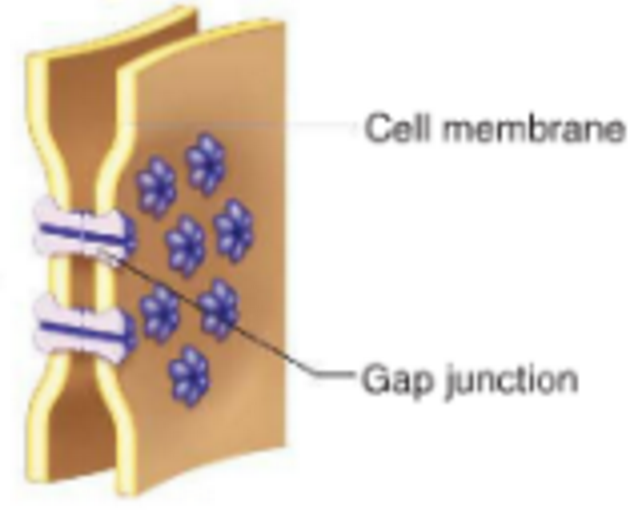
- Gap Junctions
- Form tubular channels between cells that allow the exchange of substances Ex. Muscle cells of the heart and digestive tract
- Tight Junctions
Epithelial Tissue
- protection, secretion/movement, absorption, excretion
- **lacks blood vessels**, cells readily divide, cells are tightly packed together
- cancer cells secrete a substance that dissolves the basement membrane, enabling the cells to invade other tissue layers (metastasis)
- **lacks blood vessels**, cells readily divide, cells are tightly packed together
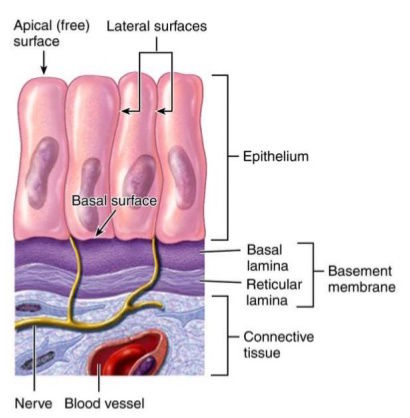
- basement membrane anchors epithelium to connective tissue
- covers body surface, covers and lines internal organs & cavities, composes glands
- cancer cells also produce fewer adhesion proteins (help cells to “stick” together) which allows them to spread into surrounding tissues.
- covers body surface, covers and lines internal organs & cavities, composes glands
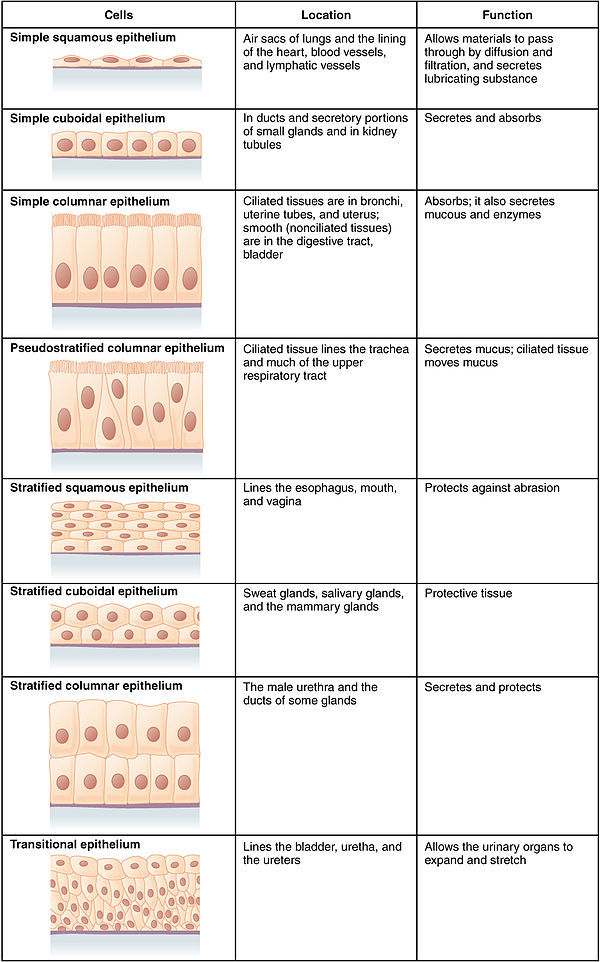
- classified according to cell shape and the number of cell layers
- simple squamous
- -one thin layer of flat cells (easily damaged) -diffusion (gas exchange in lungs), filtration (in kidney), secretion (glands) -alveoli of the lungs, kidney glomeruli, lining of the heart, blood vessels and lymphatic vessels, lining of the ventral body cavities.
- -one thin layer of flat cells (easily damaged) -diffusion (gas exchange in lungs), filtration (in kidney), secretion (glands) -alveoli of the lungs, kidney glomeruli, lining of the heart, blood vessels and lymphatic vessels, lining of the ventral body cavities.
- stratified squamous
- -several layers of cells, top layer is flattened (squamous), thickest layer of epithelial tissue, can be keratinized (contains the protein keratin) or nonkeratinized. -protection keratinized: epidermis -nonkeratinized: mouth, esophagus, tongue, vagina
- -several layers of cells, top layer is flattened (squamous), thickest layer of epithelial tissue, can be keratinized (contains the protein keratin) or nonkeratinized. -protection keratinized: epidermis -nonkeratinized: mouth, esophagus, tongue, vagina-one layer of cells that are attached to the basement membrane, cells at different heights, nuclei at different heights, ciliated or nonciliated -secretion and movement of mucus -ciliated in respiratory tract (bronchi)
- simple cuboidal
- -one layer of cube shaped cells (1 round nucleus) -secretion and absorption of substances (ex. to give urine its final composition, it moves substances in and out of the kidney tubule) -small glands, kidney tubules, ovary surface
- -one layer of cube shaped cells (1 round nucleus) -secretion and absorption of substances (ex. to give urine its final composition, it moves substances in and out of the kidney tubule) -small glands, kidney tubules, ovary surface
- simple columnar
- -one layer of elongated cells (having one oval nucleus), ciliated or nonciliated (contains microvilli) -absorption & secretion -nonciliated: mainly in the lining of the digestive tract (absorption) and lining the ducts of some glands (secretions) -ciliated: small bronchi, the uterine tubes, part of the uterus (secretions)
- -one layer of elongated cells (having one oval nucleus), ciliated or nonciliated (contains microvilli) -absorption & secretion -nonciliated: mainly in the lining of the digestive tract (absorption) and lining the ducts of some glands (secretions) -ciliated: small bronchi, the uterine tubes, part of the uterus (secretions)
- glandular
- Exocrine
- Endocrine
- hormone
- -secrete hormones which are transported into blood without using ducts- located in the pituitary glands, thyroid and parathyroid glands and pancreas - the function is hormones regulate metabolic and physiological activities to maintain homeostasis
- hormone
- - use ducts, empty onto skin surface or into lumen of hollow organs - located in the sweat and oil glands, salivary glands and pancreas- -provide substances ie sweat, oil, saliva, digestive enzymes -
- gland
- Endocrine
- Exocrine
- stratified cuboidal
- -several layers of cube shaped cells -protection -largest ducts of sweat glands, mammary glands, salivary glands
- -several layers of cube shaped cells -protection -largest ducts of sweat glands, mammary glands, salivary glands
- stratified columnar
- -several layers, top layer contains elongated cells -protection and secretion -very rare in the body - it lines part of the urethra, large ducts of some glands, portion of the conjunctiva of the eye
- -several layers, top layer contains elongated cells -protection and secretion -very rare in the body - it lines part of the urethra, large ducts of some glands, portion of the conjunctiva of the eye
- simple psuedotratified (pseudostratified columnar)
- -one layer of cells that are attached to the basement membrane, cells at different heights, nuclei at different heights, ciliated or nonciliated -secretion and movement of mucus -ciliated in respiratory tract (bronchi)
- one layer of cells that are attached to the basement membrane, cells at different heights, nuclei at different heights, ciliated or nonciliated -secretion and movement of mucus -ciliated in respiratory tract (bronchi)
- transitional
- -several layers of cells that can be stretched. will look like a stratified squamous epithelium if it is stretched or a stratified cuboidal epithelium if it is unstretched -allows for distention of urinary organs -bladder, ureters, part of urethra
- -several layers of cells that can be stretched. will look like a stratified squamous epithelium if it is stretched or a stratified cuboidal epithelium if it is unstretched -allows for distention of urinary organs -bladder, ureters, part of urethra
- simple squamous
- protection, secretion/movement, absorption, excretion
Connective Tissue
- connects, supports, protects, provides frameworks, fills spaces, stores fat, produces blood cells, protects against infection, helps repair damaged tissues
- usually have considerable extracellular matrix between them
- consists of fibers and a ground substance (gel-like material)
- major cell types
- fibroblast
- produce collagen and elastic fibers
- macrophage
- are phagocytes (“eat cells”)
- mast cell
- may release heparin and histamine
- fibroblast
- connective tissue fibers
- collagen fibers
- have a great tensile strength
- elastic fibers
- are composed of elastin and are stretchy
- reticular fibers
- are fine collagen fibers
- collagen fibers
- CATEGORIES OF CONNECTIVE TISSUES
- connective tissue proper
- loose connective tissue
- areolar
- C
- adipose
- -stores fat, cushions, and insulates -found beneath the skin; in certain abdominal membranes; around the kidneys, heart, various joints
- reticular
- -thin branched reticular fibers -supports the walls of the liver and spleen
- areolar
- dense connective tissue
- dense regular
- strong collagen fibers that bind structures as parts of tendons and ligaments
- dense irregular
- thicker, randomly distributed collagen fibers and is found in the dermis
- elastic
- elastic fibers that make up hollow internal organs like the lungs and blood vessels
- dense regular
- loose connective tissue
- special connective tissues
- cartiledge
- -provides support -consists of fibers and a gel-like substances -lacks a direct blood supply, so it is slow to heal -found at the ends of various bones; in the ear; in the larynx; and in the pads between the bones of the spinal column, pelvic girdle, and knees
- bone
- -matrix consists of mineral salts and collagen -compact & spongy bones. -heals rapidly
- blood
- -composed of cells suspended in fluid -produced in the tissue of hollow parts of certain bones
- cartiledge
- connective tissue proper
Muscle Tissue
- contracts, moving structure attached to it
- AKA muscle fiber
- skeletal muscle 40%, cardiac muscle 10%
- 3 Types
- Skeletal
- Smooth
- Cardiac
- Smooth
- Skeletal
Nervous Tissue
- found in brain, spinal cord, and **peripheral nerves
- basic cells called neurons are highly specialized
- coordinate, regulate, and integrate many body functions
- neuroglia is the supporting cell of the nervous tissue
Images and files in the map
Information
- Description
- Mind Map for Unit 2 - Tissues (Cove)
- Created by
- Lana van Heerden
- Views
- 2
- Tags
- History
-
- Created by Cove Geary · Aug 31, 2016
- Copied by Lana van Heerden · Mar 15, 2022
- Rating
More on Epithelial and Connective Tissues