
Notes
Lecture 1 - Intro
Content of the notes (2)
Page 1
WHAT IS AN INNOVATION?
DEFINITIONS
an action taken to stay competitive
an invention turned into a commercialized product that has utilitarian value and can be sold on the marketplace
innovation = creativity ? *it definitely requires some creativity*
innovation is the backbone of the knowledge driven economy
- How to come up with an idea that will start an innovation?
--> by transfering a problem into a solution --> not an easy task, however, in theory
IDEA (a big goal or end goal) + APPROACH (orchestrating innovation, steps) = SOLUTION
TYPICAL PROBLEMS AND BARRIERS
-silos --> everybody doing their own job, focused on work, too little attention to the overall process
-habits --> humans are beings of habit; we tend to stick to our habits due to familiarity and secuity
-costs (resorces) --> resources are scarce and whoever says otherwise is not prone to being earnest or rational; allocation of resources towards radical innovation is extremely complicated as there is high risk involved
-skills --> *Picaso and DaVinci example* it takes a long time until a particular skill is being learnt. having patience to go through many rounds of trial and error what gives expertese to the practice, and ultimately leads to creation of something bigger/better
WHY SHOULD WE INNOVATE?
gain competitive advantage
market needs
new problems -> new solutions -> new problems -> ....
politics
suppliers
technologies
HOW TO STRATEGICALLY DEAL WITH INNOVATION?
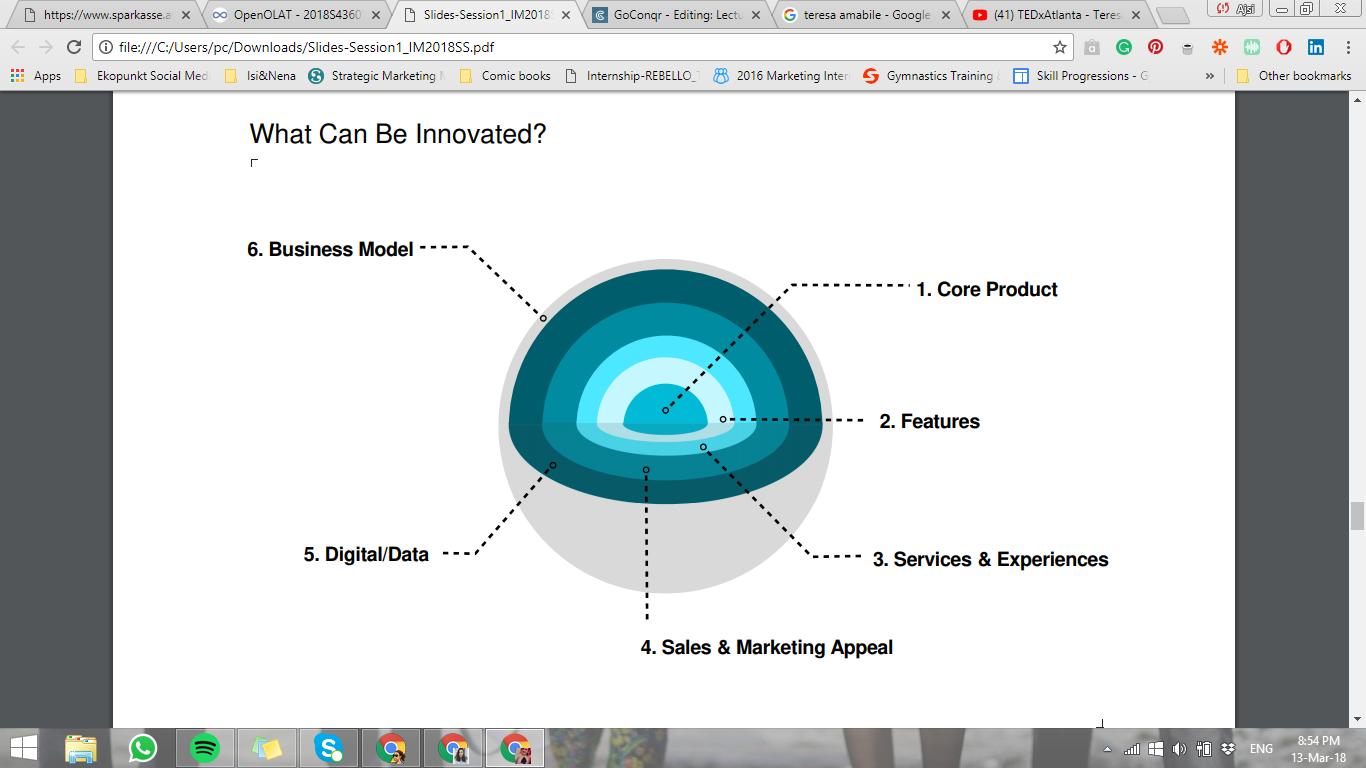
ANSWER: Decide which fields should we invest in for the highest returns (think crypto, AI, Tesla...)
INNOVATION = A BET TO THE FUTURE
WHAT IS A DIFFERENCE BETWEEN INNOVATION AND INVENTION?
INNOVATION = invention that is being utilized
INNOVATION = invention + commercialization, exploitation
INVENTION = a tangible/intangible product created ingenuinly (creatively) and requires a certain amount of creativity
innovation = invention ON AN INDIVIDUAL LEVEL (e.g. one breaks a pen and decided to create a key chain - that is creative, it is an invention, but at the same time is has been instantly utilized so it can be called innovation)
CREATIVITY
How to define creativity?
-according to Teresa Amabile theory-
CREATIVITY
=
DOMAIN (specific skills, craft)
x
HEURISTICS (lateral thinking, thinking creatively in that area)
x
PASSION, MOTIVATION (energy invested or to be invested into a certain task)
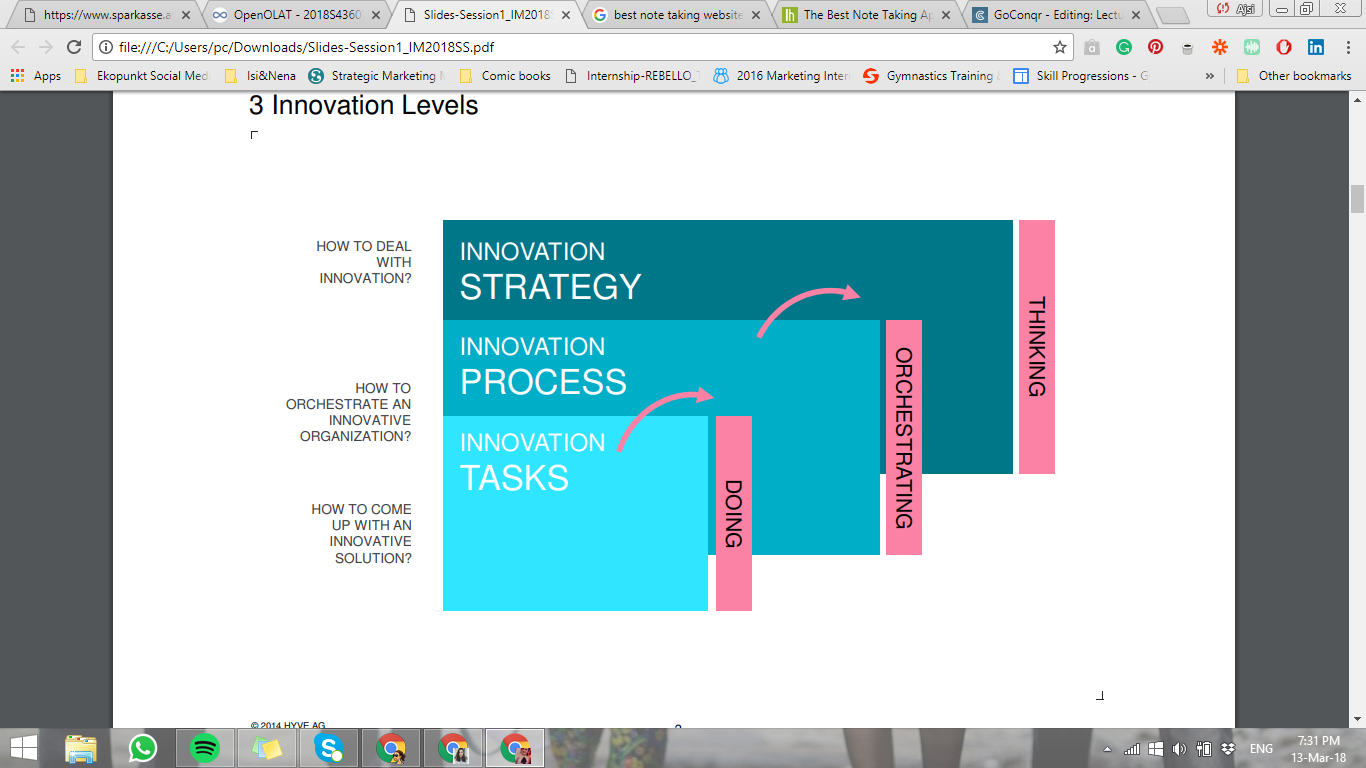
LEVELS OF INNOVATION
There are many kinds of innovations;
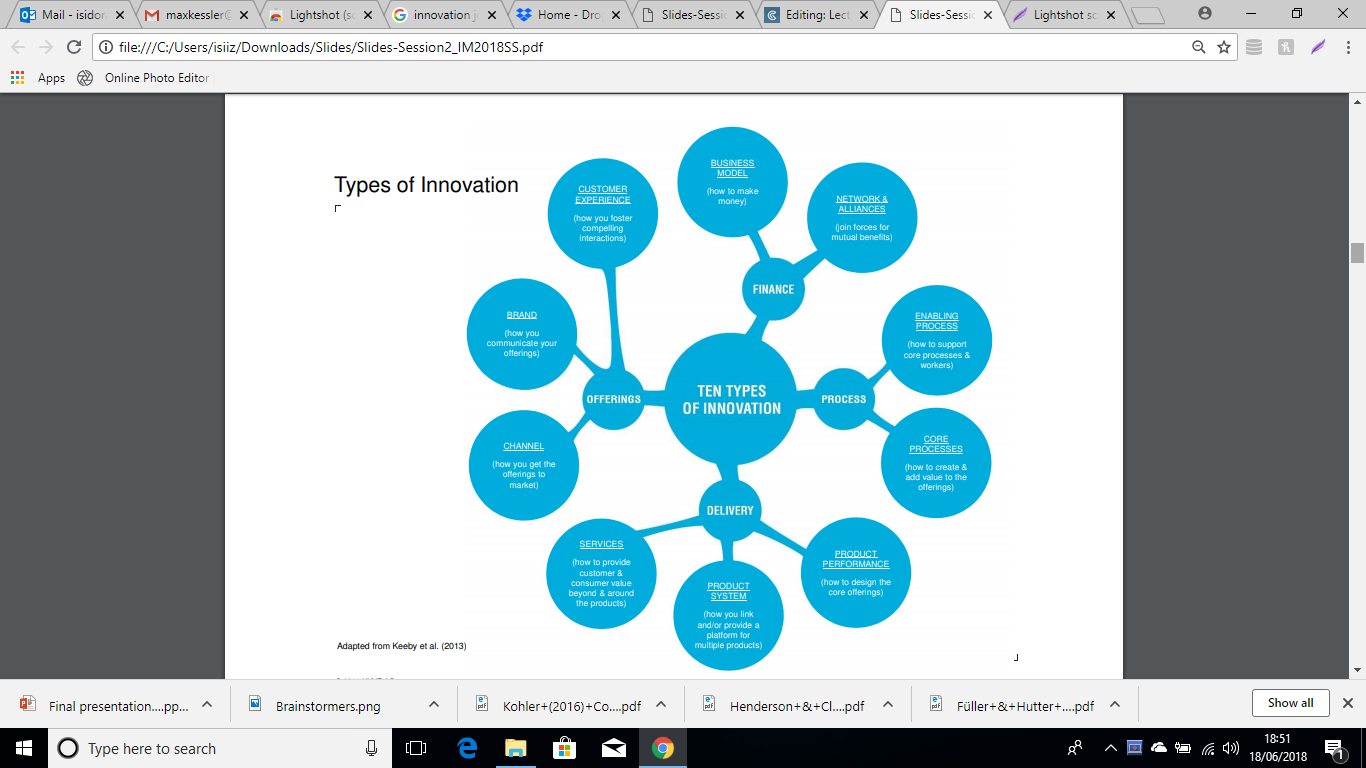
product, process, supply chain, business, disruptive innovation...
...and they all require exploring, testing, experimentation, prioritizing,...
Ideas travel into the system like in a funnel, but only a few amongst thousands of them are actually good ideas. It takes a lot of filtering and distilling for this little particle, the great idea, to reach the exit.
But how do we determine what amount of effort does one innovation take? Is it 5-step, 10-step approach? Is it a process?
It is never a one-size-fits all approach.
We do so by determining innovation levels:
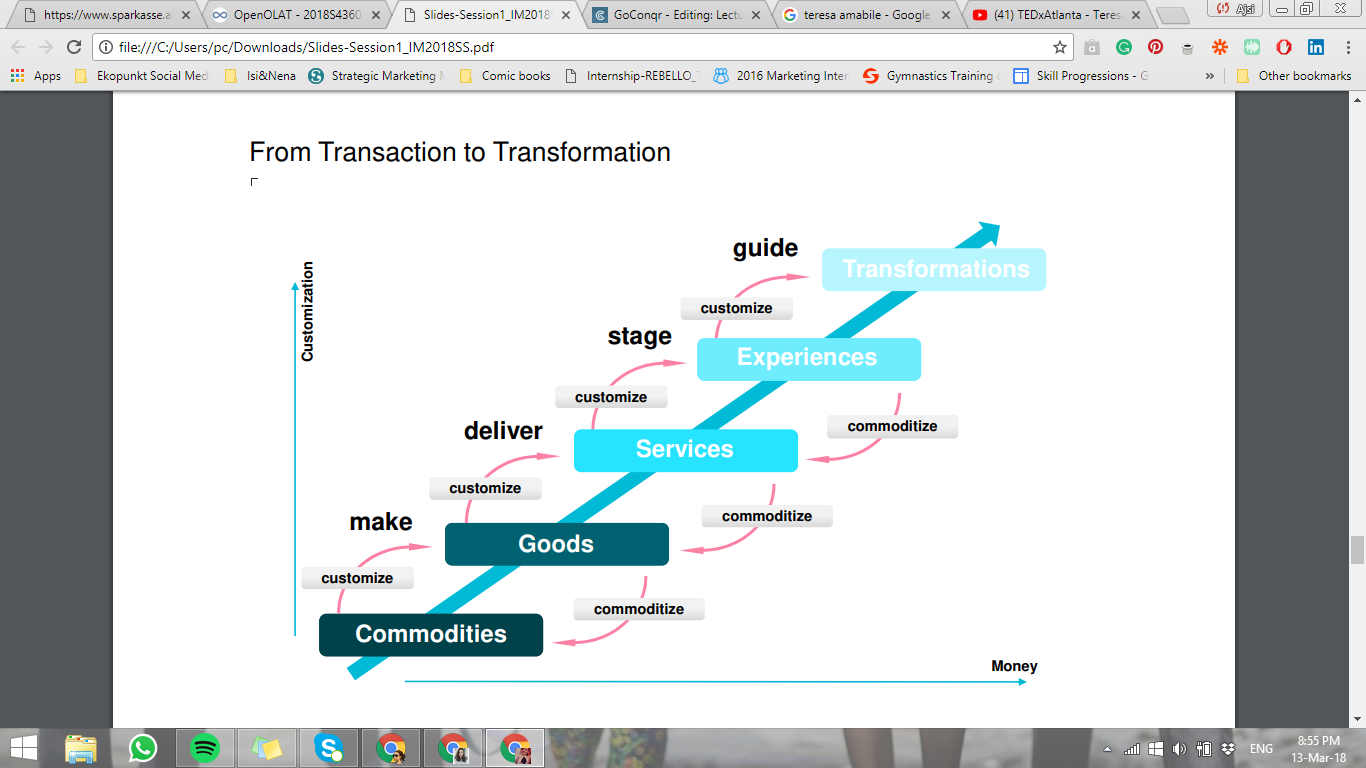
RADICAL - requires high capital and involves high risk, yields high returns (think: Apple iPod) - results: growth and new employment
INCREMENTAL - medium solution (think: Apple Music) - results: zero-sum game (wut?)
EFFICIENCY - low risk, not much capital, low returns. Safe play. (think: iPhone 45678x) - results: job killer
radical takes up more resources and energy
***insert pyramids
INNOVATION PORTFOLIO
Often organizations do not focus their efforts solely on one innovation, but rather they choose to create an innovation protfolio. It is a set of all innovation proposals, which are to be approved, that shall take place within an organization. It is a mix of different innovation projects.
Just like a stock portfolio is created to yield higher returns for the minimal risk possible, innovation portfolio seeks to receive most benefit for minimal risk. Key variables here are time and resources (and you might argue that time is resource question mark?); we would want to maximize innovation for scarce investment.
Then it definitely makes sense to have up to 100 efficiency innovations, dozens of incremental innovations, and only a couple of radical innovations. Efficiency & incremental - almost no risk, min to mid improvement, Radical - very risky, can turn the business into an empire.
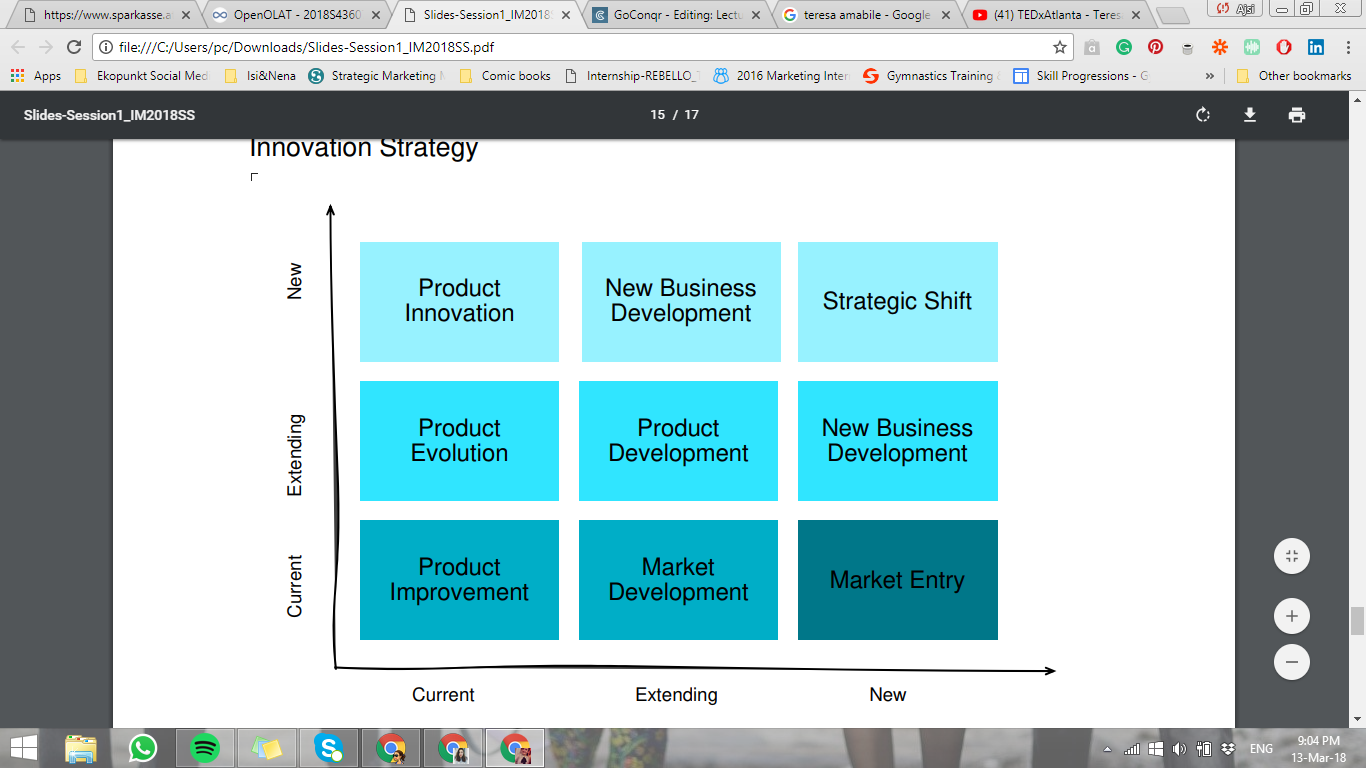
INNOVATION STRATEGY
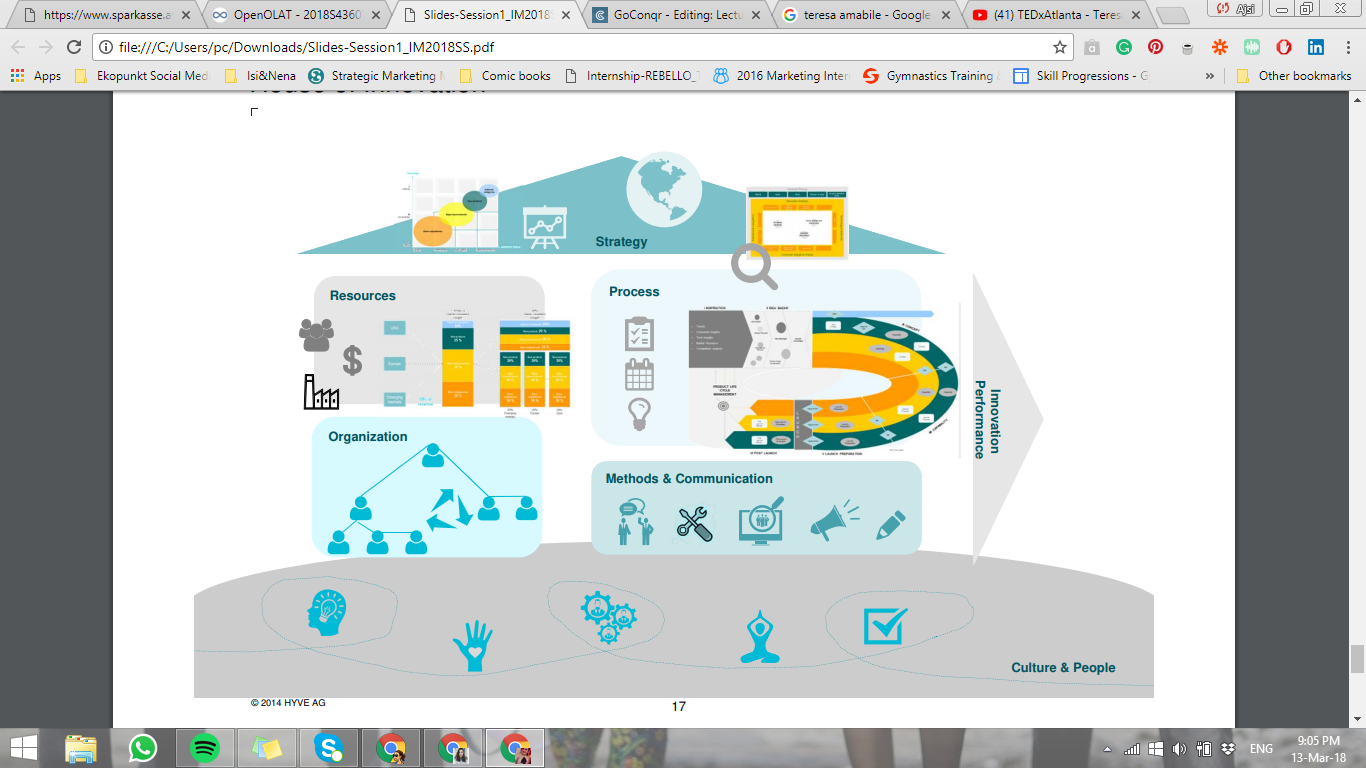
HOUSE OF INNOVATION
Page 2
Information
- Description
- 1st grade Innovation management Note on Lecture 1 - Intro , created by Ajsi Dora on 13/03/2018.
- Created by
- Ajsi Dora
- Views
- 3
- Tags
- Rating