
Notas
What makes up a eukaryotic cell?
Conteúdo das notas (1)
Página 1
What makes up a eukaryotic cell?
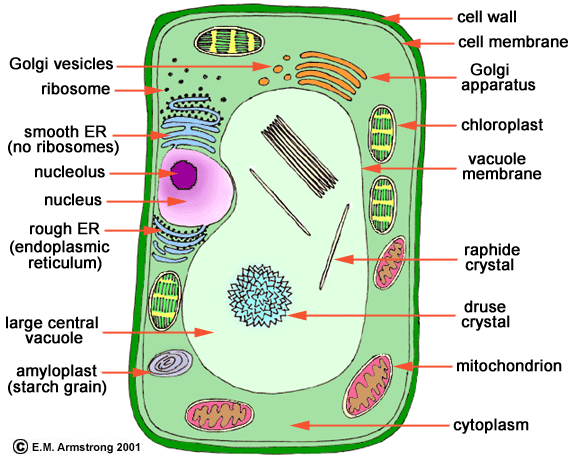
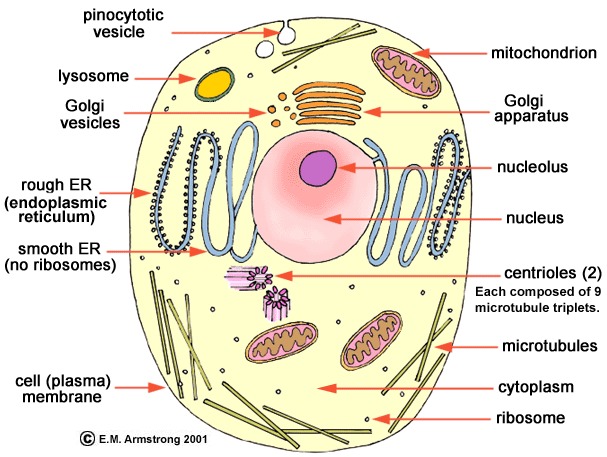
Mitochondria: Used in the production of ATP in the cellular respiration cycles (the steps of the Krebs' Cycle and Electron Transport Chain are done in mitochondria)
Cell Membrane: To form a barrier between the outside of the cell, which is only permeable to small molecules or through protein channels for larger molecules.
Lysosome: Used to digest materials (
Golgi Apparatus: Flattened membrane sacks used to package and distribute proteins and other molecules within the cell
Endoplasmic Reticulum: used to transport molecules around the cell. A rough endoplasmic reticulum has ribosomes attached and still achieves the same function.
Centrioles: Founc in animals only, involved in the separation of chromosomes during mitosis and meiosis
Microtubules: Used to provide structural support for organelles to move within the cell.
Cytosol: Location of
Nucleus: Membrane surrounding the genetic sequencing of the sequence
Nucleolus: Granular body within the nucleus, which is the site of rRNA synthesis (Refer to Part 2 and/or Part 3 items)
Ribosome: Used in the translation of proteins from RNA (Refer to Part 2 items)
Vacuoles: Used for storage, generally containing molecules such as food and water, when being transported around the cell. Plants have a central vacuole which is not only used to provide storage but for stability of the cell structure. Vacuoles in animal cells are rather small.
Chloroplasts: Found in plants only, used in the photosynthesis process
Cell Wall: Found in plants only, used to maintain a rigid structure of the cell, allowing it to keep it shape regardless of whether it is in hypertonic, isotonic or hypotonic solutions. Made from cellulose (a beta helix polysaccharide)
Informações
- Descrição
- A general outline of what is found in Eukaryotic cells, linked to the mind map from Part 1 of the course.
- Criado por
- maddie.rapisardi
- Visualizações
- 97
- Tags
- Avaliação