
Flashcards
Parasitology Strongyloides, Acanthocephalans, and Whips
Flashcards do conjunto (13)
- 1Strongyloides spp. Distribution Course in body Definitive Host Life Cycle Clinical Signs Diagnosis Treatment Zoonotic?Threadworms
Worldwide (tropical/subtropical)
Small intestine to mucosa to lungs to connective tissue to small intestine (female only)
Mammals
Direct Cycle: Embryonated egg autoinfects or hatches to rhabditiform larva, larva passes in stool to either infect another animal or carry out the cycle in the environment.
Clinical signs: diarrhea, respiratory signs, hemorrhage, foal-heat diarrhea, weight loss
Diagnosis: Fecal float with fresh feces, Baermann in dogs
Treatment: Ivermectin, benzimidazoles, levamisole, prompt removal of feces, routine deworming
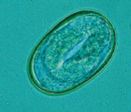
Zoonotic - 2—Strongyloides spp.
(clear, smooth surface, smaller than HOTC/Strongyle eggs) - 3—Strongyloides spp.
(small, long filariform esophagus)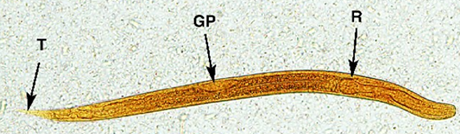
- 4—Macracanthorhynchus hirudinaceus
(dark, larvated, embryonic envelopes, almond looking)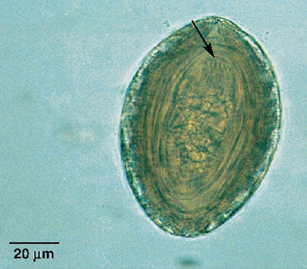
- 5—M. hirudinaceus
(white/pink, flatish, transverse wrinkles, spiny attachment organ)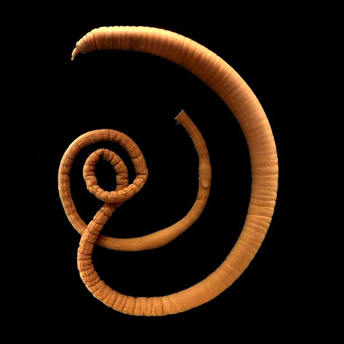
- 6Macracanthorhynchus hirudinaceus Distribution Course in body Definitive Host Life Cycle Clinical Signs Diagnosis Treatment Zoonotic? M. ingens?Thorny headed worm of swine
Worldwide
GI tract
Pigs
Indirect cycle: eggs in feces, ingested by beetle-acanthor-acanthella-cystacanth, ingest beetle, mature in small intestine.
Clinical signs: diarrhea, emaciation, abdominal pain, peritonitis
Diagnosis: Sediment, adults at necropsy
Treatment: MCLs, precent rooting, remove feces
Zoonotic
M. ingens normally infects raccoons and bears, but can infect dogs - 7Ancylostoma/Uncinaria spp. Distribution Course in body Definitive Host Life Cycle Clinical Signs Diagnosis Treatment Zoonotic?Hookworms
Worldwide
Skin/mucosa to blood to lungs to small intestine, transmammary
Carnivores
Direct Cycle: Egg in feces, develop in soil until L3, ingested by host, migrate to intestines to mature or striated muscle to encyst
Clinical Signs: Anemia, dark tarry stool, respiratory distress, dermatitis, larval leaks
Diagnosis: Fecal float/antigen, ID adults
Treatment: Pyrantel, fenbendazole/febantel, emodepside, heartworm prevention, feces removal, prevent predation
Zoonotic - 8—Ancylostoma/Uncinaria spp.
(clear, smooth surface, dark morula stage in fresh feces, ancylostoma is smaller than uncinaria spp.)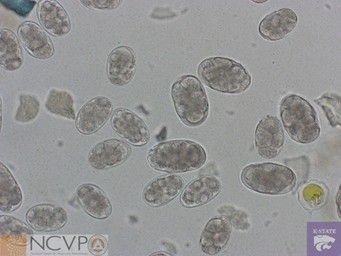
- 9—Ancylostoma/Uncinaria spp.
(Small, dorsal hook end. Ancylostoma have teeth, Uncinaria have cutting plates)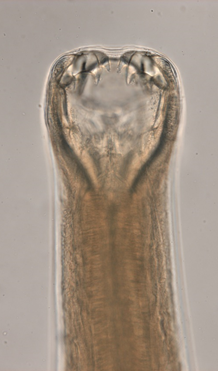
- 10Ancylostoma caninum host?Dogs
- 11Ancylostoma tubaeforme host?cats
- 12Ancylostoma braziliense host?Dogs and cats
- 13Uncinaria stenocephala host?Dogs and cats
Informações
- Descrição
- Brief overview of M. ingens, M. hirudinaceus, Strongyloides spp., Ancylostoma spp., and Uncinaria spp.
- Criado por
- Cassie Bowling
- Visualizações
- 88
- Tags
- Avaliação