
Flashcards
Biopsychology AQA AS and A2
Flashcards do conjunto (52)
- 1GeneticsThe study of the genetic makeup of organisms and how this influences physical and behavioural characteristics
- 2HeredityThe traits, tendencies and characteristics inherited from a person's ancestors
- 3GenotypeGenetic makeup of an individual
- 4PhenotypeExpression of a person's genetic makeup- observable characteristics
- 5HormonesChemicals that are produced by the endocrine glands that focuses on on target cells
- 6Interaction between genetics and environmentPKU. An inherited disorder triggered by the environment
- 7Sensory neuronesreceive messages from the outside world through our different senses
- 8Motor neuronesCarry information from the CNS to a muscle, causing it to contract
- 9Interconnecting neuronesFound only in the CNS and connects neurons to other neurons
- 10NeurotransmittersSuch as dopamine and serotonin. Can influence the post synaptic neuron to act in an inhibitory or excitatory way
- 11SynapseThe connection with two neurons. The electrical impulse "jumps" between cells at the synaptic cleft
- 12CNSThe brain and spinal cord
- 13BrainCentre of all conscious awareness
- 14Division of the brainThe brain is divided into 2 hemispheres, connected by the corpus callossum
- 15Peripheral nervous systemDivided into the somatic nervous system and the autonomic nervous system
- 16Autonomic nervous systemTransmits information to and from our internal organs and systems
- 17Somatic nervous systemControls muscle movement and receives sensory information
- 18Parasympathetic nervous systemDivision of the autonomic nervous system which restores normal bodily activity
- 19Sympathetic nervous systemDivision of the autonomic nervous system which prepares the body for action
- 20Fight or flight response-Feeling sick
-Hands sweat
-heart pounds - 21AdrenalineHelps with the fight or flight response
- 22Brain lateralisationRefers to the specific functions of each of the hemispheres in the brain
- 23Split Brain PatientsUsed as case studies to show the different abilities of the two hemispheres of the brain. These people have had their corpus callossum cut
- 24Left HemisphereResponsible for speech and language
- 25Right HemisphereResponsible for visual-spatial processing and facial recognition
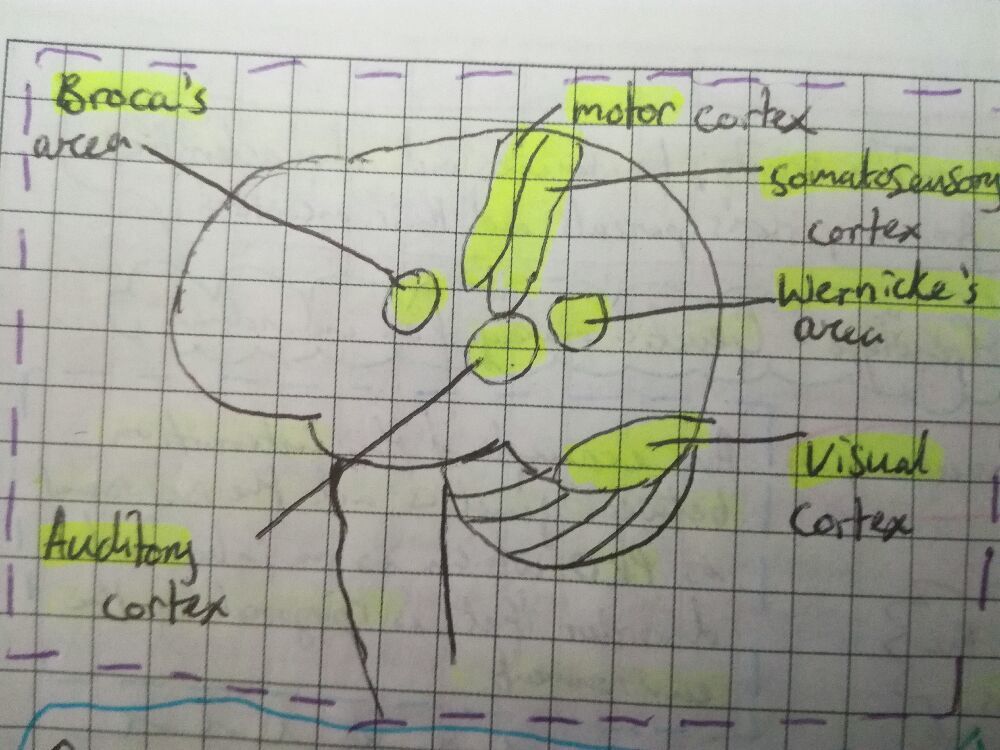
- 26Broca's areaResponsible for the production of speech
- 27Wernicke's areaResponsible for understanding speech
- 28HypothalamusControls homeostasis
- 29EEGsElectrodes that measure brain wave patterns
- 30Brain plasticityHelps when a part of the brain has been damaged. Other parts of the brain take over the functions
- 31ERPsSmall voltage changes in the brain triggered by stimuli
- 32fMRIsMeasure blood flow in the brain
- 33Brain structure
- 34Biological rhythmsCyclical changes in the way biological systems behave
- 35Circadian rhythmsRhythms that last a day which optimise an organism's physiology and behaviour to meet the varying demands of the night/day cycle
- 36The body clock is set according to...Photoentrainment
- 37Circadian rhythm driveControlled by the master pacemaker- the suprachasmic nuclei in the hypothalamus. It is reset by light
- 38Light and darkexternal signals for when to sleep
- 39Circadian dips of sleepinessHappen between 2-4 am and 1-3 pm
- 40Internal clockDescribed as "free running" as it maintains a 24h cycle but is intolerant to major alterations in sleep/wake schedules such as jet lag/shift work
- 41Core body temperatureLowest at around 4:30 am and highest at 6 pm. Sleep occurs when core body temperature begins to drop
- 42MelatoninLevels peak during hours of darkness which encourages feelings of sleep
- 43BuhrBelieves that temperature, not light controls the internal body clock
- 44CzeislerFound that dim artificial light was enough to alter circadian rhythms
- 45Ultradian rhythmsSpan less than a day, such as sleep
- 46Infradian rhythmsSpan longer than a day
- 475 stages of sleep1. Light sleep
2. Slight decrease in body temperature
3. Deep sleep
4. Very deep sleep
5. REM sleep - 48Weekly rhythmsYoung male testosterone levels are elevated at weekends
- 49Monthly rhythmsEg. The Menstrual cycle
- 50Russell et alFound that when he collected sweat from a group of women on a daily basis and put it on the upper lips of other women, their menstrual cycles synchronised due to pheromones
- 51Endogenous pacemakersRefer to everything within the organism
- 52Exogenous zeitgebersAnything whose origins are outside of the organism such as light and social cues
Informações
- Descrição
- A level Psychology (Biopsychology) FlashCards sobre Biopsychology AQA AS and A2, criado por Ewa Klonowicz em 11-04-2017.
- Criado por
- Ewa Klonowicz
- Visualizações
- 8
- Avaliação