
Mapa mental
Biological Molecules 1 (incomplete)
Conteúdo do mapa
Biological Molecules 1 (incomplete)
Water
- Properties
- High latent heat of evaporisation
- Needs a lot of energy to evaporate water - useful for organisms in restoring body temperature.
- Highest specific heat capacity of any common liquid
- value: 4190 J/kg/Degree celsius
- High cohesive forces
- Strong cohesion makes it flow - great as a transport medium e.g. xylem in plants
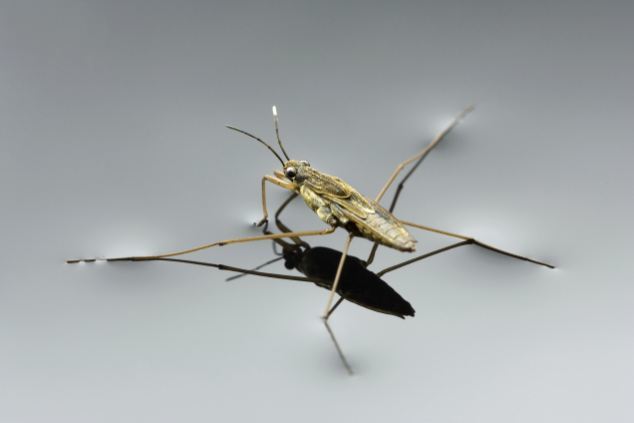
- High surface tension
- Due to high cohesive forces. Useful for some insects walking across ponds (see pic),
- High latent heat of evaporisation
- Structure
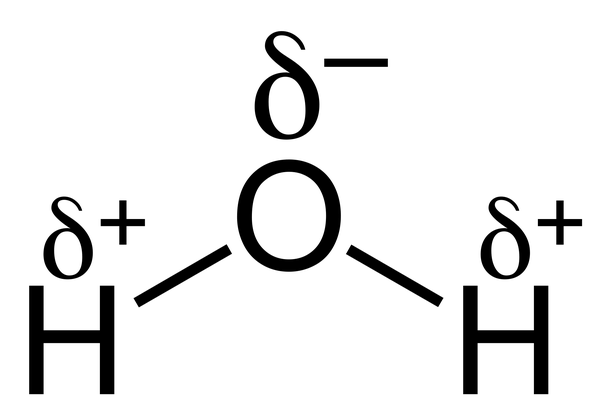
- composed of 2 hydrogen atom and 1 oxygen atom
- Bonding
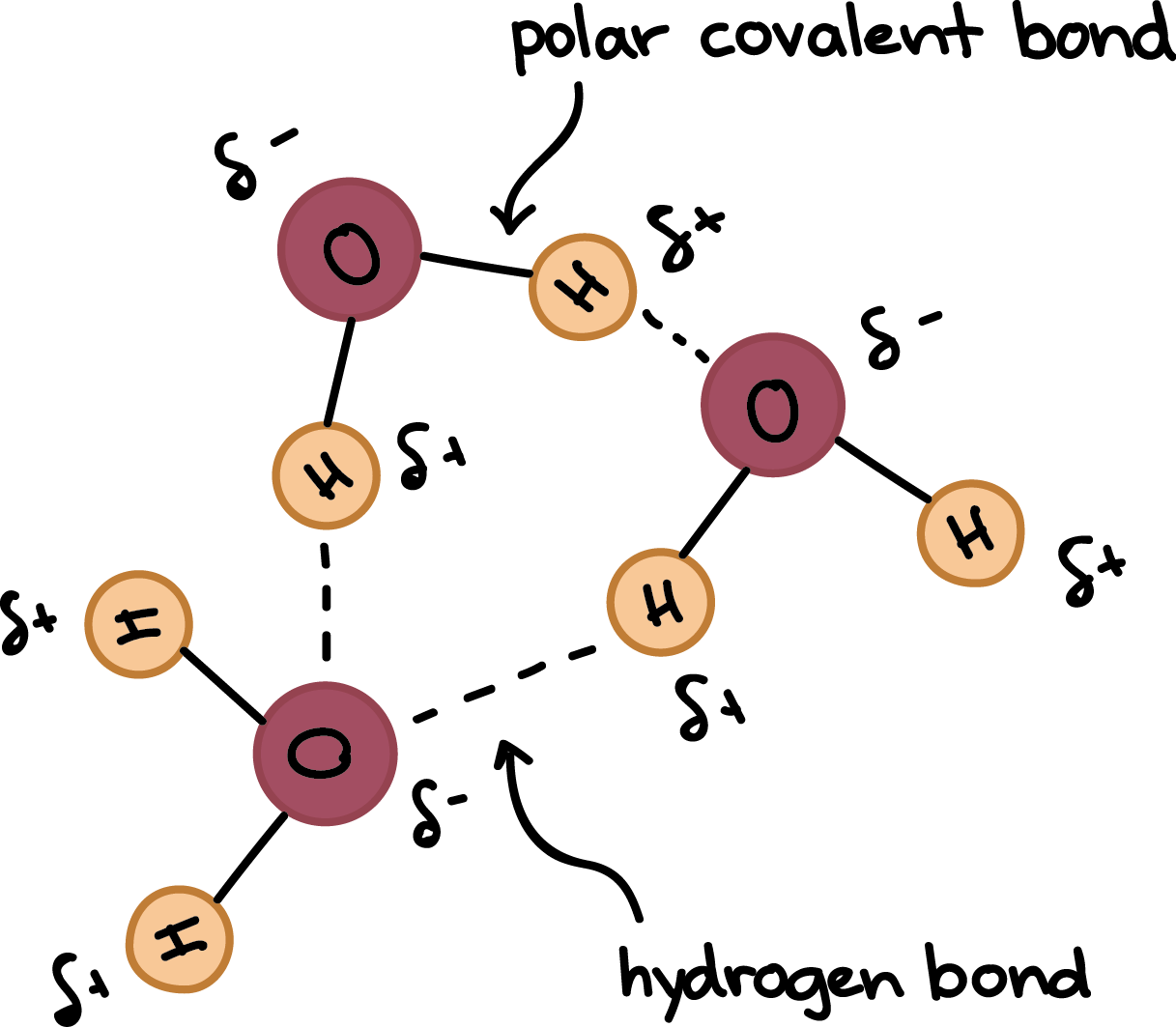
- Hydrogen bonds are formed between opposite atoms
- hydrogen bonds are 1/10th the strength of a covalent bond (individually), Collectively, they're quite significant.
- Hydrogen bonds are formed between opposite atoms
- composed of 2 hydrogen atom and 1 oxygen atom
- Uses of water
- Great metabolite
- Good solvent
- Properties
Proteins
- Enzymes
- 2 types
- Anabolic
- build up substances
- Catabolic
- break down substances
- Anabolic
- Factors affecting enzyme-controlled reactions
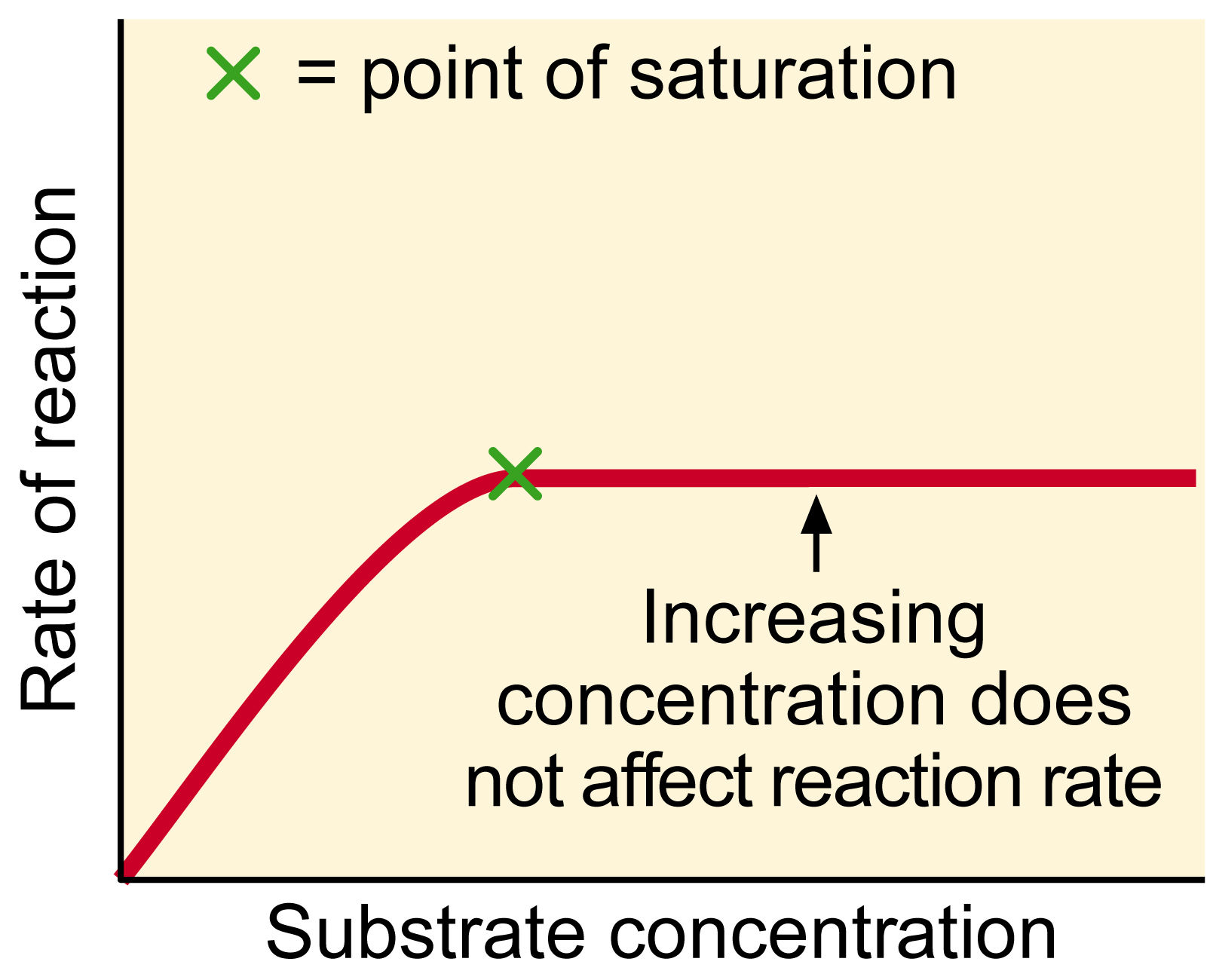
- Substrate concentration
- Enzyme concentration
- As long as there is an excess of substrate , an increase in enzyme leads to a proportionate increase in rate of reaction
- However, once substrate runs out...
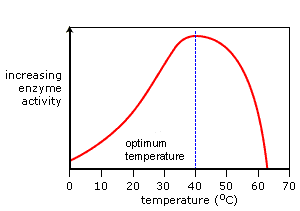
- Temperature
- As temperature increases, enzyme and substrate molecules gain more kinetic energy so they collide more frequently. this means that more ES complexes are formed so there is a faster rate of reaction.
- pH conditions
- Changes alter the charges on the amino acids making up the active site of the enzyme
- This causes hydrogen and ionic bonds to break that maintain the tertiary structure and makes it reform in different places.
- The active site has changed shape and the substrate will not fit - the enzyme has denatured.
- This causes hydrogen and ionic bonds to break that maintain the tertiary structure and makes it reform in different places.
- Changes alter the charges on the amino acids making up the active site of the enzyme
- Rate of reaction
- 2 types
- intracellular
- work inside the cell
- extracellular
- work outside the cell
- intracellular
- biological catalysts and are globular proteins
- They lower the activation energy required to start a reaction so less energy and time is needed for it.
- models
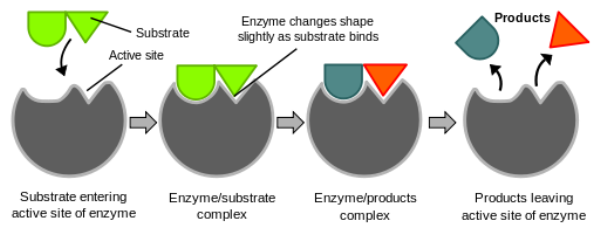
- induced fit model
- more accepted model of the 2
- suggests that the enzyme active site and substrate are NOT exactly complementary to begin with but when a substrate binds to an enzyme it induces change in enzyme structure.
- The active site of the enzyme is said to be complementary as the active site moulds itself around the substrate to make an enzyme-substrate complex
- suitable analogy - hand in glove
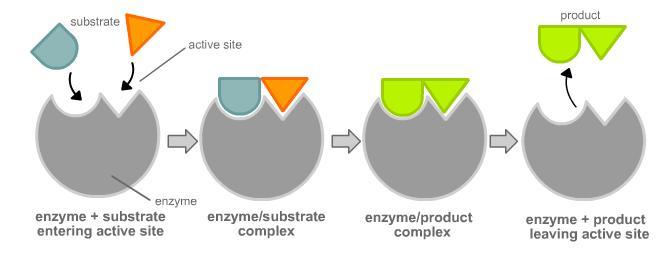
- lock and key model
- taught at GCSE
- Limitation - it suggests that the enzyme structure is rigid, which is actually not true
- This suggests that the substrate combines with the enzyme in a precise way - like a lock and key
- induced fit model
- Inhibitors
- 2 types
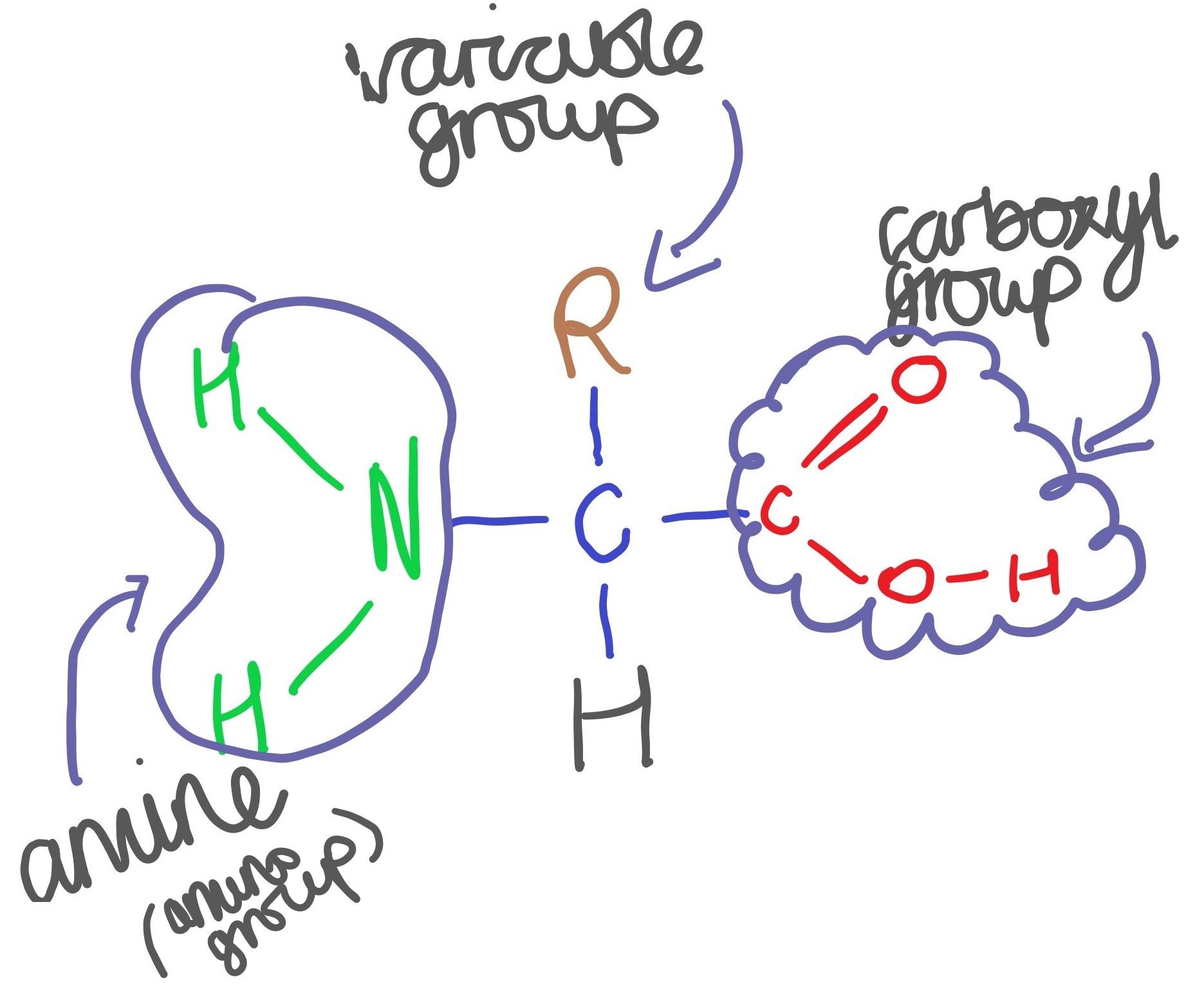
- General Structure
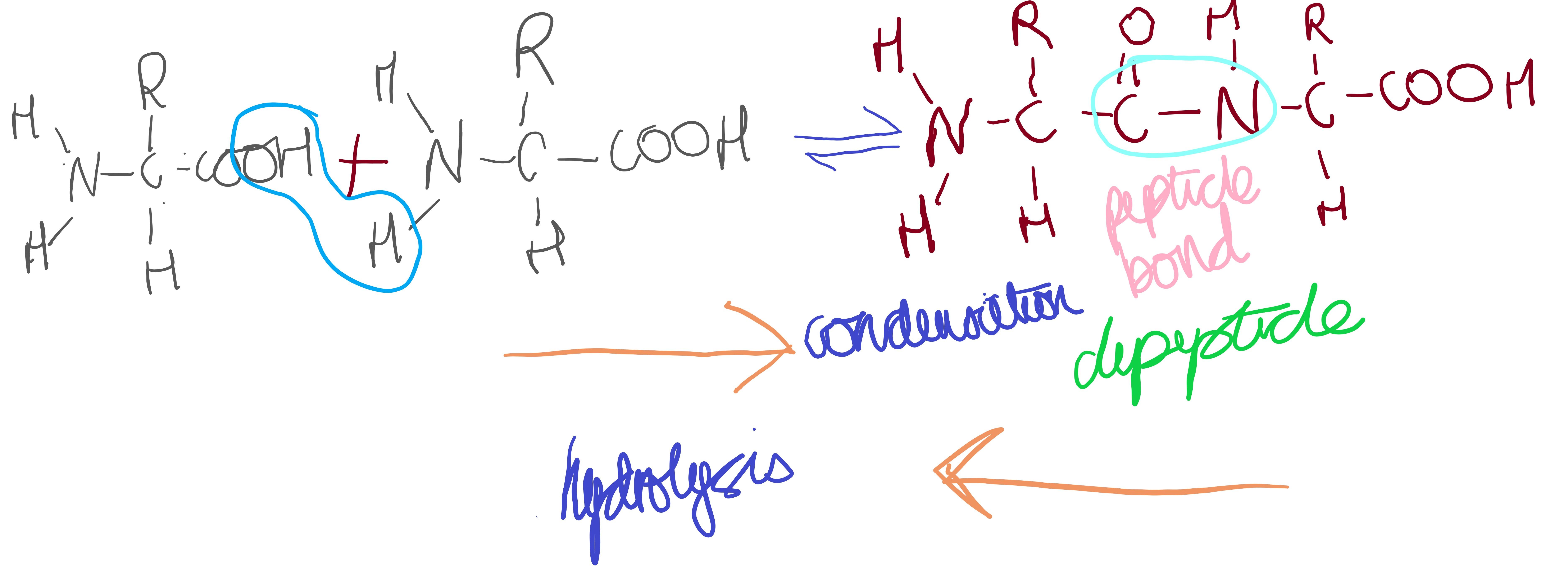
- Condensation (forming dipeptides and polypeptides)
- peptide bond formed
- This is broken in the inverse reaction called HYDROLYSIS.
- peptide bond formed
- Protein structure
- Primary structure
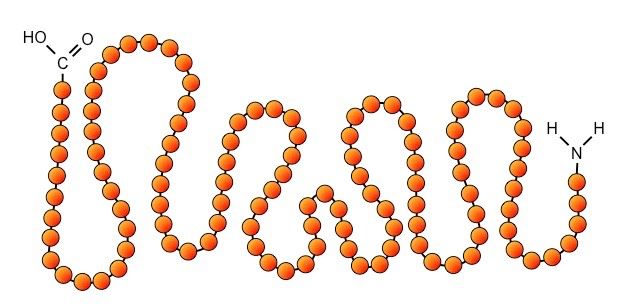
- Sequence of amino acids in a polypeptide chain
- Sequence of amino acids in a polypeptide chain
- Secondary
- Hydrogen bonds form between certain amino acids in the chain
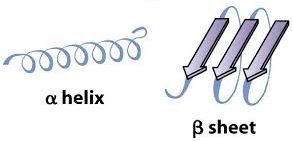
- This makes the chain automatically coil/ fold into an alpha helix or beta pleated sheet
- This makes the chain automatically coil/ fold into an alpha helix or beta pleated sheet
- Hydrogen bonds form between certain amino acids in the chain
- Tertiary
- More bonds form between amino acids including disulfide bridges, hydrogen and ionic bonds. This causes the chain to coil further.
- Quaternary
- Several different polypeptide chains join together between bonds created to form one final 3D structure.
- Conjugated proteins
- Proteins with more groups attached
- Haemoglobin has haem groups attached to it's quaternary structure
- Proteins with more groups attached
- Conjugated proteins
- Several different polypeptide chains join together between bonds created to form one final 3D structure.
- Primary structure
- Chemical test for protein
- Add Biuret's solution to a protein sample
- few drops of NaOH and CuSO_4
- Results
- Negative result - same blue colour
- Positive colour - solution turns lilac colour
- Add Biuret's solution to a protein sample
- Chromatography
- Enzymes
Carbohydrates
- Monosaccharides
- They are monomers that carbohydrates are made from
- examples
- glucose
- What group are these monosaccharides classified as?
- galactose
- fructose
- glucose
- Glucose
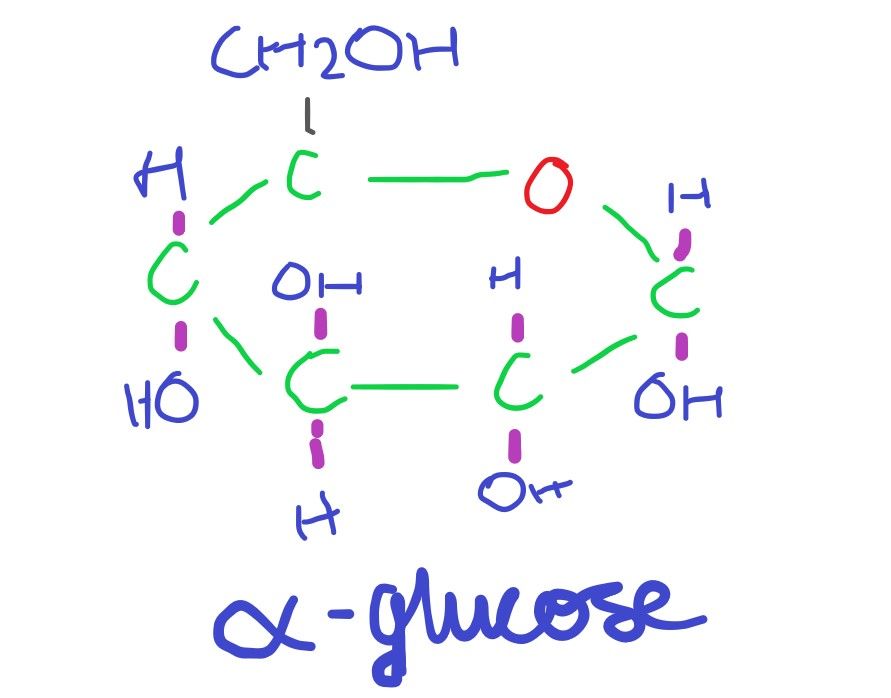
- Alpha glucose
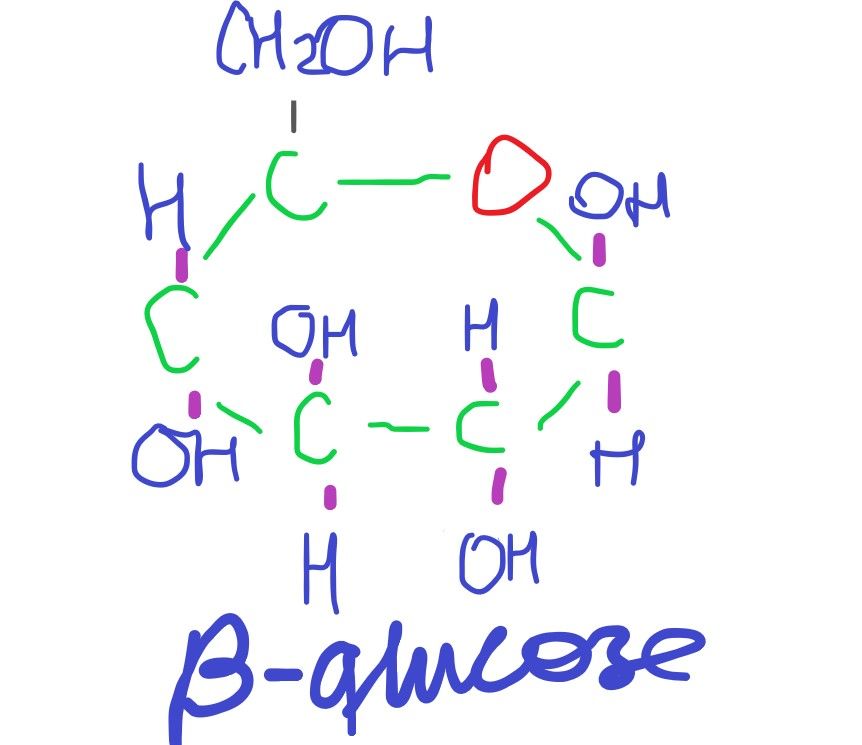
- Beta glucose
- What is the structural difference between these two isomers?
- Alpha:
- Beta:
- Alpha:
- What is the structural difference between these two isomers?
- Alpha glucose
- Disaccharides
- examples
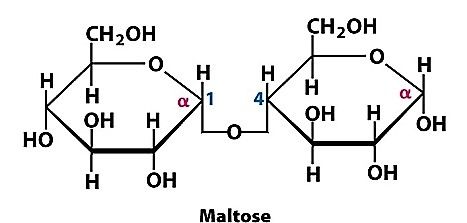
- maltose
- glucose + glucose
- sucrose
- glucose + fructose
- lactose
- glucose + galactose
- maltose
- Processes involved
- condensation
- forms one water molecule and a disaccharide
- hydrolysis
- breaks down the disaccharide and water to form 2 monosaccharides
- condensation
- Chemical Tests
- Reducing sugars test
- Method
- Add Benedict's reagent to a sample of sugar solution then heat in water bath for 2 minutes
- Expected results
- Negative
- Positive
- colour changes
- Negative
- Method
- Non reducing sugars
- Method
- Add dilute HCl to a sample of sugar in test tube then boil in a water bath for 5 mins. Remove and cool. Neutralise acid by adding few drops of NaOH. Dip a glass rod in then transfer a drop onto indicator paper. If paper BLUE add Benedict's reagent then heat for 2 minutes.
- Result
- Should turn blue to orange (Benedict's)
- Non-reducing sugars present
- Should turn blue to orange (Benedict's)
- Method
- Reducing sugars test
- Reducing and non-reducing sugars
- What are they?
- Reducing sugars are sugars that can donate electrons and act as reducing agents.
- Non-reducing sugars cannot donate electrons (opposite of reducing sugars)
- Examples
- Non-reducing
- Sucrose is the only one you need to know about for this course.
- Reducing
- All sugars except sucrose.
- Non-reducing
- What are they?
- Structure
- Bonds present
- Only glycosidic
- These form between carbon-1 and carbon-4 of each monosaccharide
- Only glycosidic
- Bonds present
- examples
- Polysaccharides
- Chemical tests
- Test for starch
- Method
- Add some iodine solution to a sample of starch. Iodine will change from a browny-red to a specific colour that shows whether sample has starch present.
- Expected Result
- Positive
- Changes to a blue-black colour
- Negative
- Stays a browny-red colour (original colour)
- Positive
- Method
- Test for starch
- Consists of TWO or more polysaccharides
- Functions of polysaccharides
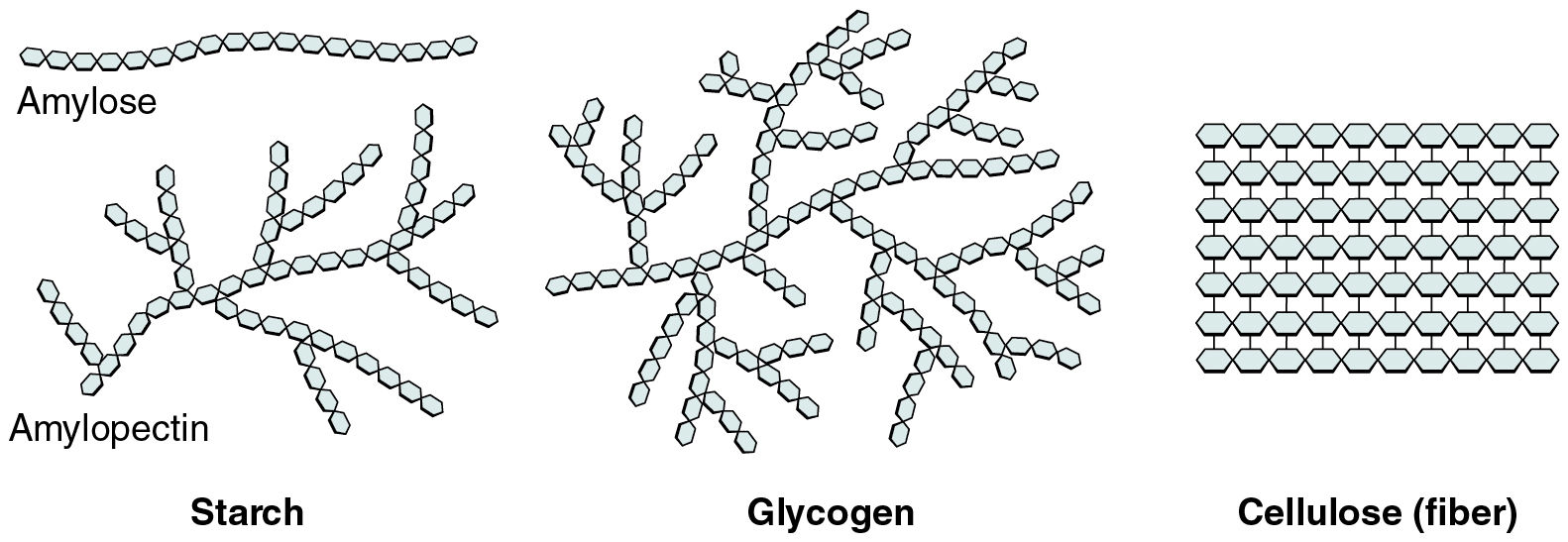
- Starch
- Mixture of 2 alpha-glucose polysaccharides
- AMYLOSE and AMYLOPECTIN
- Amylose
- long, unbranched chain of alpha-glucose
- compact - lots can be stored in small places
- Amylopectin
- Long, branched chain of alpha-glucose
- easily hydrolysed due to many branches
- Insoluble in water - doesn't affect water potential. Also helical structure - makes it compact and easy to store
- Mixture of 2 alpha-glucose polysaccharides
- Glycogen
- polysaccharide of alpha-glucose
- loads more side branches than amylopectin
- compact molecule - good for storage
- Cellulose
- Long, unbranched chains of BETA glucose
- chains linked by hydrogen bonds to form microfibrils
- hydrogen bonds give high tensile strength
- Starch
- Chemical tests
- Monosaccharides
Chromatography
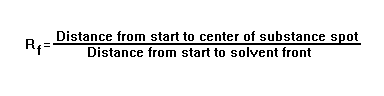
- Rf values
- used to identify monosaccharides and amino acids in mixtures
- Rf values
Imagens e arquivos do mapa


Informações
- Descrição
- A simple revision map for the Biological Molecules section in A-Level AQA Biology.
- Criado por
- Tiya Aji
- Visualizações
- 28
- Tags
- Avaliação