
Mapa mental
Skills and strategies for practice
Conteúdo do mapa
Skills and strategies for practice
Assessment and intervention
- Assessement can be something that initiates a processes-ASPIRE
- Specify
- Planning
- Intervention
- is never neutral
- can have both good and bad outcomes
- can create difficulties
- may provide opportunities in which power may be abused
- has become more policy-driven
- early intervention in children’s lives has become commonplace
- Review
- Evaluation
- should reoccur as the process is underway
- clear processes
- thought-through rationales
- understanding of underlying factor
- Assessement can be something that initiates a processes-ASPIRE
Power and practice
- who is assessing who’ and for what reason
- Individual's power
- resilience, or the power to be
- capacity to withstand unexpected trials and events
- defensive power,
- agency or the power to do
- Offenive power
- Forms
- over others
- power to influence
- political power.
- can be used positively to combat discrimination and inequalities.
- resilience, or the power to be
- Focault
- power relations
- creates resistance.
- has described the emergence of the ‘disciplinary society’, one focused on the surveillance of citizens and the regulation of all aspects of their behaviour.
- power relations
- children can often experience power relations in different ways to adults.
- a key strategy in rights-based practice for children and young people is the UNCRC
- Power is context-dependent, and views about who has power at a particular time and at a particular place can be disputed
- Power is always relative and its distribution will change
- Power is always relative and its distribution will change
- Abuses of power
- institutional abuse
Values (seen by youth in care)
- Right to your own opinion and the right to speak.
- trust, respect, dealing with anger, honesty, and listening and thinking before decisions are made
Advocacy
- promote social inclusion, equality and social justice
- address the power imbalances
- reduce abuses of power.
Professional power
- can be highly influential when it comes to making decisions about interventions
- paternalized by institutional power.
- adhere to codes of practice
- subject to regulation and inspection
- expected to work to national standards.
clear communication, good relationships and integrated working
Multi-agency collaboration:
- influenced by:
- lack of a common operational language
- real differences in views of what should be done
- Common Assessment Framework
- key component of ‘Every Child Matters
- every child needs the support to :
- be healthy
- stay safe
- enjoy and achieve
- make a positive contribution
- achieve economic wellbeing
- The Children Act 2004
- identify childrenwith special needs
- Consent from the family is required to begin a CAF.
- they are fully involved throughout the process
- Team around the Child
- tool for assessing, of a child’s needs and finding a way to accommodate those needs so that there are positive outcomes
- ecological approach
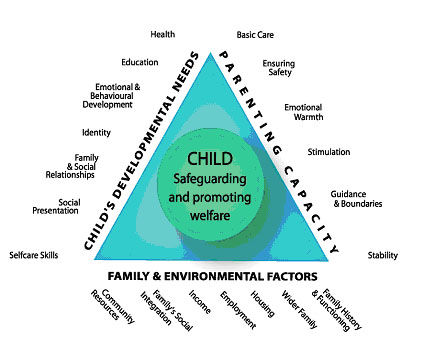
- My World Triangle’
- introduces a mental map that helps practitioners understand a child or young person's whole world
- framework for gathering information – analysing it and making an assessment prior to making a plan is an essential part of an ASPIRE approach
- influenced by: