
Mapa mental
Depression- Psychopathology Revision
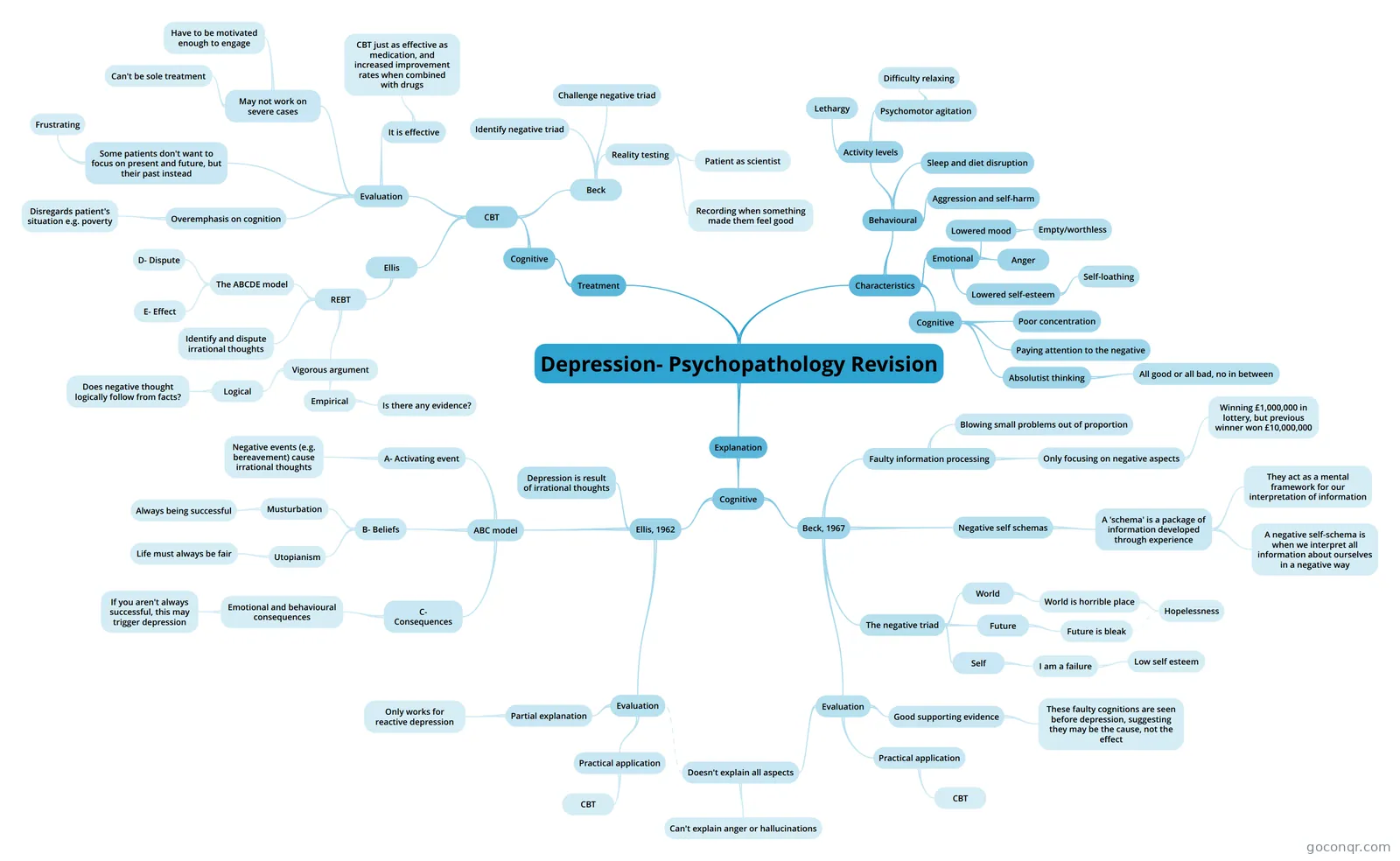
Mind map: Depression psychopathology
Conteúdo do mapa
Depression- Psychopathology Revision
Characteristics
- Behavioural
- Activity levels
- Lethargy
- Psychomotor agitation
- Difficulty relaxing
- Sleep and diet disruption
- Aggression and self-harm
- Activity levels
- Emotional
- Lowered mood
- Empty/worthless
- Anger
- Lowered self-esteem
- Self-loathing
- Lowered mood
- Cognitive
- Poor concentration
- Paying attention to the negative
- Absolutist thinking
- All good or all bad, no in between
- Behavioural
Explanation
- Cognitive
- Beck, 1967
- Faulty information processing
- Only focusing on negative aspects
- Winning £1,000,000 in lottery, but previous winner won £10,000,000
- Blowing small problems out of proportion
- Only focusing on negative aspects
- Negative self schemas
- A 'schema' is a package of information developed through experience
- They act as a mental framework for our interpretation of information
- A negative self-schema is when we interpret all information about ourselves in a negative way
- A 'schema' is a package of information developed through experience
- The negative triad
- World
- World is horrible place
- Hopelessness
- World is horrible place
- Future
- Future is bleak
- Self
- I am a failure
- Low self esteem
- I am a failure
- World
- Evaluation
- Good supporting evidence
- These faulty cognitions are seen before depression, suggesting they may be the cause, not the effect
- Practical application
- CBT
- Doesn't explain all aspects
- Can't explain anger or hallucinations
- Good supporting evidence
- Faulty information processing
- Ellis, 1962
- ABC model
- A- Activating event
- Negative events (e.g. bereavement) cause irrational thoughts
- B- Beliefs
- Musturbation
- Always being successful
- Utopianism
- Life must always be fair
- Musturbation
- C- Consequences
- Emotional and behavioural consequences
- If you aren't always successful, this may trigger depression
- Emotional and behavioural consequences
- A- Activating event
- Depression is result of irrational thoughts
- Evaluation
- Partial explanation
- Only works for reactive depression
- Practical application
- CBT
- Partial explanation
- ABC model
- Beck, 1967
- Cognitive
Treatment
- Cognitive
- CBT
- Beck
- Identify negative triad
- Challenge negative triad
- Reality testing
- Patient as scientist
- Recording when something made them feel good
- Ellis
- REBT
- The ABCDE model
- D- Dispute
- E- Effect
- Identify and dispute irrational thoughts
- Vigorous argument
- Empirical
- Is there any evidence?
- Logical
- Does negative thought logically follow from facts?
- Empirical
- The ABCDE model
- REBT
- Evaluation
- It is effective
- CBT just as effective as medication, and increased improvement rates when combined with drugs
- May not work on severe cases
- Have to be motivated enough to engage
- Can't be sole treatment
- Some patients don't want to focus on present and future, but their past instead
- Frustrating
- Overemphasis on cognition
- Disregards patient's situation e.g. poverty
- It is effective
- Beck
- CBT
- Cognitive
Informações
- Descrição
- AQA AS and A Level Psychopathology: Depression. Includes Characteristics, Explanations, and Treatment.
- Criado por
- Grace Fawcitt
- Visualizações
- 410
- Tags
- Avaliação