
Psychopathology and Mental Health
436 resources created by 306 users
This Psychopathology and Mental Health page on GoConqr gathers community-made quizzes, mind maps, flashcards and notes, from definitions of abnormality and phobias to OCD, depression and schizophrenia. It's built for school students revising a topic, university students filling gaps, and teachers after ready-made material. There are over 3,600 resources here, including more than 250 quizzes and over 2,100 mind maps, with material for A-level Psychology, GCSE Psychology, AP Psychology and IB as well as university abnormal psychology courses. Pick a topic, try a quiz, then build your own.
Top Psychopathology and Mental Health resources
-
25 questionsChild Psychopathology Test C A 7-year-old boy in second grade displays significant delays in his ability to reason, solve problems, and ...
-
13 cardsPart B- Explanations of Phobias Explanations of phobias;
-
Mind map Psychopathology as psychopathology psychology revision
-
Mind map Psychopathology
-
58 cardsAQA Psychology- Psychopathology Definitions of abnormality
-
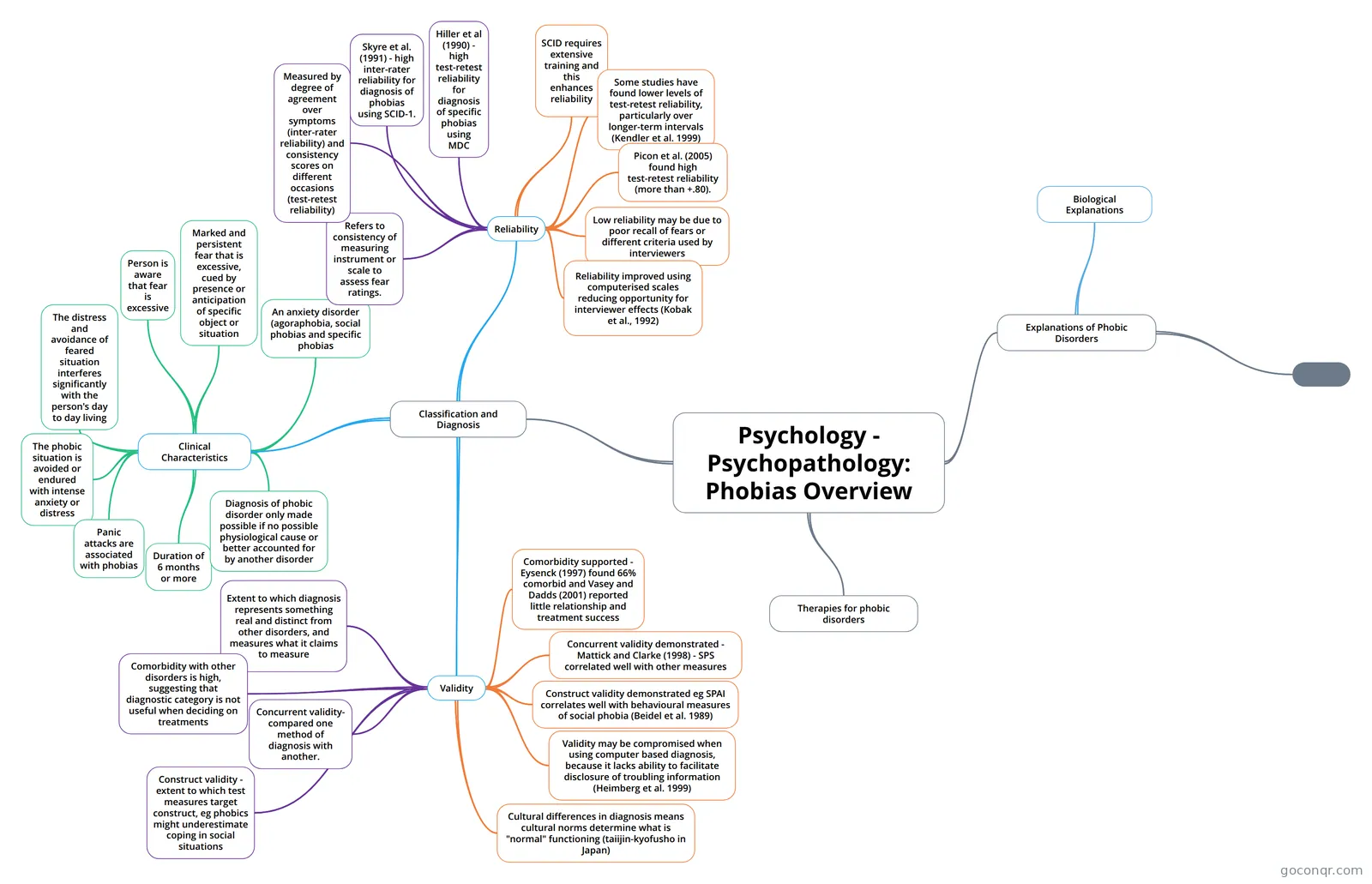 Mind map Psychology - Psychopathology: Phobias Overview
-
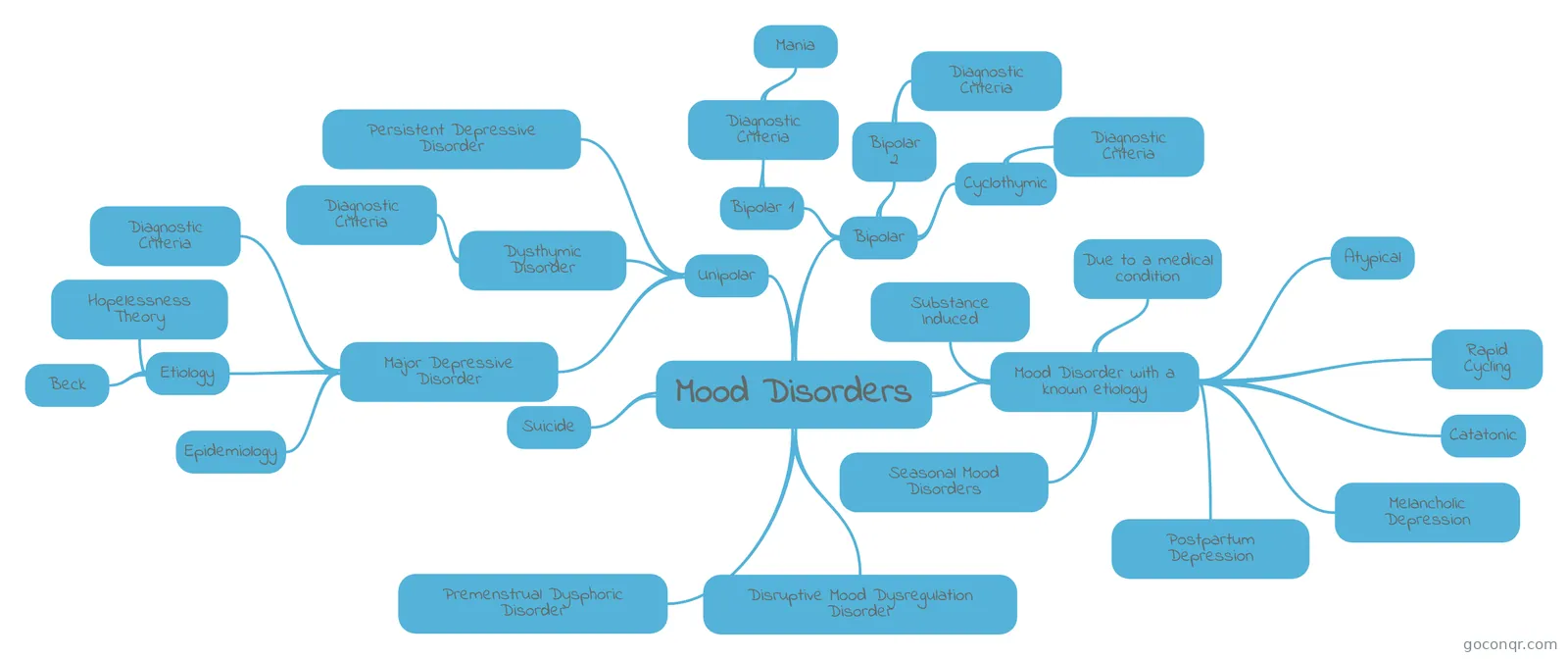 Mind map Mood Disorders
-
126 cardsExam 1 - Abnormal Psychology What are the 5 critical pieces of information related to the presenting problem?
Quizzes
See all 48 quizzes-
25 questionsChild Psychopathology Test C A 7-year-old boy in second grade displays significant delays in his ability to reason, solve problems, and ...
-
50 questionsAbnormal Psychology Final Exam (Ch. 5-8; 11-15) Marcus has been suffering from panic attacks in recent months. When he goes to his physician to find out wh...
-
70 questionsCHAPTER 17 What is the most recent edition of the Diagnostic and Statistical Manual (DSM)?
-
18 questionsApproaches Quiz- Psychology (A2) Which researcher investigated the psychodynamic approach?
-
51 questionsCognitive Psychology Chapter 4 Which is true of anxiety and fear?
-
38 questionsQuiz 2 Which of the following is not one of the five key areas of interest in clinical examination according to th...
-
20 questionsDefining Abnormality What is one word which will describe "Deviation from Social Norms"?
-
18 questionsClinical Psychology SZ occurs in 1% of the population
Mind maps
See all 204 mind maps-
Psychopathology as psychopathology psychology revision
-
Psychopathology
-
Psychology - Psychopathology: Phobias Overview
-
Mood Disorders
-
Edexcel, A2 Psychology, Schizophrenia Includes: symptoms, dopamine hypothesis, dopamine pathways explanation, genetic explanation, glutamate hypo...
-
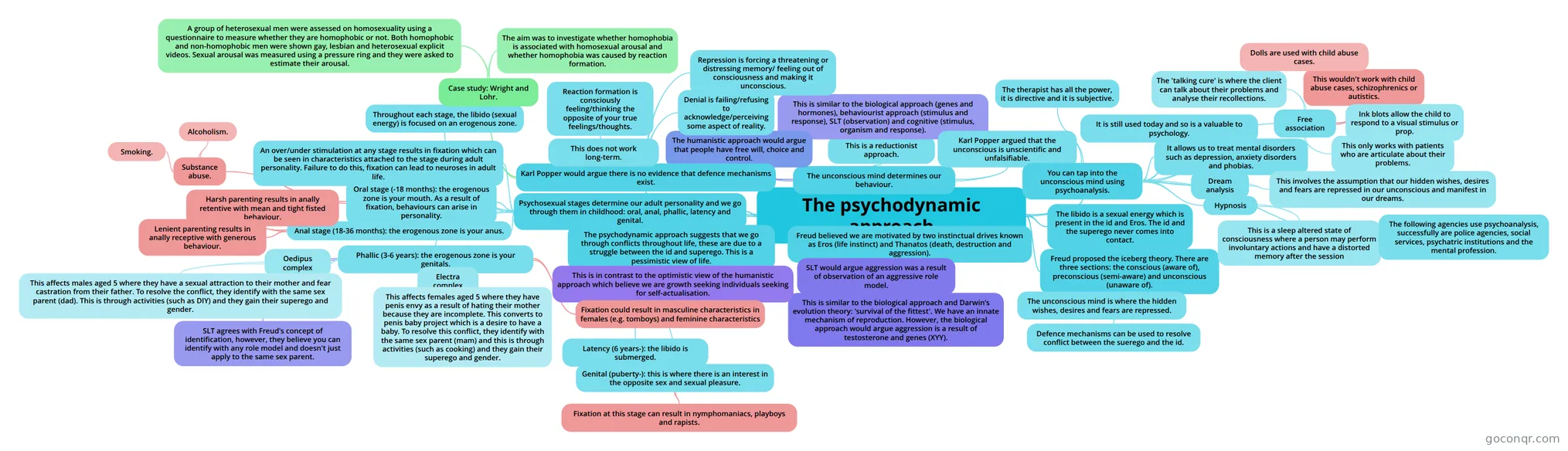 The psychodynamic approach
-
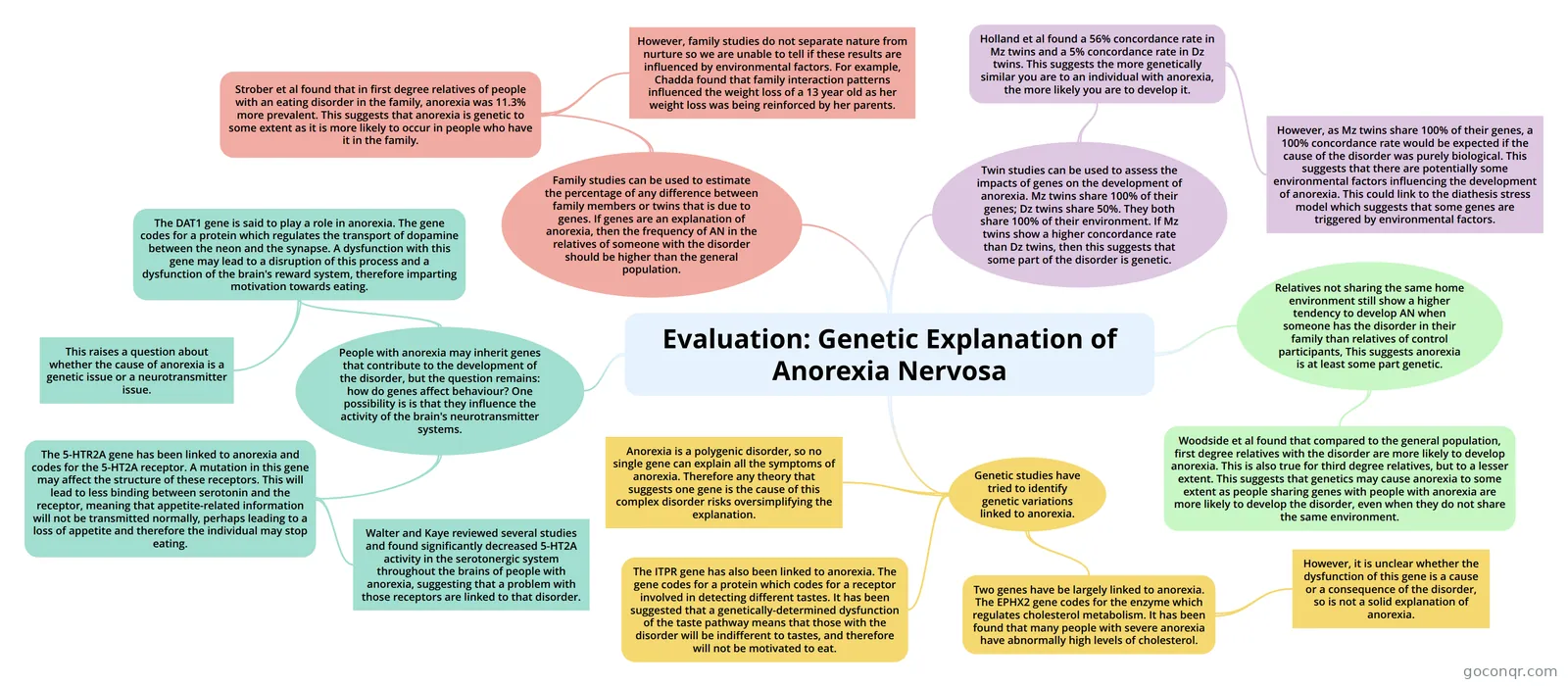 Evaluation: Genetic Explanation of Anorexia Nervosa
-
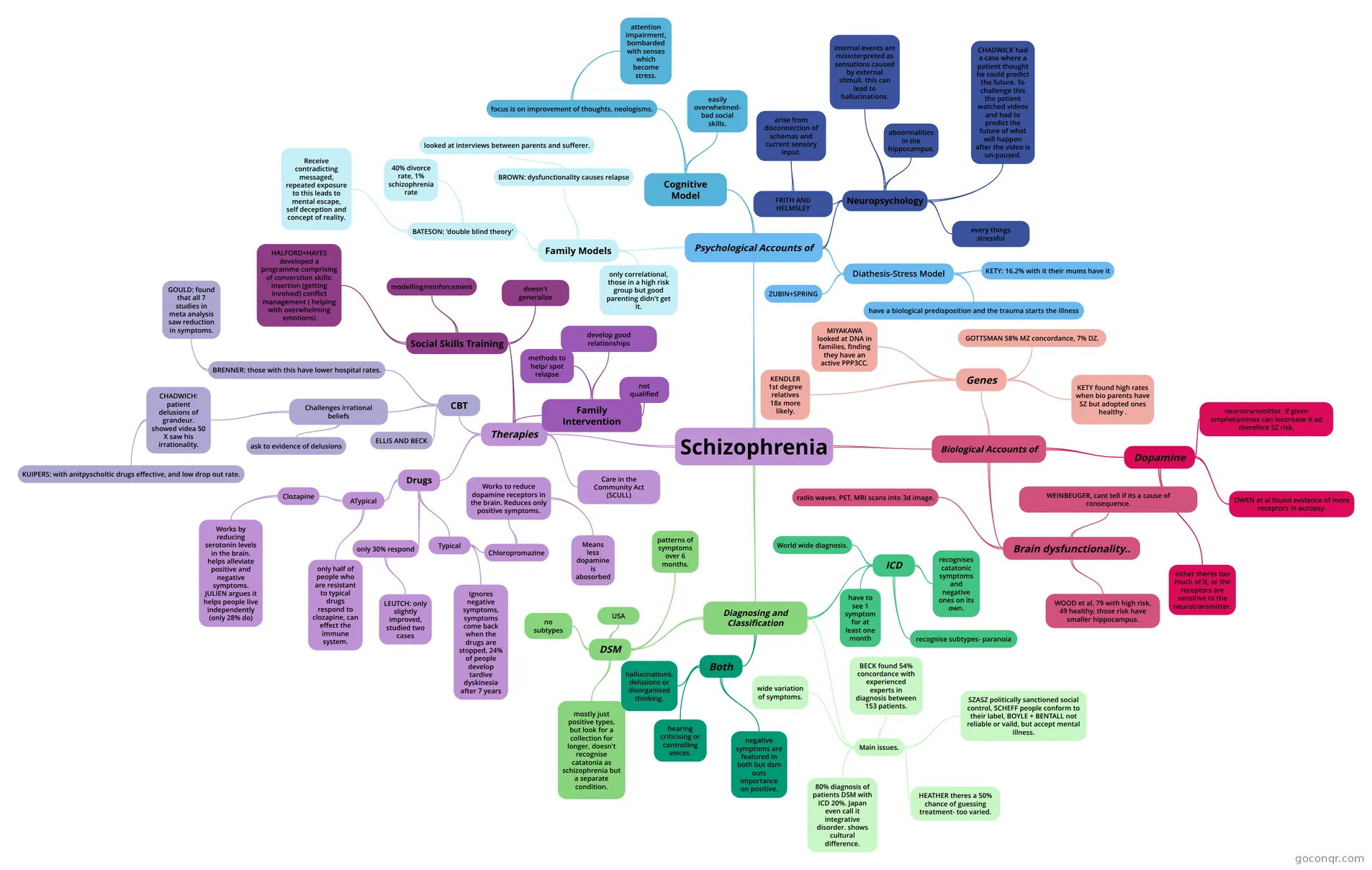 Schizophrenia not finished
Flashcards
See all 143 flashcards-
13 cardsPart B- Explanations of Phobias Explanations of phobias;
-
58 cardsAQA Psychology- Psychopathology Definitions of abnormality
-
126 cardsExam 1 - Abnormal Psychology What are the 5 critical pieces of information related to the presenting problem?
-
20 cardsAbnormality Q/A Explain how the therapist might use systematic de-sensitisation to help Hamish to overcome his phobia.
-
10 cardsPSYCHOPATHOLOGY - SLK756 PSYCHOTIC DISORDERS *Delusions *Hallucinations *Disorganised Thinking (Speech) *Disorganised or Abnormal Mo...
-
52 cardsSchizophrenia What is the definition of 'schizophrenia'?
-
33 cardsPsychology IB HL - Abnormality - Depression (Implementing Treatment) Depression 2: Implementing Treatment Biomedical Treatments of Depression - Antidepressants (AD).
-
24 cardsPsych 239 Tuesday Week 13 Warning Signs of Suicide
Flowcharts
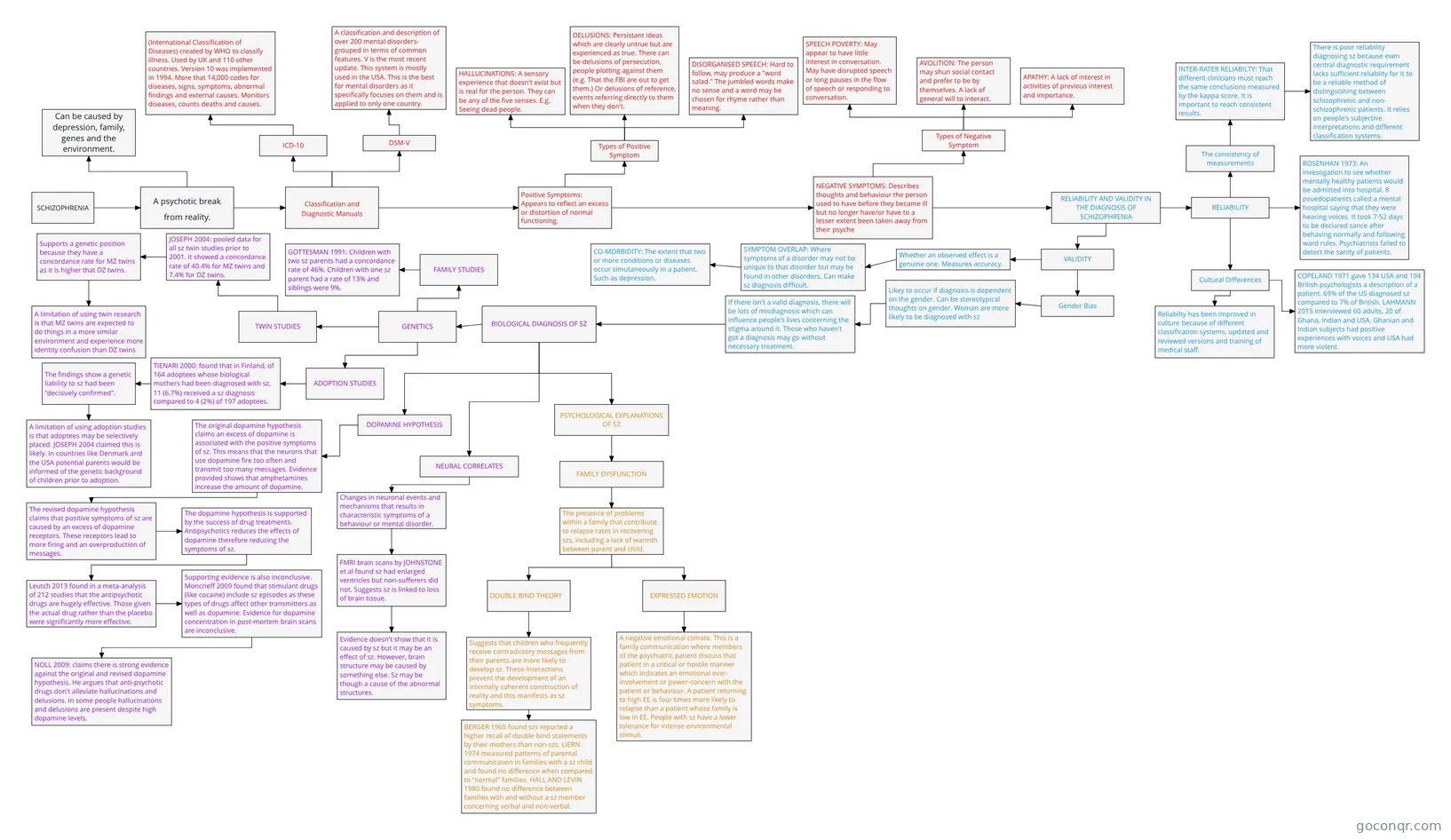
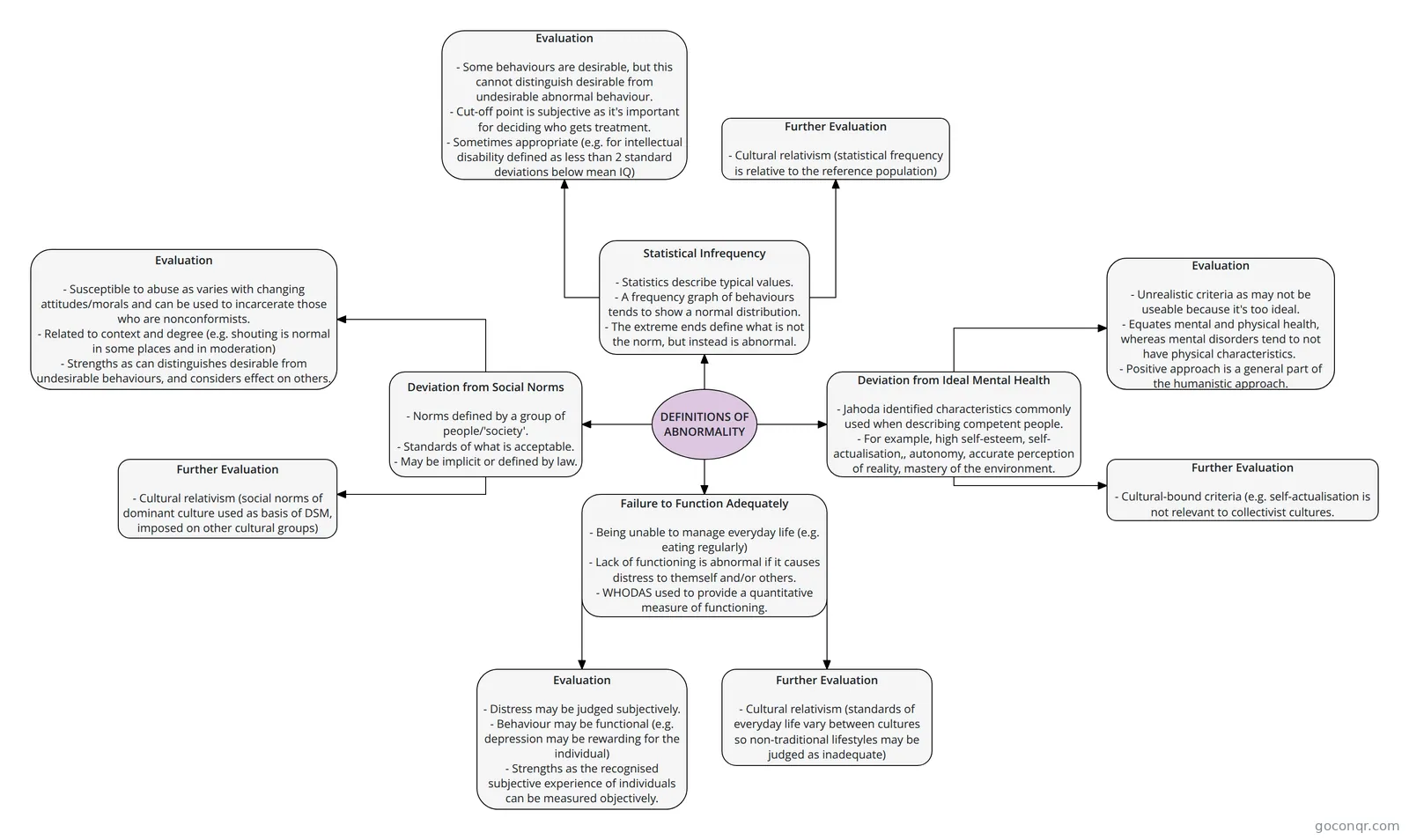
Notes
See all 32 notes-
Biological Approach to Explaining OCD Genetic Explanations:Genes are involved in individual vulnerability to OCD. Lewis observed that of his OCD patients, 37% had parents with OCD and 21% had siblings with OCD. This suggests that OCD runs in families alth...
-
Cognitive Approach to Explaining Depression Beck's Cognitive Theory of Depression:Beck proposed that it is a person's cognitions that make them more vulnerable to depression. He suggested 3 parts to this vulnerability.Faulty Information Processing:When depresse...
-
Outline and Evaluate the Behaviourist Approach to Abnormality Outline and Evaluate the Behaviourist Approach to AbnormalityThe main assumption of the biological approach is that all behaviour, normal or abnormal is learnt from the environment. This happens in three main ways. So...
-
Outline and evaluate the biological approach to psychopathology (12) The biological approach to psychopathology suggests that all abnormal behaviour has a physical cause. The biological model assumes that all mental disorders are related to some change in the body, and that mental diso...
-
Chapter 8 (Dissociative Disorders and Somatic-Symptom Related Disorders) Chapter 8 (Dissociative Disorders and Somatic-Symptom Related Disorders) Both types of disorders tend to be associated with stressful experiences, not direct expressions of anxiety Diss...
-
Psychopathology The definitions of abnormalityThe cognitive, behavioural and emotion characteristic of mental illness--------------------------------------------------------------------------------------------------------------------...
-
Psychology PSYA3 Clinical classifications and explanations of schizophrenia.Classifications (psychopathology- dominated by biology approach)- it assumes that mental disorders is similar to physical disorders, so it suggests that menta...
-
Depression The DSM-5 recognises four categories of depression; Major Depressive Disorder - severe but often short term depression Persistent Depressive Disorder - long term/recurring depression including sustained major depressi...
Slides
More Psychology topics
About Psychopathology and Mental Health
GoConqr OriginalWhat the resources cover
The page opens with the basics of abnormality. Two mind maps titled Psychopathology set out the definition of abnormality and deviation from social norms. Other maps and notes look at the failure to function adequately, statistical infrequency and ideal mental health, and the notes on the three definitions of abnormality cover both description and evaluation.
From there the page moves into specific conditions. You will find phobias, OCD, depression, schizophrenia, bulimia nervosa, anorexia nervosa and ADHD. The Mood Disorders mind map separates unipolar from bipolar conditions and lists Bipolar 1, Bipolar 2, Major Depressive Disorder and Persistent Depressive Disorder.
Where to start
- Begin with the definitions of abnormality mind maps to get the key terms in place.
- Move to the AQA Psychology- Psychopathology flashcards, which cover definitions and types of phobias.
- Choose one condition at a time. For OCD, read the notes on the biological approach to explaining OCD, then look at the OCD- Psychopathology Revision mind map.
- Finish with evaluation maps, such as the one on DSM and ICD and diagnosis, and the Rosenhan 1973 maps.
Using quizzes and maps together
Read a mind map first, then close it and take a quiz on the same topic. The Phobias quiz and the quiz on the biological approach to explaining and treating OCD suit this well. Anything you miss tells you which branch to go back to. University students can try the Abnormal Psychology Final Exam quiz and the Chapter 15 quiz on therapies for psychological disorders.
Essay practice
For longer answers, the notes titled Outline and evaluate the biological approach to psychopathology and the AQA A Level 16-marker plans show how an answer can be structured. Teachers can use them as ready-made examples for a class.
Where it sits
This unit belongs to the Psychopathology and Treatment strand of Psychology. It looks at both how disorders are described and how they are explained and treated.
Open a mind map you like, and then try a quiz to see what has stuck.
Frequently asked questions
Which resource should I open first?
Start with the Psychopathology mind maps on definitions of abnormality. They set out the key terms, including deviation from social norms, which later topics build on. Once those feel familiar, move to the AQA Psychology- Psychopathology flashcards and then choose a condition such as phobias or OCD.
Which conditions do the mind maps cover?
The mind maps cover phobias, OCD, depression, schizophrenia, bulimia nervosa and mood disorders, including unipolar and bipolar types. There are also evaluation maps on anorexia nervosa, DSM and ICD diagnosis, and the Rosenhan 1973 study, so you can go from description to criticism.
Which exams and levels do these resources suit?
The resources mention A-level Psychology, GCSE Psychology, AP Psychology and IB Psychology, including AQA, OCR and Edexcel A-level material. Many others are university abnormal psychology flashcards and quizzes. Check each resource's title and content to see whether it matches your course.
Are the resources free to use?
Yes. Every resource on this page is free to open, study and take, with no account needed. They were made by GoConqr users, not by GoConqr. A free account also saves your quiz scores and lets you make your own quizzes, mind maps, flashcards and notes.
Is there anything for essay-style questions?
Yes. The notes Outline and evaluate the biological approach to psychopathology and Outline and Evaluate the Behaviourist Approach to Abnormality are written as essay answers. There are also 16-marker plans for AQA A Level Psychology, which show how an extended answer can be organised.
What if I cannot find my topic?
Look under a nearby heading first, because many topics appear in several formats, such as notes, flashcards and slide sets. If something is still missing, you can make your own mind map, flashcards or quiz and keep it alongside the community resources.