
Mapa mental
Enzymes
Conteúdo do mapa
Enzymes
Biological catalysts - proteins that are only made by the cell and speed up the rate of reaction without being used up.
- Globular proteins (tertiary structure)
- Because each protein has a specific shape, it allows enzymes to work by the lock and key hypothesis
- Held by hydrogen bonds, disulphide bridges, ionic bonds and hydrophobic interactions
- Globular proteins (tertiary structure)
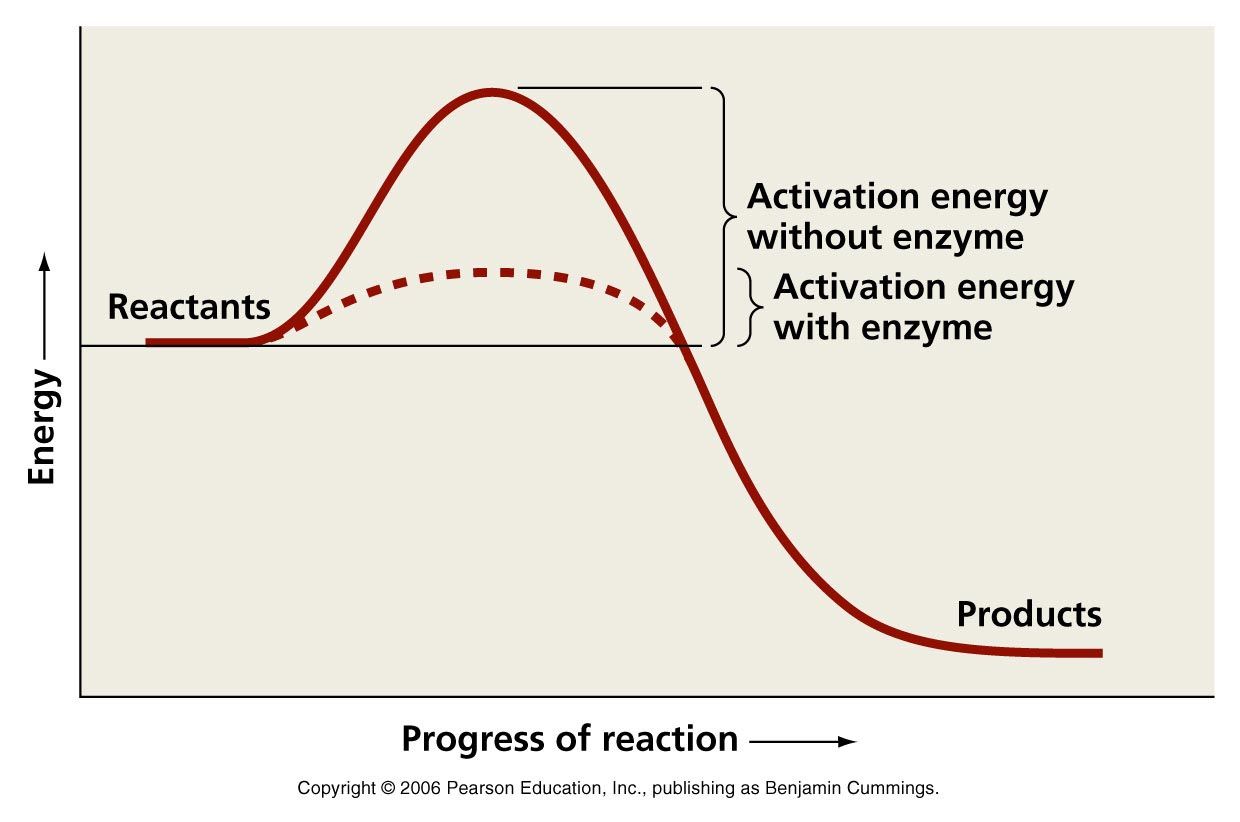
Activation energy: is the energy required to start a reaction
- enzymes lower the activation energy required for a biological reaction to occur.
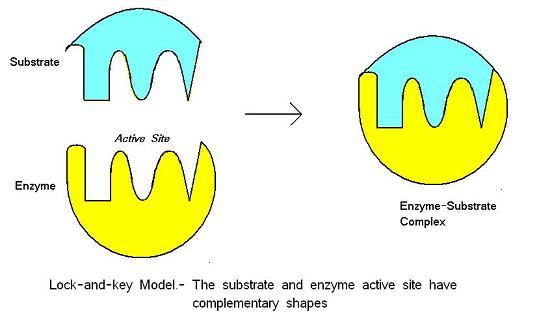
The Lock and Key Hypothesis
- The active site of an enzyme is always complementary to the shape of the substrate
- When they both collide successfully it results in an enzyme-substrate complex being formed
- This lowers the activation energy and allows products to form
- When they both collide successfully it results in an enzyme-substrate complex being formed
- The active site of an enzyme is always complementary to the shape of the substrate
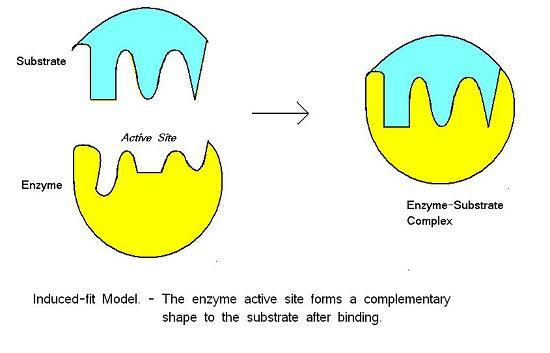
The Induced Fit Model
- The enzyme's active site changes shape and enfolds the substrate molecule
- It places pressure on the substrate molecule and forces a reaction to happen with more energy
- The enzyme's active site changes shape and enfolds the substrate molecule
Factors affecting enzyme activity
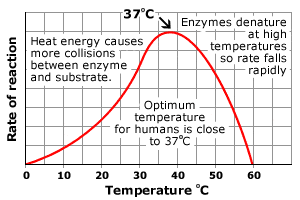
- Temperature
- Low temperatures: enzymes and substrate molecules move slowly and reactions take a long time to happen
- As temperature increases, the enzyme and substrate molecules gain kinetic energy, making them more likely to have successful collisions
- Temperatures higher than the optimum cause the bonds holding the tertiary structure to break, this changes the shape of the specific enzyme and substrate molecule- it is denatured
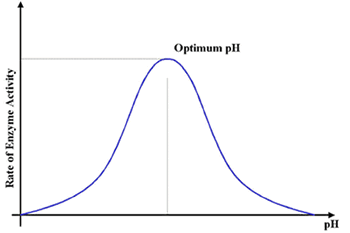
- pH
- Changes in pH can affects ionic and hydrogen bonds
- Small deviations from the optimum are reversible and inactivate the enzyme
- Large deviations from the optimum pHcause denaturation
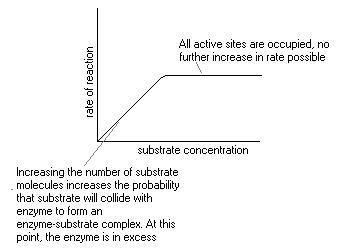
- Substrate concentration
- As substrate concentration increases so does the rate of reaction
- The graph levels out at a maximum rate as all the active sites are full
- The point where the graph begins to level out is the point of saturation, before that point the substrate concentration is the limiting factor, after that point it is the enzyme concentration that is the limiting factor
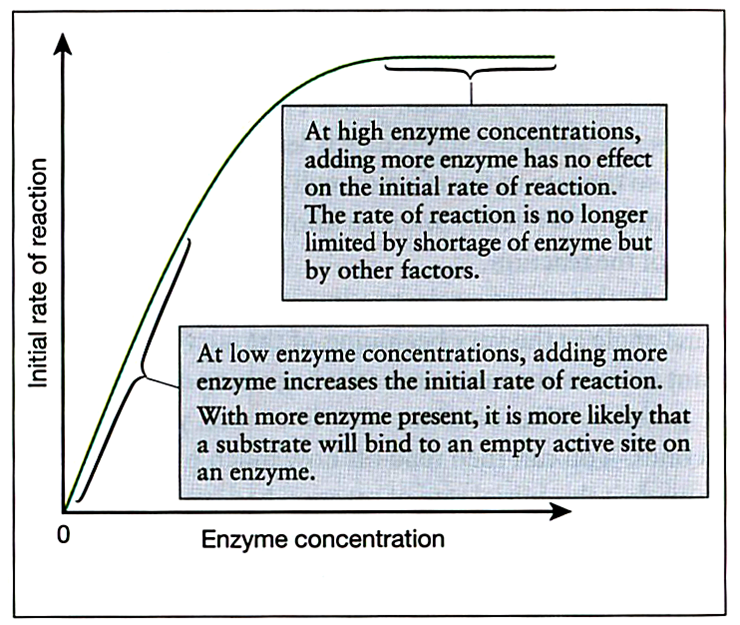
- Enzyme concentration
- As the concentration of enzymes increase, so does the likelihood of successful collisions
- The rate increases up until the substrate concentration limits the it
- Temperature
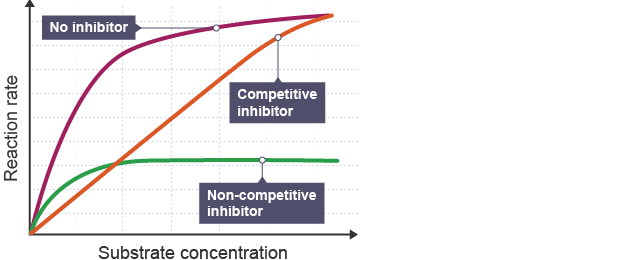
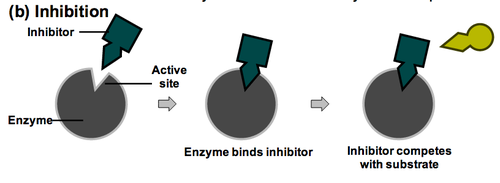
Inhibitors- molecules that slow down the rate of reaction in enzyme controlled reactions
- Competitive
- Molecules that are structurally similar to the enzymes normal substrate - it has a complementary shape to the enzymes active site.
- The inhibitor can fit into the active site and block it, temporarily stopping the substrate to bind to the enzyme
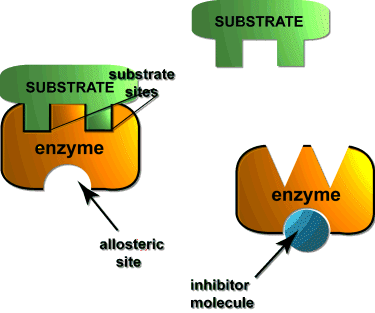
- Non-Competitive
- These molecules aren't similar to the substrate and therefore aren't complementary to the enzyme
- They bind to another part of the enzyme- the ALLOSTERIC SITE
- When bonded to the allosteric site, it causes the enzyme active site to change shape, so enzymes can no longer catalyse reactions as the substrate can't fit into it
- The enzyme is always affected and overall less enzyme-substrate complexes are formed, even at high substrate concentrations
- Competitive
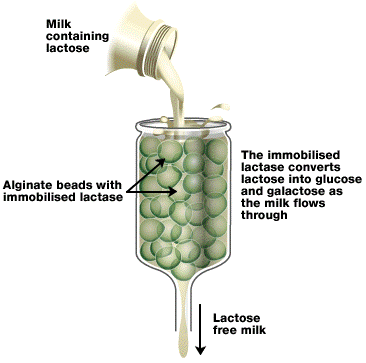
Imobilised Enzymes
- enzyme fixed in an inert matrix
- Uses
- Making lactose for milk
- making high fructose corn syrup
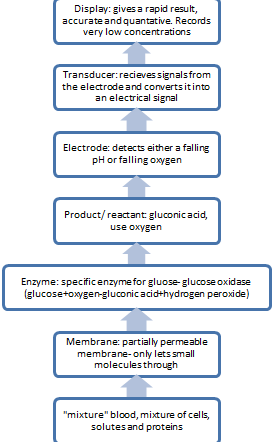
- biosensers
- a device that measures the concentration of a specific molecule in a mixture (usually bloods or urine - coloured fluids)
- MAIN USE: diagnosis and monitoring of blood glucose in diabetes
- a device that measures the concentration of a specific molecule in a mixture (usually bloods or urine - coloured fluids)
- Advantages
- Product isn't contaminated with enzyme: no need to seperate the product and enzyme
- Enzyme is more stable at higher temperatures and a wider range of pH's
- Enzyme can be reused
- Disadvantages
- If the substrate has to diffuse through the bead, its slower
- Bead size (smaller beads are better as there's a bigger surface area in relation to volume
- flow rate (if its too slow it wastes time, if its too fast reactions don't have enough time to work)
Imagens e arquivos do mapa
Informações
- Descrição
- Mapa Mental sobre Enzymes, criado por Erum Jamil em 14-11-2015.
- Criado por
- Erum Jamil
- Visualizações
- 0
- Avaliação