
Notas
Germany 1918-39 - created from Mind Map
Conteúdo das notas (1)
Página 1
The Weimar Republic
Given the name 'Weimar Republic' because the base was set in the countryside of Weimar, this was because Berlin was unstable and full of revolts.
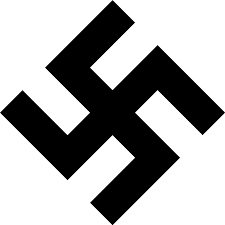
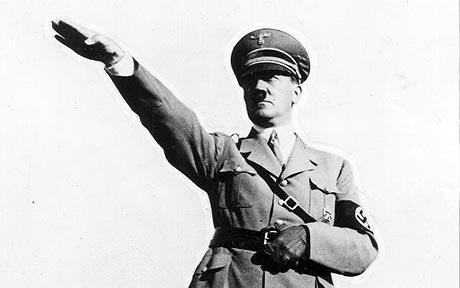
The Nazi Party
Early Problems 1919-23
Enemies
In 1919 the republic had many enemies. Was it sensible to give rights to those who wanted to destroy it?
The army generals were the same as the ones who had fought under the kaiser. They wanted the Kaiser to return.
The Judges were the same as the ones who had served under the Kaiser. They had sympathy with those who were against the Republic.
Coalitions
Proportional representation encouraged lots of small parties. It was difficult for one party to get majority, so goverments formed coalitions. This led to a weaker goverment filled with conflicted views.
Presdient's Power
The President had too much power; article 48 of the constitution said that in an emergency he/she could rule by decree.
The TOV
Opponents of the TOV blamed the new goverment for signing the TOV and called them 'The November Criminals'.
A word tossed around about the TOV was 'Dolchstoss' it referenced that the new republic had stabbed the country in the back.
The country could not afford to pay reparations. (6.6 billion) They had already been run down by the war and people were already facing poverty.
Many people claimed that if the republic hadnt signed the treaty that Germany could have won the war. This of course, was not true.
Opposition on the 'Left'
Who?
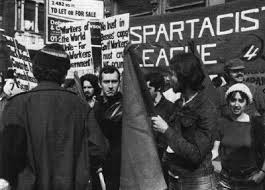
The Spartacist League
Communists in Germany known as the Sparticists, wanted a revolution like Russia 1917.
When? Where?
In January, 1919, activists led by Karl Liebknecht and Rosa Luxemburg seized power in Berlin.
Consequences:
Within weeks, the revolt had been crushed by regular troops and ex-soliders (Freikorps). The communist leaders were assassinated.
Opposition on the 'Right'
Who & What?
The Kapp Putsch
The Kapp Putsch were german nationalists who felt that democracy was weak. They wanted to see a strong Germany led under one leader.
When & Where?
In March 1920, Dr. Wolfgang Kapp (an extreme nationalist) and a bunch of freikorps seized power in Berlin.
Consequence:
Kapp was not supported by the workers in factories. The workers, by influence of Ebert, organized a strike in Berlin. Within hours the German capital had came to a halt, all gas, water and coal stopped.
After 4 days, Kapp and his supporters gave up and fled. Ebert returned to power.
French Occupation of the Ruhr
By 1922, Germany could no longer afford to pay reparations and announced it. They asked for more time but was declined by the French Goverment.
In 1923, the french and belgian goverments sent troops into the Ruhr, the centre of german industry.
Consequences:
The German workers went on strike but it was to no avail. The french set in their own workers, and arrested the leaders of the strike.
The German economy ground to a halt.
Hyperinflation
The problems of making the reparation encouraged the republic to print more money. However, printing more money caused prices to rise out of control.
Consequences:
Peoples savings became worthless.(This hit the middle class partically hard).
People on fixed incomes, such as pensioners, suffured badly.
Prices rose much faster than incomes, so people starved as they couldnt afford food.(This hit the working class the hardest)
Recovery Under Stresemann 1924-1929
Economic Recovery
Recovery in International Relations
Political Stability
1924-29 saw more stable goverments. The national socialists joined the coallition for the first time since '23, which showed that the middle class parties were no longer suspicious of them.
Extreme parties, such as the Nazis, lost support.
Problems
Germany depended on American loans.
Farming suffured from depression throughout the 20's because of falling food prices.
Communist seats in reichstag went from 45 in 1924 to 54 in 1928.
1925, Hindenburg was elected as President. He had served under the kaiser and disliked the republic.
The fall of Stresemann and The Great Depression
The Rentenmark
1925, French left the Ruhr
1928, industrial leves = pre-war levels
1930, Germany became a leading exporter
1929, The Young Plan
Reduced reparations by 67%
1924, The Dawes Plan
In return for Germany paying the reparations once more, the USA agreed to lend 800 marks.
1928, Kellog-Briand Pact
Signed with 64 other nations that the countries would keep their armies for self defence but solution of all disputes shall only be sought by peaceful means.
1926, League of Nations
Germany was accepted into the L of N
1925, Locarno Pact
The locarno pact estaballished the borders between Germany and France/Belguim.
Unemployement and Rise of Extremisim
From 1928 to 1930, German unemployement rose from 2.5 million to 4 million.
Therefore by 1930, communists increased their seats from 54 to 77.
Nazi support increased from 12 in 1928 to 107 in 1930. They were the second largest party in the Reichstag.
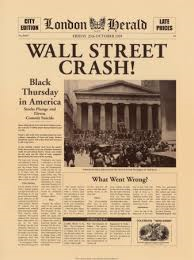
Effects of the Wall Street Crash 1929
Many American banks were forced to reclaim their loans. This Bankrupted many German Buisnesses and many German people lost their jobs.
1919, Hitler joins the 'German Workers Party'.
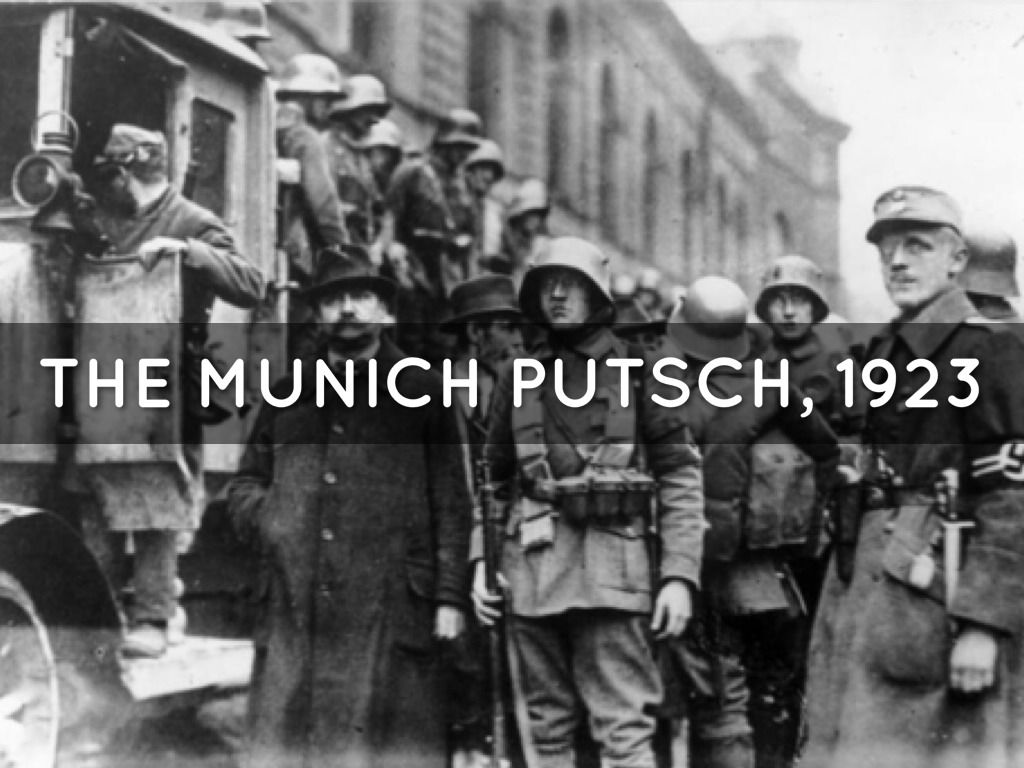
Munich Putsch, 1923.
The lean years, 1924-29
Increased support, 1929-33.
Nazi Dictatorship 1933-39
1921, he changes its name & becomes leader.
The name is changed to National Socialist's German Workers Party (Nazi's) and Hitler replaces Anton Drexler.
1st Decisions
25 point programme
This included the promise to reverse the terms of the TOV, destroy communism, and make Germany great. It also included attacking the Jews, and making them a scapegoat for WW1.
Support
By 1922, the Nazi party had 3,000 members, all of which had been enchanted by Hitler's speeches.
Founding of the SA
Hitler founds his private army, the Sturm Abteilung, who were used to protect Nazi meetings and attack opponents.
Reasons
What Happened
Consequences
Hitler recieved the minimum sentence and many others recieved light sentences too.
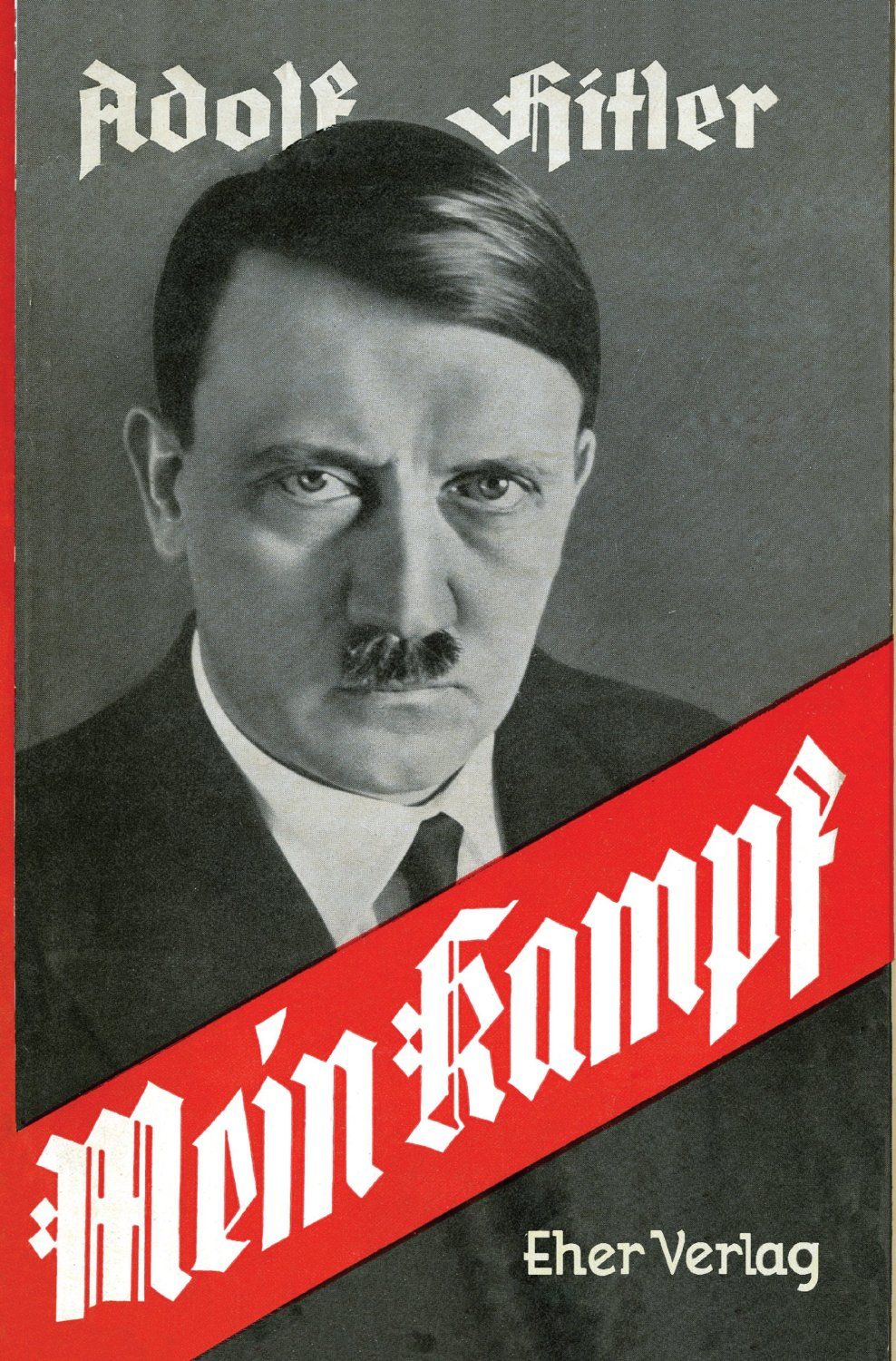
Hitler served his sentenced in a comfortable Fortress and spent his time writing his memoirs. These memoirs were published as a book, 'Mein Kampf'.
Hitlers trail had given him a national audience and the chance to get publicity.
Unpopularity of W. Republic
Due to French Occupation of The Ruhr & Hyperinflation.
1922, Italian March
In 1922, the Italian leader, Benito Mussolini, ad seized power after a march in Rome. This inspired Adolf.
Support
Hitler was convinced he would get popular support in munich.
November 8th 1923
Hitler forced members of the Bavarian Goverment to join him, at gunpoint. Their leader, Von Kahr, was reluctant to do so and alerted the army and police.
November 9th 1923
Bavarian police opened fire on Nazi SA at their march and 16 Nazis were killed.
November 10th 1923
Hitler and Ludendorff were arrested and charged with high treason.
Optimistic View
Hitler had learned from the mistake of Munich Putsch and was determined to achieve power through legal methods.
Hitler re-organised the party and made it more efficient.
Pessimistic View
The party only won 12 seats in the election of 1928.
There had been quarrels and disagreements in the party during Hitlers period in prison.
Advantageous 'Depression'
The depression caused a period of chaos in Germany.
No goverment could seem to solve Germanys economic crisis and by 1932 unemployement stood at 6 million. Therefore, Hitler became popular by promising 'work and bread'
1932-33
During the general election of 1932, the Nazis became the largest reichstag party and hitler demanded to be chancellor.
Hindenburg was suspicous of Hitler and refused. Instead he appointed Franz von Papen. To achieve his aims, von Papen arranged a general election (1932). The Nazis lost some support but Papen did not get the support he needed.
It was clear Hindenburg couldnt work witha chancellor who did not have majority support. So, in December 1932, Hindenburg replaced von Papen with von Schleicher. Within a month von Schleicher was forced to resign.
Hindenburg and Papen decide to put Hitler as chancellor and claim they can control him once he is in power.
January 20th 1933, Hitler became German Chancellor and Papen,Vice-Chancellor
Removal of opposition
The Reichstag Fire, 1933
During the election campaign, on the night of february 1933, a communist called Marinus Van der Lubbe set fire to the Reichstag Building. The Nazis were quick to blame the communist paty and Hitler persuaded Hindenburg to pass an emergency law restricting personal liberty.
Using this law, thousands of communist supporters were thrown into prison.
The Enabling Act, March 1933
Hitler passed the Enabling Act, the act that allowed him dominant control for 4 years, by:
*Ordering the SA to intimidate the opposistion
*The 81 Communist members of the Reichstag were expelled
The enabling act was passed 441:94.
The Night Of Long Knives, 1934
Hitler felt he couldnt trust the SA because they were under persuasion of Ernst Rohm. As well as this, he knew that members of the SA looked to him to follow a socialist programme. Yet he knew he couldn't do this as he would lose support from wealthy industralists.
Therefore, on June 30th 1934, Hitler assassinated his enemies and founded the SS. It is estimated that over 400 people were killed.
The Police State
In June 1933, Germany became a one party state. All other parties were banned and people who critized the party were imprisoned- or worse.
There was no freedom of speech in fear of the gestapo (secret police) hearing.
The Law Courts
There was no trial by jury and all judges were Nazis. The court was controlled by Hitler.
The Churches
The churches were disliked by Hitler because their beliefs contrasted some of his own and they were not loyal to him, but instead loyal to God (or the pope). So Hitler set up the Nazi Reich Church (to replace protestants) and Catholics were persecuted.
Censorship & Propaganda
Joseph Goebbels was in chage of propaganda and censorship.
All newspapers were censored by the goverment and were only allowed to print stories favourable to the Nazis.
Radio was controlled by the goverment. Cheap radios were manufactured so that most germans could afford one and hear stories favourable to the Nazis.
The Nazis took control of the German film industry. Films often showed great German hereos defeating their enemies. Cartoons were used to belittle the Jews.
The Nazis used sporting events such as the 1936 Olympics to imply the superiority of the 'Aryan Race'
Young People
Teachers had to swear a loyal oath to Hitler and promote Nazi ideals in the classroom.
The curriculum was changed to prepare students for their future roles. With boys the educational emphasis was on preparation for the military. Girls took needlework and home crafts, especially cookery, so the women would be good house wives and mothers.
1/6 of the timetable was dedicated to Physical Education (PE)
New studies such as racial studies were introduced.
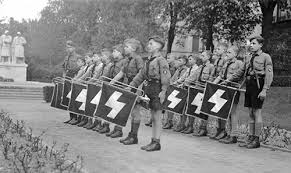
From 1936 membership of the Hitler Youth was compulsory and their was 7 million members.
Women
Womens roles were summarised in the 3 k's - kinder, kuche, and kirche (children, kitchen, and church).
They reduced the amount of women in employement by introducing acts such as the 'foundation of life' and married couples were given loans (which they didnt have to pay back a certain percent for every child they had).
Employement & Standard Of Living
Positives:
There was full employement.
The 'Strength Through Joy' movement organised lesuire activities for good workers.
'Beauty With Labour' improved working conditions.
Negatives:
The Labour Front replaced trade unions. Workers were not allowed to leave their jobs without goverment permission and strikes were made illegal.
Jews and married women were forced to leave their jobs.
Most work was voluntary work and consisted of hard labour and little pay.
Persecution of Minorities
The Nazis believed in the superiority of the Aryan race. They persecuted members of other races,and many minority groups such as gypsies, homosexuals and mentally & physically disabled people.
In 1933, the Nazis organised a boycott of all Jewish buissiness's.
In 1935, the Nuremberg Laws were introduced. Jews could no longer be German Citizens. Marriages between Jews and Aryans were forbidden. Jews had to wear a yellow star on their clothing.
Kristallnacht 1938
Early november 1938, a polish jew shot a german diplomat in Paris. Hitler ordered an immediate attack on jews and their property in Germany. Between the 9th and 10th thousands of jews were killed
Concentration Camps
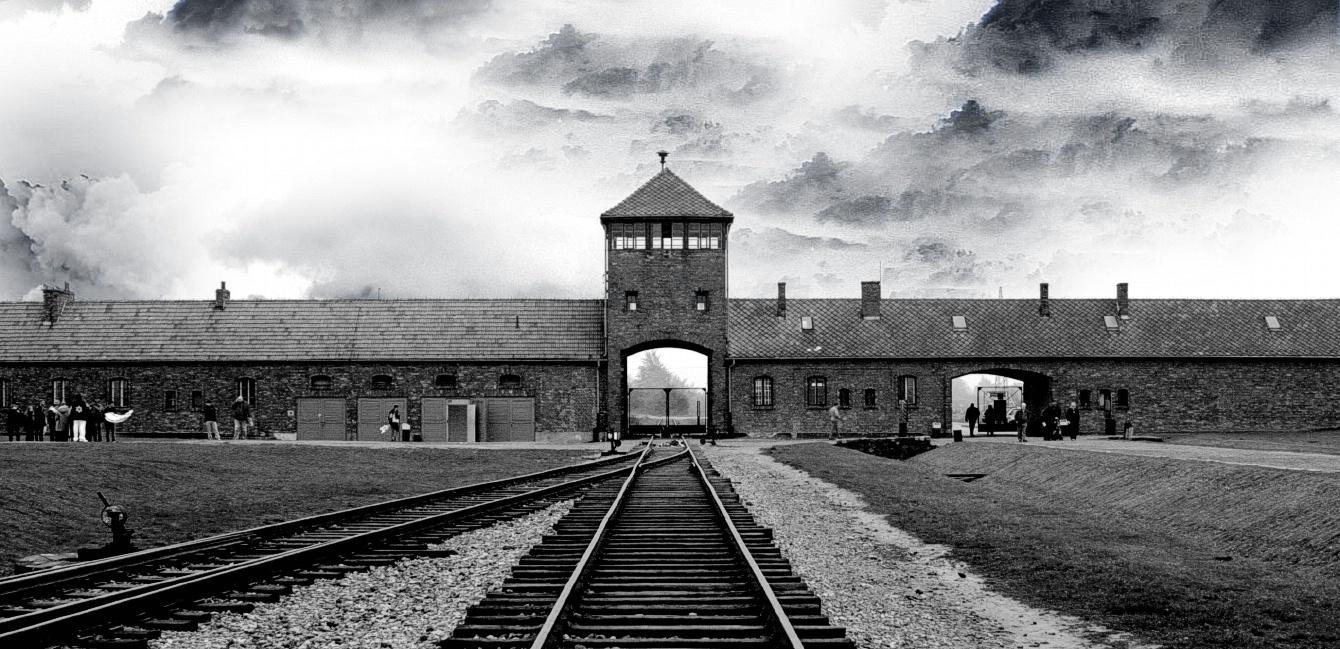
The first concentration camp is opened in Dachau 1933.
Over the years millions of innocent people were murdered at these camps.
Thousands of Jewish Businesses were attacked and 200 synagogues burnt down.
Informações
- Descrição
- A mind map showing the stages of Germany from the rise and fall of The Weimar Republic to the rise and fall of the Nazi Dictatorship. (1918-1939).
- Criado por
- Nathan Leeland
- Visualizações
- 1
- Histórico
-
- Criado por Cam Burke · 10 jun 2018
- Copiado por Nathan Leeland · 10 jun 2018
- Copiado para Nota por Nathan Leeland · 10 jun 2018
- Avaliação