
Key Profiles: Stuart Britain and the Crisis of Monarchy in 1603-1702
Slides do conjunto (21)
-
- James Stuart became King James VI of Scotland in 1655. In 1603, when Elizabeth I, the last Tudor monarch, died childless, James succeeded to the English throne as King James I, having a claim through his great-grandmother, Margaret Tudor, who was the sister of Henry VIII and had married the Scottish king, James IV. A successful ruler, James I was pragmatic and practical enough to realise that he needed to work with Parliament. He did, however, dissolve Parliament several times in frustration during his reign.
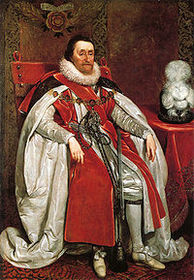
- Legenda: James I
-
- Charles I was the younger son of James I, with whom he had a strained relationship. His older brother, Henry, was increasingly viewed by the English political elite as the model prince, partly due to increasing dissatisfaction with James I. Henry died 18 years, and Charles became heir to the throne at the age of 11. Charles was temperamentally unsuited to kingship and was unprepared for the role. He did not get along with Parliament.
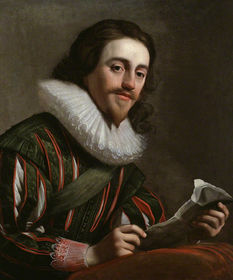
- Legenda: Charles I
-
- THE DUKE OF BUCKINGHAM
- Buckingham came to prominence in 1616 because James I liked him, From 1620 he became closer to James' son, the then Prince Charles. In 1623, the prince and Buckingham travelled together to Madrid in an attempt to secure a marriage between Charles and the Spanish princess, Maria. This experience seems to have bound them closer, and when James died in 1625, Buckingham became one of the new king Charles I's favourites. As Lord High Admiral, Buckingham showed himself to be an effective administrator, but he was also seen as responsible for foreign policy failures. Buckingham was defended by Charles I when he was attacked by Parliament, but in 1628 Buckingham was assassinated by a disgruntled soldier.
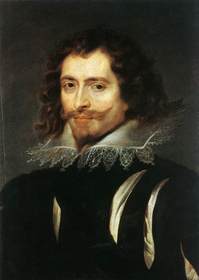
- Legenda: George Villiers
-
- THE EARL OF SALISBURY
- Was the son of William Cecil, Elizabeth I's chief minister. As Elizabeth's Secretary of State from 1596 until her death in 1603, he played an important role in organising James' accession to the English throne. Because Cecil was physically deformed, James I referred to him in derogatory terms, sometimes calling him his 'beagle', but there can be little doubt about Cecil's importance up to 1612. While the Scots may have dominated James' favour, Cecil ran James' government. He came up with the idea of the Great Contract of 1610 to reform Crown finances, although he ultimately failed to effect it.
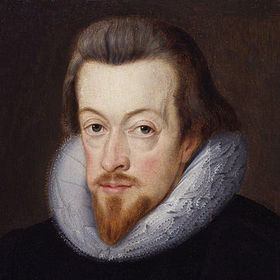
- Legenda: Sir Robert Cecil
-
- Daughter of Henry IV of France, Henrietta Maria married Charles I in 1625. The marriage was part of James I's foreign policy. After trying and failing to secure a marriage between his son Charles and a Spanish princess, which James believed would help him negotiate a peace for Europe and the Palatinate, he instead secured a marriage with the French, the main rivals of Spain. This move signalled a more aggressive stance against Spain as part of the attempt to recover the Palatinate.
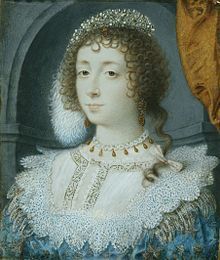
- Legenda: Henrietta Maria
-
- Was a philosopher, scientist and statesman. He became Lord Chancellor under James I but was impeached in 1621. He is known for developing the scientific method, which placed emphasis on the importance of experimentation to scientific understanding.
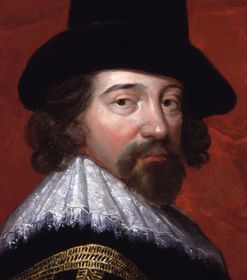
- Legenda: Sir Francis Bacon
-
- Was a lawyer and MP. He opposed absolutism. He was Speaker of the House of Commons (1592-1593), Attorney General (1594-1606), and Chief Justice (1606-1613). Coke believed in the common law, which limited the authority of the monarchy. Coke influenced the Commons' Protestation of 1621 and the limited vote of tonnage and poundage to Charles I in 1625. He opposed the forced loan of 1626. After helping draft the 1628 Petition of Right, Coke retired.
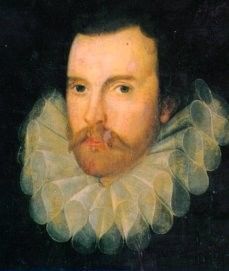
- Legenda: Sir Edward Coke
-
- John Eliot emerged alongside Edward Coke and Thomas Wentworth as the leading critic of Buckingham, and thereby Charles, in the parliaments of 1625 to 1629. Many MPs regarded Eliot as going too far, as he was involved in both the presentation of the Petition of Right and Three Resolutions. Charles thought of Eliot as one of the leading 'fiery spirits'. In 1629, Charles put him in the Tower of London and left him there until he died in 1632.
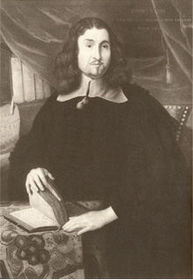
- Legenda: John Eliot
-
- Although a prominent opponent of the forced loan of 1626, Wentworth actually went out of his way to submit to the king during his confinement, paving the way for his appointment as President of the Council of the North in 1628 and as Lord Deputy of Ireland in 1632. Recalled to England in 1639 to deal with the brewing crisis in Scotland and England, Wentworth became Charles' chief advisor and was appointed Earl of Strafford, Lord Lieutenant of Ireland, and Lieutenant-General of the army. He advised Charles to call what was to become the Short Parliament (which convened in April 1640) to help him crush the Scots.
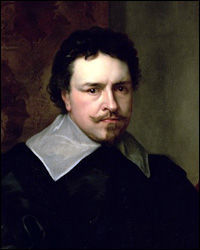
- Legenda: Thomas Wentworth
-
- FIRST VISCOUNT SAYE AND SELE
- William Fiennes was a strongly Protestant peer heavily involved in colonisation plans with Lord Brooke in North America and the Caribbean. In 1630, with Brooke and the Earl of Warwick, he founded the Providence Island Company to colonise a small island in the West Indies. This company would be seen as a centre for a network of opposition to Charles and Laudianism. John Pym acted as the company's treasurer. Fiennes was one of the English peers who had contacts with the Scots, recognising that their military force would lead to an English Parliament and thereby give the Political Nation a legitimate forum for voicing their grievances.
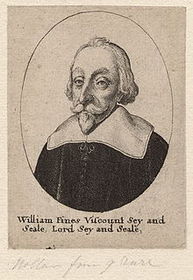
- Legenda: William Fiennes
-
- A minor member of the Buckinghamshire gentry, Hampden became an MP in 1621 when he became close to Sir John Eliot, one of Charles I's leading opponents of the time. Hampden refused to pay the forced loan of 1626 and was briefly imprisoned. In 1635 he refused to pay ship money. He was prosecuted by Charles I in 1637 for this refusal, and his trial made him a leading public opponent of the regime. Such had his stature become that in January 1642, Hampden was among the five men whom Charles regarded as his leading opponents and marched into Parliament to arrest. Hampden died at Chalgrove Field, a Civil War battle, in 1643.
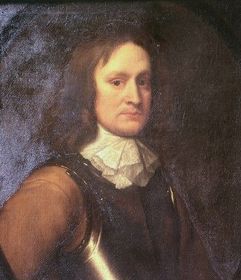
- Legenda: John Hampden
-
- FOURTH EARL OF BEDFORD
- Bedford was a moderate politician who wanted to participate in Charles' government in the House of Lords in order to ensure 'good government'. He was appointed as one of Charles' privy councillors in February 1641 and took a key role in the proposed financial settlement for the royal income. This settlement would have meant that Charles would not need to exploit his prerogative, but Charles was not willing to cooperate.
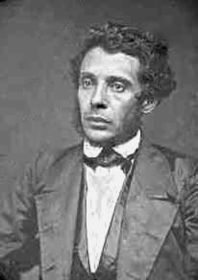
- Legenda: Francis Russell
-
- FIRST MARQUIS AND FIFTH EARL OF MONTROSE
- As well as being a leading member of the Scottish nobility, Montrose took a leading role in the Scottish Kirk in opposing the imposition of Laudianism. He signed the National Covenant and fought in the Convenanter armies in 1639 and 1640. His concern at the religious radicalism of others in the Convenanting movement led to him seeing Charles as a means of stopping the Scottish Revolution going further.
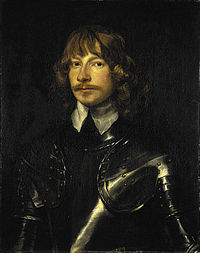
- Legenda: James Graham
-
- EARL OF ARGYLL
- A Presbyterian and head of the Campbell clan Argyll was a Gaelic Highland chief. The centre of his power was the western Highlands. Part of Argyll's support of the Convenanting movement came from the traditional Campbell rivalry with the MacDonalds and MacDonnells who were led by the Catholic Earl of Antrim. Charles had considered using Antrim against the Convenanters and this had made Argyll more convinced in his stand against the king. He was made Marquess in 1641.
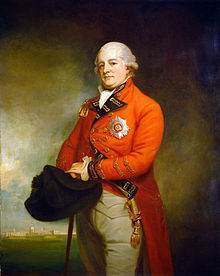
- Legenda: Archibald Campbell
-
- FIRST EARL OF CLARENDON
- An MP in the Short Parliament and Long Parliament, Hyde was involved in criticising perceived abuses of the Personal Rule, such as ship money and Star Chamber. He had a role in preparing the charges for Wentworth's impeachment but did not like the threat to episcopacy in the Root and Branch Petition. Essentially a conservative, Hyde moved over to support the king, or rather monarchy, as the best defence of order in 1641. Hyde became the leading figure in the constitutional royalist party that sought to prevent the king taking any aggressive measures in the continuing search for settlement. In 1642 he opposed Charles' Five Members Coup but continued to support the monarchy. In June 1642 Hyde produced the Answer to the Nineteen Propositions, outlining the constitutional royalist position that monarchy was the best protector of the Church, the constitution and order.
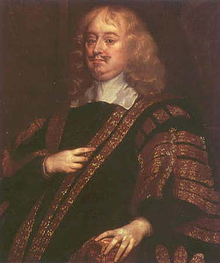
- Legenda: Edward Hyde
-
- Rupert was a noted German prince and soldier. He was also Charles I's nephew, and with his brother Maurice he rallied to his uncle's cause. Rupert proved himself to be one of Charles' chief military assets, though he lacked discipline. He eventually became commander-in-chief of the Royalist armies. Near the end of the First Civil War, a bitter Charles sent Rupert into exile because he was angered by Rupert's claim following his defeat at Naseby that a settlement with Parliament was needed.
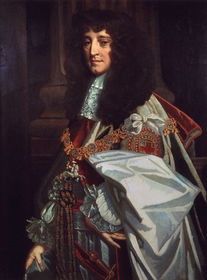
- Legenda: Prince Rupert
-
- Was general of Parliament's Northern Association Army, commanded by his father. In 1645 Fairfax was appointed commander-in-chief of the newly created New Model Army. An excellent general, Fairfax was less self-assured in politics. With the army's politicisation, Fairfax found himself sidelined by his subordinates, particularly Cromwell and Henry Ireton.
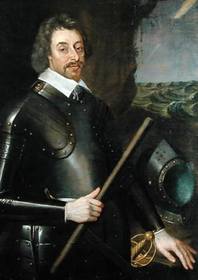
- Legenda: Thomas Fairfax
-
- A member of the minor gentry, had been spiritually transformed by his acceptance of God's direction in the 1630's into one of 'the godly'. Cromwell was elected as an MP in 1640 and during the First Civil War had served as lieutenant general of the Eastern Association Army and then became second in command of the New Model Army. Although he was naturally politically conservative, Cromwell came to believe through his experience on the battlefield and as a member of the New Model Army that God had condemned Charles I. He increasingly took the lead in settlement politics.
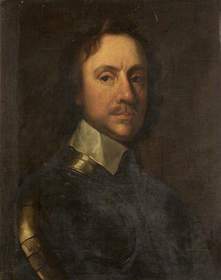
- Legenda: Oliver Cromwell
-
- A Puritan who suffered persecution in the 1630's, Lilburne joined the Eastern Association Army and became a lieutenant colonel in 1644. He resigned his post in protest at the alliance with Scots via the Solemn League and Covenant. In 1646, he was sent to the Tower for attacking Manchester as a Royalist sympathiser. He emerged as a key figure in the Leveller movement and was their leading spokesman, facing Ireton as the Whitehall Debates in December 1648.
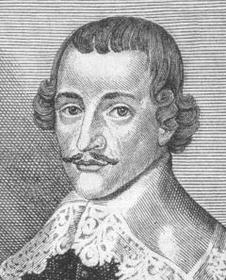
- Legenda: John Lilburne
-
GERRARD WINSTANLEY (1609-1676)
- A Digger and political writer, Winstanley supported Parliament but became increasingly radical after 1643, especially in his anti-clerical views. He was never really well off: from 1647 to 1648, he suffered economic collapse and depression. This seems to have been the trigger for his more radical stance and his production of pamphlets. On 1st April 1649 he began an occupation of St George's Hill. After the collapse of the Digger movement a year later, Winstanley increasingly became part of established society in Cobham parish, although at some point he became a Quaker.
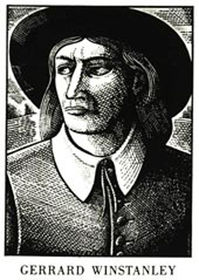
- Legenda: Gerrard Winstanley
-
- Ireton had served in the Eastern Association Army, where he met Cromwell and later became his son-in-law. Ireton was third in command of the New Model Army. Ireton and Cromwell shared a godly zeal. The experience of war further bound them together as a political partnership that was central to the politics of settlement. Ireton was more politically radical than Cromwell and was responsible for most of the army's political statements, from the Solemn Engagement and the Heads of the Proposals to the Remonstrance (November 1648) that called for the execution of Charles I. He played a leading role in the politics that led to the regicide.
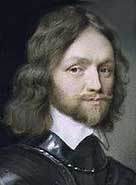
- Legenda: Henry Ireton
Informações
- Descrição
- AS - Level History Mr Bentley Slides sobre Key Profiles: Stuart Britain and the Crisis of Monarchy in 1603-1702, criado por Rebecca Birch em 29-03-2016.
- Criado por
- Rebecca Birch · mar 2016
- Atualizado
- 4 nov 2019
- Visualizações
- 108
- Avaliação