
Quiz
Revision on Chapter 2
Este quiz tem tipos de pergunta que abrem no player de sempre.
Perguntas do quiz (44)
1Very small things need to be [blank_start]magnified[blank_end] so that they become visible to us
- Amagnified
- Breduced
- Csmall
2Objects that can only be seen using a microscope are described as [blank_start]microscopic.[blank_end]
- Abig
- Bhuge
- Cmicroscopic.
3The type of microscope used in schools and many science laboratories is a [blank_start]light microscope.[blank_end]
- Astereo microscope.
- Blight microscope.
- Celectron microscope.
4Monocular microscopes have 2 eyepieces.
- AVerdadeiro
- BFalso
5 Label the parts of a microscope.
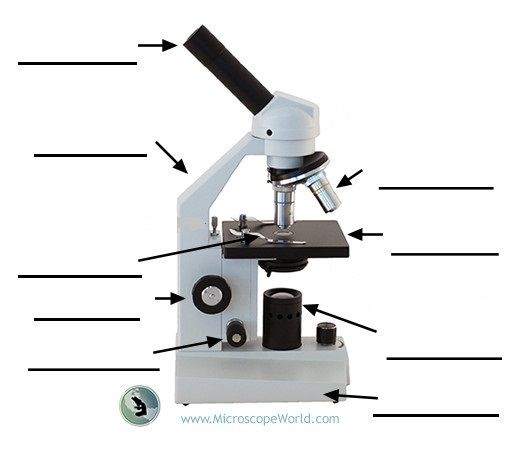
- AEyepiece
- BHandle
- CClips
- DCoarse focus knob
- EFine focus knob
- FBase
- GMirror or lamp
- HStage
- IObjective lens
6What does 'X' stand for?
- AMagnification
- BMinimize
7What is the measurement scientists use to measure microscopic objects?
- AMilliemetres
- BMicrometres
- CMetres
- DCentimetres
8Electron microscopes are much more powerful than light microscopes.
- AVerdadeiro
- BFalso
9The 2 types of microscopes are SEM and REM.
- AVerdadeiro
- BFalso
10[blank_start]Zacharias Janssen[blank_end] was the first person who had created the first true microscope.
- ARobert Hooke
- BZacharias Janssen
- CAntonie van Leewenhoek
11What are the 3 main points of the cell theory?
- A- All living things are made up of one of more cells.
- Cells are the basic building blocks of life.
- New cells are produced from existing cells. - B- All non-living things are made up of no cells.
- Cells are the basic building blocks of death.
- Old cells are produced from new cells. - CNone of the above
- A- All living things are made up of one of more cells.
12What are organelles?
- AThe basic building blocks of life.
- BAny of numbers of organized or specialized structures within a living cell.
- CStructures that produce proteins.
13Label the parts of an animal cell.
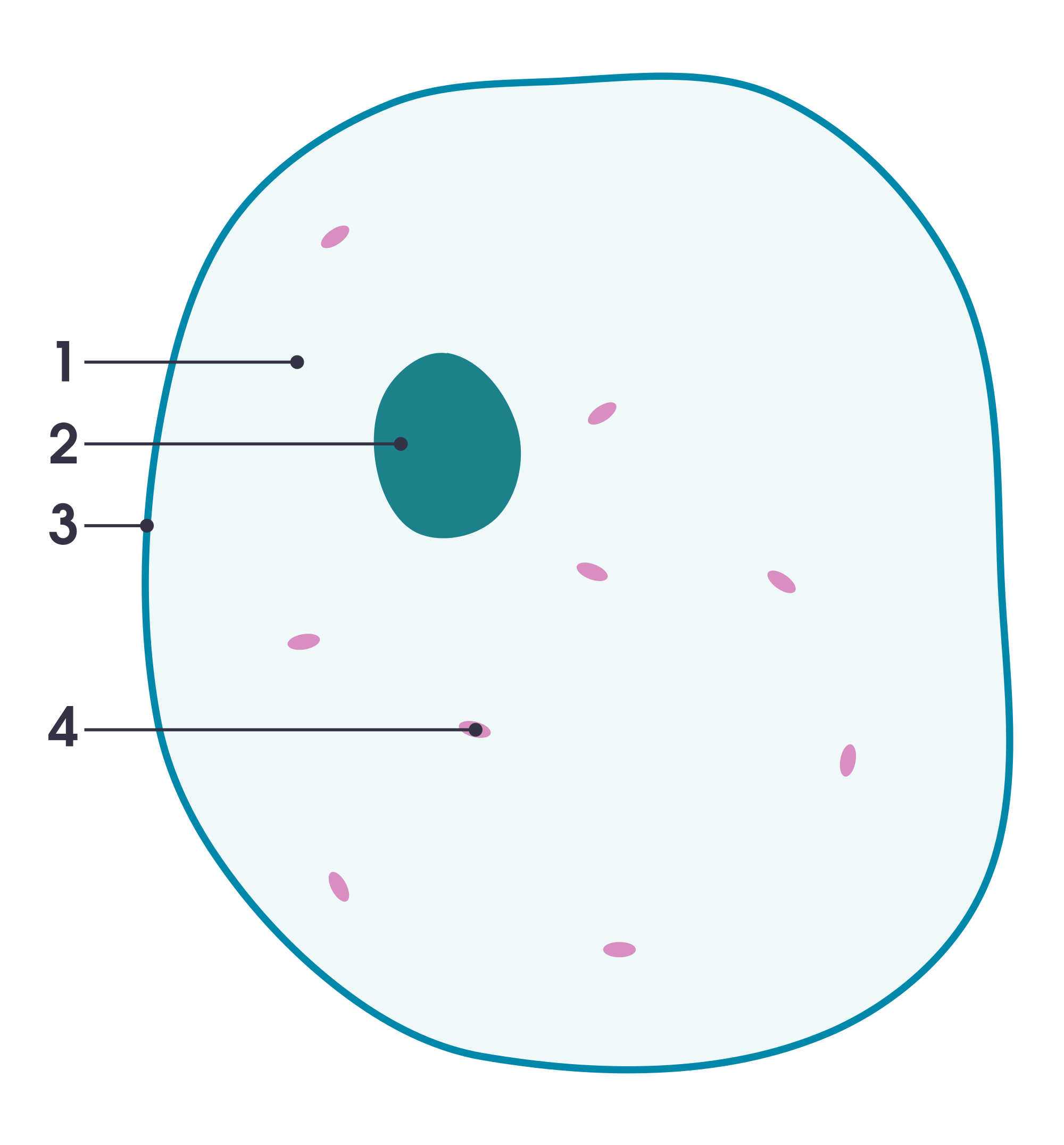
- ACytoplasm
- BNucleus
- CCell membrane
- DVacuole
14Ribosomes are structures that produce proteins.
- AVerdadeiro
- BFalso
15Label the following plant cell.
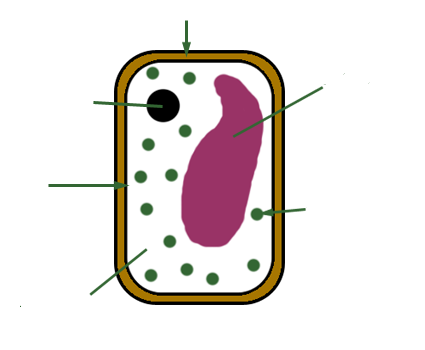
- AChloroplasts
- BCytoplasm
- CCell membrane
- DVacuole
- ENucleus
- FCell wall
16Label the following fungal cell.
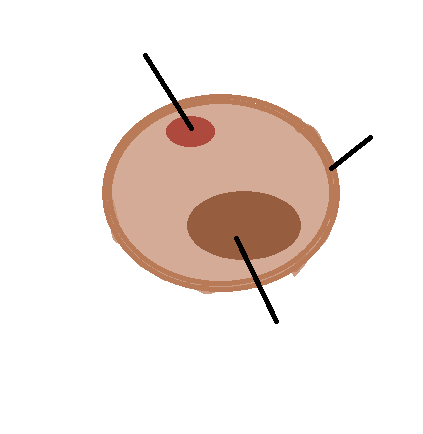
- ANucleus
- BVacuole
- CCell wall
17Living things that are made up of only one cell are known as [blank_start]unicellular organisms.[blank_end]
[blank_start]Bacteria[blank_end] are small, simple cells that do not have any organelles or a true nucleus. Some bacteria cause [blank_start]diseases and infections.[blank_end]- Aunicellular organisms.
- Bmulticellular organisms
- CBacteria
- DFungi
- EOrganisms
- Fdiseases and infections.
- Gstrength and stability
- Hhealthy bodies
18What are the living things found in water?
- ADiatoms and Rotifer
- BCells and organisms
- CProtists and Giardia Lamblia
19Unicellular organisms belong to a group called [blank_start]protists.[blank_end]
- Aprotists.
- BBacteria
- CChloroplasts
20Mitosis is when cells divide into [blank_start]2 identical[blank_end] cells.
- A2 identical
- B3 different
- C4 same
21[blank_start]Multicellular[blank_end] organisms are organisms made up of more than 1 cell.
- AMulticellular
- BUnicellular
- CI don't know
22Cells have a special job to do in the body and they have a structure that makes them better able to do their job.
- AVerdadeiro
- BFalso
23About how many cells does the human body contain.
- A50 trillion
- B50 million
- CInfinity
24About how many DIFFERENT TYPES of cells are there in the human body.
- A200
- B2000
- C150
25What are the names of the 3 types of muscles in your body?
- AInvoluntary, Voluntary and Cardiac.
- BSkeletal, smooth and axons.
- CBrown fat cells, White fat cells and red blood cells.
26[blank_start]Voluntary[blank_end] muscles are attached to the bones of your skeleton. Another name for it is [blank_start]skeletal[blank_end] muscles.
- AVoluntary
- BInvoluntary
- CCardiac
- Dskeletal
- Esmooth
- Fheart
27[blank_start]Involuntary[blank_end] muscles are muscles that work without you having to think about it for example; when you breathe you don't think about it. Another term used to describe involuntary muscles is [blank_start]smooth[blank_end] muscles.
- AInvoluntary
- BVoluntary
- CCardiac
- Dsmooth
- Eskeletal
- Faxons
28[blank_start]Cardiac[blank_end] muscles is the muscles that makes up the [blank_start]heart.[blank_end] It is an [blank_start]involuntary[blank_end] muscle.
- ACardiac
- BInvoluntary
- CVoluntary
- Dheart.
- Eliver.
- Fkidney.
- Ginvoluntary
- Hvoluntary
29Nerve cells make up your brain. They also carry information from your brain to other parts of your body and from your muscles back to your brain.
- AVerdadeiro
- BFalso
30Some nerve cells have a very long fibre extending from the cell, these fibres are known as [blank_start]axons.[blank_end]
- Aaxons.
- Bspecialized.
- Cmulticellular organisms.
31Red blood cells carry oxygen from your lungs to your cells.
- AVerdadeiro
- BFalso
32White blood cells help store energy.
- AVerdadeiro
- BFalso
33Brown fat cells help produce heat for the body.
- AVerdadeiro
- BFalso
34White fat cells are used as part of the immune system and help the body fight infections.
- AVerdadeiro
- BFalso
35Tick 3 different specialised plant cells.
- AGuard cells
- BConducting cells
- CPhotosyntetic cells
- DAnimal cells
- EFungi cells
- F"I don't know" cell
36Tissues work together to complete a specific task.
- AVerdadeiro
- BFalso
37An organ supports or holds together other tissues in the body.
- AVerdadeiro
- BFalso
38Organ systems have 2 or more different organs that work together.
- AVerdadeiro
- BFalso
39In the human body there are 4 types of tissue:
- [blank_start]Epithelial[blank_end]
- Connective
- [blank_start]Muscle[blank_end]
- Nerve- AEpithelial
- BOrgans
- CTissues
- DMuscle
- EXylem
- FPhloem
40The [blank_start]skin[blank_end] is the largest organ in the human body.
- Askin
- Bleg
- Ctongue
413 different types of systems in your body are:
- ANervous, respiratory, reproductive
- BCells, organs and organ systems
- CXylem, phloem, photosynthesis
42The 2 types of cells in a vascular tissues are Xylem and Phloem.
- AVerdadeiro
- BFalso
43The process which plant makes it's food is photosynthesis and it takes place in the leaves.
- AVerdadeiro
- BFalso
44Plants release carbon dioxide and take in oxygen.
- AVerdadeiro
- BFalso
Informações
- Descrição
- not finished
- Autor
- Roqaiah Ali
- Idioma
- English
- Visualizações
- 40
- Etiquetas
- Avaliação
- 4,8 de 5 · 5 avaliações Avalie este quiz