
Quiz
RUBIN PATHOLOGY CELL INJURY
Crie uma conta grátis para terminar este quiz
Salve seu progresso e veja sua nota final.
Já tem uma conta? Inicie sessão
Perguntas do quiz (39)
11 Bone marrow cells from an organ donor are cultured in vitro
at 37°C in the presence of recombinant erythropoietin. A
photomicrograph of a typical “burst-forming unit” is shown
in the image. This colony, committed to the erythrocyte
pathway of differentiation, represents an example of which
of the following physiologic adaptations to transmembrane
signaling?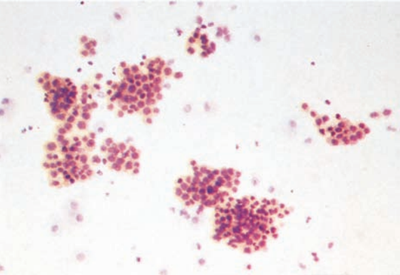
- AAtrophy
- BDysplasia
- CHyperplasia
- DHypertrophy
- EMetaplasia
22 A 50-year-old chronic alcoholic presents to the emergency
room with 12 hours of severe abdominal pain. The pain
radiates to the back and is associated with an urge to vomit.
Physical examination discloses exquisite abdominal tenderness.
Laboratory studies show elevated serum amylase. Which of
the following morphologic changes would be expected in the
peripancreatic tissue of this patient?- ACoagulative necrosis
- BCaseous necrosis
- CFat necrosis
- DFibrinoid necrosis
- ELiquefactive necrosis
3A 68-year-old man with a history of gastroesophageal reflux
disease suffers a massive stroke and expires. The esophagus at
autopsy is shown in the image. Histologic examination of the
abnormal tissue shows intestine-like epithelium composed of
goblet cells and surface cells similar to those of incompletely
intestinalized gastric mucosa. There is no evidence of nuclear
atypia. Which of the following terms best describes this
morphologic response to persistent injury in the esophagus of
this patient?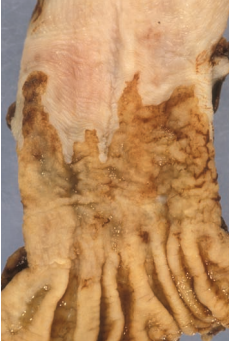
- A(A) Atypical hyperplasia
- B(B) Complex hyperplasia
- C(C) Glandular metaplasia
- D(D) Simple hyperplasia
- E(E) Squamous metaplasia
4A CT scan of a 43-year-old woman with a parathyroid adenoma
and hyperparathyroidism reveals extensive calcium deposits in
the lungs and kidney parenchyma. These radiologic findings
are best explained by which of the following mechanisms of
disease?- A(A) Arteriosclerosis
- B(B) Dystrophic calcification
- C(C) Granulomatous inflammation
- D(D) Metastatic calcification
- E(E) Tumor embolism
5A 75-year-old woman with Alzheimer disease dies of congestive
heart failure. The brain at autopsy is shown in the image. This
patient’s brain exemplifi es which of the following responses to
chronic injury?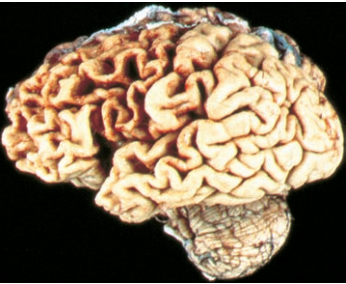
- AAnaplasia
- BAtrophy
- CDysplasia
- DHyperplasia
- EHypertrophy
6A 68-year-old woman with a history of heavy smoking and
repeated bouts of pneumonia presents with a 2-week history of
fever and productive cough. A chest X-ray reveals a right lower
lobe infi ltrate. A transbronchial biopsy confi rms pneumonia
and further demonstrates preneoplastic changes within the
bronchial mucosa. Which of the following best characterizes
the morphology of this bronchial mucosal lesion?- A(A) Abnormal pattern of cellular maturation
- B(B) Increased numbers of otherwise normal cells
- C(C) Invasiveness through the basement membrane
- D(D) Transformation of one differentiated cell type to another
- E(E) Ulceration and necrosis of epithelial cells
7A 64-year-old man with long-standing angina pectoris and
arterial hypertension dies of spontaneous intracerebral
hemorrhage. At autopsy, the heart appears globoid. The
left ventricle measures 2.8 cm on cross section (shown in
the image). This adaptation to chronic injury was mediated
primarily by changes in the intracellular concentration of
which of the following components?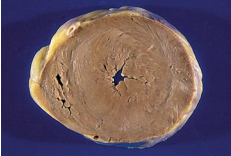
- ADNA
- BGlycogen
- CLipid
- DmRNA
- EWater
8A 24-year-old woman contracts toxoplasmosis during her
pregnancy and delivers a neonate at 37 weeks of gestation
with a severe malformation of the central nervous system. MRI
studies of the neonate reveal porencephaly and hydrocephalus.
An X-ray film of the head shows irregular densities in the basal
ganglia. These X-ray findings are best explained by which of
the following mechanisms of disease?- AAmniotic fluid embolism
- BDystrophic calcification
- CGranulomatous inflammation
- DMetastatic calcification
- EOrgan immaturity
9A 30-year-old man with AIDS-dementia complex develops
acute pneumonia and dies of respiratory insufficiency. At
autopsy, many central nervous system neurons display
hydropic degeneration. This manifestation of sublethal
neuronal injury was most likely mediated by impairment of
which of the following cellular processes?- A(A) DNA synthesis
- B(B) Lipid peroxidation
- C(C) Mitotic spindle assembly
- D(D) Plasma membrane sodium transport
- E(E) Ribosome biosynthesis
10A 62-year-old man is brought to the emergency room in a
disoriented state. Physical examination reveals jaundice,
splenomegaly, and ascites. Serum levels of ALT, AST, alkaline
phosphatase, and bilirubin are all elevated. A liver biopsy
demonstrates alcoholic hepatitis with Mallory bodies. These
cytoplasmic structures are composed of interwoven bundles
of which of the following proteins?- Aα1-Antitrypsin
- Bβ-Amyloid (Aβ)
- CIntermediate filaments
- DPrion protein (PrP)
- Eα-Synuclein
11A 65-year-old man suffers a heart attack and expires. Examination of the lungs at autopsy reveals numerous pigmented
nodules scattered throughout the parenchyma (shown in the
image). What is the appropriate diagnosis?- AAnthracosis
- BAsbestosis
- CHemosiderosis
- DSarcoidosis
- ESilicosis
12A 32-year-old woman with poorly controlled diabetes mellitus
delivers a healthy boy at 38 weeks of gestation. As a result of
maternal hyperglycemia during pregnancy, pancreatic islets in
the neonate would be expected to show which of the following morphologic responses to injury?- A(A) Atrophy
- B(B) Dysplasia
- C(C) Hyperplasia
- D(D) Metaplasia
- E(E) Necrosis
13A 59-year-old female alcoholic is brought to the emergency room with a fever (38.7°C/103°F) and foul-smelling
breath. The patient subsequently develops acute bronchopneumonia and dies of respiratory insufficiency. A pulmonary abscess is identified at autopsy (shown in the image).
Histologic examination of the wall of this lesion would
most likely demonstrate which of the following pathologic
changes?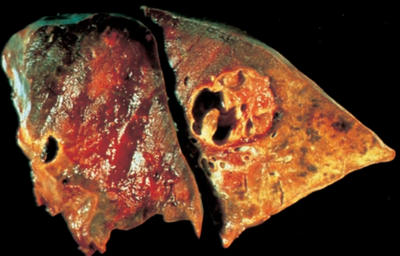
- A(A) Caseous necrosis
- B(B) Coagulative necrosis
- C(C) Fat necrosis
- D(D) Fibrinoid necrosis
- E(E) Liquefactive necrosis
14A 20-year-old man from China is evaluated for persistent
cough, night sweats, low-grade fever, and general malaise.
A chest X-ray reveals fi ndings “consistent with a Ghon complex.” Sputum cultures grow acid-fast bacilli. Examination of
hilar lymph nodes in this patient would most likely demonstrate which of the following pathologic changes?- A(A) Caseous necrosis
- B(B) Coagulative necrosis
- C(C) Fat necrosis
- D(D) Fibrinoid necrosis
- E(E) Liquefactive necrosis
15A 31-year-old woman complains of increased vaginal discharge of 1-month duration. A cervical Pap smear is shown
in the image. Superfi cial epithelial cells are identifi ed with
arrows. When compared to cells from the deeper intermediate layer (top), the nuclei of these superfi cial cells exhibit which
of the following cytologic features?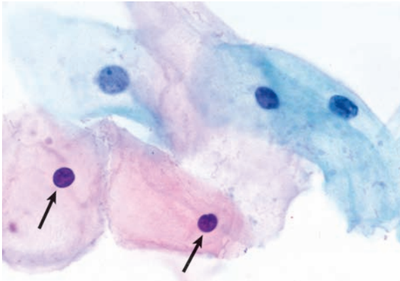
- A(A) Karyolysis
- B(B) Karyorrhexis
- C(C) Pyknosis
- D(D) Segmentation
- E(E) Viral inclusion bodies
16A 30-year-old woman suffers a tonic-clonic seizure and presents with delirium and hydrophobia. The patient states that
she was bitten on the hand by a bat about 1 month ago. The
patient subsequently dies of respiratory failure. Viral particles are found throughout the brainstem and cerebellum at
autopsy. In addition to direct viral cytotoxicity, the necrosis of
virally infected neurons in this patient was mediated primarily
by which of the following mechanisms?- A(A) Histamine release from mast cells
- B(B) Humoral and cellular immunity
- C(C) Neutrophil-mediated phagocytosis
- D(D) Release of oxygen radicals from macrophages
- E(E) Vasoconstriction and ischemia
17A 52-year-old woman loses her right kidney following an automobile accident. A CT scan of the abdomen 2 years later shows
marked enlargement of the left kidney. The renal enlargement
is an example of which of the following adaptations?- A(A) Atrophy
- B(B) Dysplasia
- C(C) Hyperplasia
- D(D) Hypertrophy
- E(E) Metaplasia
18An 82-year-old man has profound bleeding from a peptic
ulcer and dies of hypovolemic shock. The liver at autopsy displays centrilobular necrosis. Compared to viable hepatocytes,
the necrotic cells contain higher intracellular concentrations
of which of the following?- A(A) Calcium
- B(B) Cobalt
- C(C) Copper
- D(D) Iron
- E(E) Selenium
19A 28-year-old woman is pinned by falling debris during a hurricane. An X-ray fi lm of the leg reveals a compound fracture
of the right tibia. The leg is immobilized in a cast for 6 weeks. When the cast is removed, the patient notices that her right leg
is weak and visibly smaller in circumference than the left leg.
Which of the following terms best describes this change in the
patient’s leg muscle?- A(A) Atrophy
- B(B) Hyperplasia
- C(C) Metaplasia
- D(D) Ischemic necrosis
- E(E) Irreversible cell injury
20A 70-year-old man is hospitalized after suffering a mild stroke.
While in the hospital, he suddenly develops crushing substernal chest pain. Analysis of serum proteins and ECG confirm
a diagnosis of acute myocardial infarction. The patient subsequently develops an arrhythmia and expires. A cross section of
the left ventricle at autopsy is shown in the image. Histologic
examination of the affected heart muscle would demonstrate
which of the following morphologic changes?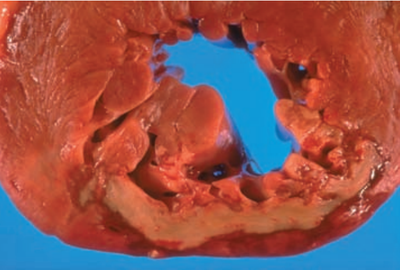
- A(A) Caseous necrosis
- B(B) Coagulative necrosis
- C(C) Fat necrosis
- D(D) Fibrinoid necrosis
- E(E) Liquefactive necrosis
21Which of the following histologic features would provide
definitive evidence of necrosis in the myocardium of the
patient described in Question 20?- A(A) Disaggregation of polyribosomes
- B(B) Increased intracellular volume
- C(C) Influx of lymphocytes
- D(D) Mitochondrial swelling and calcification
- E(E) Nuclear fragmentation
22A 90-year-old woman with mild diabetes and Alzheimer disease dies in her sleep. At autopsy, hepatocytes are noted to
contain golden cytoplasmic granules that do not stain with
Prussian blue. Which of the following best accounts for pigment accumulation in the liver of this patient?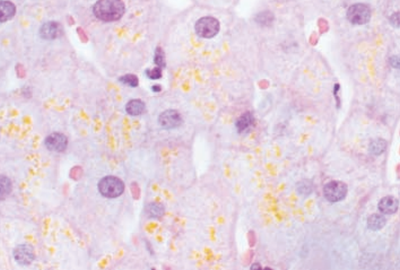
- A(A) Advanced age
- B(B) Alzheimer disease
- C(D) Diabetic ketoacidosis
- D(E) Hereditary hemochromatosis
23Which of the following mechanisms of disease best describes
the pathogenesis of pigment accumulation in hepatocytes in
the patient described in Question 22?- A(A) Degradation of melanin pigments
- B(B) Inhibition of glycogen biosynthesis
- C(C) Malabsorption and enhanced deposition of iron
- D(D) Peroxidation of membrane lipids
- E(E) Progressive oxidation of bilirubin
24A 45-year-old man presents with increasing abdominal girth
and yellow discoloration of his skin and sclera. Physical examination reveals hepatomegaly and jaundice. A Prussian blue
stain of a liver biopsy is shown in the image. What is the major
intracellular iron storage protein in this patient’s hepatocytes?- A(A) Bilirubin
- B(B) Haptoglobin
- C(C) Hemoglobin
- D(D) Hemosiderin
- E(E) Transferrin
25A 60-year-old man with chronic cystitis complains of urinary
frequency and pelvic discomfort. Digital rectal examination
is unremarkable. Biopsy of the bladder mucosa reveals foci
of glandular epithelium and chronic infl ammatory cells. No
cytologic signs of atypia or malignancy are observed. Which of
the following terms best describes the morphologic response
to chronic injury in this patient?- A(A) Atrophy
- B(B) Dysplasia
- C(C) Hyperplasia
- D(D) Hypertrophy
- E(E) Metaplasia
26A 60-year-old man is rushed to the hospital with acute liver
failure. He undergoes successful orthotopic liver transplantation; however, the transplanted liver does not produce much
bile for the first 3 days. Poor graft function in this patient is
thought to be the result of “reperfusion injury.” Which of the
following substances was the most likely cause of reperfusion
injury in this patient’s transplanted liver?- A(A) Cationic proteins
- B(B) Free ferric iron
- C(C) Hydrochlorous acid
- D(D) Lysosomal acid hydrolases
- E(E) Reactive oxygen species
27A 68-year-old woman with a history of hyperlipidemia dies
of cardiac arrhythmia following a massive heart attack. Peroxidation of which of the following molecules was primarily
responsible for causing the loss of membrane integrity in cardiac myocytes in this patient?- ACholesterol
- BGlucose transport proteins
- CGlycosphingolipids
- DPhospholipids
- ESodium-potassium ATPase
28A 22-year-old construction worker sticks himself with a
sharp, rusty nail. Within 24 hours, the wound has enlarged to
become a 1-cm sore that drains thick, purulent material. This
skin wound illustrates which of the following morphologic
types of necrosis?
(E) Liquefactive necrosis- A(A) Caseous necrosis
- B(B) Coagulative necrosis
- C(C) Fat necrosis
- D(D) Fibrinoid necrosis
- E(E) Liquefactive necrosis
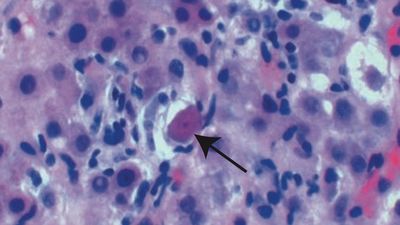
29A 42-year-old man undergoes liver biopsy for evaluation of the grade and stage of his hepatitis C virus infection. The biopsy reveals swollen (ballooned) hepatocytes and moderate lobular inflammatory activity (shown in the image). The arrow identi- fies an acidophilic (Councilman) body. Which of the following cellular processes best accounts for the presence of scattered acidophilic bodies in this liver biopsy?
- AAggregation of intermediate filament proteins
- B(B) Apoptotic cell death
- C(C) Coagulativenecrosis
- D(D) Collagendeposition
- E(E) Intracellular viral inclusions
30Which of the following biochemical changes characterizes the formation of acidophilic bodies in the patient described in Question 29?
- AFragmentation of DNa
- BLoss of tumor suppressor protein p53
- CMitochondrial swelling
- DSynthesis of arachidonic acid
- ETriglyceride accumulation
31 A 56-year-old woman with a history of hyperlipidemia and hypertension develops progressive, right renal artery stenosis. Over time, this patient’s right kidney is likely to demonstrate which of the following morphologic adaptations to partial ischemia?
- A(A) Atrophy
- B(B) Dysplasia
- C(C) Hyperplasia
- D(D) Hypertrophy
- E(E) Neoplasia
32 A 5-year-old boy suffers blunt trauma to the leg in an automobile accident. Six months later, bone trabeculae have formed within the striated skeletal muscle at the site of tissue injury. This pathologic condition is an example of which of the following morphologic adaptations to injury?
- A(A) Atrophy
- B(B) Dysplasia
- C(C) Metaplasia
- D(D) Metastatic calcifi cation
- E(E) Dystrophic calcifi cation
33A 43-year-old man presents with a scaly, erythematous lesion
on the dorsal surface of his left hand. A skin biopsy reveals
atypical keratinocytes fi lling the entire thickness of the epidermis
(shown in the image). The arrows point to apoptotic bodies.
Which of the following proteins plays the most important
role in mediating programmed cell death in this patient’s skin
cancer?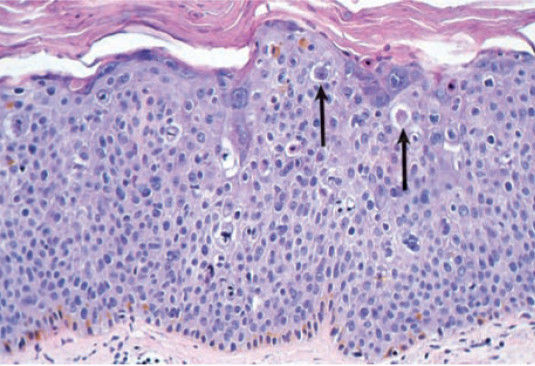
- A(A) Catalase
- B(B) Cytochrome c
- C(C) Cytokeratins
- D(D) Myeloperoxidase
- E(E) Superoxide dismutase
34A 16-year-old girl with a history of suicidal depression swallows
a commercial solvent. A liver biopsy is performed
to assess the degree of damage to the hepatic parenchyma.
Histologic examination demonstrates severe swelling of the
centrilobular hepatocytes (shown in the image). Which of the following mechanisms of disease best accounts for the
reversible changes noted in this liver biopsy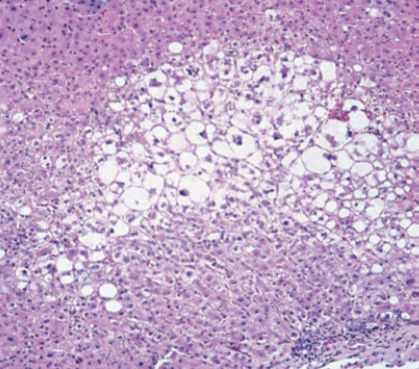
- A(A) Decreased stores of intracellular ATP
- B(B) Increased storage of triglycerides and free fatty acids
- C(C) Intracytoplasmic rupture of lysosomes
- D(D) Mitochondrial membrane permeability transition
- E(E) Protein aggregation due to increased cytosolic pH
35A 40-year-old man is pulled from the ocean after a boating
accident and resuscitated. Six hours later, the patient develops
acute renal failure. Kidney biopsy reveals evidence of karyorrhexis
and karyolysis in renal tubular epithelial cells. Which
of the following biochemical events preceded these pathologic
changes- A(A) Activation of Na+/K+ ATPase
- B(B) Decrease in intracellular calcium
- C(C) Decrease in intracellular pH
- D(D) Increase in ATP production
- E(E) Increase in intracellular pH
36A 58-year-old man presents with symptoms of acute renal failure.
His blood pressure is 220/130 mm Hg (malignant hypertension).
While in the emergency room, the patient suffers a
stroke and expires. Microscopic examination of the kidney at
autopsy is shown in the image. Which of the following morphologic
changes accounts for the red material in the wall of
the artery?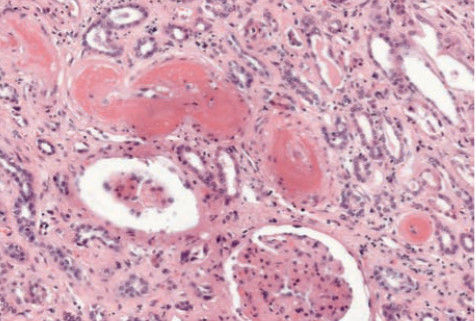
- A(A) Apoptosis
- B(B) Caseous necrosis
- C(C) Fat necrosis
- D(D) Fibrinoid necrosis
- E(E) Liquefactive necrosis
37A 10-year-old girl presents with advanced features of progeria
(patient shown in the image). This child has inherited mutations
in the gene that encodes which of the following types of
intracellular proteins?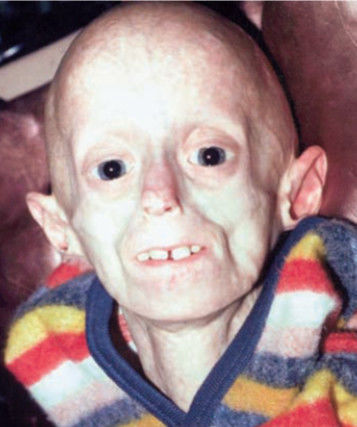
- A(A) Helicase
- B(B) Lamin
- C(C) Oxidase
- D(D) Polymerase
- E(E) Topoisomerase
38A 32-year-old woman develops an Addisonian crisis (acute
adrenal insuffi ciency) 3 months after suffering massive hemorrhage
during the delivery of her baby. A CT scan of the
abdomen shows small adrenal glands. Which of the following
mechanisms of disease best accounts for adrenal atrophy in
this patient?- A(A) Chronic infl ammation
- B(B) Chronic ischemia
- C(C) Hemorrhagic necrosis
- D(D) Lack of trophic signals
- E(E) Tuberculosis
39A 47-year-old man with a history of heavy smoking complains
of chronic cough. A “coin lesion” is discovered in his right
upper lobe on chest X-ray. Bronchoscopy and biopsy fail to
identify a mass, but the bronchial mucosa displays squamous
metaplasia. What is the most likely outcome of this morphologic
adaptation if the patient stops smoking?- A(A) Atrophy
- B(B) Malignant transformation
- C(C) Necrosis and scarring
- D(D) Persistence throughout life
- E(E) Reversion to normal
Informações
- Descrição
- USMLE pathology Quiz sobre RUBIN PATHOLOGY CELL INJURY, criado por Jean-Michel Telhomme em 16-11-2016.
- Autor
- Jean-Michel Telhomme
- Idioma
- English
- Visualizações
- 1.121
- Etiquetas
- Avaliação
- 5,0 de 5 · 1 avaliação Avalie este quiz