
Quiz
Practice questions- Parasitology 2nd semester: RUSVM
Perguntas do quiz (61)
1A number of older cows in a Texas herd are losing condition rapidly with a corresponding drop in milk production. Two pregnant animals have aborted.
Affected animals are off feed, uncoordinated and out of breath after exertion. On physical exam, affected cows have a rapid bouncing pulse and pale mucous membranes. One animal appears to be icteric with a temp of 105. Blood smear (pic). What is the most likely diagnosis?- AEperythrozoon spp
- BAnaplasmosis
- CLeptospira icterohaemorrhagiae
- DTheileriosis
- EBabesia bigemina
2A flock from a turkey farm is presented with a mysterious illness. Several dead birds are notable. Mostly younger animals.
Sick turkeys are listless, with drooping wings, unkempt feathers, yellow droppings, and silk older birds are emancipated.
Necropsy shows a yellowish green caseous exudate in the ceca, cecal ulcerations and thickening of the cecal wall.
Picture of liver
What is the diagnosis?- ANecrotic enteritis
- BHistomonasis
- CAvian spirochetosis
- DCoronaviral enteritis of turkeys
- EHemorrhagic enteritis of turkeys
3The most likely cause of diarrhea without intestinal blood loss in a 2 week old calf is which of the following?
- ASarcocystis cruzi
- BBunostomum phlebotomum
- CEimeria bovis
- DToxoplasma gondii
- ECryptosporidium parvum
4This bronchoscope image what's acquired from a 3 year old hound dog with a chronic cough, unresponsive to antibiotics that has recently increased in frequency and severity
(Image has nodules in bronchoscope). Which of the following choices is the most likely rule out?- ANodules caused by a lungworm
- BChronic eosinophilia bronchitis
- CSquamous cell carcinoma
- DMyobacterial tracheitis/bronchitis
- EPneumonyssoides caninum granuloma
5What is the proper name for this parasite of pigs?
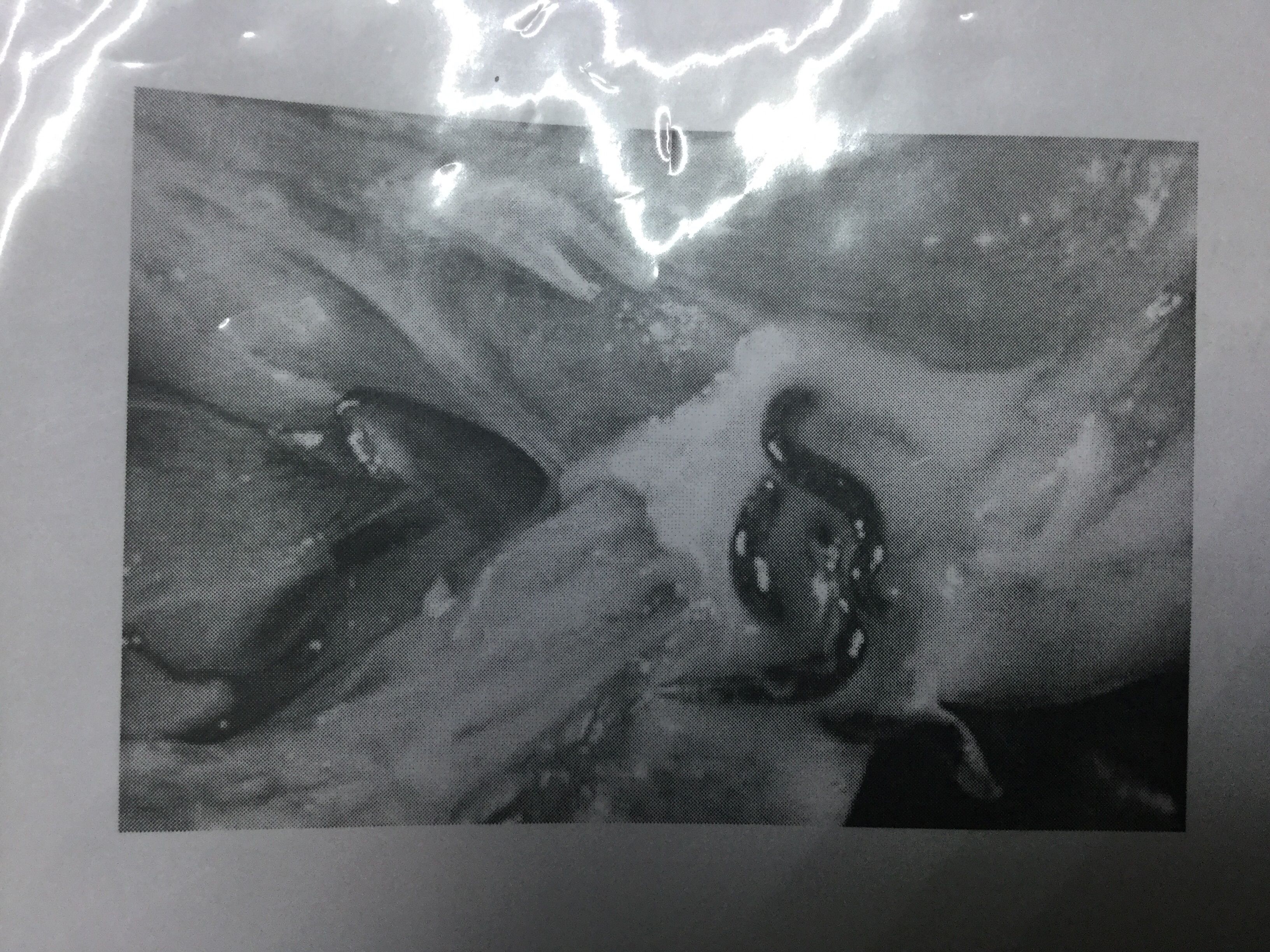
- ADioctophyma renale
- BStephaanurus dentatus
- CTrichinella spiralis
- DCapillaria plica
- EGnathostoma spinigerum
6Infection in a beef herd with Tritrichomonas foetus is characterized by which of the following?
- AAnemia
- BInfertility
- CWasting
- DDiarrhea
- ENeurologic disease
7During the necropsy of an 8 year old mixed breed dog from the southern United States, reactive granulomas in the esophagus containing bright red worms 40mm to 70mm long are found. What is the diagnosis?
- AOllulanus tricuspis
- BHaemonchus placei
- CSpirocerca lupi
- DGastrophilus spp.
- EPhysaloptera spp.
8Within a steers ear, on examination, there appear to be very large mites (about 1 cm in diameter). The parasites are subsequently identified as a stage of the soft tick Otobius megnini. The stages present in the ear of this steer are which of the following?
- ALarvae, nymphs, and adults
- BNymphs and adults
- CNymphs and eggs
- DEggs, larvae and nymphs
- ELarvae and nymphs
9On a cold February day in the northeastern US, the cow shown below is examined for pruritis and crusts around the perineum. A skin scrape shows some kind of mite with long legs and short unsegmented pedicles. What should be done next?
- ATopical furazolidone
- BAmitraz SQ
- CQuarantine animal
- DSlaughter
- ETopical .25% crotoxyfos spray
10Obstruction ovis ovewinters as which of the following?
- AThird-stage larvae in the frontal sinuses of sheep
- BSecond-stage larvae in the frontal sinuses of sheep
- CAdults in lofts and attics
- DEggs deposited on vegetation in sheep pastures
- EFirst-stage larvae in the nasal cavity of sheep and as pupae in soil
11Damalinia equi is a louse that infests horses. The eggs of this louse are most likely to be found which of the following locations?
- AIn the feces
- BGlued to the hairs
- CIn water containers within the box stall
- DIn the bedding of box stall
- EIn soil surrounding the stable
12Skin scrapings of a lesion at the base of the tail of a cow reveal mites. The mites are identified as Chorioptes bovis, by which of the following?
- ALong, jointed pedicles of the pretarsi
- BLong, nonjointed pedicles of the pretarsi
- CShort pedicles of the pretarsi
- DElongate body
- ELack of caruncles on the pretarsi
13A flock of ewes is experiencing abortion as a result of focal placentitis. The parasite that typically causes this lesion in sheep is which of the following?
- ATrypanosomiasis ovis
- BIsospora felis
- CEimeria ovinoidalis
- DSarcocystis Tenella
- EToxoplasma gondii
14An otherwise healthy rabbit keeps shaking his head and scratching incessantly. There is a brown crust coating the interior of both ears. What is the most likely diagnosis?
- APsoroptes cuniculi
- BCheyletiella
- CSarcoptes scabei
- DTaenia serialis
- EOtodectes cyanotis
15The most likely cause of diarrhea without intestinal blood loss in a 2 week old calf is which of the following?
- ASarcocystis cruzi
- BBunostomum phlebotomum
- CEimeria bovis
- DToxoplasma gondii
- ECryptosporidium parvum
16Necropsy of a horse reveals infection of the skeletal and cardiac muscle with Sarcocystis bertrami. Typical clinical signs of myositic infection (bradyzoite stage infection) with this parasite as with other species of Sarcocystis are:
- AMuscle pain and loss of function
- BInappetence and wasting
- CDiarrhea no dehydration
- DCentral nervous system signs
- EAbsent
17Converting evaluation of the efficacy of parasite control programs, which statement is least accurate?
- AAt 1-2 weeks after anthelmintic therapy, 20% of horses should be evaluated for nematode ova
- BTapeworm ova are best detected using the Wisconsin technique
- CFecal egg counts should be performed on all fecal samples that show eggs on fecal flotation
- DFecal egg counts cannot predict the number of parasites a horse harbors
- EPasture contamination can be considered low if fecal egg counts are below 50 eggs/g
18Concerning tapeworm infection which statement is least accurate?
- AThe common tapeworms of horses are Anoplocephala magna and Anoplocephala perfoliata
- BThe life cycle involves snails as intermediate hosts
- CTapeworms are more common in adults horses than foals
- DClinical signs attributable to tapeworm infection include unthriftiness, intestinal ulceration, and intussusception
- EPyrantel pamoate is the treatment of choice against Anoplocephala
19Which of the following is not associated with Parascaris equorum infection?
- Aweight loss
- BCoughing and nasal discharge
- CLethargy
- DSlow weight gain
- EProtein-losing enteropathy
20In order of occurrence, the typical pattern of events in the life cycle of a coccidi an parasite, such as Eimeria organisms are:
- Aschizont, schizont, gametocyte, oocyst, sporocyt, sporozoite
- BOocyst, gametocyte, schizont, schizont, sporozoite, sporocyst
- COocyst, sporocyst, sporozoite, gametocyte, schizont, schizont
- DGametocyte, schizont, schizont, oocyst, sporocyst, sporozoite
- ESchizont, schizont, oocyst, gametocyte, sporocyst, sporozoite
21Which procedure is required to control house flies and stable flies?
- AFrequent spraying of insecticides around barns
- BApplying repellents and insecticidal sprays to horses
- CInstalling electric light traps around barns
- DProper disposal of hay and manure
- EAdministering oral insecticides
22Concerning infestations of ectoparasites in horses, which statement is least accurate?
- ALice infestations most commonly involve the biting louse (damalinia equi) and the sucking louse (Haematopinus asini). Infestations can occur at any time but tend to be most common in the winter
- BScabies in horses usually begins on the head, Chorioptes infestations begin on the legs and Psoroptes infestations begin on the trunk
- CCulicoides hypersensitivity is one of the most common fly-bite dermatoses of horses . In general, the head, tail, and centrum are affected; pruritus may be generalized in severe cases
- DOnchocerciasis can cause cutaneous and ocular lesions. Cutaneous lesions are represented by alopecia, ulcerations, depigmentation, and scaling. The face, neck, and ventral midline are the most commonly infested. The filariasis nematode is transmited by Musca domestica
- EThe treatment of choice for equine mite and lice infestations is ivermectin
23Which of the following diseases is NOT transmitted by hard ticks? (Ixodidae)
- ABabesiosis
- BEhrilichiosis
- CTheileriosis
- DLyme disease
- ERift Valley fever
24In horses, the larvae of Gasterophilus intestinalis spend more time within the oral mucosa. Ultimately, however, they arrive in the stomach where they complete their development. The total average stay of G. intestinalis within a horse is approximatley which of the following?
- A2 weeks
- B2 months
- C3 months
- D10 months
- E23 months
25This Holstein cow has submandibular Adela, slightly pale mucus membranes, and reduced milk production. CBC shows mild anemia, GGT is elevated. Fecal examination shows a few oval, operculated golden brown eggs. Which one of the following choices is the most likely diagnosis?
- ATraumatic reticuloperitonitis
- BHigh-mountain disease
- CLiver abscesses
- DFasciolosis
- EParamphistomosis
26Which organisms is depicted in the images?
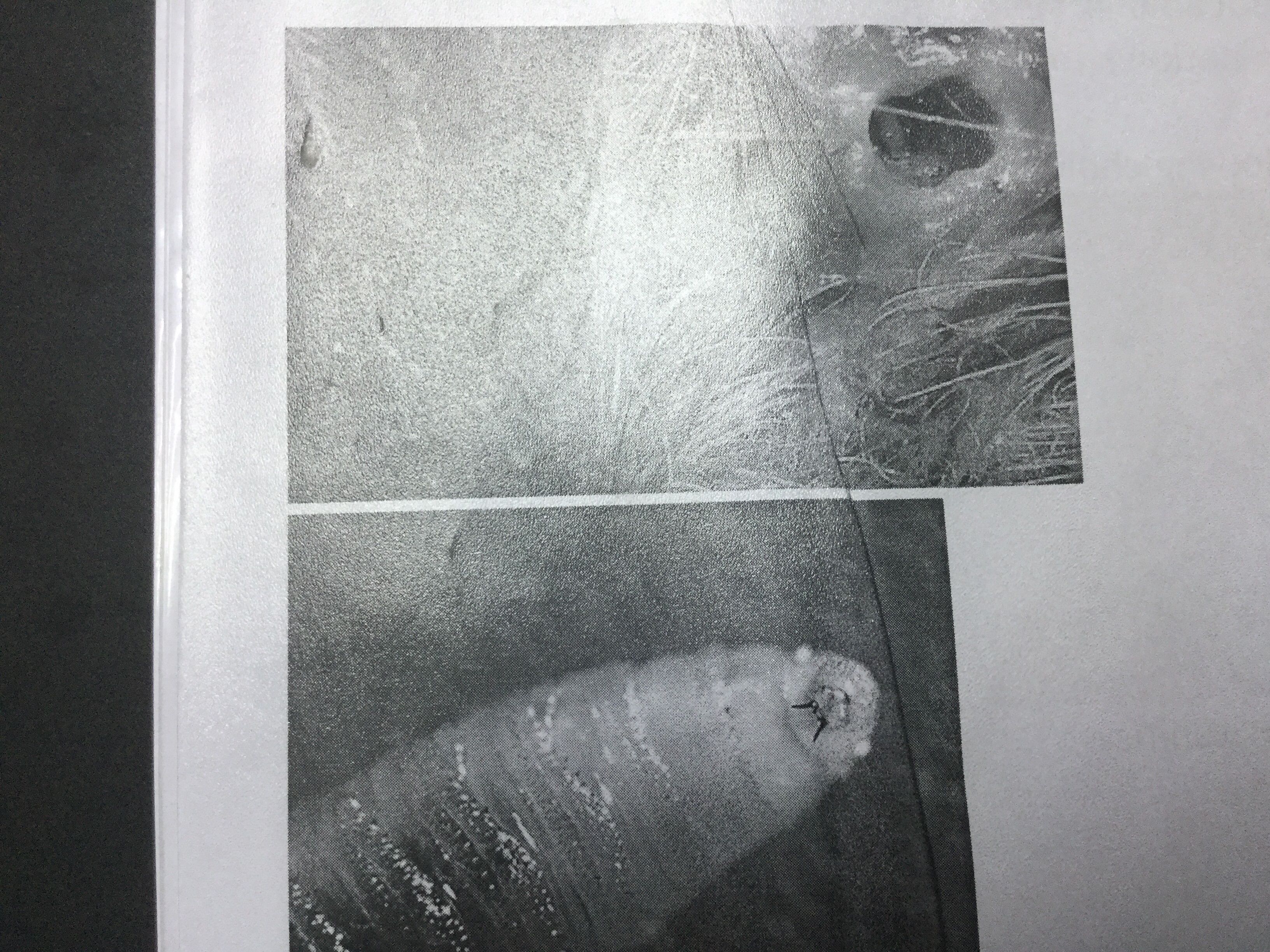
- ADermatitis hominis
- BCochliomyia hominivorax
- CCuterebra spp.
- DCoenurus cerebralis
- EOnchocerca cervicalis
27Concerning onchocerciasis, which statement is least accurate?
- ACutaneous onchocerciasis is characterized by alopecia nod depigmentation
- BAdult Onchocerca cervicalis worms live in the nuchal ligament
- CCulicoides gnats ingest the microfilariae of Onchocerca in the dermis
- DIvermectin therapy kills both microfilariae and the adult Onchocerca cervicalis worms
- ELesions can appear on the face, chest, withers and ventral midline
28If the following image is seen on necropsy, what would be recommended as a treatment plan for the remaining group of pigs?
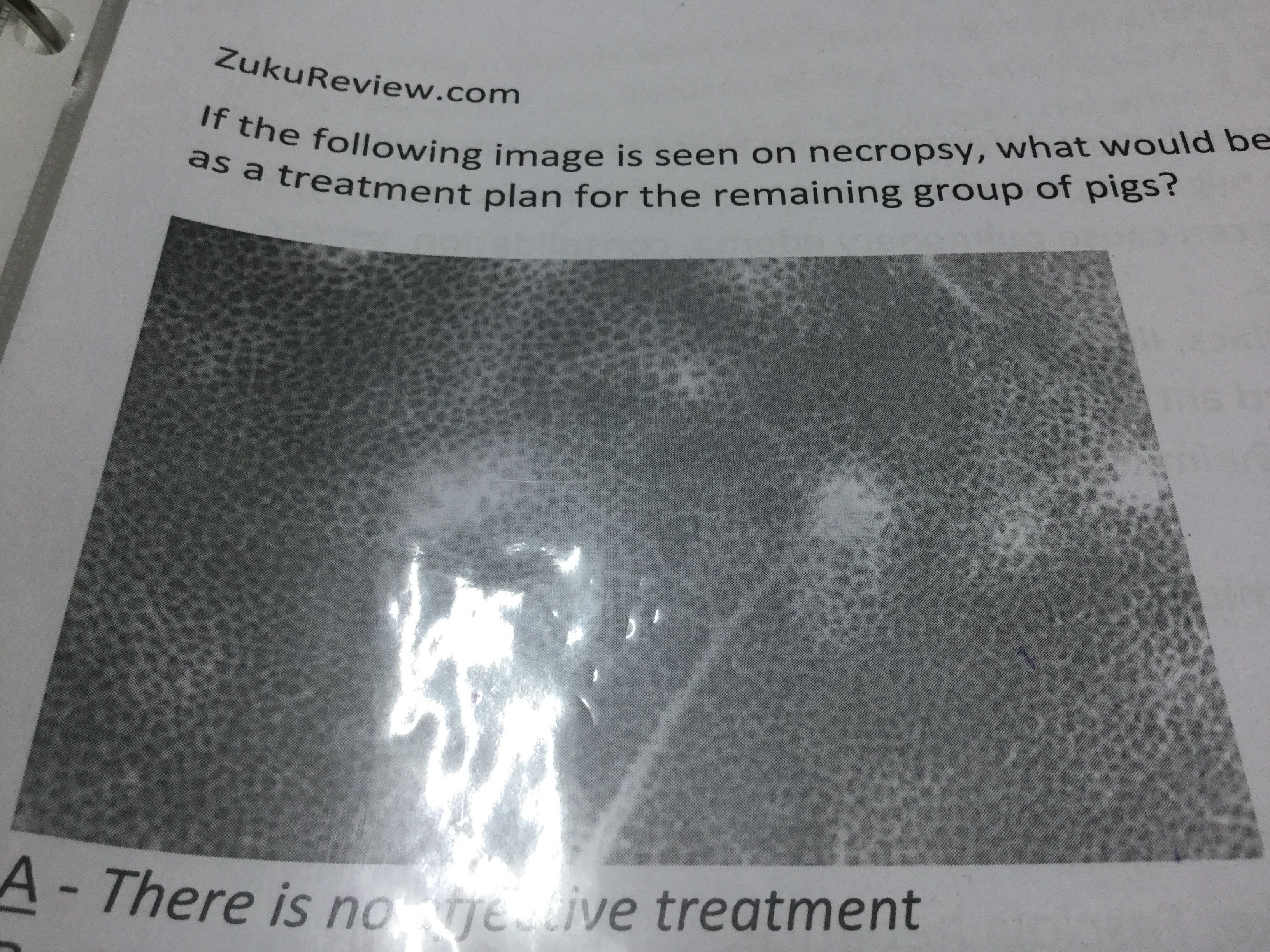
- AThere is no effective treatment
- BMorantel PO
- CLincomycin IM
- DDecrease non-protein nitrogen in diet
- EAntihelminthics
29The following image is seen on a blood smear from a range cow from south Texas near the Mexican border. The cow has 2 day history of high fever, anorexia, depression and "redwater" (red urine-hemoglobinuria). What is the diagnosis?
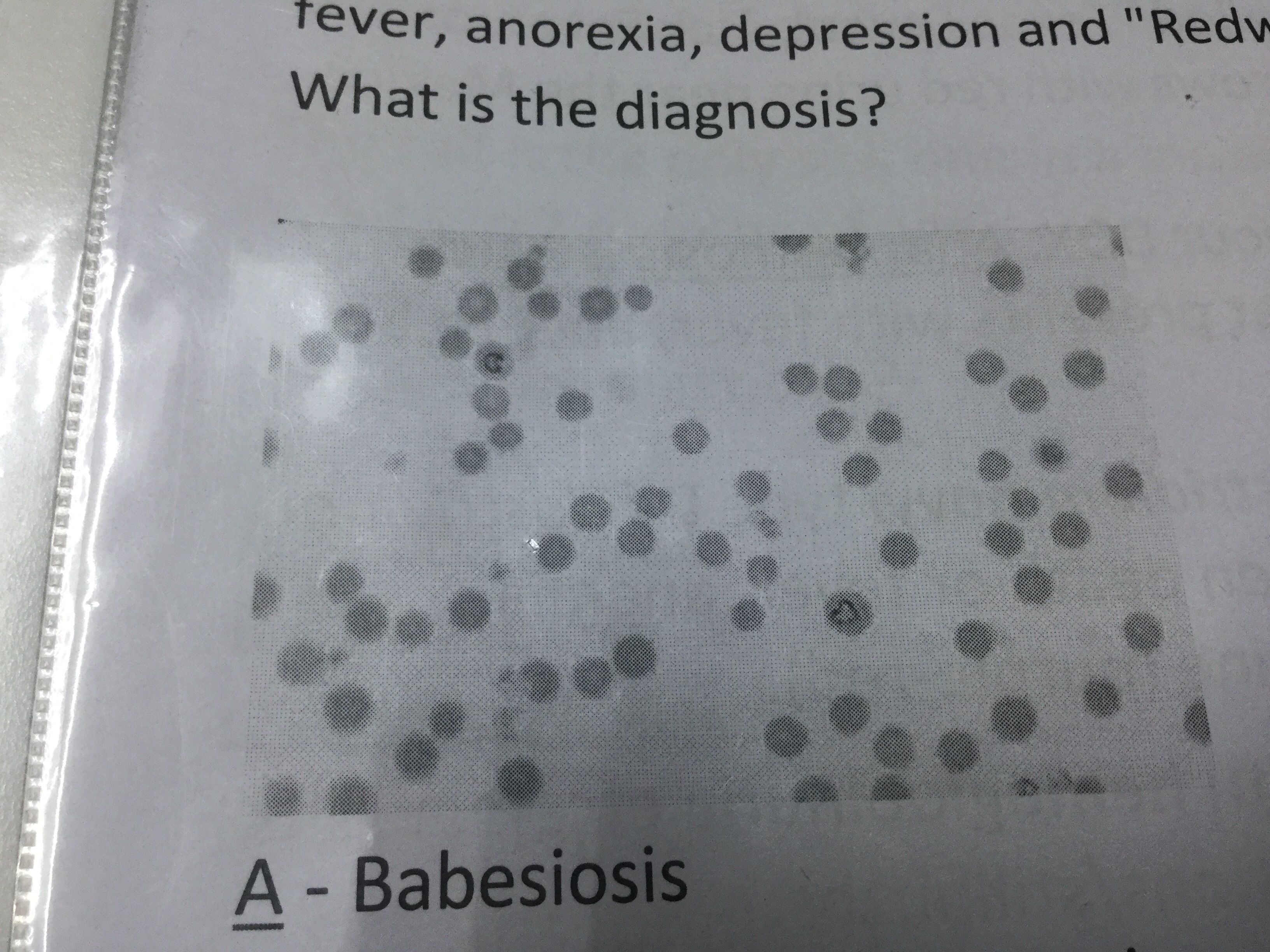
- ABabesiosis
- BBacillary Hemoglobinuria
- CLeptospirosis
- DAnaplasmosis
- ETrypanosomiasis
30A 2 week old calf is presented that is dehydrated and almost emancipated from weight loss. She has a 1 week history of water, foamy diarrhea and exhibits tenesmus during examination. The calf is the only sick one in the mixed group of calves that range from 3 weeks to 2 months of age. What is the diagnosis?
- ACoronavirus
- BCoccidiosis
- CColibacillosis
- DOstertagiasis
- ECryptosporidiosis
31Cutaneous habronemasis (summer sores) is a:
- Adisease of the lymphatics of the extremeties
- BSkin disease of the ventral midline, transmitted by midges
- CSeasonal granulomatous skin disease transmitted by house flies and stable flies
- DSeasonal granulomatous skin dense transmitted by Culicoides gnats
- ESkin dense of the face transmitted by Culicoides gnats
32The concept of "spring rise" refers to which of the following?
- AIncreased numbers of larvae on pasture in the spring
- BAccelerated development from egg to larvae under spring conditions
- CIncreased egg output by ewes due to continued development of arrested larvae
- DDevelopment of increased Hemonchus-specific antibody levels during spring
- EMovement of larvae that have overwintered in the soil up onto freshly growning grass in the spring
33Necropsy of a horse reveals a 5cm hemispheric swelling in the stomach at the level of the Margo plicatus. The swelling contains necrotic material and a large number of worms about 1cm long. The females lay small, thin-shelled larvated eggs. The worm within this lesion is most likely which of the following?
- ADraschia megastoma
- BHabronema muscle
- CTrichostrongylus axei
- DStrongyloides westeri
- EProbstmayria vivipara
34Species of Nematodirus differ from other trichostrongyloid nematodes in which of the following?
- ATheir larvae develop into infective stage within the egg
- BThe adult worms live in the lungs
- CThe adult worms live in the small intestine
- DDeveloping larvae migrate through the liver and lungs
- EThey require an intermediate host
35Concerning fecal examination for parasite ova in horses, which statement is most accurate?
- AFecal egg counts correlate well with the severity of clinical signs
- BParasitism can be ruled out as a cause of chronic diarrhea in horses when fecal egg counts are less than 500 eggs/g feces
- CParasitism can be ruled out as a cause of chronic diarrhea in horses when fecal examination is negative for parasite ova
- DExamination of feces from several horses in the same environment for parasite ova is useful for dertermining the efficacy of the parasite control program
- EParasitism can be ruled out as a cause of diarrhea in horses when fecal egg counts are less than 200 eggs/g feces
36Which choice is associated with osteosarcoma and hypertrophic osteopathy?
- ASpirocerca lupi
- BCoccidiodomycosis
- CHabronema spp.
- DBlastomycosis
- EOllulanus tricuspis
37A smear of blood collected from a newborn foal contains microfilariae identified as those of Setaria equina. If the microfilariae in the foal are not killed by anthelmintic treatment, they will:
- ADevelop to adults within the abdominal cavity
- BDevelop to infective larvae in the dermis
- CCause "summer sores" in the saddle area
- DDie from natural causes without serious consequences to the foal
- EMigrate to the brain causing serious neurologic disease
38In horses, the larvae of Strongylus vulgaris are the pathogenic stage of this parasite. Damage is caused by migration of the larvae within the:
- ABile canaliculi of the liver
- BIslet cells of the pancreas
- CIntima of the cranial mesenteric arteries
- DLymphatic vessels in the small intestinal wall
- EMeninges of the spinal cord
39Which parasite can cause cutaneous larva migrans in people?
- AHabronema spp
- BTrichuris spp
- CSpirocerca sp
- DGastrophilus spp
- EAncylostoma spp
40Concerning larval cyathostomiasis, which statement is least accurate?
- ALarval cyathostomiasis is most common in young horses but can occur in horses of all ages
- BClinical signs of cyathostomiasis may include: diarrhea, colic, weight loss, dependent edema, and delayed shedding of the winter hair coat
- CThe disease is seasonal and associated with emergence of larvae from the gut wall after hypobiosis
- DAdult cyathostomiasis does not usually cause diarrhea but can contribute to protein losing eneropathy
- EIvermectin and some benzimidazole dewormers are the only anthelmintics effective against third-stage larvae encysted in the gut wall
41Infection of a horse with large numbers of Oxyuris equi is likely to lead to:
- AVerminous arteritis
- BGastritis
- CAcute diarrhea in late winter and spring
- DBare patches around the tail and perineum
- EChronic bloody diarrhea
42Which of the following is correct concerning the larva that hatches after an egg of Parascaris equorum is ingested by the host?
- AIt develops entirely within the intestinal lumen
- BIt undergoes early development in the intestinal wall before migrating back to the small intestine
- CIt migrates to the liver and throughout the abdominal cavity before migrating back to the small intestine
- DIt migrates from the liver to the lungs before returning to the small intestine
- EIt devotes in the colon and then migrates back to the small intestine e
43Necropsy of a horse reveals the intestine to contain a very large number of white tapeworms at the ileocecal valve, though no eggs were detected in the feces enforce necropsy. This parasite is most likely which of the following?
- ATaenia hydatigena
- BEchinococcus granulosus
- CMoniezia expansa
- DAnoplocephala perfoliata
- EThysanosoma actinioides
44A large cyst (8 cm in diameter) is found in the lung of a cow in Utah. The cyst contains thousands of microscopic tapeworm scolices. This cyst represents which of the following?
- AA sparganum
- BA cysticercus
- CA coenurus
- DA hydatid
- EA cystercercoid
45Which of the following is the major clinical sign of hemonchosis in sheep?
- APale mucus membranes
- BDiarrhea
- CHypoproteinemia
- DConstipation
- EBloody diarrhea
46In a calf that died from severe diarrhea associated with high serum pepsinogen levels, necropsy reveals in the rumen, reticulum and omasum to be full of feed, while the remainder of the alimentary tract is virtually empty. The mucosa of the abomasum is covered with gray-white 3-5mm nodules, each of which contains a small worm. The parasite responsible for this type of lesion in cattle is which of the following?
- AHaemonchus placei
- BTrichostrongylus axei
- COstertagia ostertagi
- DMenatodirus helvetianus
- EBunostomum phlebotomum
47A skin lesion on the face of a horse contains large numbers of eosinophils and nematode larvae and improves markedly after ivermectin therapy. The larvae are probably those of which of the following?
- AHabronema muscae
- BStrongylus vulgaris
- CTrichostrongylus axei
- DStrongyloides westeri
- EProbstmayria vivipara
48Infection of a horse with large numbers of Oxyuris equi is likely to lead to which of the following?
- AVerminous arteritis
- BGastritis
- CAcute diarrhea in late winter and spring
- DBare patches around the tail and perineum
- EChronic bloody diarrhea
49Young beef cattle in Mississippi develop anemia and anasarca during a wet period of the summer. None of the animals shows any signs of diarrhea and some seem constipated. One animal dies and necropsy reveals numerous red and white worms, 20-3-mm long, within the abomasum. The worm most likely responsible for the disease in these cattle is which of the following?
- AHaemonchus placei
- BTrichostrongylus axei
- COstertagia ostertagi
- DNematodirus helvetianus
- EBunostomum phlebotomum
50A mite that has long, jointed pedicles and is occasionally found in the ears of llamas is a species of which of the following?
- ASarcoptes
- BPsoroptes
- CChorioptes
- DOtodectes
- EKnemidokoptes
51Winter coccidiosis in cattle is characterized by which of the following?
- AAnemia and icterus
- BWasting and myositis
- CDiarrhea and dysentery
- DCardiac failure
- EFever and loss of hair at the base of the tail
52Which parasite has been associated with hypoadrenocorticism-like syndrome and has been suggested as a cause for cecocolic intussusception in dogs?
- AAncylostoma caninum
- BPhysaloptera spp
- CTrichuris Vulpis
- DToxocara canis
- ESpirocerca lupi
53A 2- year old heifer is presented who died the night before.
She was stunted compared to her herdmates, and had a 3 week history of poor appetite, unthriftiness, and diarrhea.
Necropsy reveals that the abomasum is edematous and covered in small umbilicated nodules (Moroccan leather appearance).
Several other younger cows in this Spring-calving herd look unthriftiness and have diarrhea too.
What is the plan of action?- ACull the sick cows, keep horses of the same pasture 3 months
- BTreat the affected heifers with Albendazole
- CTreated affected heifers with Ivermectin, repeat in 6 months
- DTreat herd with Amprolium, repeat every 5 weeks
- EDewormers cows post calving, calves by midsummer, all stock in fall
54Donkeys infected with Dictyocaulus arnfieldi are considered a threat to horses because they contaminate the environment with larvae. Grazing horses acquire lungworm infections by ingesting:
- AFree living infective larvae
- BInfective larvae in snail intermediate host
- CInfective larvae in an oribatid mite
55In horses, small strongyles (cyathostomiasis) can cause disease when present in large numbers or apparently when there is a mass emergence of arrested larvae. In which of the following are the hypobiotic larvae (arrested larvae) of these worms located in the parasitized horse?
- AThe lungs
- BThe cranial mesenteric arteries
- CCaseous nodules in the small bowel
- DThe wall of the cecum and colon
- EThe wall of the stomach
56The pot bellied pig in this picture is infected with Trichinella spiralis. How is this parasite in pigs transmitted?
- AIngestion of encysted larvae in the muscle
- BIngestion of earthworms, the IH
- CIngestion of encysted larvae in the urine
- DIngestion of encysted larvae in the feces
- EIngestion of snails, the IH
57On fecal examination of a 7 year old dog, this organism is evident. Which of the following is this egg associated with?
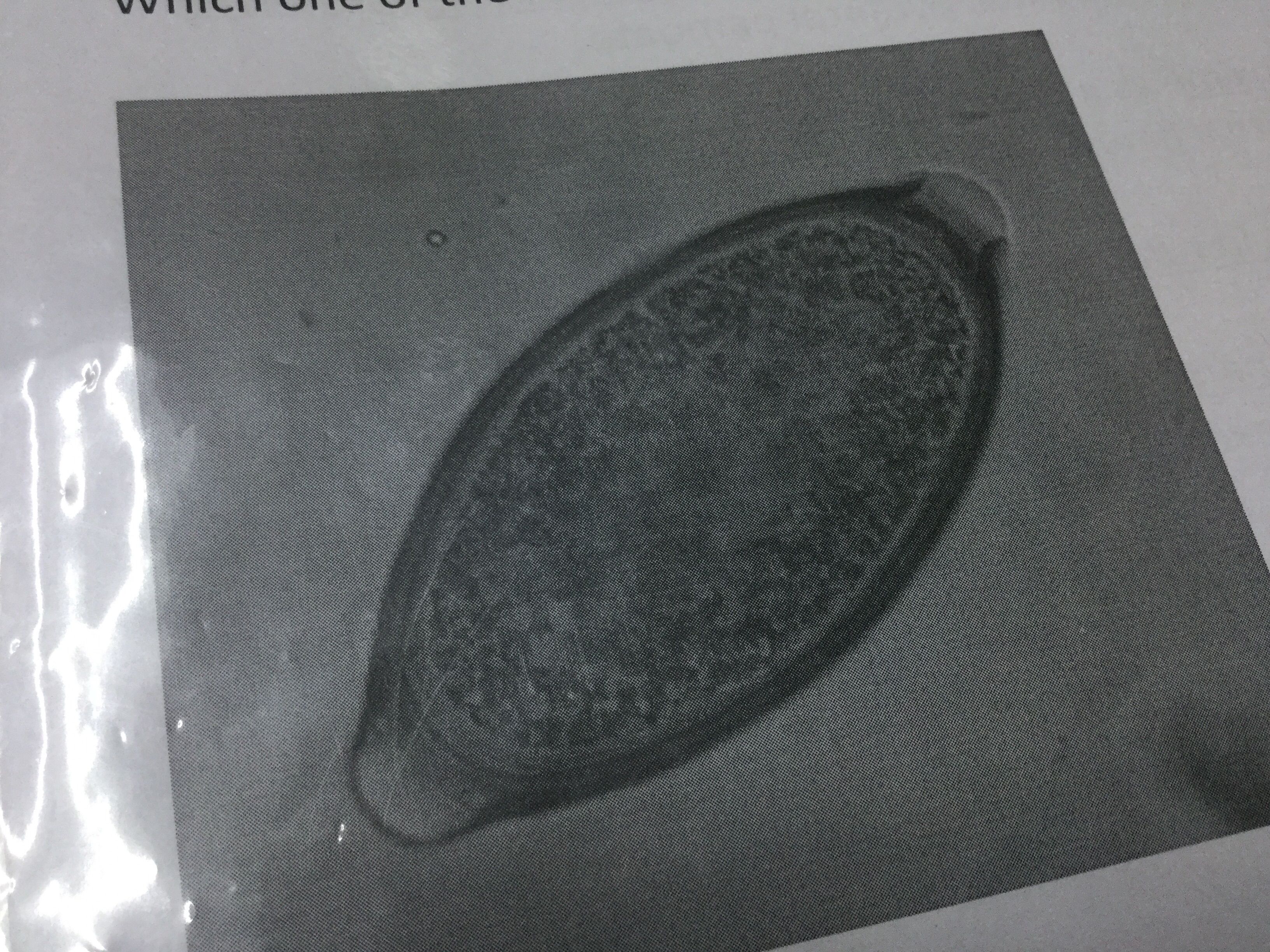
- AWhipworm
- BRoundworm
- CTapeworm
- DFluke
58Concerning the parasitic portion of the life cycle of Parascaris equorum, which statement is least accurate?
- AThe life cycle begins with ingestion of infective eggs
- BThird-stage larvae migrate via the mesenteric artery to the liver in the first week after infection
- CLarvae migrate to the lungs about 10 days after infection
- DLarvae migrate within the lungs for about 1 week before proceeding to the major airways
- EMost larvae arrive in the small intestine 2-3 weeks after ingestion
59The prepatent period for Parascaris equorum infection is?
- A75-100 days
- B65-120 days
- C55- 65 days
- D35-50 days
- E115 to 135 days
60Cattle become infected with Ostertagia ostertagi by which of the following means?
- AIngestion of infective larvae
- BIngestion of infected aribatid mites
- CTransmammary migration of infective larvae
- DTransplacental migration of infective larvae
- EIngestion of infective larvae encysted in water plants
61A 4 year old standard bred mare develops paralysis of the right side of its face. Despite various treatments, the disease progresses to lameness and paresis and the owner elects euthanasia. Necropsy reveals lesions in the brain and spinal cord containing Protozoal organisms. Which of the following is the most likely cause of these findings?
- ATrypanosomiasis equiperdum
- BBabesia caballi
- CKlossiella equi
- DSarcocystis neurona
- EBesnoitia jelisoni
Informações
- Descrição
- Quiz sobre Practice questions- Parasitology 2nd semester: RUSVM , criado por Kathryn George em 04-08-2017.
- Autor
- Kathryn George
- Idioma
- English
- Visualizações
- 596
- Etiquetas
- Avaliação
- Ainda sem avaliações Avalie este quiz