
Flashcards
Mexico XIX Century
Flashcards do conjunto (38)
- 1Why is the XIX century in Mexico known as the "Century of Anarchy"?Civil wars
Changes of Constitutions
Military and popular uprisings
Foreign interventions
Conservatives vs. Liberals
Political, economic and social instability - 2Mention some of the problems that independent Mexico faced in the creation of a Nation-StateMexico had to define its type of government
(Monarchy, Federal or Centralist Republic)
Confrontation of ideas, opinions
(Conservatives vs Liberals)
Social inequality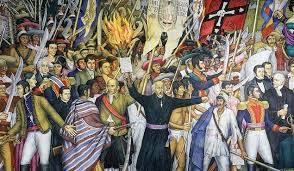
- 3Describe Mexican society in the XIX centurySocial classes:
Wealthy landowners
Small political elite (liberals & conservatives)
Majority of poor population
Indigenous people (didn't speak Spanish)
Peasants and workers had little rights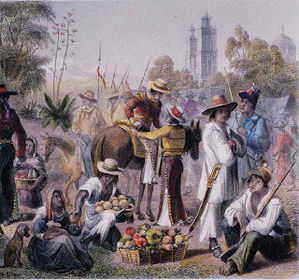
- 4How was the Mexican territory in the XIX century?The Mexican territory in the XIX century was not well integrated
All the political decisions were made in Mexico City (centralization)
The northern territories were isolated
This made Mexico vulnerable to internal and external conflicts (foreign invasions)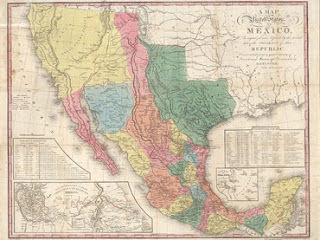
- 5Main economic problems of Independent Mexico- Little production (Indpendence war)
- No capacity to collect taxes
- Debt with UK, France and Spain
(loans, acquisition of weapons, ships, investment in mining)
- Mexico exported raw materials
and imported manufactured goods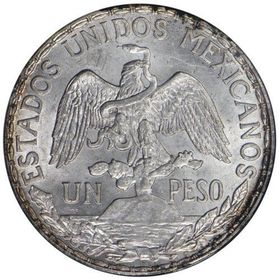
- 6What role did Agustín de Iturbide play in the Mexican Independence?Agustín de Iturbide switched bands from the Royal to the Independence army
He negotiated the terms of the Mexican Independence
Signed the Iguala Plan & Córdoba Treaties
He supported an European-style Monarchy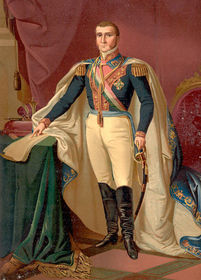
- 7First Empire Agustín de Iturbide 1822-1823After the formation of the Provisional Junta, the army supported Iturbide to become an Emperor in 1822
Iturbide was named "Agustin I"
His empire was a bad simulation of the Spanish Monarchy
The liberal Congress constantly attacked Iturbide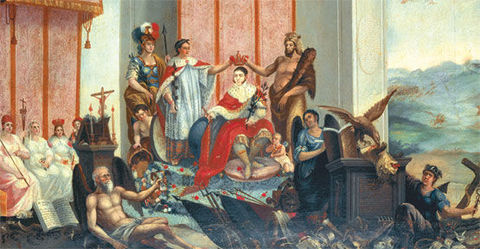
- 8Who signed the Casa Mata Plan in 1823 and what was it for?Antonio López de Santa Ana
Vicente Guerrero
Nicolás Bravo
J.A. Chávarri and others
- Its purpose was to overthrow Iturbide
- It wanted to form a new Congress
- Supported regional autonomy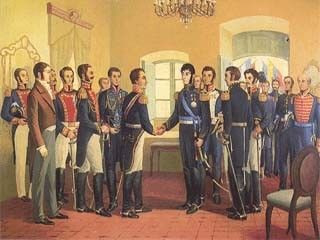
- 9The Triumvirate or Three-People Government in 1823After the fall of Iturbide, the Congress named a new executive government led by three men:
Pedro Celestino Negrete
Vicente Guerrero
Nicolás Bravo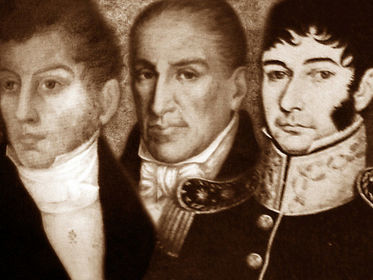
- 10Constitution of 1824Promulgated October 4th, 1824
Inspired by Cádiz & U.S. Constitution
- Established a Federal Republic
- Catholic religion
- Education & freedom of press
- Did not alter the rights of the Church and the military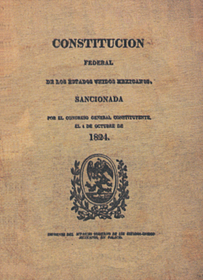
- 11The first Federal Republic in MexicoFrom 1824 - 1835
First Mexican experience with Republic
Two Triumvirates & Nine Presidents Guadalupe Victoria was the First President
Creation of the Mexican Hacienda
More loans from foreign countries
Attempt of a Spanish reconquest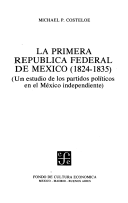
- 12Lucas Alamán Advisor to: Anastasio Bustamante & Antonio López de Santa AnnaMinister and presidential advisor
Participated in the Conservative Party
In favor of the Church
Had Liberal Constitutional ideas:
- In favor of division of powers
- Preferred a Centralist Republic in order to better organize the country
- Promoted Mexico's industrialization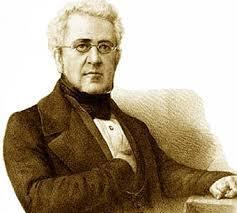
- 13First Liberal Reforms 1833Promoted by liberals: Valentín Gómez Farías, José María Luis Mora, Lorenzo de Zavala
- Abolished clergy and military "fueros"
- Took away property of the Church
- Public shcools
- National guard
- National Library, Museum, University
- 14The Central Republic Constitution of the Seven Laws 1835Reaction of the Liberal Reforms of 1833 by the Church and the military:
"Religion and privileges"
President Santa Ana expelled the liberals
New Congress
New Constitution: Seven Laws (1835)
Conservative Power
Presidential Period of 8 years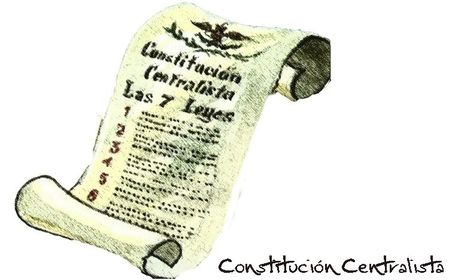
- 15Types of Government in Mexico First half of the XIX Century1. First Empire: Iturbide (1822-1823)
2. First Federal Republic (1824-1835) - Guadalupe Victoria, Guerrero, Bustamante, Gómez Farías
3. Central Republic (1835-1846) - Santa Anna, Bustamante, Bravo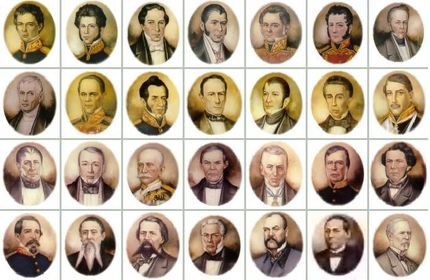
- 16—- Texas protested the new Central government (Seven Laws) and rebelled in favor of a Federal system
- U.S. nationals outnumbered Tejanos
- Santa Anna advanced in "El Álamo" but was defeated in 1836
- Treaties of Velasco: Texas Independence
- 17Types of Government in Mexico Second half of the XIX CenturyFederal Republic (1846-1863) - Santa Anna, Gómez Farías, Comonfort, Juárez
Second Empire - Maximilian
Restored Republic - Juárez & Lerdo de Tejada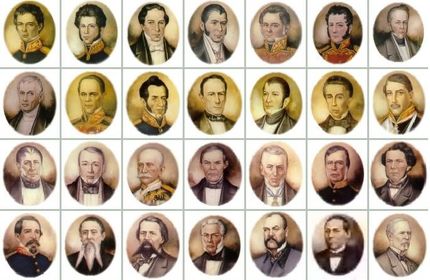
- 18Two consequences of the Central Republic (loss of territory)1. Texas Independence in 1836
2. Yucatán Peninsula secession in 1837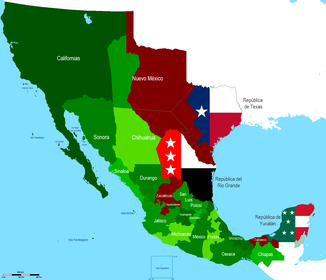
- 19First French Intervention in Mexico 1838-18 "Pastry War"France demanded reparations from damages to French businesses in the Mexican revolts, including damages to a bakery
$600,000 pesos
The French attacked San Juan de Ulúa & the port of Veracruz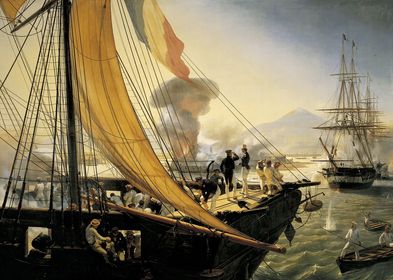
- 20The Organic Bases 1841 and 1843There were two different Organic Bases that modified the Constitution of 1835 (Seven Laws) and ended Anastasio Bustamante's presidency:
a) 1841 (Tacubaya) - Federal regime
b) 1843 - Central regime led by Santa Anna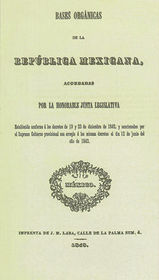
- 21U.S. - MEXICO WAR 1846 - 1848 CAUSESMexico had not recognized the Independence of Texas
US expansion policy
(Manifest Destiny, President Polk)
Mexican troops in Texas caused the US to declare War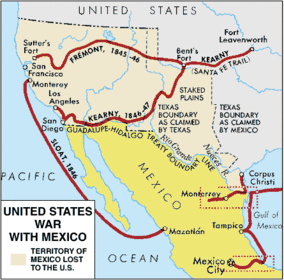
- 22US - MEXICO WAR BATTLES AND CONSEQUENCESGeneral Scott took Veracruz & Puebla
Mexico's forces were divided - between centralists and federalists
The US army took Mexico City in 1847
Santa Anna was defeated
Treaty of Guadalupe Hidalgo in 1848
Mexico lost half of its territory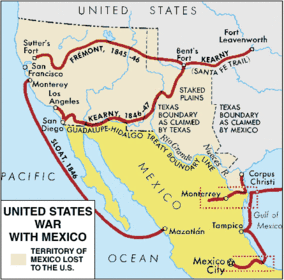
- 23Antonio López de Santa Anna His HighnessSanta Anna came back to power after the loss of the US-Mexico war
He suspended the Constitution and declared himself a dictator in 1853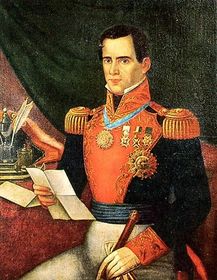
- 24The Ayutla Revolution against Santa AnnaLead by Juan Álvarez
with a group of liberals that came back from exile:
Melchor Ocapmo, Sebastián Lerdo de Tejada, Benito Juárez
Ends Santa Anna dictatorship
Elections for a Constitutional Congress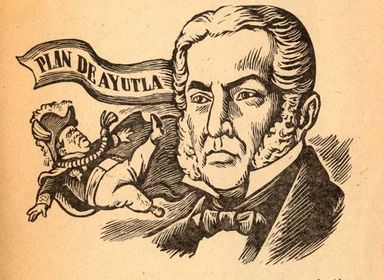
- 25The liberal Program Juan Álvarez Ignacio ComonfortAs the new Constitutional Congress deliberated, the governments of Juan Álvarez and Ignacio Comonfort promulgated the first liberal laws:
Juárez Law
Iglesias Law
Lerdo Law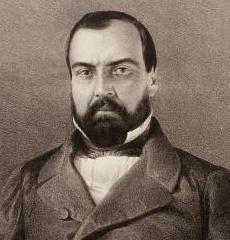
- 26JUÁREZ LAW After Benito JuárezAbolished privileges and exemptions of the Church and the military
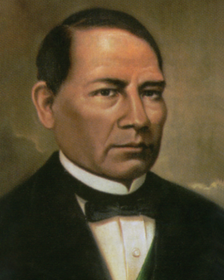
- 27IGLESIAS LAW After José María IglesiasEliminated the government obligation to demand the payment of the tithe (diezmo) to the Church
Tithe or diezmo = 1/10 of people's income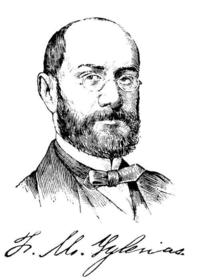
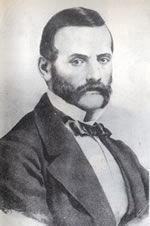
- 28LERDO LAW After Miguel Lerdo de Tejada (brother of Sebastian Lerdo de Tejada)Promoted the sale of lands owned by religious and civil corporations (ejidos)
- 29—On February 5th, 1857 a new Constitution was promulgated
1. Federal Republic
2. Individual guarantees: liberty, property
3. Recognized Catholicism, but allowed for religious tolerance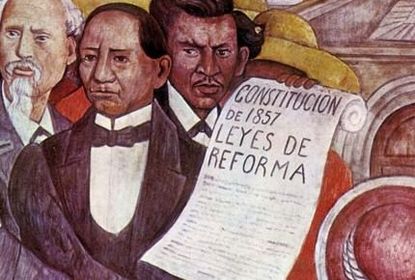
- 30REFORMA WAR or War of Three Years 1858-1861The liberal Constitution of 1857 caused disagreement among the conservative groups (Church, military, landowners)
Ignacio Comonfort pacted the cancellation of the Constitution (Tacubaya Plan)
Juárez fights to defend the Constitution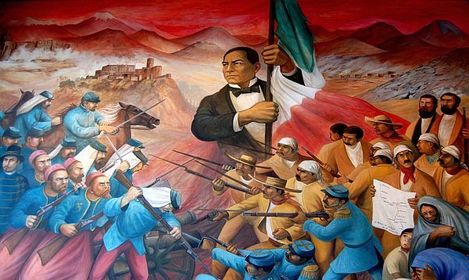
- 31—The fight between Liberals and Conservatives
Liberal side - Benito Juárez, establishes his government in Veracruz
Conservative side - Féliz Zuloaga and Miguel Miramón in Mexico City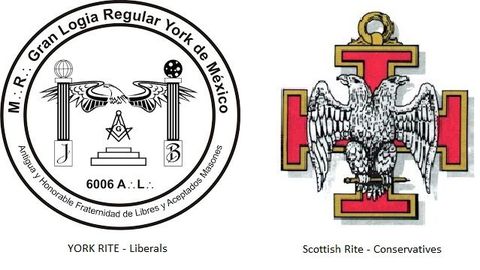
- 32—In Veracruz, Juárez promotes a series of laws that seek to complete the Liberal Reform:
1. Separation of State and Church
2. Civil Registry and Calendar
3. Religious freedom
4. Nationalization of Church property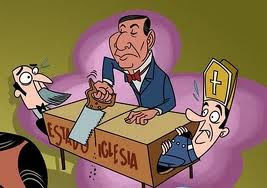
- 33Second French Intervention 1861-1867Juárez won the Reform War
1861 - Juárez suspended all the debt payments to foreign countries
1862 - Spain, UK and France landed in Veracruz, only the French stayed
5 de mayo - Battle of Puebla
1863- The French took Mexico City, Juárez exiled in El Paso & Chihuahua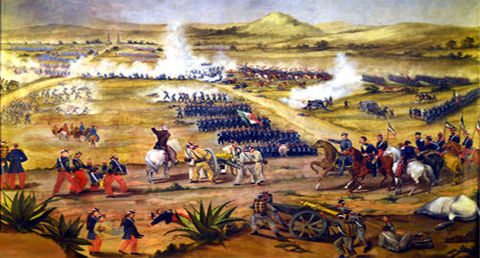
- 34Second Empire Maximilian I 1864-1867The Conservatives negotiated with the Vatican and France the creation of a European Monarchy in Mexico
1864 - Maximilian of Habsburg was declared Emperor of Mexico, supported by the French troops of Napoleon III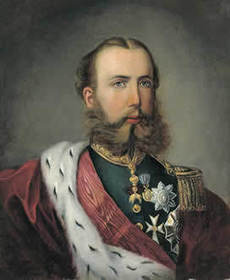
- 35End of the Maximilian Empire and the Second French Intervention 18671867 - France started war with Prusia
- The US Civil War came to an end and supported Juárez
- The French government retired its troops
- Maximilian I was left alone
- The liberals defeated the conservatives and executed Maximilian in QRO.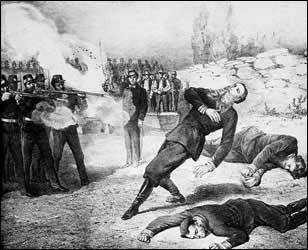
- 36—The Restored Republic
1867-1876
Period in which Juárez gets back to power in 1867 until Porifirio Díaz becomes president in 1876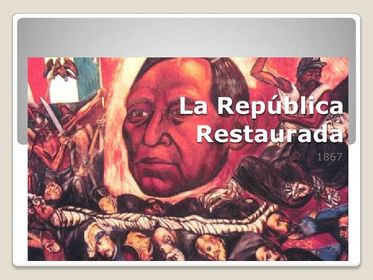
- 37—In the 1871 elections, Juárez did not obtain a clear majority against Lerdo de Tejada and Porifiro Díaz
Díaz started an uprising (Noria Plan) but he was defeated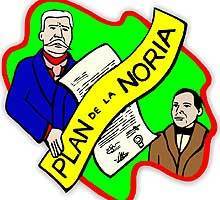
- 38Porfirio Díaz reaches the Presidency 18761872 - Juárez died without finishing his presidential period
Lerdo de Tejada substituted him
1875 - Lerdo de Tejada won the elections, but José María Iglesias and Porfirio Díaz denounced fraud
1876 - Díaz takes power through the Tuxtepec Plan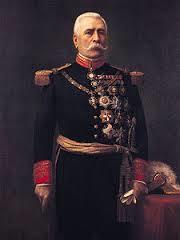
Informações
- Descrição
- Main events and processes during the XIX century in Mexico
- Criado por
- Paola Vizcaino
- Visualizações
- 855
- Tags
- Avaliação