
Flashcards
year end final review
Flashcards do conjunto (100)
- 1AmendmentA change in a document or an article added to the Constitution.
- 2Assimilateto change to ones culture or belief.
- 3BiasTo already have a favor in what you want. Usually bad
- 4BicameralTwo houses in the legislative branch
- 5BlockadeSurrounding an area to prevent sullies or people from leaving or entering
- 6BoomtownA town that is experiencing huge growth due to a spike in the economic system
- 7CapitalismIt allows private ownership and is "every man for himself"
- 8Captain of industryA business man who earns their money fairly. They treat employees right and they are just an all around good person.
- 9Checks and BalancesA system where every branch (Executive, Legislative, and Judicial) have some sort of power over each other.
- 10CongressThe national legislative body of a country
- 11Due process of lawFair and normal treatment in court
- 12EconomicsAnything to do with money growth or deduction
- 13EmancipatedFreed
- 14EnfranchiseGive the right to vote
- 15Enumeratedlisted
- 16FederalismA system of government in which power is divided between a national, state, and local
- 17Forty-ninersSomeone looking for gold during the California gold rush
- 18Free EnterpriseSmall businesses are able to compete without government interference
- 19Habeas corpusRight to a fair and speedy trial
- 20IndustryA business that supplies a specific good or service
- 21JudicialCourt system. They carry out the laws
- 22Ku Klux KlanA secret society who believes in white supremacy and will use fear/violence to get what they want
- 23Manifest DestinyThe belief that America should expand westward.
- 24MartyrSomeone who is willing to die for religious beliefs.
- 25MonopolyA business or group that owns everything and in control of everything.
- 26NomadicMoving a lot. Mostly Native American tribes who followed their food.
- 27Overrride2/3s vote in each chamber of congress required to override a veto.
- 28Popular SovereigntyThe people give the government its power.
- 29RatifyTo make official.
- 30RadicalHaving extreme beliefs.
- 31RepublicanismThe state has power.
- 32Robber BaronA business man who made his wealth by unfair wages and being ruthless.
- 33RuralNot the city. Not as technologically advanced.
- 34Separation of powerLegislative, Judicial, and Executive branches.
- 35Social DarwinismThe natural selection of business and social lives.
- 36SuffrageRight to vote.
- 37Supreme courtHighest court in the land. Holds the most power in court system.
- 38TariffTaxes on exports and imports.
- 39Taxation without representationDuring the revolutionary war era British Parliament was taxing the colonists very unfairly.
- 40Trade UnionWorkers grouping together to try and get safe working conditions, fair pay, or some other thing.
- 41UrbanThe city.
- 42VetoWhen the president declines a bill.
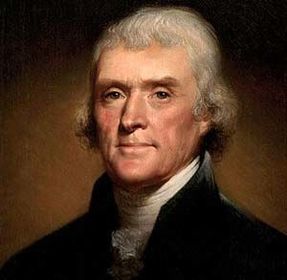
- 43Thomas Jefferson3rd president of the United States of America, wrote the Declaration of Independence, is a founding father and much more.
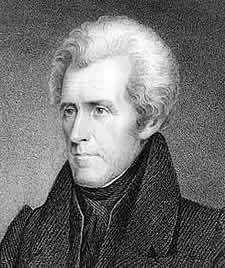
- 44Andrew Jackson7th president of the United States of America. Started the Trail of Tears and removed Native Americans from their homes.
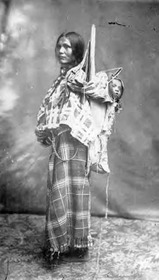
- 45SacagaweaA Native American who guided Lewis and Clark on their expedition to explore territory in the Louisiana Purchase.
- 46James PolkGained America the most land of any other president. "54-40 or fight".
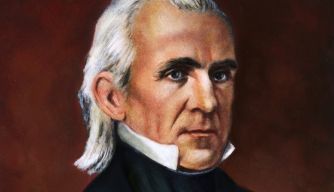
- 47Fredrick DouglassFormer slave. Escaped and became abolitionist and writer.
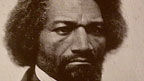
- 48Harriet Beecher StoweAbolitionist and writer of Uncle Toms Cabin. Also was a huge woman's suffrage advocate.
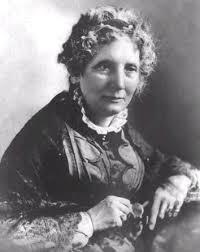
- 49John BrownA white abolitionist. He believed that violence was the only way to stop slavery.
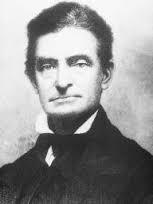
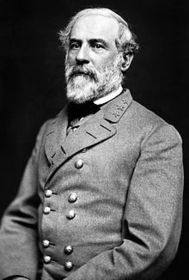
- 50Robert E. LeeSouthern Commander who wanted the Union to stay together but also wanted to follow his home state, North Carolina.
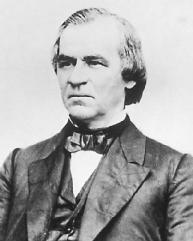
- 51Andrew Johnson17th president. He was vice president when Lincoln was assassinated so he became president. He pardoned the south after the Civil War. He was removing and hiring people and almost got impeached.
- 52Susan B. AnthonyAbolitionist and Suffragist
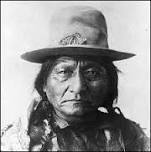
- 53Sitting BullAmerican Indian warrior. Leader of the Hunkpapa. Won at Little Bighorn
- 54George CusterFought in Civil war and Indian wars. Lost at Little Big Horn. "Custers last stand"
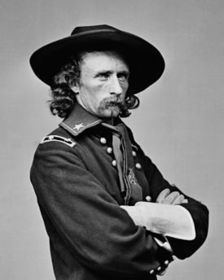
- 55Cornelius VanderbiltAn American business man and philanthropist who made his wealth in railroads and shipping.
- 56John RockefellerWas a philanthropist. Made his money off of oil.
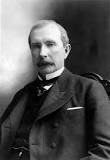
- 57Andrew CarnegieA Scottish American. Made wealth off of steel. Was a philanthropist.
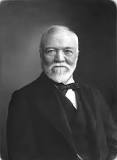
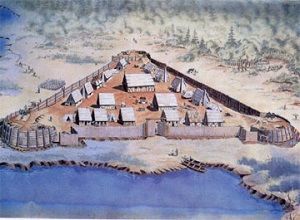
- 58JamestownWas a settlement in Virginia. Was the first permanent English settlement in America.
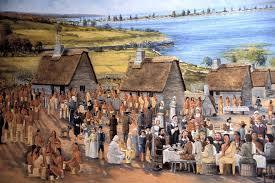
- 59PlymouthColony formed by the Pilgrims when they arrived at Plymouth Rock in 1620. Captain John Smith was leader of it.
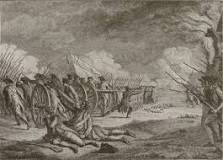
- 60Lexington and ConcordThe first military engagements of the American Revolutionary War.
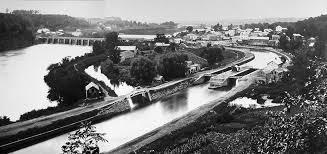
- 61Erie CanalA canal in New York that originally ran 363 miles from Albany, New York, the Hudson River to Buffalo, New York, and Lake Erie
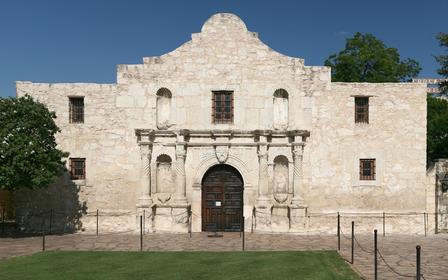
- 62The AlamoA place in Texas where there was a battle between a small group of U.S. soldiers and a large Mexican army. The U.S. soldiers were all killed.
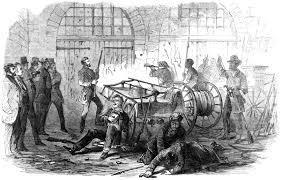
- 63Harper's FerryFort where weapons were stored and transported during the Civil War. John Browns raid occurred here.
- 64Fort SumterSouth won the fort. Started the Civil War.
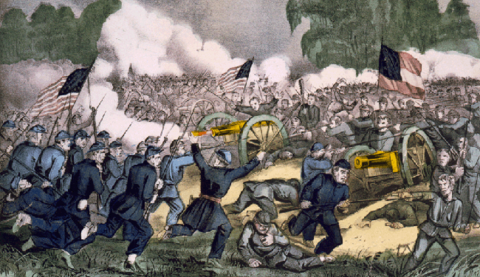
- 65GettysburgNorth won. Bloodiest battle of the war. Turning point of the war.
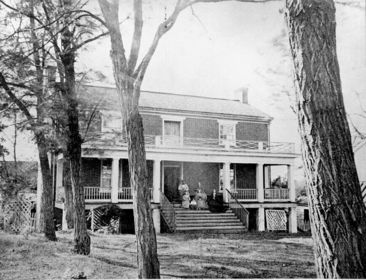
- 66Appomattox CourthouseThis is where General Lee surrendered to the northern army.
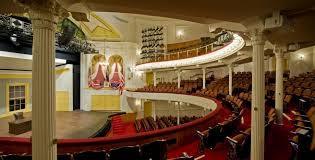
- 67Ford's TheaterThe theater where Lincoln was shot.
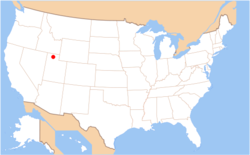
- 68Promontory Point, UtahWhere the transcontinental railroad finished/met.
- 69Ellis island and Angel islandAngel: Where Asian immigrants arrived
Ellis: Where Irish immigrants and any other Europeans arrived.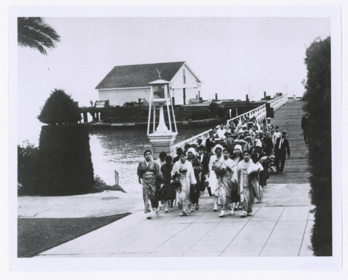
- 70Declaration of IndependenceOur "break up letter" with Great Britain. We are declaring our independence.
- 71Revolutionary warThe war between us and Britain. We are trying to gain independence.
- 72Articles of ConfederationThe original Constitution.
- 73Great CompromiseVirginia plan: Large states. Based on population
New Jersey plan: Each state one vote. Equal representation.
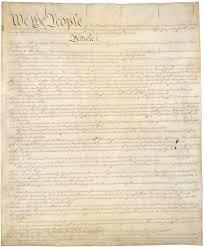
Great compromise is having senate equal and house is based on population. - 74Passing of the ConstitutionContains the Bill of Rights. Federalist and Anti-Federalists groups were formed. Was ratified in 1788.
- 75Adding the Bill of RightsPut in for the Anti-Federalist because they didn't want the Constitution so they compromised and passed the Bill of Rights.
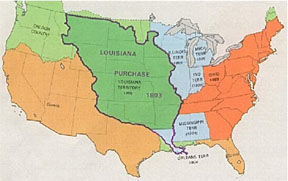
- 76Louisiana PurchaseJames Monroe got us it in 1803. It cost $15 million which is less than three cents per acre. We got it from the french.
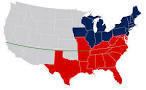
- 77Missouri Compromise36'30 parallel was the line that divided the north and south. This said that any state above it was free and any state below was slave.
- 78Indian removal actsAlso know as the trail of tears this was enacted by Andrew Jackson. This moved all Native Americans to Oklahoma . This was a long journey that was all done on foot.
- 79Mexican-American warJames K. Polk was the one who started it. He believed we had a Manifest Destiny. At first he offered money but they rejected so we decided to go to war. We gained all the southwest territory, Oregon territory, and Texas.
- 80California Gold RushGold was found and peopled rushed to get there so they could hopefully strike rich.
- 81Homestead ActThe government was giving away free plots of land. First come first serve. Many people cheated called sooners. Boomers were people who wanted the land.
- 82Industrial revolutionWhere we became a technological nation rather than agricultural.
- 83Underground RailroadNot really underground. A system of houses that runaway slaves could go to to get help. Harriet Tubman was a huge help being a conductor.
- 84Seneca Falls ConventionWhere the first woman's rights convention was.
- 85Compromise of 1850Fugitive slave act was passed in this. California as a free state Utah and New Mexico territories decide on slavery with popular sovereignty. Slave trade ends in Washington D.C.
- 86Kansas-Nebraska ActAllowing the Kansas and Nebraska territories to use popular sovereignty to decide on slavery.
- 87Dred Scott vs. StanfordDred scotts master moved to a free state and he went to court to try and get him and his family freed. He unfortunately lost.
- 88Fugitive Slave ActThis said that any runaway slave was to be brought back to his/her master. If you didn't return them you could go to jail.
- 89Bleeding KansasViolent time during Kansas history. People were trying to settle here so they could vote on the matter of slavery in Kansas.
- 90Civil WarThe war between the south and north. North against slavery South for it. Largest loss for the U.S.A. than any other war.
- 91Emancipation ProclomationThis freed all slaves in area of rebellion.
- 92Civil War Draft RiotsRiots formed by people being drafted to fight in the war.
- 93Gettysburg AdressLincoln's most famous speech to give people hope after the huge death toll at the battle of Gettysburg.
- 94ReconstructionThe time period after the Civil War where we tried to piece the country back together.
- 95Civil War ammendments13th- Abolished slavery in the U.S.A
14th- Granted citizenship
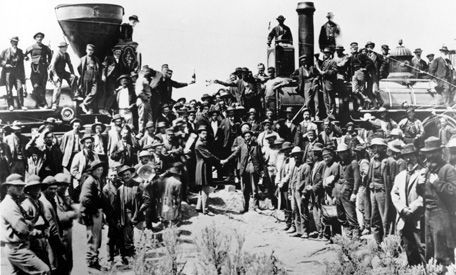
15th- Gave all ex-slaves the right to vote - 96Completion of the Trans-Continental RailroadCompleted at Promontory point Utah. Chinese immigrants mainly built to the left of the rocky mountains and Irish immigrants to the right.
- 97Indian WarsThe battles over land between the Americans and Native Americans.
- 98Gilded AgeA time were big business became more prevalent. Robber Barons and Captains of Industry arose out of this age.
- 99Populist PartyKansans started this because the only people representing them were rich.
- 100Plessy vs FergusonThis court case basically made segregation legal.