
Quiz
Cog final
Create a free account to finish this quiz
Save your progress and see your final score.
Already have an account? Sign in
Questions in this quiz (66)
1What are the forms of context?
- APhysical location
- BTime of day
- CPhysiological/emotional state
- DPhysical Characteristics of Surroundings
- EAll of the above
2What does Encoding Specificity mean?
- AThe way you encode things will not be the way you remember
- BThe way you encode things is how you will remember things
- CThe way you encode things will help variability
- DThe way you encode things will not help you
3 Elizabeth Loftus research found that….
- AMemories are very malleable
- BEyewitness testimonies
- CIt introduces false memories
- DAll of the above
4This graph is an example of the
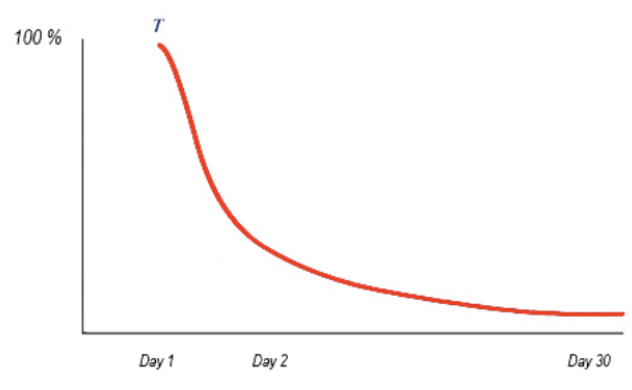
- ARemembering curve
- BLearning Curve
- CForgetting curve
- DRetention curve
5Variability is good for long-term retention/recall
- ATrue
- BFalse
6What is proactive Interference
- ASomething you learned later interferes with something you learned earlier
- BThe more facts associated with a concept, the slower you are to retrieve the concept
- CSomething you learned earlier interferes with something you learned later
- DNew learning is preventing you from recalling things before
7What is Retroactive Interference?
- ASomething you learned later interferes with something you learned earlier
- BThe more facts associated with a concept, the slower you are to retrieve concept
- CSomething you learned earlier interferes with something you learned later
- DSomething you know interferes with something new you’re learning
8The Fan Effect
- ASomething you learned later interferes with something you learned earlier
- BThe more facts associated with a concept, the slower you are to retrieve concept; only works for irrelevant facts
- CSomething you learned earlier interferes with something you learned later
- DSomething you know interferes with something new you’re learning
9Inferences are made at the time of _____ more than the time of _______
- AEncoding; recall
- BRecall; consolidation
- CRecall; encoding
- DConsolidation; encoding
10Imagine you are staying at a hotel and keep opening the closet door when you mean to open the bathroom door because the closet door in the hotel is in the same location as your bathroom door at home. What cognitive phenomenon can explain this?
- AFalse Memories
- BAssociative Spreading
- CProactive Interference
- DRetroactive Interference
11Imagine you participate in a paired association task in which words from list A are associated with numbers from list B (cat-43, house-61, etc.). You first learn to associate list A with list B (A-B) and then later you learn to associate list A with list D (A-D) (cat-82, house-37, etc.). Why would it be hard to recall the A-B associations after you learn the A-D pairings?
- AAssociative Spreading
- BFalse Memories
- CRetroactive Interference
- DProactive Interference
12If you are trying to remember the name of a person you met last week and your friend “helps” you by suggesting possible names (“Was it Bob? Was it Bill? Was it Joe?”), this might actually make it harder to remember the name of the person. Which phenomenon is this an example of?
- AProactive Interference
- BFan Effect
- CBlocking
- DRetroactive Interference
13What is the name of the phenomenon when you know the answer to a question but can’t quite think of it for the moment? In this situation, you might know which letter the answer starts with or the number of syllables, but not be able to say the answer itself.
- ABlocking
- BTip of the Tongue Phenomenon
- CPlausible Retrieval
- DFan Effect
14 ________ refers to how strongly a memory is encoded, regardless of whether you can access it or not.
- ARetrieval strength
- BKnowledge
- CIntuition
- DStorage strength
15Elizabeth Loftus has shown that it is possible to create a memory of being lost in the shopping mall as a young child, even though the event never happened. What sort of memory is that?
- ADeclarative Memory
- BLong-Term Memory
- CShort-Term Memory
- DFalse Memory
16Which of the following is NOT a type of context that gets associated with memories?
- AAll of these are types of context
- BPhysical location
- CTime of day
- DEmotional state
17 Imagine you are studying for three different tests in subjects A, B, and C. You have three days to study and you can study for 3 hours per day. (Each letter represents 1 hour of study and spaces separate the days.) Which of the following distributions of study would lead to the best long term recall for the three subjects?
- ABBB AAA CCC
- BAAA BBB CCC
- CAAB BBC CCA
- DABC BCA CAB
18 Which of the following is a type of declarative memory? (The rest are non-declarative types of memories.)
- AEpisodic
- BProcedural skills
- CHabits
- DPriming
19Which of the following is NOT a type of Implicit (Non-Declarative)
- ANonassociative (Habituation/sensitization)
- BSemantic
- CPriming
- DConditioning
- EProcedural skills
20 What are the two parts of Long-Term Memory
- AControl Executive and Sensory
- BNon-Declarative and Control Executive
- CDeclarative and Non-Declarative
- DDeclarative and Sensory
21 Which is NOT a reason why Spacing helps?
- AInterference
- BFalse Memories
- CDifferent/Better Retrieval Cues
- DForgetting
22A____ retrieval strength is associated with a small increase in storage space while a ___ retrieval strength is associated with a big increase in storage space
- ALow; high
- BHigh; low
- CWeak; strong
- DMedium; low
23Which one is NOT an operating Heuristic
- ABackup Avoidance
- BWorking backward/forwards
- CDifference Induction
- DMeans-Ends Analysis
24What do humans use for problem space?
- ABrute Force
- BInductions
- CHeuristics
- DDeduction
25What are the states of problem space?
- AInitial State
- BGoal State
- CState Transitions
- DAll of these are correct
26What are the effects of Incubation?
- AReduces blockage
- BThinks about it more
- CChanges the context
- DBoth reduces blockage and changes the context
27Cognitive psychologists think of solving problems as moving through a ___________.
- Asolution set
- Bproblem area
- Cheuristic zone
- Dstate space
28To a solve a problem, one must move from the ________ to the ________ through a series of ________.
- Agoal state; initial state; random guesses
- Binitial state; goal state; random guesses
- Cinitial state; goal state; state transitions
- Dgoal state; initial state; state transitions
29The saying “Always move forward, never go backwards” best describes which operating heuristic?
- AWorking Backward
- BDifference Reduction
- CWorking Forward
- DMeans-Ends Analysis
30What is the major difference between how humans solve problems compared to how computers solve problems?
- AHumans search thoroughly through all possibilities using brute force while computers look for patterns and use heuristics.
- BThey are actually very similar – both humans and computers look for patterns and use heuristics.
- CHumans look for patterns and use heuristics while computers search thoroughly through all possibilities using brute force.
- DThey are actually very similar – both humans and computers search thoroughly through all possibilities using brute force.
31Seemingly difficult problems like the mutilated checkboard puzzle are easy if you have _________.
- Athe right mental attitude
- Bthe correct problem representation
- Cthe Einstellung effect
- Dfunctional fixedness
32Which of the following barriers to problem-solving is McGyver especially good at overcoming?
- ABackup avoidance
- BFunctional fixedness
- CThe Einstellung effect
- DExerting proper effort
33When you find a solution to a problem and then keep using that solution despite the fact that other easier solutions are available, you are falling prey to _________.
- Athe Einstellung effect
- Bthe wrong problem representation
- Cfunctional fixedness
- Dbackup avoidance
34Which choice below has Wallas’s Four Stages of Problem Solving in the correct order?
- APreparation; Incubation; Illumination; Verification
- BPreparation; Illumination; Incubation; Verification
- CVerification; Illumination; Incubation; Preparation
- DIllumination; Verification; Incubation; Preparation
35 If you are trying to solve a difficult problem and get stuck, the best thing to do is
- Akeep going and work on it as long as possible
- Btake a break from the problem and think about something else for a while
36Which of the following are true about the analogical transfer of operators?
- ANovices use surface similarity while experts use deep similarity
- BNeither novices nor experts use deep similarity
- CExperts use surface similarity while novices use deep similarity
- DPeople aren’t very good at using analogies to solve problems
37The fact that Brazilian schoolchildren could easily calculate the cost of 5 lemons at 35 cruzeiros each when selling fruit on the street but struggled to solve the math problem 5 x 35 in school demonstrates that __________.
- Amost children are bad a math
- Blemons make you smarter
- Cexpertise generalizes widely
- Dexpertise is domain specific
38When people try out for American Idol yet can’t sing in key, that is evidence that they are __________.
- Aunskilled & aware
- Bunskilled & unaware
- Cskilled & unaware
- Dskilled & aware
39When people are particularly bad in some domain, they tend to overestimate their abilities. What happens when they get some training in that domain?
- ATheir estimate of their skills stays the same.
- BTheir estimate of their skills goes up.
- CThey become worse in the domain.
- DTheir estimate of their skills goes down.
40In which stage of skill acquisition are the rules for performance being chunked and consolidated into procedural memory?
- ACognitive stage
- BAutonomous stage
- CAssociative stage
- DIndependent stage
41If a chess expert is asked to memorize and then replicate a chessboard with pieces in random (non-game) positions, he or she remembers ________.
- Amore pieces than a chess novice
- Babout as many pieces as a chess novice
- Call of the pieces perfectly
- Dfewer pieces than a chess novice
42According to Allard & Starks (1991), why are Field Hockey experts better than Volleyball experts at remembering the configuration of players in a game?
- AThe configuration of players is important in Field Hockey but not in Volleyball.
- BThe configuration of players is important in Volleyball but not in Field Hockey.
- CVolleyball experts tend to have more hours of practice than Field Hockey experts.
- DField Hockey experts tend to have more hours of practice than Volleyball experts.
43What do you call practicing in an effortful, self-monitoring mode, meant to improve specific aspects of performance?
- APractice
- BEffortful practice
- CDeliberate practice
- DEmbracing the grind
44In which stage of skill acquisition are the rules for performance being transferred from declarative memory to procedural memory?
- AStrategic Learning
- BTactical Learning
- CPerceptual Learning
- DProceduralization
45Which is an area of expertise that is often overlooked, but which can be trained specifically to improve information discovery and pickup?
- ASensory Expertise
- BProblem Sensation
- CProblem Memory
- DPerceptual Learning
46Which philosophical perspective correctly proposes that the mind is like a patchwork of specialized modules?
- ATheory of Identical Elements
- BThe Quilt Theory of Cortical Structure
- CDoctrine of Formal Discipline
- DHumanist Perspective
47Rule: “If it’s raining, then the driveway is wet.” The driveway is not wet, therefore you can conclude ___________ by ___________.
- Ait is raining; Modus Tollens
- Bit is not raining; Modus Ponens
- Cit is raining; Modus Ponens
- Dit is not raining; Modus Tollens
48What is it called when people fail to consider the basic probability of events when reasoning, such as the small number of Ivy League Classics professors compared to truck drivers?
- AConditional rate bias
- BConditional rate neglect
- CBase rate neglect
- DBase rate bias
49If a roulette wheel has hit red 10 times in a row and you want to bet on black because you think black is “overdue,” then you have fallen victim to ___________.
- Athe representativeness heuristic
- Bthe availability heuristic
- Cthe gambler’s fallacy
- Dbase rate neglect
50If you have a 50% chance to win $100, what is the expected value of that proposition?
- A$100
- B$50
- C$25
- D$0
51Which of the following propositions are people usually more likely to accept?
- AA 100% chance to win $1 Million
- BA 50% chance to win $2 Million and a 50% chance to win nothing.
52Which of the following propositions are people usually more likely to accept?
- AA 100% chance to lose $1 Million
- BA 50% chance to lose $2 Million and a 50% chance to lose nothing
53When the new husband tells the bride’s father, “Don’t think of it as losing a daughter, think of it as gaining a son!” he is using __________.
- Aanchoring and adjustment
- Bthe representativeness heuristic
- Cthe availability heuristic
- Da framing effect
54When people judge it more likely that there will be a major earthquake that strikes California in the next month than there will be a major earthquake that strikes the United States in the next month, they are using __________.
- Aa framing effect
- Banchoring and adjustment
- Cthe representativeness heuristic
- Dthe availability heuristic
55After seeing several television programs on shark attacks, you start to think that such incidences are relatively common. When you go on vacation, you refuse to swim in the ocean because you believe the probability of a shark attack is high. You are using _________.
- Aanchoring and adjustment
- Bthe representativeness heuristic
- Cthe availability heuristic
- Dhindsight bias
56You are cleaning the kitchen and set a glass pitcher on the counter. A moment later, you knock the pitcher off the counter, shattering it on the ground. You think to yourself “I knew that was going to happen!” You are using ________.
- Athe availability heuristic
- Bhindsight bias
- Canchoring and adjustment
- Dthe representativeness heuristic
57This syndrome is characterized by fluent but relatively meaningless speech.
- AWernicke’s Aphasia
- BNone of these
- CConduction Aphasia
- DBroca’s Aphasia
58This syndrome is characterized by disfluent but meaningful speech.
- ANone of these
- BWernicke’s Aphasia
- CBroca’s Aphasia
- DConduction Aphasia
59Which of the following are important characteristics of language?
- AProductivity
- BGrammar
- CRegularity
- DAll of these
60Which of the following aspects of grammar describes word order and inflection?
- AAll of these
- BPhonology
- CSyntax
- DSemantics
61When people make speech errors, sound substitutions tend to occur ________ phrases and word substitutions tend to occur ________ phrases.
- Abetween; between
- Bwithin; within
- Cwithin; between
- Dbetween; within
62What is the strong Whorfian Hypothesis?
- ALanguage depends on thought
- BLanguage and thought are independent of each other
- CThought depends on language
- DNone of these
63When children start babbling at about 6 months old, what is special about the sounds they make?
- AThe sounds are only the phonemes they hear around them.
- BThe sounds are all the phonemes from every language in the world.
- CThe sounds form words.
- DThe sounds form phrases.
64What’s interesting about the two-word utterances children make at around 18 months of age?
- AThe words are consistently different than the correct order for the language in their environment.
- BThe words are randomly ordered.
- CChildren don’t make two word utterances until they are 3 years old.
- DThe words are in the correct order for the language in their environment.
65What is a creole?
- AAll of these.
- BA collection of words from different languages without grammar.
- CThe default accent babies have when they first start talking
- DA full-fledged language with grammatical rules.
66What is interesting about pidgins and creoles?
- AIf children grow up hearing a pidgin, they never learn grammar.
- BIf children grow up hearing a creole, they turn it into a pidgin by adding grammatical rules.
- CIf children grow up hearing a pidgin, they turn it into a creole by adding grammatical rules.
- DIf children grow up hearing a creole, they never learn grammar.
Information
- Description
- final Cognition Quiz on Cog final, created by Lluvia Gonzalez on 28/11/2018.
- Author
- Lluvia Gonzalez
- Language
- English
- Views
- 0
- Tags
- Rating
- No ratings yet Rate this quiz