
Quiz
Fasciola hepatica
This quiz has question types that open in the usual player.
Questions in this quiz (17)
1What is the name of the snail that is the most important intermediate host in Australia?
- AAustropeplea tomentosa
- BPseudosuccinia columella
- CLand snail
2Label the life cycle of Fasciola hepatica
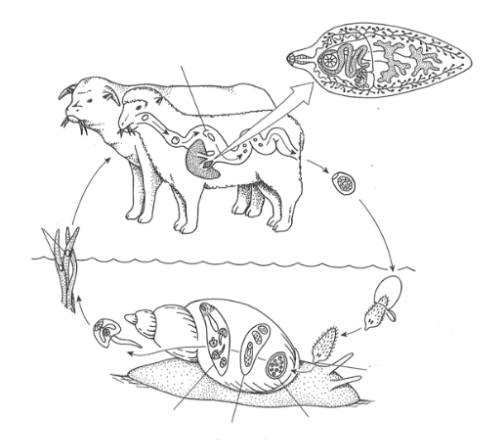
- ASporocyst
- BSporozoite
- CFormation of rediae
- DFormation of cercaria
- ERediae filled with cercariae
- FSporocyst filled with rediae
- GCercariae emerge
- HRediae emerge
- ICercariae encyst on vegetation
- JRediae encyst on vegetation
- KMetacercariae ingested
- LCercariae ingested
- MJuveniles enter duodenum
- NJuveniles enter liver
- OFluke moves to liver
- PFluke moves to lungs
- QEntry to bile duct
- REntry to liver
- SEgg in faeces
- TEgg in urine
- UEggs develop in water
- VEggs die in water
- WMiracidia penetrate snail
- XMiracidium penetrate snail
3What are the 3 main factors that are associated with fasciolosis outbreaks?
- ASuitable snail habitat (ponds, streams, irrigation canals)
- BTemperature > 10 degrees
- CMoisture
- DTemperature < 30 degrees
- EFood available
- FSuitable snail habitat (pastures, crops)
4What are the types of disease associated with fasciolosis?
- AAcute, subacute and chronic
- BAcute and chronic
- CAcute only
- DChronic is the only type with clinical significance
5What is associated with chronic disease?
- AOccurs 4-5 months after ingestion of metacercariae
- BOccurs 10-12 months after ingestion of metacercariae
- COccurs 1-2 months after ingestion of metacercariae
- DCauses billary fibrosis and calcification
- EHemorrhage and necrosis of liver
6Acute disease is most common in [blank_start]sheep[blank_end], occurs [blank_start]2-6 weeks[blank_end] after ingestion of large numbers of [blank_start]metscercariae[blank_end]. Causes [blank_start]hemorrhages[blank_end] and necrosis of the [blank_start]liver.[blank_end]
- Asheep
- Bcattle
- C2-6 weeks
- D4-8 weeks
- Emetacercariae
- Fsporocytes
- Ghemorrhages
- Hcalcification
- Iliver
- Jbillary duct
7In an acute disease how many metacercariae are ingested by an animal?
- A>2000
- B500-1500
- C200-500
8What stage of disease causes liver damage pictured?
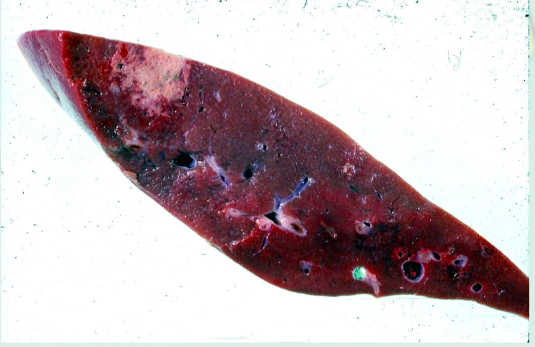
- AAcute
- BSubacute
- CChronic
9How many adult liver flukes does it take to cause death in sheep?
- A500
- B250
- C1000
- D100
10How many adult liver flukes does it take to cause significant production loss?
- A20-30
- B100 -150
- C50-60
- D10-20
11How big is this F. hepatica egg?
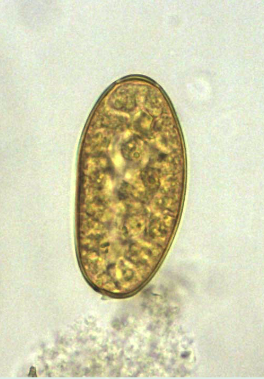
- A130 x 60 um
- B130 x 60 ym
- C200 x 60 um
- D120 x 30 um
12What is the pre-patent period of F. hepatica?
- A3-4 months
- B5-6 months
- C10-12 monts
- D1-2 months
13What are the 3 main diagnostic techniques used to detect an infection of Fasciola hepatica?
- ASedimentation test
- BELISA
- CPCR
- DPost mortem findings (liver - enlarged, hemorrhagic, necrotic lesions, fibrosis, pale, firm)
- EZinc sulfate flotation test
- FFecal egg count
14What methods of snail control are used to prevent disease spread?
- AAnthelmintics
- BPasture management
- CCulling infected animals
15What chemotherapeutics are used to control Fasciola hepatica?
- ATriclabendazole
- BAlbendazole
- CClosantel
- DClorsulon
- ENitromec
16How many preventative drenches should be administered per year and when?
- ATwo - Late autumn, Early summer
- BOne - Late winter/ early spring
- CThree - Late autumn, Late winter/early spring, Mid summer
17What type of Fasciola is this?
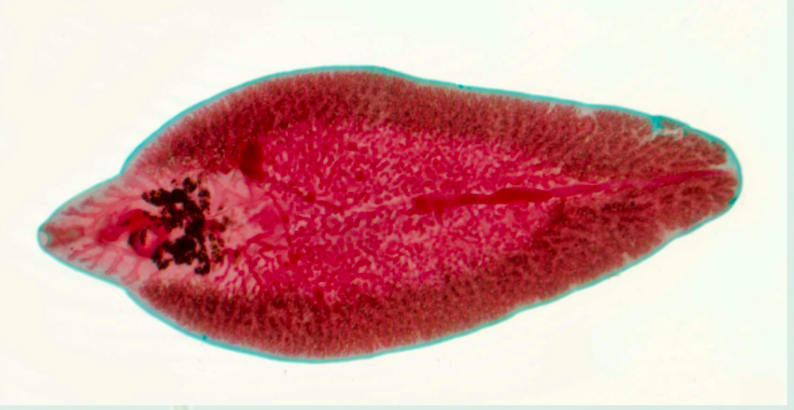
- AF. hepatica
- BF. gigantica
- CF. magna
Information
- Description
- Trematode - Helminths
- Author
- Caitlin Wringe
- Language
- English
- Views
- 11
- Tags
- Rating
- No ratings yet Rate this quiz