
Quiz
Dirofilaria immitis - Heartworm
This quiz has question types that open in the usual player.
Questions in this quiz (31)
1Label the lifecycle.
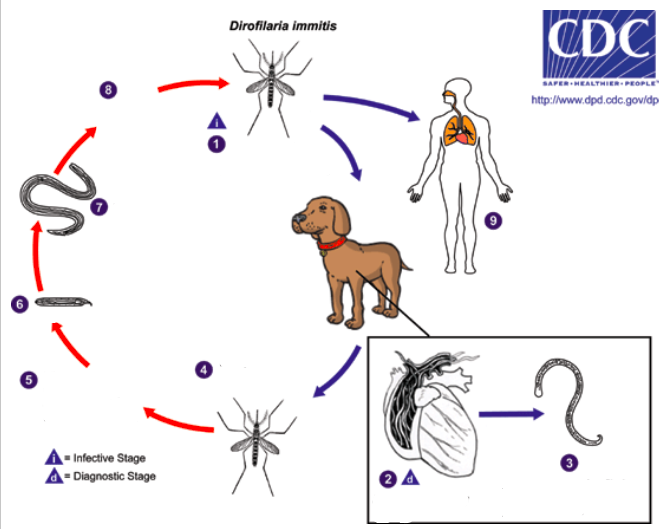
- AL3 larvae enter bite mosquito wound
- BL1 larvae enter mosquito bite wound
- CAdult in pulmonary arteries
- DAdult in ventricles
- EMicrofilariae form in peripheral blood
- FMetacercariae form in peripheral blood
- GMosquito ingests microfilariae
- HMosquito ingests metacercariae
- IMicrofilariae enter midgut and tubules
- JMetacercariae enter gut and tubules
- KL1 larvae
- LL3 larvae
- ML3 larva
- NL1 larva
- OL3 moves to mosquito proboscis
- PL1 moves to mosquito proboscis
2What organs does heart worm invade?
- APulmonary arteries and right ventricle
- BPulmonary arteries and left ventricle
- CPulmonary veins and right atrium
- DPulmonary veins and left atrium
3Which Australian state has the highest prevalence of heart worm and what percentage is it?
- ASA 1%
- BQLD 40%
- CNSW 34%
- DVIC 54%
4What is the intermediate host for this parasite?
- AMosquito
- BMice
- CFleas
- DLand snails/slugs
5What is the prepatent period for heart worm?
- A6 months
- B1-2 months
- C12 months
- D4 months
6Match the label to the hearts - which one is normal and which isn't?
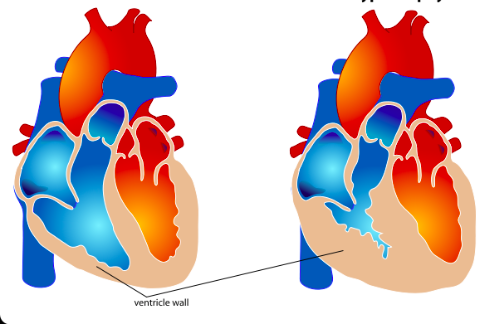
- ANormal
- BLeft ventricular hypertrophy
- CRight ventricular hypertrophy
- DRight atria hypertrophy
7What are the major health concerns and clinical signs can be a result of heart worm infections in dogs?
- APulmonary hypertension
- BCor pulmonale
- CPulmonary thromboembolism
- DHepatomegaly
- EHeart murmurs
- FLiver failure syndrome (hemaglobinemia/hemaglobinuria
8What is Cor pulmonale?
- ARight sided congestive heart failure secondary to pulmonary hypertension
- BRight sided congestive heart failure independent to pulmonary hypertension
- CPulmonary thromboembolism
- DLiver failure syndrome
9The clinical signs for a dog with heart worm are classified based on severity and progression of the infection.
Class 1: Early infection/mild disease. [blank_start]Cough[blank_end] or [blank_start]no signs[blank_end].
Class 2: Moderate. [blank_start]Cough[blank_end], [blank_start]exercise intolerance[blank_end], [blank_start]abnormal lung sounds[blank_end].
Class 3: Severe. Class 2 signs in addition to [blank_start]dyspnea[blank_end], [blank_start]hepatomegaly[blank_end], [blank_start]syncopy[blank_end], [blank_start]ascites[blank_end], death.
Class 4: Caval syndrome. [blank_start]Intravascular haemolysis[blank_end], [blank_start]haemoglobinuria[blank_end], [blank_start]anaemia[blank_end], [blank_start]liver failure[blank_end]- ACough
- BVomiting
- Cno signs
- Dweight loss
- ECough
- FDiarrhoea
- Gexercise intolerance
- Hweight loss
- Iabnormal lung sounds
- Jabnormal heart sounds
- Kdyspnea
- Lvomiting
- Mhepatomegaly
- Nliver failure
- Osyncopy
- Pdull hair coat
- Qascites
- Ranorexia
- SIntravascular haemolysis
- TIntramuscular haemolysis
- Uhaemoglobinuria
- Vhaematuria
- Wanaemia
- Xpolycythemia
- Yliver failure
- Zheart failure
10What type of diagnostic test in. dogs is used to detect heart worm?
- AAntigen-ELISA tests
- BModified Knotts test
- CFilter test
- DDirect smear
- EHematocrit tube
11What are the 4 types of Microfilaria tests available for heart worm detection in dogs?
- ADirect smear
- BModified Knotts test
- CFilter test
- DHematocrit tube
- EELISA
12What 2 species of worms' microfilaria can be detected by an examination of blood for circulating microfilaria (Microfilaria test)?
- ADirofilaria immitis and Dipetalonema reconditum
- BDirofilaria immitis and Dirofilaria repens
- CDirofilaria immitis and Dipetalonema streptocerca
- DDirofilaria immitis and Dirofilaria tenuis
13Antigen tests can only be used on dogs [blank_start]7 months[blank_end] of age and older.
Microfilaria tests can only be used on dogs over the age of [blank_start]6 months[blank_end].- A7 months
- B12 months
- C6 months
- D7 months
14The antigen test kit detects the female worm
- ATrue
- BFalse
15Dogs should be treated with [blank_start]adulticide[blank_end] followed [blank_start]4-6 weeks[blank_end] later with a [blank_start]microfilaricide[blank_end].
[blank_start]Antigen ELISA[blank_end] tests should be negative [blank_start]4-6 months[blank_end] post treatment if successful.- Aadulticide
- Bmicrofilaricide
- Cmicrofilaricide
- Dadulticide
- EAntigen ELISA
- FMicrofilaria
- G4-6 months
- H10-12 months
- I4-6 weeks
- J6-8 weeks
16What are the two adulticides that can be used to treat dogs with heart worm and are they rapid or slow kill?
- AMelarsonine - rapid
- BMelarsonine - slow
- CIvermectin - rapid
- DIvermectin - slow
17Ivermectin is safer for dogs at high risk of thromboembolism.
- ATrue
- BFalse
18[blank_start]Melarsomine[blank_end] treatment protocols for dogs can be either a 2 injection or 3 injection protocol.
2 injection: 1 dose, repeat in [blank_start]24 hours[blank_end].
3 injection: 1 dose, wait [blank_start]4-6 weeks[blank_end] then follow 2 injection protocol.- AMelarsomine
- BIvermectin
- C24 hours
- D4-6 weeks
- E4-6 weeks
- F24 hours
19What microfilaricides can be used after 4-6 weeks from treating with adulticide?
- AIvermectin
- BMilbemycin
- CMoxidectin
- DAlbendazole
20Use of microfilaricides carries risk as high doses can cause reactions in dogs with high microfilaria counts. How long should these high risk dogs be hospitalised for post treatment?
- A12 hours
- B24 hours
- C8 hours
- D4-6 hours
21Cats are more susceptible to heart worm infections that dogs.
- ATrue
- BFalse
22There is a smaller number of worms with a shorter lifespan involved in a heart worm infection in cats than there is in dogs.
- ATrue
- BFalse
23HARD ([blank_start]Heartworm Associated Respiratory Disease[blank_end]) in cats occurs in 2 stages;
Stage 1: [blank_start]inflammatory[blank_end] response to [blank_start]worm[blank_end] involving [blank_start]pulmonary arteries[blank_end], [blank_start]asthma[blank_end] like signs, signs disappear as worm matures.
Stage 2: Adult worms [blank_start]die[blank_end], respiratory and/or circulatory collapse due to severe [blank_start]inflammation[blank_end] and [blank_start]thromboembolism[blank_end], acute [blank_start]death[blank_end], chronic [blank_start]cough[blank_end], dyspnea, [blank_start]vomiting[blank_end].- AHeartworm Associated Respiratory Disease
- BHeartworm Associated Renal Disease
- Cinflammatory
- Dallergy
- Eworm
- Fmicrofilariae
- Gpulmonary arteries
- Hheart
- Iasthma
- Janemia
- Kdie
- Lreproduce
- Minflammation
- Nproliferation
- Othromboembolism
- Pliver damage
- Qdeath
- Rasthma
- Scough
- Tanemia
- Uvomiting
- Vdiarrhoea
24Both an [blank_start]antigen serologic[blank_end] and a [blank_start]microfilaria concentration test[blank_end] should be done on all dogs [blank_start]7 months[blank_end] of age and older on initial exam and retest [blank_start]6-12 months[blank_end] later using an [blank_start]antigen test[blank_end].
- Aantigen serologic
- BModified Knotts test
- Cmicrofilaria concentration test
- DDirect smear
- E7 months
- F6 months
- G6-12 months
- H10-12 months later
- Iantigen test
- Jmicrofilaria test
25What clinical signs, history and diagnostics can be done to diagnose heart worm in dogs?
- ARadiography
- BEchocardiography
- CHemaglobinuria (urine tests)
- DElectrocardiogram (blood counts)
26Despite microfilaria tests being inferior to antigen testing in dogs, what are they used for?
- AConfirming positive antigen test results
- BIdentifying dogs that act as a reservoir for microfilaria for mosquitos
- CIdentifying dogs with high microfilaria counts
- DDetermining whether the microfilaria are pathogenic or not
- EIdentifying male worms
27Which diagnostic technique is best suited to cats with heart worm?
- AMicrofilaria test
- BSerology
- CAntibody-ELISA
- DClinical signs/history/diagnostic work up
28What treatment options are available for cats with heart worm?
- ASurgery to remove worms in pulmonary artery/right ventricle
- BDo nothing
- CMedical management of respiratory disease
- DAdulticidal therapy - melarsomine or ivermectin
- EMicrofilarcides
29What are the best preventative anthelmintics available for dogs?
- AIvermectin (monthly oral)
- BMilbemycin (monthly oral)
- CMoxidectin (monthly oral, annual injectable, monthly topical)
- DSelamectin (monthly topical)
- EDEC (daily)
- FPraziquantel (monthly oral)
- GPyrantel (monthly oral)
30What anthelmintics can cats be given as a preventative?
- AIvermectin (monthly oral)
- BSelamectin (monthly topical)
- CMilbemycin (monthly oral)
- DMoxidectin (monthly topical)
- EPraziquantel (monthly oral)
31General monthly anthelmintic protocol:
Start - [blank_start]first[blank_end] pill within the [blank_start]first month[blank_end] after the [blank_start]start[blank_end] of the transmission season.
End - [blank_start]last[blank_end] pill within [blank_start]1 month[blank_end] after the [blank_start]end[blank_end] of the transmission season.- Afirst month
- Bfirst week
- Cstart
- Dend
- Efirst
- Ffinal
- Glast
- Hstarting
- I1 month
- J6 weeks
- Kend
- Lstart
Information
- Description
- Small animal lung worms
- Author
- Caitlin Wringe
- Language
- English
- Views
- 1
- Tags
- Rating
- No ratings yet Rate this quiz