
Metals and their extraction
Slides in this set (5)
-
-
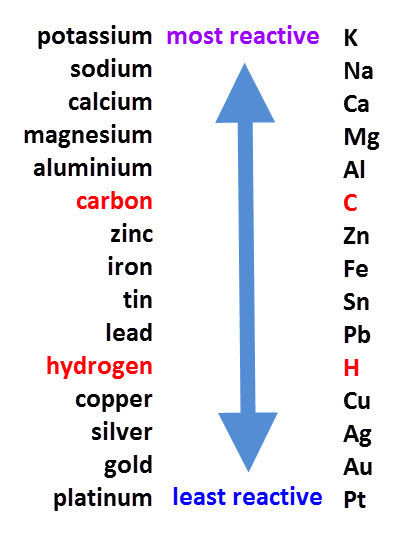
- Everything more reactive than carbon, can not be displaces using carbon and therefore electrolysis must be used to extract the metal from it's oxide.
- Anything below carbon but above hydrogen can be displaced from their oxide using a reduction and oxidation reaction. AKA- displacement reactions.
- Everything below hydrogen is a native metal meaning they are found in their pure form and their is no need for extraction.
-
- A more reactive metal will displace a less reactive metal from it's compound.
- The carbon is more reactive than the copper so it displaces it. Therefore, the carbon is oxidized and becomes CO- Carbon Monoxide and the copper oxide is reduced so becomes Cu- Copper.
- This is an easy way to get metals that are LESS reactive than carbon into their purest form.
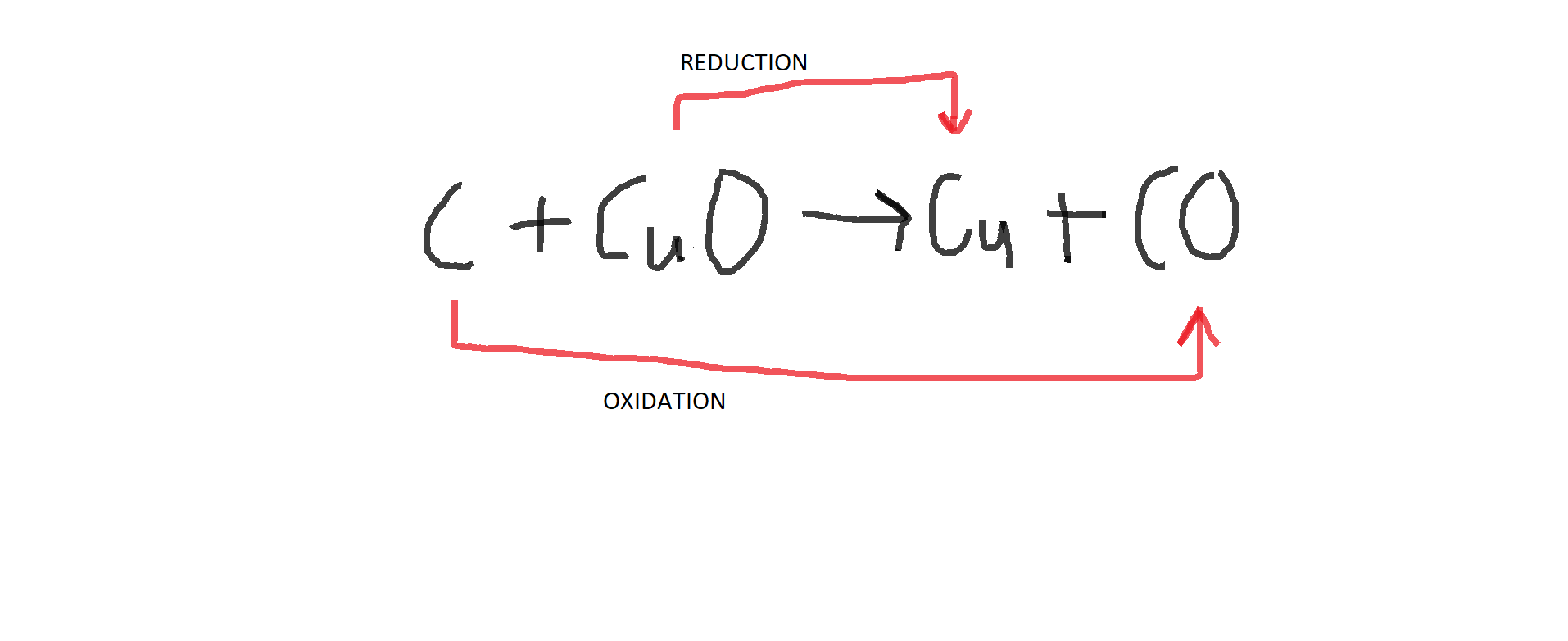
- Caption: Top label reads 'Reduction' and the bottom label reads 'Oxidation'
-
- Metals that are more reactive than carbon are extracted by electrolysis. In electrolysis there is a cathode and an anode. The cathode is negatively charged and the anode is positively charged.
- So how does this work for extracting metals?
- Well, take Lead Bromide as an example. It is an ionic substance so can be broken down by electrolysis. It happens because the Lead ions are positively charged so are attracted to the negatively charged cathode. But, the Bromine ions are negatively charged so are attracted to the positively charged anode. This then separates the ionic compound because they go separate directions.
- The Lead is oxidised because it loses electrons at the NEGATIVE cathode.
- Bromine is reduced because it gains electrons at the POSITIVE anode.
-
- What are alloys?
Information
- Description
- GCSE Chemistry Slide Set on Metals and their extraction, created by Millie Thomas on 27/03/2021.
- Created by
- Millie Thomas
- Views
- 1
- Rating