
Metals: Reactivity and Extraction
842 resources created by 669 users
This Metals: Reactivity and Extraction page on GoConqr gathers community-made quizzes, mind maps, flashcards and notes, from the reactivity series and metals with acids to the blast furnace, electrolysis and alloys. It's built for school students revising a topic and teachers after ready-made material. There are over 800 resources here, including more than 30 quizzes, over 490 mind maps and over 220 flashcards, almost all at secondary level. Pick a quiz to spot your gaps, then make your own revision sets.
Select topic
- Properties and Uses of Metals110
- Metallic Bonding and Alloys60
- Reactivity Series105
- Metal Reactions and Displacement30
- Metal Extraction Methods239
- Electrolysis in Metal Extraction7
- Iron Extraction and Steelmaking30
- Aluminium Extraction17
- Copper Extraction28
- Bioleaching and Phytomining7
- Environmental Impact and Recycling of Metals18
- Corrosion and Rust Prevention22
Top Metals: Reactivity and Extraction resources
-
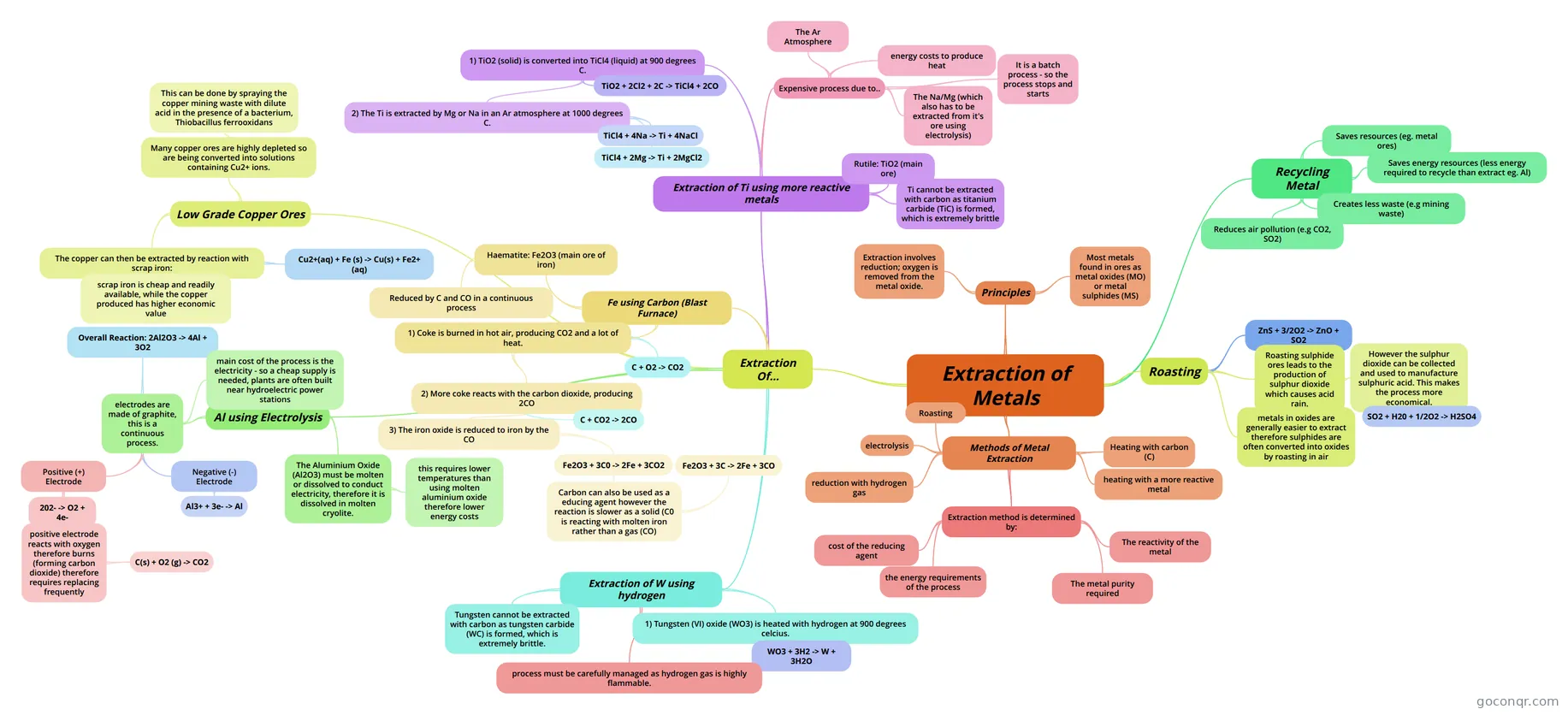 Mind map Extraction of Metals
-
32 questionsIndustrial Inorganic Chemistry A Quiz to learn and revise everything necessary of Ch - 9 of the syllabus, in Chemistry.
-
Mind map Getting Metals from Rocks
-
21 questionsThe blast furnace The blast furnace quiz on IGCSE level
-
Mind map GCSE Chemistry C1.3 - Metals and their uses
-
Mind map metals That mind map includes some of the subjecst of igcse chemistry metals. Have fun!
-
27 cardsNational 5 Chemistry-Metals Between what does metallic bonding occur?
-
43 cardsC1 3.1 Extracting metals What do Ores contain?
Quizzes
See all 42 quizzes-
32 questionsIndustrial Inorganic Chemistry A Quiz to learn and revise everything necessary of Ch - 9 of the syllabus, in Chemistry.
-
21 questionsThe blast furnace The blast furnace quiz on IGCSE level
-
7 questionsMetals and acids Do metals react more violently with water or acid?
-
12 questionsReactivity series of metals The most reactive metals belong to group 2.
-
14 questionsExtraction of metals and Rusting Topic 1 What is an alloy?
-
8 questionsReactivity series
-
34 questionsChemistry Exam revision (summer) We can use metals for building because...
-
15 questionsChemistry Chapter 10
Mind maps
See all 500 mind maps-
Extraction of Metals
-
Getting Metals from Rocks
-
GCSE Chemistry C1.3 - Metals and their uses
-
metals That mind map includes some of the subjecst of igcse chemistry metals. Have fun!
-
Alloys
-
Extracting Metals
-
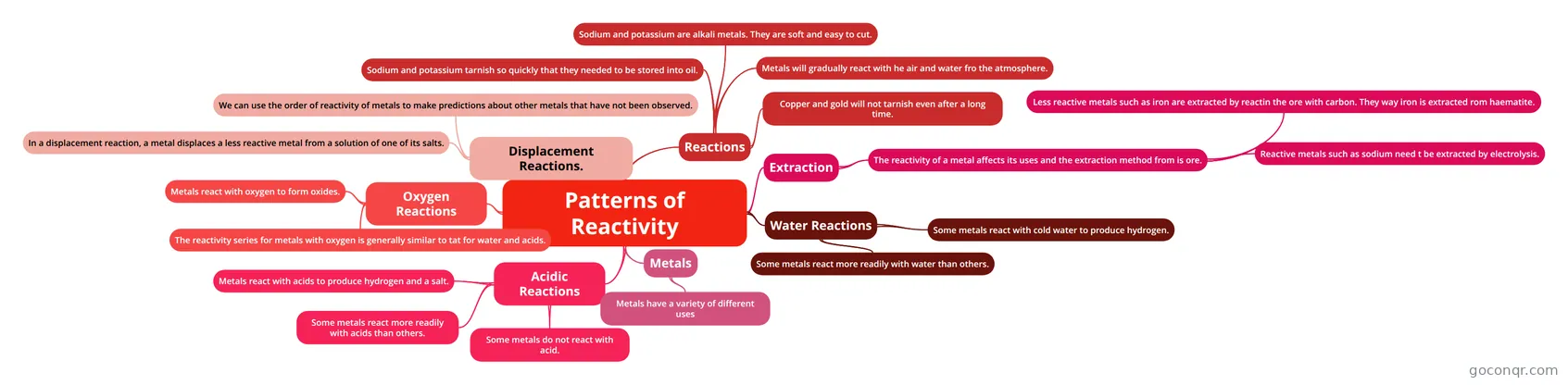 Patterns of Reactivity This is a year 9 chemistry topic summary mind map on: Patterns of Reactivity.
-
Metals Chemistry Mind Map Learn all about the properties and behaviours of Metal with the easy study mind map.
Flashcards
See all 229 flashcards-
27 cardsNational 5 Chemistry-Metals Between what does metallic bonding occur?
-
43 cardsC1 3.1 Extracting metals What do Ores contain?
-
9 cardsBlast Furnace The Blast Furnace
-
11 cardsCorrosion ✔ What are the things that make iron rust? (2)
-
5 cardsC2: Alloys What is an alloy?
-
59 cardsC1 Metals and their uses Where are metals found?
-
13 cardsThe Reactivity Series
-
51 cardsUntitled
Flowcharts
Notes
See all 60 notes-
The Blast Furnace
-
Metals Minerals and Ores: Most metals in Earth’s crust combined with other elements Individual compounds are minerals Examples of iron-containing minerals - FeS2 (pyrite), Fe3O4 (magnetite), Fe2O3 (hematite) Minerals normall...
-
Extracting metals Extracting Metals- The reactivity series Most reactive element is placed at the top and the least reactive element at the bottom REACTIVITY SERIES- STARTING FROM THE MOST REACTIVE METAL Potassium, Sodium, Ca...
-
Extraction and Uses of Metals Very few metals exist as elements in nature. Most metals are combined with other elements and exist in the form of compounds known as metal ores. A metal ore is a rock containing a mineral from which a useful metal is...
-
Getting Metals From Rocks Getting Metals from Rocks.Ores contain enough metal to make extraction worthwhile. 1) A metal ore is a rock which contains enough metal to make it worthwhile extracting from. 2) In many cases, the ...
-
2. Chemical Reactions of Metals 2. Metals differ in their reactivity with other chemicals and this influences their uses2.1 - Describe observable changes when metals react with dilute acid, water and oxygenMetals and Oxygen Most metals will react wi...
-
Extraction of Metals Reduction of Metal Oxides Using Carbon Extraction of Iron: Iron, Fe, is extracted from its metal oxide in the Blast Furnace using Carbon as a reducing agent. To the Blast Furnace, the following 'ingredi...
-
Metals and their reactions Y8 Metals and their reactions: The reactivity series: Most reactive: Potassium Sodium Magnesium Aluminium Zinc Copper Iron Silver Least reactive: GoldDisplacement reactions: A displacement reaction happens when a element...
Slides
Topics in Metals: Reactivity and Extraction
More Chemistry topics
About Metals: Reactivity and Extraction
GoConqr OriginalWhat this unit covers
The resources follow a clear path through metals. They start with properties and uses, move on to how metals react, and finish with how they are taken from ores. Several mention GCSE Chemistry, IGCSE Chemistry, National 5 Chemistry and A-level Chemistry, so you can find material that matches your course.
Where to start
Begin with the mind map Extraction of Metals. It explains that most metals are found in ores as oxides or sulphides, and that extraction involves reduction, where oxygen is removed from the metal oxide. Then look at Patterns of Reactivity, which shows how some metals tarnish in air and water while copper and gold do not.
If you want a broader overview first, the Metals Chemistry Mind Map lists the usual properties of metals: strong, malleable, ductile, shiny when polished and good conductors of heat and electricity.
Reactions and the blast furnace
- The quiz Metals and acids asks what happens when magnesium meets hydrochloric acid and what happens with copper.
- The quiz The blast furnace tests how coke burns in hot air and why the air is blasted in.
- The notes called The Blast Furnace list the raw materials: haematite, limestone and coke.
Using maps and quizzes together
Read a mind map first, then take a quiz on the same idea. Wrong answers show you which branch to revisit. The flashcard deck National 5 Chemistry-Metals is useful for quick recall of metallic bonding, reactions with water and reactions with acid. The mind map Alloys explains why mixtures of metals with other elements matter.
Where it fits
This unit sits in the Inorganic Chemistry strand of Chemistry. Teachers can pick maps and quizzes to set as revision tasks. Whatever your role, choose one resource today and work through it.
Frequently asked questions
Which resource should I open first?
Start with the mind map Extraction of Metals. It sets out the principle that metals are mostly found as oxides or sulphides and that extraction is a reduction. After that, try the quiz The blast furnace to see how much has stuck.
What do the mind maps cover?
They cover the reactivity series, properties and uses of metals, alloys, electrolysis, extracting iron and copper, and the impact of extraction. Some, such as Patterns of Reactivity, compare how quickly different metals tarnish in air and water.
Are the resources free to use?
Yes. Every resource listed here is free to open, study and take, with no account needed. They were made by GoConqr users rather than by GoConqr itself, so it helps to check them against your own course notes.
Which exams do these resources suit?
Resources here mention GCSE Chemistry, IGCSE Chemistry, National 5 Chemistry and A-level Chemistry. Nearly all of the material is at secondary level, so it suits school students and the teachers who plan their lessons.
Is there anything on metals reacting with acids?
Yes. The quiz Metals and acids asks about the products of these reactions and compares metals such as magnesium and copper. There is also a flashcard deck called Metals and Acids and a note on reactions of metals with acid and water.
What if I can't find the topic I need?
Browse the other formats on the page, since a topic may appear as a note or flashcard deck rather than a quiz. You can also make your own mind maps, flashcards and notes with a free account, which also saves your quiz scores.