
Mindmap
Reconstructive Memory (Barlett, 1932)
Inhalt der Mindmap
Reconstructive Memory (Barlett, 1932)
Description
- Bartlett believed memory was changeable and affected by experience
- It was reconstructed when remembering due to expectations and schemas
- More like a jigsaw than a video player
- Past and current experiences affect how you interpret and remember new information
- Bransford (1979)
- Participants were given a piece of text. When told to recall it they gave information which wasn't in the original text
- E.g. glass breaking
- They said what they expected
- Participants were given a piece of text. When told to recall it they gave information which wasn't in the original text
- "Portrait of a Man"
- Bartlett showed people an image of a shield titled "portrait of a man"
- When ppts were told to redraw the shield and pass it on, he found it slowly turned into a face
- This showed that titles affected our memory
- Did the same with an image of an owl and labelling it "cat"
- When ppts were told to redraw the shield and pass it on, he found it slowly turned into a face
- Bartlett showed people an image of a shield titled "portrait of a man"
- It is an active process of confabulation
- "Filling in the gaps"
- Using schemas and stereotypes
- Rationalisation
- Memory changing so it makes sense to us
- E.g. war of the ghosts
- Schema
- Mental structures or scripts which represent something
- A packet of information
- They give us shortcuts to navigating and helping us identify things
- Loftus and Mackworth (1978)
- Believed schematas free up cognitive processing power
- Mental structures or scripts which represent something
- Bartlett believed memory was changeable and affected by experience
Support
- Bransford (1979)
- Rorschach ink blots
- War of the Ghosts (Bartlett, 1932)
- Was rationalised and westernised
- e.g. "canoe" became "boat"
- Became shorter (300+ words to 180)
- Native American Story
- Was rationalised and westernised
- Chartier (1997)
- Eyewitness testimony is vague and witnesses tent to "fill in the gaps" (confabulate) to make it make sense (rationalise)
- Loftus and Palmer
- Verbs used in a question influence the answer
- Showed ppts video of a car accident
- "How fast were the cars going when they ___?"
- Words like smashed, contacted, bumped, collided etc were used
- Asked "Did you see broken glass?"
- Those who were asked questions with more violent words (e.g. smashed) said they saw broken glass
- "How fast were the cars going when they ___?"
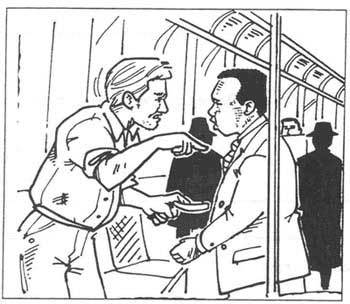
- Allport and Postman (1945)
- "Was the black or white man carrying the knife?"
- White participants remembered it as the black man carrying the knife
- "Was the black or white man carrying the knife?"
- Carli (1999)
- When retelling a story about rape, ppts described the rapist as threatening before the rape happened
Conflict / Criticism
- Wynn and Logie (1998)
- People still remembered stories in detail even if some were lost
- Asked psych students to retell stories
- Realistic stories were better remembered
- Flashbulb memories aren't affected
- Realistic stories were better remembered
- Asked psych students to retell stories
- People still remembered stories in detail even if some were lost
- Wynn and Logie (1998)
Other
- WMM
- MSM
- Episodic and Semantic
Usefulness
- Can't trust eyewitness testimony in a court setting
- Descriptive
- Doesn't say where in the brain
Testability
- Lab research
Bilder und Dateien der Mindmap
Informationen
- Beschreibung
- A level Psychology (Cognitive) Mindmap am Reconstructive Memory (Barlett, 1932), erstellt von Niamh C am 17/04/2017.
- Erstellt von
- Niamh C
- Aufrufe
- 7
- Bewertung