
Notizen
language comprehension - created from Mind Map
Inhalt der Notizen (1)
Seite 1
two major problems of speech perception
random terms
models of speech perception
lexical access
parsing
main types of script
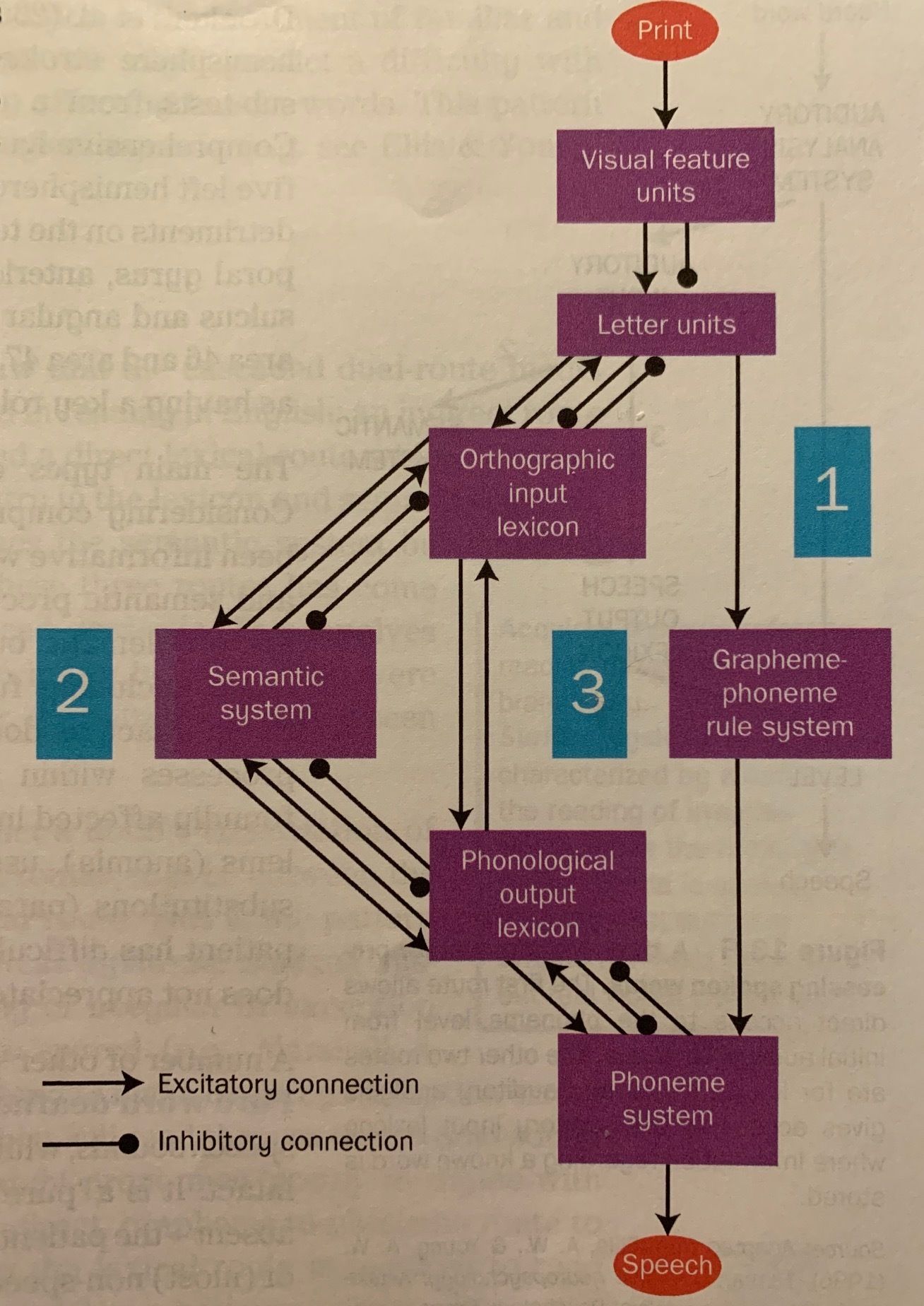
Coltheart's dual-route model of reading
problems
invariance problem
segmentation (division) problem
hearing the same sound, although the physical properties of the sound are different
detecting distinct words in a continuous string of speech sounds, because there are no clear boundaries between words even though we do perceive those boundaries
stress pattern of the language can be an important cue
context is important in word recognition
co-articulation
foreign accent syndrome
phonotactic constraints
onset
slips of the ear bc misperception of word boundary
categorical perception
voicing
right ear advantage
phoneme restoration effect
McGurk effect
transparent/shallow orthography
opaque/deep orthography
word superiority effect
saccades
tendency for a speech sound to be influenced by sounds preceding it/following it
syndrome resulting from brain injury
language-specific sound groupings that occur in a language
e.g. no English word starts with XR
initial phoneme of a word
also called mondegreens
categorising the incoming sound in a known category
when speech sounds are produced while the vocal cords are vibrating
language sounds are processed more efficiently when presented to the right ear
tendency to hear a complete word even when a phoneme is missing
top-down influence
perceptual illusion that illustrates the interplay of visual and auditory processing in speech perception
one-to-one correspondence between the letters and sounds
relationship between letters and sound is more complicated
a target letter within a letter string is detected more readily when the string forms a word than in a non-word
fast movements of the eye made when reading or scanning an image
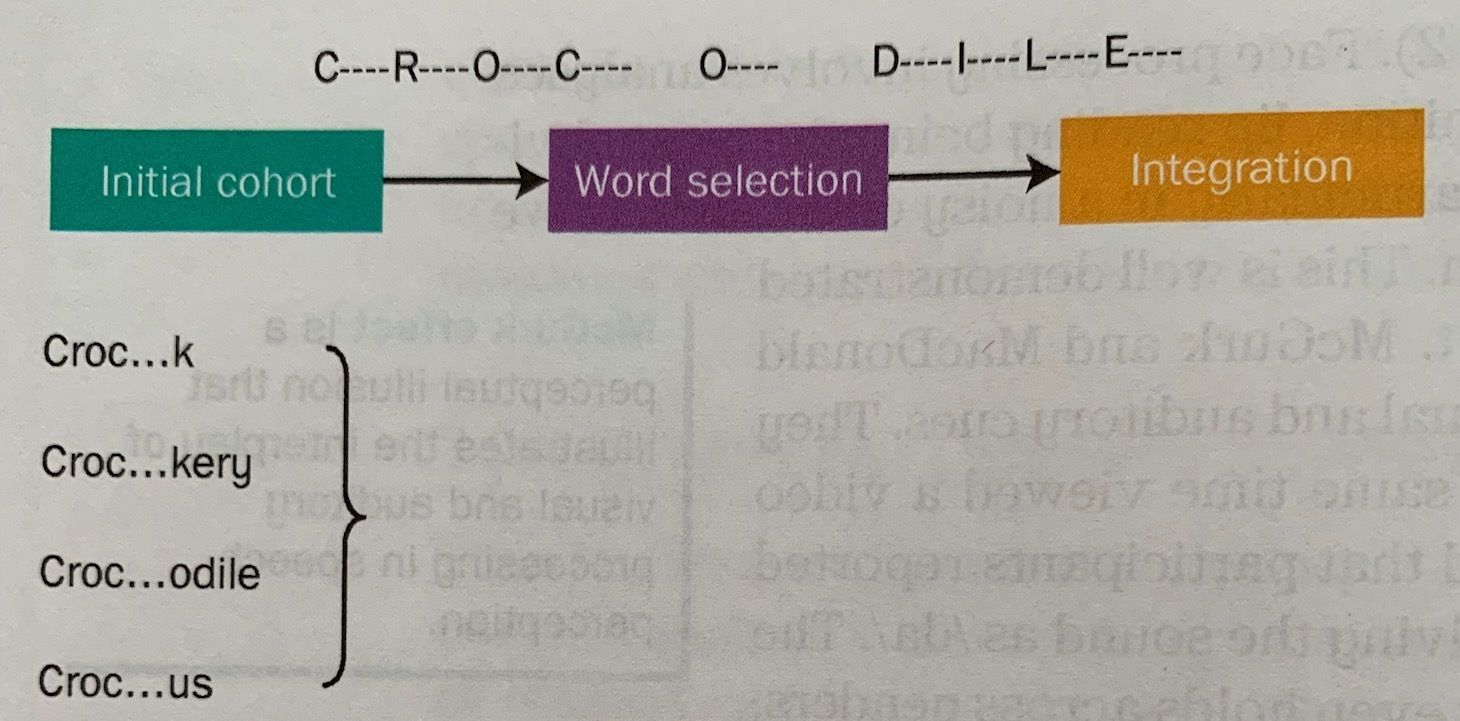
Cohort model
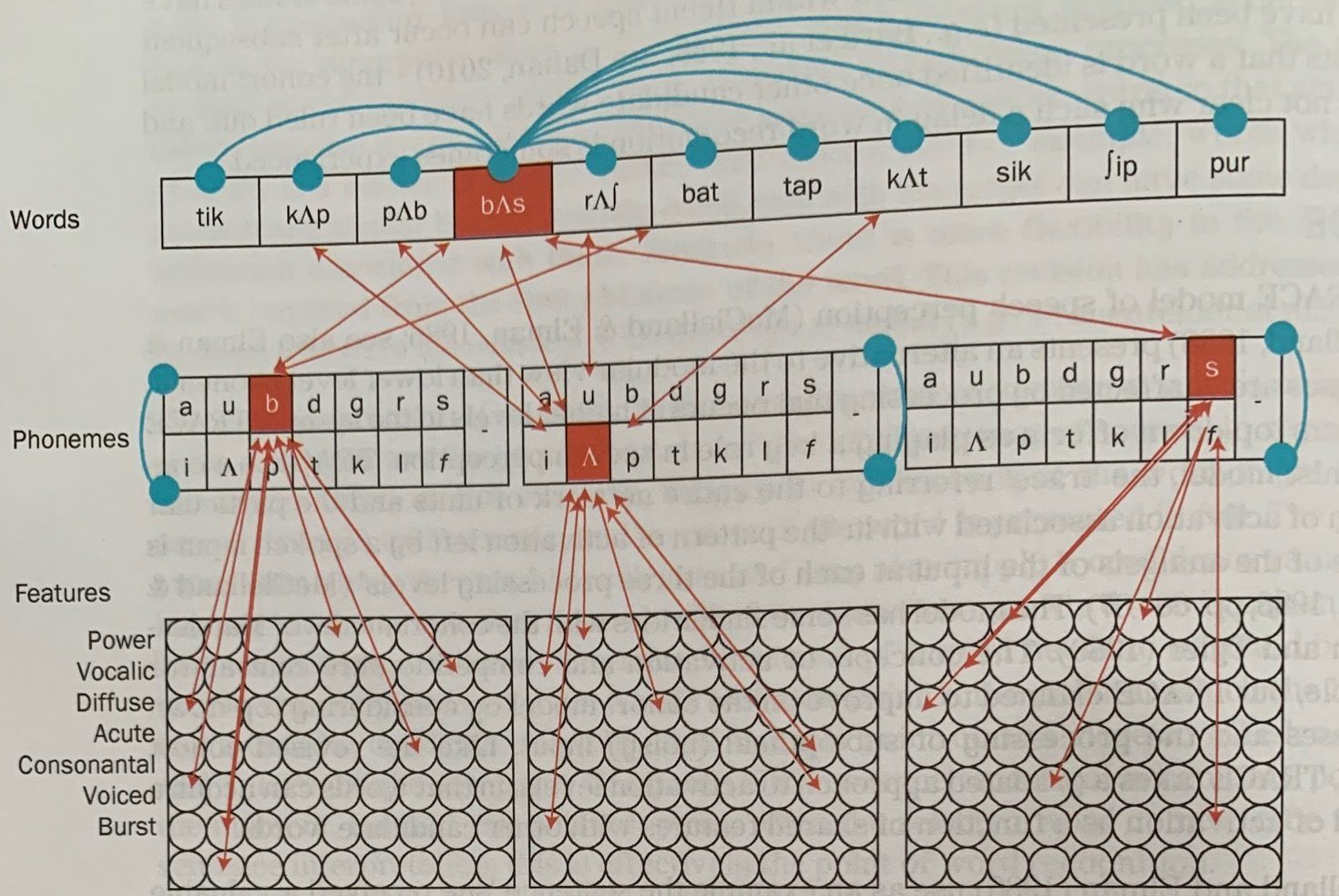
TRACE model
autocorrect model
assumes that incoming speech sounds have direct and parallel access to the store of words in the mental lexicon
uniqueness point
when only one option is left
has three layers
top-down processing key role
features activate phonemes, phonemes activate words
localist representation
features
phonemes
words
a single unit represents a particular concept
process by which we access stored knowledge about words
investigated with two tasks:
effects that influence lexical access:
word naming task
sentence verification task
response time measured while participants have to name a word
present a sentence frame with a target word and participants decide if it fits
frequency effects
priming effects
syntactic context
lexical ambiguity
frequency with which a word is used affects cognitive processing
people fixate their eyes on low-frequency words longer
if semantically related words are used in a lexical decision task, response time decreases
appropriate grammatical context makes the response time decrease
homographs make response time decrease
homographs: words with the same spelling, but more than one meaning and pronunciation
process by which we assign a syntactic structure to a sentence
phrase structure tree
garden path sentences
two key strategies for assigning appropriate roles to incoming words
graphic representation of the syntactic structure of a sentence
grammatically correct but ambiguous sentences that bias the reader's initial parsing
minimal attachment
late closure
creating the simplest tree structure as possible with as few syntactic nodes as possible
attaches incoming material to the phrase that is currently being processed
e.g. the police shot the suspects with guns
logographic scripts
syllabic scripts
consonantal scripts
alphabetic scripts
grapheme
1 symbool dat iets zegt over de betekenis en niets over de uitspraak
use a symbol to represent each syllable
represent the consonants (medeklinkers) of the language, no vowels
represent the phonemes or sounds in a language
written representation of a phoneme
route 1: grapheme-to phoneme conversion route
route 2: lexical route
route 3: semantic system route
difference Ellis & Young model: theirs is about HEARING a word and repeating it, Coltheart's model is about READING a word
from letter to speech sound
can be used for regular words (that follow the print-sound rules)
good for unfamiliar/new words
reading/pronunciation happens via word recognition
makes use of the mental lexicon
only used to UNDERSTAND the word we're reading
pure word deafness
pure word meaning deafness
dyslexia
non-semantic reading
deficit affecting the ability to recognise speech sounds, while comprehension of non-speech sounds remains intact
compromised route 1
they can hear other sounds, just not speech
a disorder in which the patient can't understand words (but can repeat it)
compromised route 2
acquired dyslexia
surface dyslexia
phonological dyslexia
reading difficulties following brain injury
deficit in reading of irregular words, while reading regular words is spared
affects non-word reading, but real words can be read
can read regular and irregular words but can't understand them
Informationen
- Beschreibung
- Psychology Notiz am language comprehension - created from Mind Map, erstellt von Sabine - am 16/12/2019.
- Erstellt von
- Sabine -
- Aufrufe
- 0
- Verlauf
-
- Erstellt von Sabine - · 16 Dez 2019
- Zu Notiz kopiert von Sabine - · 16 Dez 2019
- Bewertung