
Notizen
Sensation and Perception
Inhalt der Notizen (1)
Seite 1
I. Overview of Sensory Information Processing
A. Stimulus energy
light, sound, kinetic, thermal, etc.
not all energy can be sensed (e.g. UV light)
B. Transduction
conversion of stimulus (physical) energy into neural impulses
we can only perceive things that have been transduced
C. Iconic/Echoic Storage (ST memory stores)
visual and auditory information is stored to allow for more complex processing (takes time)
iconic (visual)--1/4 of a second, holds and integrates with incoming info
echoic (auditory)--3-4 seconds, e.g. recognizing what someone says just after they say it (when you're asking "what?")
II. Threshold--minimum amount of physical energy required to produce a conscious sensation
Method of Limits--experimental technique used to determine the sensory threshold; tone is played at varying intensities, starts at lowest intensity and trial stops when subject reports that they can hear the tone; next trial starts at highest intensity and stops when subject reports that they can no longer hear the tone; trials are repeated and then averaged to get an estimate of the threshold
A. Defined
Supraliminal--can produce conscious sensation; above threshold
Subliminal--cannot produce conscious sensation; above threshold
Semantic priming--flashing "doctor" subliminally primes for target stimulus "nurse"; reduces response time; RT(related)<RT(unrelated)
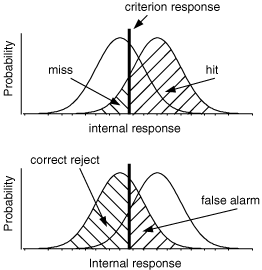
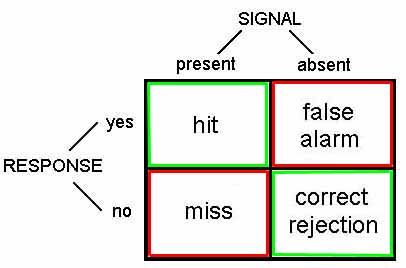
III. Signal Detection Theory--can be applied to decision making situations
A. Elements of Decision
Sensitivity--difference in older/younger adults
Response bias--all the things that influence how you respond but are not sensory
B. Signal and Noise distribution
subjects sits in a room and reports whether or not they heard a tone; the tone is low intensity, sometimes people get it wrong
the same tone will not always produce the same psychological intensity; due to external noise that fluctuates and internal noise, our sensory systems do not always produce the same amount of action potentials
IV. Iconic and Echoic Store
Sperling (1960): partial report method; subject were shown a grid of letters, asked to recall either the whole thing or just a row; did much better when only having to recall one row; the iconic store faded fast when the letters were all being recited
Informationen
- Beschreibung
- 230 Psychology (Exam I Material) Notiz am Sensation and Perception, erstellt von ashley9595 am 14/06/2016.
- Erstellt von
- ashley9595
- Aufrufe
- 0
- Tags
- Bewertung