
Quiz
Pathophysiology revision - SECTION 1: GENERAL PRINCIPLES
This quiz has question types that open in the usual player.
Questions in this quiz (42)
1Cell membranes are composed of mainly proteins and phospholipids. [blank_start]Phospholipids[blank_end] have a glycerol backbone that is [blank_start]hydrophilic (water-loving)[blank_end] and fatty acid tails which are [blank_start]hydrophobic (water-hating)[blank_end]. Proteins are embedded in the phospholipid bilayer and play an important role by forming [blank_start]ion channels[blank_end]
- APhospholipids
- BProteins
- CIon channels
- DLipids
- Ehydrophilic (water-loving)
- Fhydrophobic (water-hating)
- Gsoluble
- Hhydrophobic (water-hating)
- Ihydrophillic (water-loving)
- Jsoluble
- Kion channels
- Lfatty acid tails
- Mdiffusion trails
2The process by which MOLECULES move from areas of high concentration to low concentration until evenly spread is known as
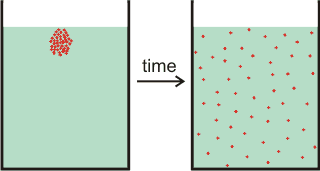
- Adiffusion
- Bosmosis
- Cactive transport
- DBoyle's Law
3The process by which WATER moves from an area of high concentration to an area of low concentration is known as:
- Aosmosis
- Bdiffusion
- Cactive transport
- DHenry's Law
4Two solutions with equal osmolarities are said to be [blank_start]iso-osmotic[blank_end]. If two solutions have different measures osmolarities, the solution with the higher osmolarity is said to be [blank_start]hyper-osmotic[blank_end] and that with lower osmolarity is said to be [blank_start]hypo-osmotic[blank_end].
- Aiso-osmotic
- Bosmolaric
- Cbi-osmolar
- Din aquatic equilibrium
- Ehyper-osmotic
- Fhypo-osmotic
- Gsuper-osmotic
- Hminor-osmotic
- Ihypo-osmotic
- Jhyper-osmotic
- Ksuper-osmotic
- Lminor-osmotic
5An isotonic soloution [blank_start]will have no change in cell volume[blank_end]. A hypertonic solution [blank_start]will cause cells to shrink[blank_end]. A hypotonic solution [blank_start]will cause cells to swell[blank_end]
- Awill have no change in cell volume
- Bwill cause cells to shrink
- Cwill cause cells to swell
- Dwill cause cells to shrink
- Ewill cause cells to swell
- Fwill have no change in cell volume
- Gwill cause cells to swell
- Hwill have no change in cell volume
- Iwill cause cells to shrink
6The process by which molecules can be moved from an area of low concentration to high is known as [blank_start]active transport[blank_end]. This uphill movement requires [blank_start]energy in the form of ATP[blank_end]
- Aactive transport
- Bdiffusion
- Cosmosis
- DCollapsing pressure
- Eenergy in the form of ATP
- Fa differential pressure
- Ga group of enzymes
- Hlipid molecules
7You are on the scene of a farm accident. The patient is trapped in heavy machinery with a prolonged extrication. In addition to having several other serious injuries, the patient has sustained multiple lacerations on the forearms that appear to be grossly contaminated with manure, dirt and other debris. After properly assessing and stabilizing the patient, you are then required to irrigate the lacerations while the rest of the team works to extricate the patient. What fluid would be most appropriate for irrigation?

- ASterile hypertonic (3% saline)
- BSterile isotonic (0.9% saline)
- CSterile hypotonic (5% dextrose in water)
- DSterile colloid solution (25% albumin)
- EPlain tap water
8Which of these statements is false?
- ALipid insoluble drugs are readily absorbed into the cell membrane
- BPassive diffusion is the most common process by which drugs cross cell membranes
- CDiffusion of drugs into cell membranes generally occurs in the direction of high concentration to an area of low concentration
- DUphill” (low to high concentration) transport of drugs across cell membranes occurs through the process of active transport and requires energy
- EActive transport ATPase pumps move move drugs from areas of low concentration to high concentration
9Water comprises of approximately [blank_start]60%[blank_end] of total body weight in males and [blank_start]50%[blank_end] in females. Obese individuals tend to have [blank_start]25-30%[blank_end] less body water and newborns will comprise of [blank_start]75-80%[blank_end] body water
- A60%
- B70%
- C50%
- D40%
- E50%
- F60%
- G70%
- H80%
- I25-30%
- J35-40%
- K15-20%
- L5-10%
- M75-80%
- N65-70%
- O55-60%
- P45-50%
10Water in the body is divided into [blank_start]intracellular[blank_end] (first space), [blank_start]intravascular[blank_end] (second space) and [blank_start]extravascular[blank_end] (interstitial, third space) compartments. [blank_start]40%[blank_end] of total body water is found in the cells, 5% is found [blank_start]intravascular[blank_end] and [blank_start]15%[blank_end] is contained in the interstitiam
- Aintracellular
- Bintramuscular
- Cintrafiberous
- Dintraglobular
- Eintravascular
- Fintracardiac
- Gintralunar
- Hintracirculatory
- Iextravascular
- Jextracirculatory
- Kextralumbar
- Lextrasynovial
- M40%
- N30%
- O20%
- P10%
- Qintravascular
- Rintracardiac
- Sintralunar
- Tintracirculatory
- U15%
- V20%
- W25%
- X10%
11One law which relates best to the movement of fluids through the capillaries is [blank_start]Starling’s Law[blank_end]. This explains the distribution of fluids from a high pressure to a low pressure
- AStarling’s Law
- BBoyle's Law
- CLa Places' Law
- DCharles' Law
12[blank_start]0.9% Saline[blank_end] and [blank_start]Ringer’s Lactate[blank_end] are both considered to be istonic solutions and used to provide immediate expansion of circulatory volume. However, because of their tonicity, they will eventually distribute into the third space therefore, expanding [blank_start]interstitial[blank_end] rather than [blank_start]intravascular[blank_end] volume. [blank_start]5% dextrose[blank_end] is considered a hypotonic solution and can be used to keep a cannulated vein open.
- A0.9% Saline
- B25% saline
- C5% dextrose
- Dtap water
- ERinger’s Lactate
- F25% saline
- G5% dextrose
- Htap water
- Iinterstitial
- Jintracellular
- Kintravascular
- Lintravascular
- Minterstitial
- Nintracellular
- O5% dextrose
- P0.9% saline
- Q25% saline
- RRinger's Lactate
13Colloid solutions include 5% and 25% albumin and hetastarch. They are used to [blank_start]increase plasma volume[blank_end] in the blood vessels as the large molecules can not pass through membranes as easily as crystalloids
- Aincrease plasma volume
- Bincrease glucose concentration
- Cdecrease lactate
- Ddecrease extracellular pressure
14You are called to the scene of a motor vehicle accident. The patient is a 23 year old male with extensive multi-system trauma including lower extremity amputation with active bleeding. Vital signs are as follows: BP 90/palpation, HR 122, RR 24. Which IV fluid should be used?
- A5% dextrose
- B0.9% saline
- C0.45% saline
- DLactated Ringers solution
- E5% dextrose in Lactated Ringer’s solution
15What would happen if a colloid solution was used to treat a patient who had experienced an amputation?
- ALactate formation would be promoted, leading to a build-up of toxic substrates
- BThe fluid would distribute to the interstitial space since the osmotic pressure would be decreased
- CFluid would be absorbed into the blood vessels because the osmotic pressure would increase
- DThe intravascular volume would become further depleted
- EThe patient would not be able to receive crystalloid fluids because they are incompatible with colloids
16An example of when not to use 5% dextrose fluid is (check all that apply):
- AResuscitation of a paediatric patient
- BCritically ill patients
- CWithout Thiamine in known alcoholics
- DHypoglycemic patient in insulin shock
17The partial pressure of Oxygen (P02) roughly [blank_start]100 mmHg[blank_end] in the atmosphere and [blank_start]40mmHg[blank_end] in the pulmonary arties. The partial pressure of Carbon Dioxide (PC02) in the atmosphere is roughly [blank_start]40mmHg[blank_end] and [blank_start]45mmHg[blank_end] in the pulmonary arteries coming from the right ventricle. Hence, oxygen is diffused into the returning pulmonary vein and carbon dioxide diffuses out into the atmosphere
- A100 mmHg
- B80 mmHg
- C50 mmHg
- D40 mmHg
- E40mmHg
- F30 mmHg
- G50 mmHg
- H20 mmHg
- I40mmHg
- J50 mmHg
- K30 mmHg
- L20 mmHg
- M45mmHg
- N55 mmHg
- O35 mmHg
- P50 mmHg
18Oxygen is normally carried around the body bound to [blank_start]haemoglobin[blank_end]. The [blank_start]percent saturation (SP02)[blank_end] describes the amount of oxygen molecules bound to haemoglobin
- Ahaemoglobin
- Bfatty cells
- Cprotine molecules
- Dmacrophages
- Epercent saturation (SP02)
- Fhaemosaturated pressure gradient
- Gred blood cell count
- Hfluid distribution curve
19A shifting of the oxygen dissociation curve to the [blank_start]right[blank_end] decreases haemoglobin’s affinity for oxygen. This makes it easier for haemoglobin to release oxygen but may lead to hypoxia due to the molecule being less willing to carry it. Acidotic patients have curves shifted to the right as a “protective” mechanism, so the body can offload O2 rapidly when it needs (Bohr Effect). This also effects people at high altitude
- Aright
- Bleft
- Cupwards segment
- Ddownwards segment
20A shifting of the oxygen dissociation curve to the [blank_start]left[blank_end] increases haemoglobins affinity for oxygen. Examples of this include carbon monoxide poisoning, increase in PH and decrease in temperature
- Aleft
- Bright
- Cupwards gradient
- Ddownwards gradient
21What causes hypoxia? (tick all that apply):
- ADecreased P02
- BHypoventilation
- CVentilation-perfusion inequality
- DShunting
- EDecreased oxygen carrying capacity
22CO2 is transported to the lungs by [blank_start]plasma[blank_end] and [blank_start]red blood cells[blank_end] via the bicarbonate buffer system. C02 is transformed into bicarbonate by the carbonic anhydrase enzyme
- Aplasma
- Blipids
- Cproteins
- Dactive transport
- Ered blood cells
- Fwhite blood cells
- Gmacrophages
- Hfree floating lipids
23Which of the following can cause a shift of the oxygen-haemoglobin dissociation curve to the right?
- AMetabolic acidosis
- BHigh fever
- CLiving at high altitude
- DStrenuous Exercise
- ERespiratory Alkalosis
24All of the following are known mechanisms for the development of hypoxia except:
- ALiving at high altitude
- BHyperventilation
- CSevere anaemia
- DPulmonary embolism
- EHeart chamber defects
25Which of the following is FALSE with regards to pulse oximetry?
- AThe saturation of oxygen can be measured within a 3% margin of error
- BAn SP02 of 100% corresponds to a P02 of 70
- CPulse oximetry is a useful adjunct in assessing oxygen transport
- DPatients with hypovolemia, hypotension and anaemia can still be monitored with a pulse oximeter
- EPulse oximetry can reveal unsuspected hypoxemia in cases of carbon monoxide poisoning
26You are called to the scene to intubate a pulseless, apneic patient. After intubation, you notice fogging in the ET tube, breath sounds and absence of abdominal distension. What else would confirm a proper tube placement?
- AA chest x-ray
- BPulse oximetry
- CA yellow colour change on a colormetric end-tidal C02 detector
- DPresence of breath sounds heard over the trachea
- EAn arterial blood gas
27The autonomic nervous system has three essential divisions which are the [blank_start]sympathetic[blank_end], [blank_start]parasympathetic[blank_end] and [blank_start]enteric[blank_end] systems. These all control and regulate cardiac muscle, smooth musle and various glands.
- Asympathetic
- Bsymphonic
- Cadregenic
- Dsystemic
- Eparasympathetic
- Fparasymphonic
- Gparametabolic
- Hparanervous
- Ienteric
- Jenerdrenic
- Kenergetic
- Lenertonic
28In the autonomic nervous system, the neurons from each division connect outside the central nervous system in cell clusters known as [blank_start]ganglia[blank_end]
- Aganglia
- Bgang junctions
- Cneuronic junctions
- Dcentral nervous buffers
29Ganglia which are located in the innervated organs; neurons exiting from the craniosacral division; pre-ganglionic neurons being longer than post-ganglionic nerons – all describe the [blank_start]parasympathetic[blank_end] nervous system
Ganglia which are located closer to the spinal chord; neurons which leave the CNS at the thoracolumbar division; pre-ganglionic neurons being shorter than post-ganglionic neurons – all describe the [blank_start]sympathetic[blank_end] nervous system- Aparasympathetic
- Bsympathetic
- Centeric
- Dsympathetic
- Eparasympathetic
- Fenteric
30Neurotransmitters function as chemical bridges to relay signals from neuron to neuron . In both sympathetic and parasympathetic divisions, the major neurotransmitter is [blank_start]acetylcholine[blank_end]. In postganglionic fibres leading to innervated tissue, [blank_start]acetylcholine[blank_end] acts as the main neurotransmitter for the parasympathetic system while [blank_start]norepinephrine[blank_end] is released in the sympathetic system.
- Aacetylcholine
- Bepinephrine
- Ccortisol
- Dglutamate
- Eacetylcholine
- Fepinephrine
- Gnorepinephrine
- Hseratonin
- Inorepinephrine
- Jepinephrine
- Kacetylcholine
- Lseratonnin
31In pre-hospital care, many of the medications administered work at the receptor level of the sympathetic and parasympathetic divisions of the autonomic nervous system. These receptors are either ADRENERGIC which include Alfa and Beta receptors or CHOLINERGIC which include nicotinic and muscarinic receptors.
[blank_start]Alpha-1[blank_end] and [blank_start]Beta-1[blank_end] receptors produce an excitatory response.
[blank_start]Alfa-2[blank_end] and [blank_start]Beta-2[blank_end] receptors usually produce an inhibitory/relaxing response.
[blank_start]Alfa-1[blank_end] receptors are usually located on smooth muscle and are sensitive to norepinephrine and epinephrine
[blank_start]Alfa-2[blank_end] receproes are usually located in smooth muscle as well as in platelets and fat cells
[blank_start]Beta-1[blank_end] receptors are located primarily in the heart
[blank_start]Beta-2[blank_end] receptors are located in vascular smooth muscle, gastrointestinal tract and bronchial smooth muscle
[blank_start]Nicotonic[blank_end] receptors are found at the neurotransmitter junction and in autonomic ganglia. They allow the cells to exchange sodium and potassium and produce excitation when stimulated
[blank_start]Muscarinic[blank_end] receptors are located in the heart and smooth muscles. They cause an inhibitory response in the heart but an excitatory reponse in the smooth muscle- AAlpha-1
- BAlpha-2
- CBeta-1
- DBeta-2
- EAlfa-1
- FAlfa-2
- GBeta-1
- HBeta-2
- IAlfa-1
- JAlfa-2
- KBeta-1
- LBeta-2
- MAlfa-1
- NAlfa-2
- OBeta-1
- PBeta-2
- QAlfa-1
- RAlfa-2
- SBeta-1
- TBeta-2
- UAlfa-1
- VAlfa-2
- WBeta-1
- XBeta-2
- YNicotonic
- ZMuscarinic
- AAMuscarinic
- ABNicotonic
32The study of pharmacokinetics attempts to define the dynamics of drug behaviour in the body. The biological fate of a drug after it has been administered depends on four essential processes which are defined as:
- The rate and quality of a drug that is introduced into the body ([blank_start]Absorbtion[blank_end])
- The movement or temporary storage of a drug ([blank_start]distribution[blank_end])
- The process of chemical conversion of the original drug to metabolite ([blank_start]metabolism[blank_end])
- Removal of the drug from the body ([blank_start]elimination[blank_end])- AAbsorbtion
- BQuantification
- Cpharmalocation
- Dinjestion
- Edistribution
- Fmovement
- Gplacement
- Hdeliverance
- Imetabolism
- Jtransformation
- Kconversion
- Ldepletion
- Melimination
- Nextraction
- Ovacation
- Pevacuation
33Solubility, rate of dissolution, presence of other drugs, obesity or anything which affects the gastrointestinal tract all effect the [blank_start]absorption[blank_end] of drugs.
Blood flow, diffusion and active transport all rate to the [blank_start]distribution[blank_end] of a drug.
The process by which most drugs are converted in the liver is the [blank_start]metabolism[blank_end] of a drug
The kidneys, lungs, liver and body fluids are all responsible for the [blank_start]elimination[blank_end] of a drug.- Aabsorption
- Bdistribution
- Cmetabolism
- Delimination
- Edistribution
- Fabsorption
- Gmetabolism
- Helimination
- Imetabolism
- Jdistribution
- Kabsorption
- Lelimination
- Melimination
- Ndistribution
- Ometabolism
- Pabsorption
34The rate in which a drug is excreted from the body is known as its [blank_start]half life[blank_end]. This is the amount of time it takes to remove 50% of the drug and generally [blank_start]6[blank_end] of these are required to remove 98% of the drug. [blank_start]10[blank_end] of these completely eliminate the drug
- Ahalf life
- Belimination time
- Cdestruction segment
- Dsplit point
- E6
- F4
- G8
- H2
- I10
- J8
- K12
- L9
35The amount of drug in systemic circulation is usually a fraction of the original dose – this is known as [blank_start]bioavailability[blank_end]. For drugs given IV, this is approximately [blank_start]100%[blank_end] and those given oraly depends on the four essential processes of drugs. Over time, this will equal the rate of elimination and this is known as the [blank_start]steady state[blank_end] which usually takes [blank_start]4[blank_end] half lives to achieve.
- Abioavailability
- Bhalf life
- Cdrug dose percentage
- Dpharmainventory
- E100%
- F90%
- G50%
- H40%
- Isteady state
- Jhalf life
- Kbioavailability
- Lpharmavailability
- M4
- N6
- O8
- P10
36The action by which drugs are removed or partially metabolised by the liver after being absorbed by the gastrointestinal tract is known as the [blank_start]first pass hepatic effect[blank_end]. Drugs which are particularly affected by this process are aspirin, [blank_start]morphine[blank_end] and propranolol
- Afirst pass hepatic effect
- Bhepatic re-directive
- Chepatic metabolite confirmation
- Dhepatic elimination drive
- Emorphine
- Fadderall
- GAmoxicillin
- HSuprophen
37You are called to a remote location to asses a paediatric patient with an accidental ingestion of one tablet of his mother’s pain medication (drug X). En route to hospital, you read an information file on drug X. The half life is listed as 1 hour. When would 98% of the drug be eliminated from the patient’s body?
- A2 hours
- B4 hours
- C6 hours
- D8 hours
- E24 hours
38Which of the following medications used in emergency care has the most extensive first pass hepatic effect?
- AAmioderone
- BEpinephrine
- CFurosemide
- DDiazapam
- EMorphene
39Drugs must be particularly carefully administered to patients with which of the following medical conditions? (tick all that apply)
- AHeart failure
- BHyperthyroidism
- CHypothyroidism
- DCirrhosis
- EHypoglycaemics
- FRhumatoid Arthritis
40The relationship between pressure and volume is [blank_start]Boyle’s Law[blank_end]. This related to the ventilation of the lungs and movement of air into/out of them.
The relationship between temperature and volume is [blank_start]Charles’ Law[blank_end]. This relates to the warming of air through the sinuses in order to increase volume. If you breathe in cold air, there is less volume.
Illustrating that the pressure of gas is directly related to the number of moles and that total pressure of the mixture of gasses is equal to the sum of them (PA + PB + PC) is [blank_start]Dalton’s Law[blank_end]. This relates to climbers ascending heights where the partial pressure of oxygen is lower and hence, creates hypoxia.
The principle that all gases are soluble in liquids relates to [blank_start]Henry’s Law[blank_end]. More gas dissolves at high pressure and hence, as the pressure decreases that gas will begin to expand back into the blood stream. If this happens too quickly, organs will suddenly depressurise, collapse and sudden death will occur. The bends relates to Nitrogen expanding into the joints causing pain as well as CO2 expanding out and causing the blood to become foamy.
Both [blank_start]Henry’s Law[blank_end] and [blank_start]Starling’s Law[blank_end] relate to the gaseous exchange in the alveoli.
[blank_start]La Places’ law[blank_end] explains how a decreasing radius within the alveoli relates to an increased collapsing pressure due to surface tension as well as the need for surfactant.- ABoyle’s Law
- BCharles' Law
- CDalton's Law
- DHenry's Law
- EStarling's Law
- FLa Places' Law
- GCharles’ Law
- HBoyle's Law
- IDalton's Law
- JHenry's Law
- KStarling's Law
- LLa Places' Law
- MDalton’s Law
- NBoyle's Law
- OCharles' Law
- PHenry's Law
- QStarling's Law
- RLa Places' Law
- SHenry’s Law
- TBoyle's Law
- UCharles' Law
- VDalton's Law
- WStarling's Law
- XLa Places' Law
- YHenry’s Law
- ZBoyle's Law
- AACharles' Law
- ABStarling’s Law
- ACDalton's Law
- ADLa Places' Law
- AELa Places’ law
- AFBoyle's Law
- AGCharles' Law
- AHDalton's Law
- AIHenry's Law
- AJStarling's Law
41The body usually maintains a PH of around [blank_start]7.4[blank_end]. Control of the acid-base balance is through the lungs, kidneys and buffer system.
Lungs – [blank_start]fast response[blank_end]
Kindeys – slow response, takes days to work and several hours to respond
Buffer system – [blank_start]instantaneous, works in seconds[blank_end]- A7.4
- B7.0
- C7.9
- D6.8
- Efast response
- Fslow response, takes days/hours
- Ginstantaneous, works in seconds
- Hinstantaneous, works in seconds
- Ireasonably fast response
- Jslow response
42Decreased ability to breathe due to severe chronic lung disease leads to [blank_start]respiratory acidosis[blank_end] and is corrected by increasing [blank_start]excretion of acid in the urine[blank_end]
Hyperventilation due to anxiety leads to [blank_start]respiratory alkalosis[blank_end] and is corrected by increased [blank_start]excretion of alkali in the urine[blank_end]
Loss of stomach acid due to vomiting leads to [blank_start]metabolic alkalosis[blank_end] and is corrected by decreased [blank_start]breathing rate to retain CO2[blank_end]
Increased acid production due to DKA leads to [blank_start]metabolic acidosis[blank_end] and is corrected by increased [blank_start]breathing rate[blank_end]- Arespiratory acidosis
- Brespiratory alkalosis
- Cmetabolic acidosis
- Dmetabolic alkalosis
- Eexcretion of acid in the urine
- Fexcretion of alkali in the urine
- Gbreathing rate to retain C02
- Hbreathing rate to rid C02
- Irespiratory alkalosis
- Jrespiratory acidosis
- Kmetabolic alkalosis
- Lmetabolic acidosis
- Mexcretion of alkali in the urine
- Nexcretion of acid in the urine
- Obreathing rate to retain C02
- Pbreathing rate to reduce C02
- Qmetabolic alkalosis
- Rmetabolic acidosis
- Srespiratory acidosis
- Trespiratory alkalosis
- Ubreathing rate to retain CO2
- Vbreathing rate to expel C02
- Wexcretion of acid in the urine
- Xexcretion of alkaline
- Ymetabolic acidosis
- Zmetabolic alkalosis
- AArespiratory acidosis
- ABrespiratory alkalosis
- ACbreathing rate to decrease C02
- ADbreathing rate to retain C02
- AEexcretion of acid in the urine
- AFexcretion of alkaline in the urine
Information
- Description
- Revision for section one of the red book
- Author
- Kaylee Garrick
- Language
- English
- Views
- 183
- Tags
- Rating
- No ratings yet Rate this quiz