
Flashcards
Protozoa, Slime Molds, and Fungi
Cards in this deck (41)
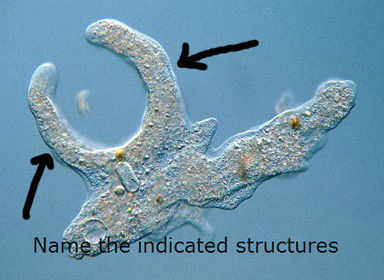
- 1—Pseudopoda
- 2—Phagocytosis
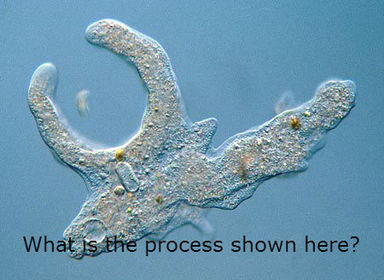
- 3—Locomotion and phagocytic ingestion
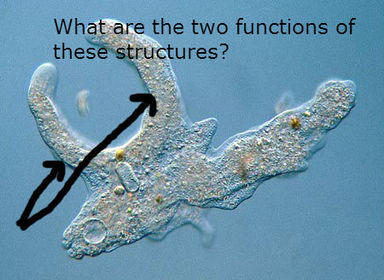
- 4—Kingdom Fungi
Phylum Ascomycota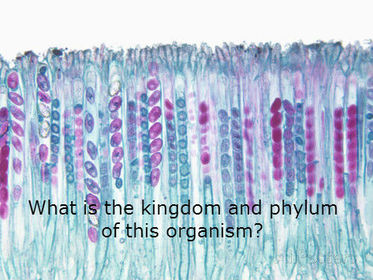
- 5—Ascospores
(within asci)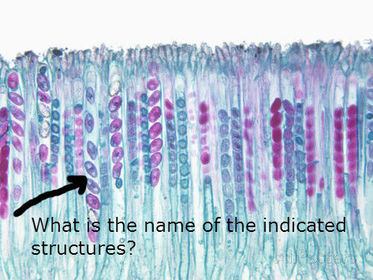
- 6—Ascocarp
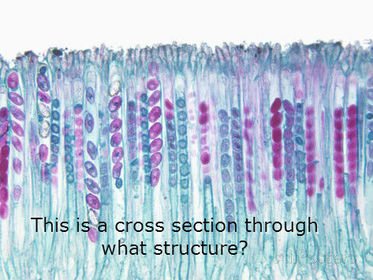
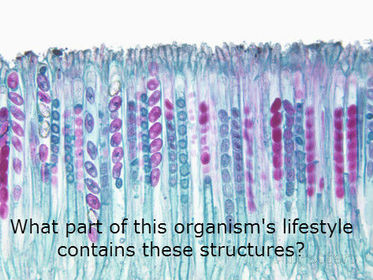
- 7—Sexual
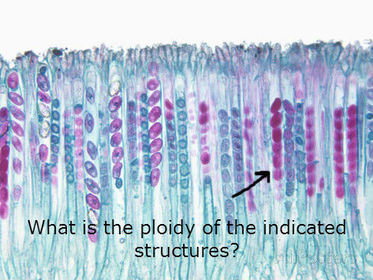
- 8—Haploid
- 9—Basidiospores
(on basidium)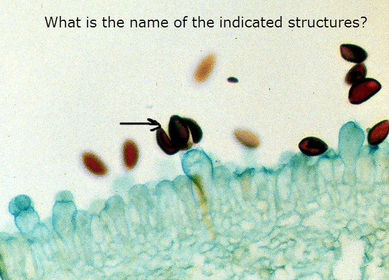
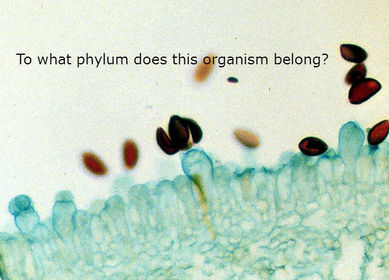
- 10—Phylum Basidiomycota
- 11—4;
Members of ascomycota produce 8 sexual spores (ascospores) because they undergo mitosis after meiosis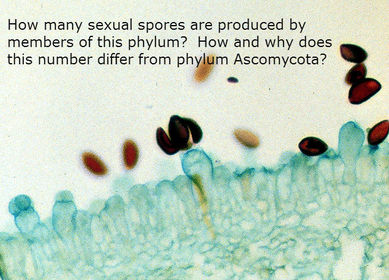
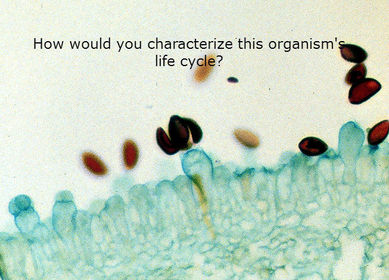
- 12—Haploid dominant
- 13—"Protozoa" is not a monophyletic grouping
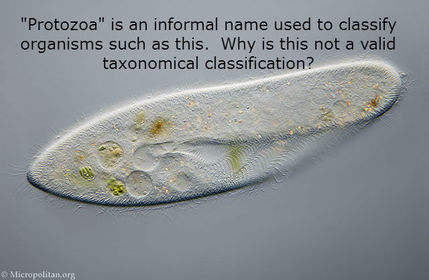
- 14—Unicellular
Heterotrophic
Protists
No cell walls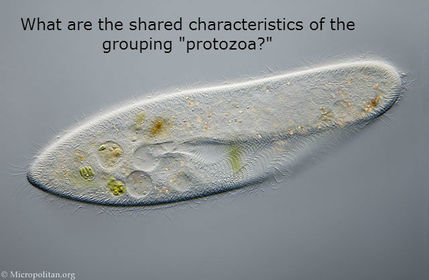
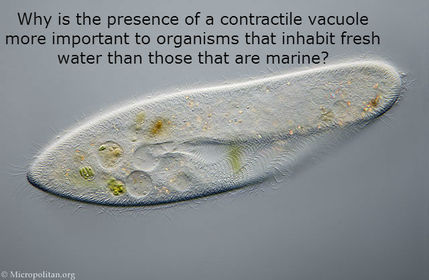
- 15—Freshwater organisms are hypertonic to their environment. Thus, due to diffusion down the electrochemical gradient, water tends to enter the organism. Contractile vacuoles function in osmoregulation.
- 16—Subgroup Apicomplexans
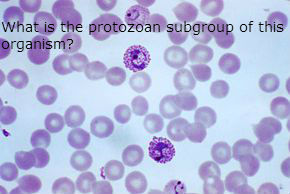
- 17—Malaria
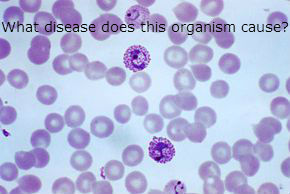
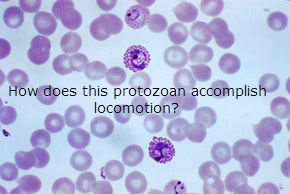
- 18—Apicomplexans are non-motile parasites
- 19—Undulating membrane
(used in locomotion)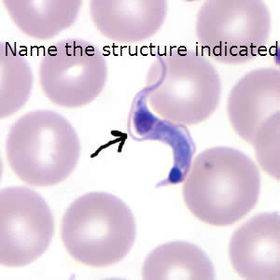
- 20—Protozoan subgroup Kinetoplastids
African Sleeping Sickness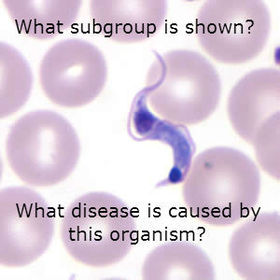
- 21—Tse tse fly
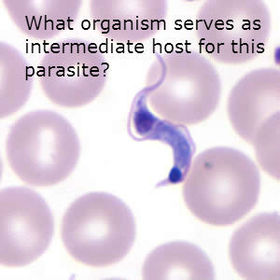
- 22—Subgroup Ciliates
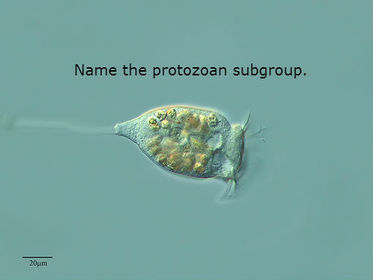
- 23—A: Contractile stalk
B: Cilia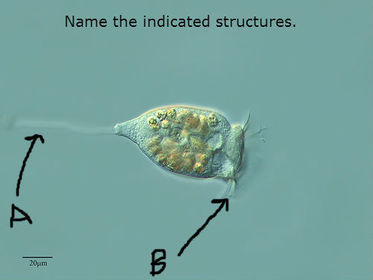
- 24—Suspension feeding
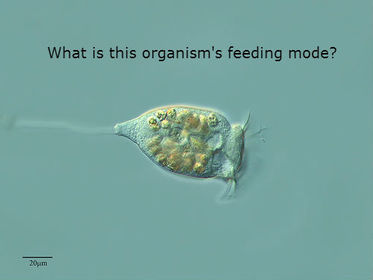
- 25—Major lineage Amoebozoa
Protozoan subgroup Plasmodial Slime Molds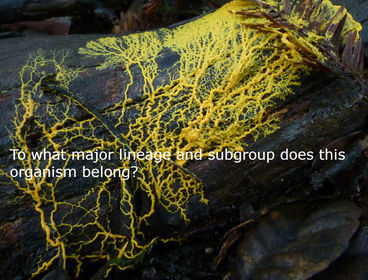
- 26—Phagocytic ingestion
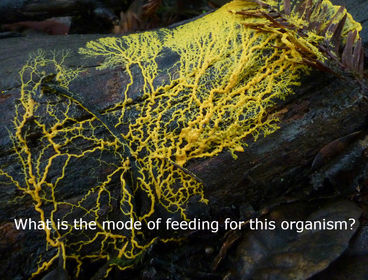
- 27—Coenocytic
(one large cell with many nuclei)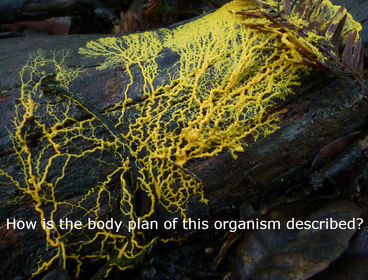
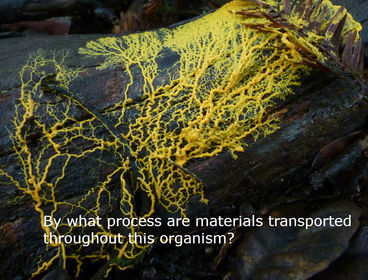
- 28—Cytoplasmic Streaming
- 29—Conidiophores; produce conidia
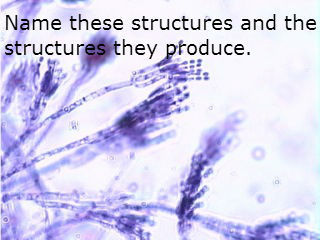
- 30—Asexual
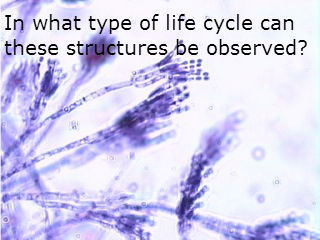
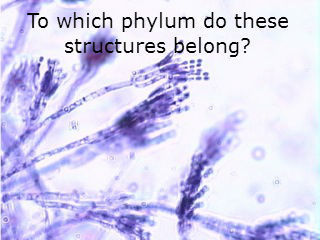
- 31—Phylum Ascomycota
- 32—Phylum Zygomycota
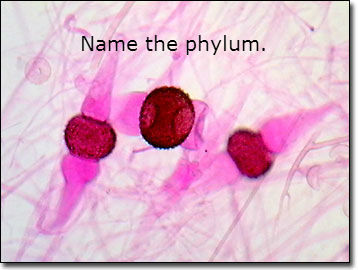
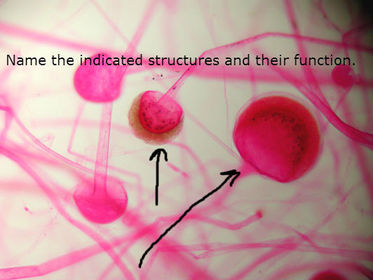
- 33—A: Hypha
B: Zygospore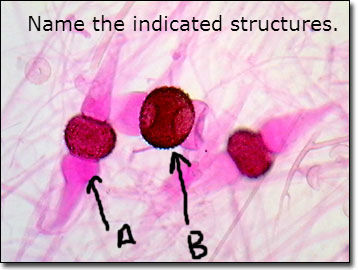
- 34—General: Plasmogamy
Specific: Conjugation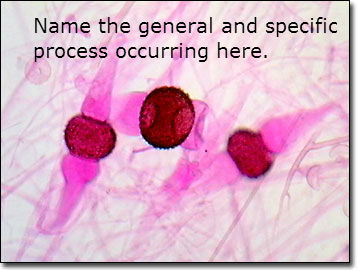
- 35—Sexual
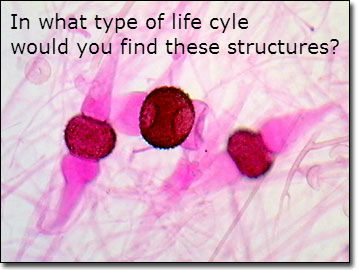
- 36—Phylum Zygomycota
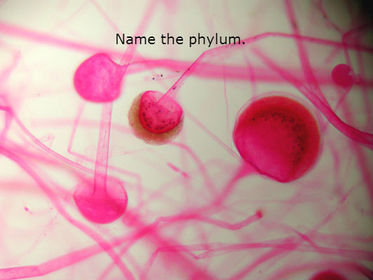
- 37—Asexual
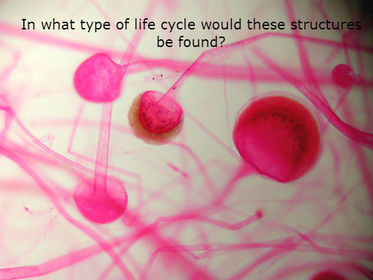
- 38—Sporangia, production of asexual spores
- 39—Aseptate
(coenocytic)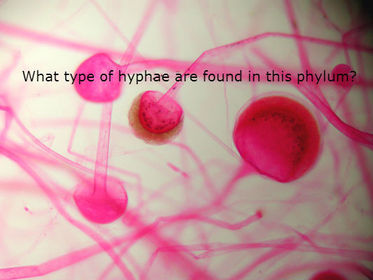
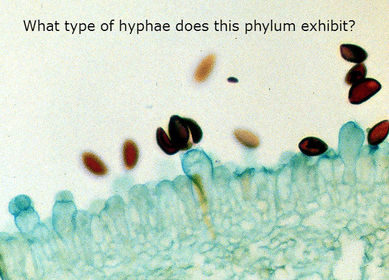
- 40—Incompletely septate
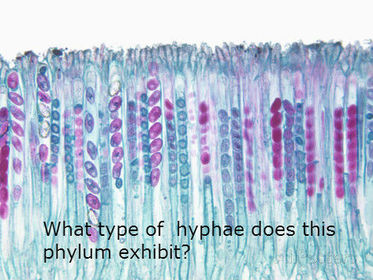
- 41—Completely Septate
Information
- Description
- Example practice questions for lab practical 2, Truman State University, Bio 108
- Created by
- Macey Peterson
- Views
- 279
- Tags
- Rating