Flashcards
Unit 1 -Psych
Cards in this deck (77)
- 1—
- 2Definition of Psychologythe study of the mind of behavior
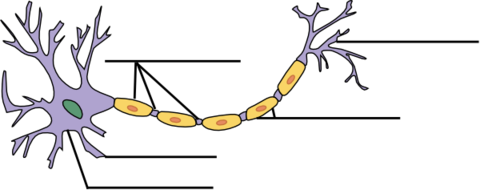
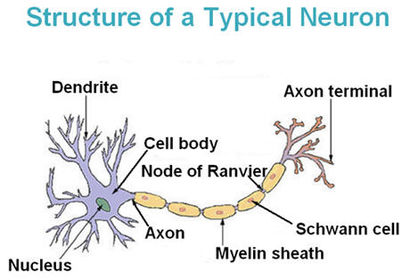
- 3How does a neuron work with a message? What does what?DENDRITE receives nerve info ---> AXON sends message ---> MYELIN protects the Axon when sending a message
- 4Steps in Action Potential??--Stimulus is Introduction
-Resting potential (Inside-Negative(Potassium) Outside-Positive(Sodium)
-Depolarization(Sodium rushes into the cell) --> creates
Action Potential - 5Communication style of neurons?Communicate across neurons
- 6What Am I? -Surround axons, they insulate axons which help the message send quicker?Schwann Cells
- 7True/False? Neurons touch each other when sending a messageFalse. Neurons do not touch each-other
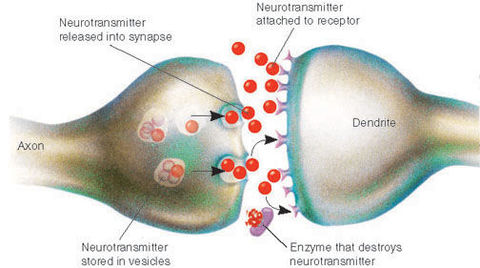
- 8How do signals between Neurons travel?Synapse-space between axon and Dendrite
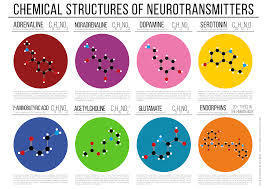
- 9Stimulus cells that either excite or inhibit a neigboring neuron. Causing a behaviorNeurotransmitters
- 10The time that it takes for an action potential to travel depends on the ______of the _________ & how far it has to travelStrength
Stimulus - 11______ stays constant in an action potential ________ can change when it is recievedStrength
Time - 12What happens to left over neurotransmitters?They can be reabsorbed(reuptake) or blocked
- 13What determines the strength of the message?Neural firing-->greater magnitude of experience
- 14Peripheral Nervous System-Connects to skin & Muscles. (Nerves)
Blue Nerves (Somatic NS)
Red Nerves (Autonomic NS) - 15In the Peripheral NS, what do the Blue Nerves Control? What do the Red Nerves Control?Blue - control voluntary muscles, & convey sensory info to the central nervous system
Red - Controls the heart, stomach, other organs. - 16What system are the Blue Nerves related to?Somatic NS - Voluntary
- 17What system are the Red Nerves related to?Autonomic NS-involuntary things
- 18Sympathetic muscles are....expanding energy, doing an action

- 19Central Nervous controls the....Brain, Spinal Cord
- 20What side of brain controls the left side of the body?The right brain.
- 21What happens if the corpus Colosseum is severed?There would be no communication, each side would receive info seperately
- 22—
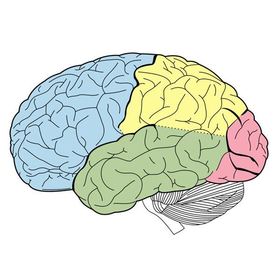
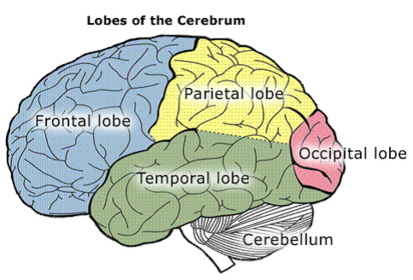
- 23Functions of The Frontal Lobe?Executive Control
-Thinking
-Planning
Organising
-Problem Solving
-Emotions
-Personality
Behavior Control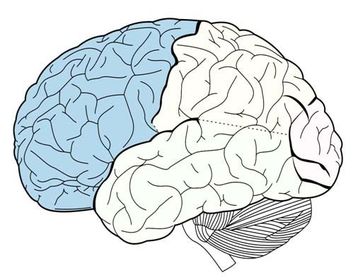
- 24Functions of The Occipital Lobe? What happens if you damage it?Vision
-If you damage it you'd have no awareness of what you were seeing, but you'd know subconsciously what it looked like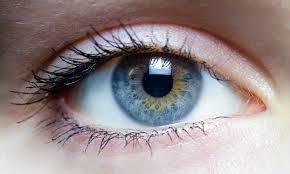
- 25Functions of the Temporal Lobe?Memory
Understanding
Language
(If you damage this, you'd have trouble recognizing voices and music)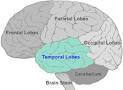
- 26Functions of the Parietal Lobe?-Perception
-Making sense of the world
-spelling
-arithmatic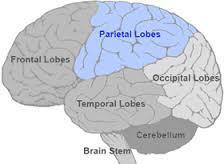
- 27Types of Psychologists?Teach & Research
Organizational
Individual
- 28Where do psychologists work?Companies
Schools
Hospitals
Research facilities
Gvt. - 29Someone who reads and learns from the research conducted by others?Research Consumer

- 30Someone who conducts research studies & collects studies?Research Producer
- 311.Can you be a research producer without being a consumer? 2.Can you be a consumer without being a researcher?1. No
2. Yes - 32Difference b/t psychologists & psychiatristsPsychologists get a Doctorate, cannot prescribe meds
Psychiatrists - have MD, can prescribe meds. - 33The Types of studies for research?Self-Report
Physiological
Obersvational
- 34Random assignment vs SamplingRandom A- when you pick your participants at random from the pop.
While Sampling is the researchers choosing who gets to participate to represent the population - 35WEIRDWestern Educated Industrial Rich Democratic
- 36What type of samples do most people use?Convenient Samples
- 37What does the IRB stand for? What does it do?Institutional Review Board
-decides whether researchers can do the study.
Weights the risk/reward factors
Assesses the damage to the particpants - 38describes exactly what the variables are and how they are measured within the context of your studyOperational Definition
- 39Common stats in psych research?Mean
Median
Mode - 40This Common stat tells you the averageMean
- 41This common stat tells you the middle valueMedian
- 42This common stat tells you the most frequent valueMode
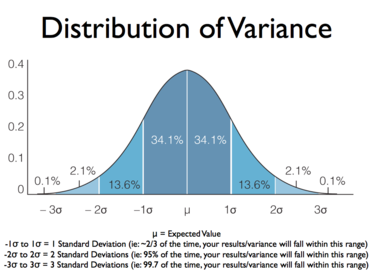
- 43Tells you how much the scores deviate from the meanStandard Deviation
- 44When you are not doing an experiment, you use_______________________ for analyseCorrelational Data (r)
- 45What are the directions that (r) can go?-Positive Correlation (+1) if both variables move in the same direction
No correlation (0)
-Negative Correlation (-1) When variables move in opposite directions - 46Best way to visualize correlational data?
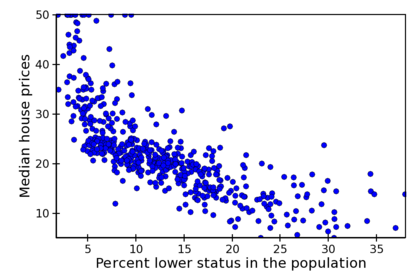
- 47What kind of data do you use when you aren't controlling variablesCorrelational Data
- 48When you think that theres a relationship b/t two variables, but really there is no relationship or its very weakIllusory Correlations
- 49Manipulated Variable is called?Independent Variable
- 50Measured Variable is called?Dependent Variable
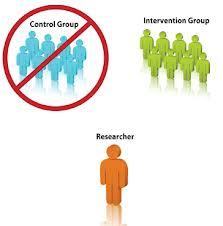
- 51The group that isn't manipulated in an experiment is calledthe Control Group
- 52The group that uses random assignment?Between Group
- 53The group that uses the same people for each experimentWithin groups
- 54Stat bundle -what do they mean r M SD T-score F-score P-valuer-correlational data
M-mean
SD-standard deviation
T-score-difference b/t 2 groups
F-score difference for 3 or more groups
P-value - How likely due to chance - 55—
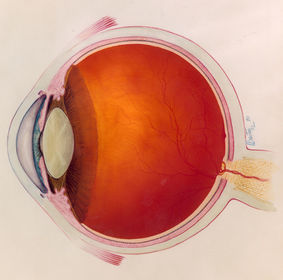
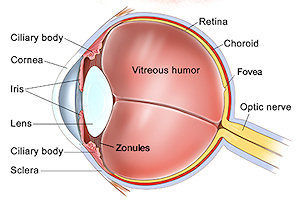
- 56Function of the... pupil? Iris? Sclera?Pupil controls how much light is let into the eye
Iris is the eye color, contracts to change size of pupil
Scelera is the whites of your eyes, an protects the surface anatomy of the eye - 57Function of the Cornea Lens Retina Vitreous Humor FoveaCornea - covers the surface of they eye and is responsible for 2/3 of the focusing power
Lens-helps to focus on the retina -->responsible for the process of accommodation
Retina -layer of visual receptors covers the outer surface of eye in the back
Vitreous H - the jelly substance in the middle
Fovea- Where the greatest density of photoreceptors exist - 58The whole is different from the sum of its partsGestalt Principles
- 59The Gestalt principles are?Proximity
Similarity
Good Continuation
Simplicity
Closure - 60Gestalt Principle: We automatically perceive complete objects; not absent spaceClosure
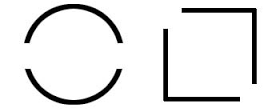
- 61Gestalt Principle: Simplicity AKA?Law of Good Figure
we tend to interpret a form in the simplest way possible
- 62Gestalt Principle: Good Continuationeven when objects are blocked we assume they continue

- 63Gestalt Principle: SimilarityWe tend to groups things that are similar
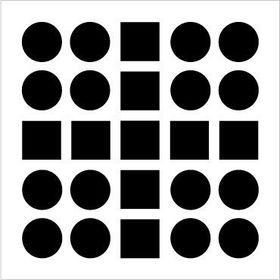
- 64Gestalt Principle: PromixityGrouping things together b/c they are close to eachother
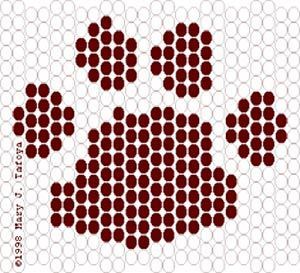
- 65Top-Down Processing?Interpretation based on prior knowledge
-experience driven - 66Bottom-up processing?Interpretation based on what is in your environment
- 67Signal Detection Theory?4 possible decisions when a stimulis is present or Absent
Preset - Hit/Miss
Absent - False Alarm/Correct Rejection - 68What are the 3 theories of vision?Trichromatic Theory of Color Vision
Opponent-Process Theory
Retinex Theory - 69Whats the theory? Color vision depends on the response rate of the various types of conesTrichromatic Theory
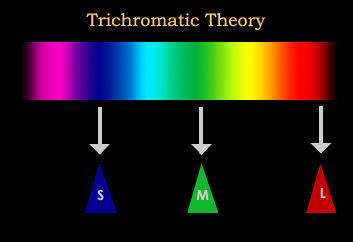
- 70Whats the theory? We perceive color in terms of paired opposites (red/green blue/yellow etc)Opponent-Process Theory
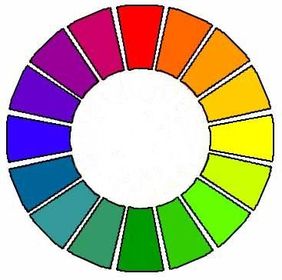
- 71Whats the theory? The cerebral cortex compares the patterns of light coming from the different parts of the retina & synthesizes a color perception of each area?Retinex Theory
- 72Visual Constancy?We percieve objects as maintaining their phyiscal characteristics, despite variations in their actual appearance
- 73Monocular Cues?Using cues from our environment from one eye.
(Linear Environments
Detail/Texture
Interposition-looking at objects in relation to other stuff
Shadows) - 74Our eyes have to turn(come closer) when we try to focus near objectsConvergence
(Binocular Cue) - 75Retinal Disparity?Our left & right eye have different perspective regarding the placement of an object comparative to our environment
- 76Induced Movement?When something appears to move when its not moving
- 77Stroboscopic Movement?Illusion of movement caused by rapid succesion of stationary images