
Flashcards
ENGL 3002 Midterm
Cards in this deck (41)
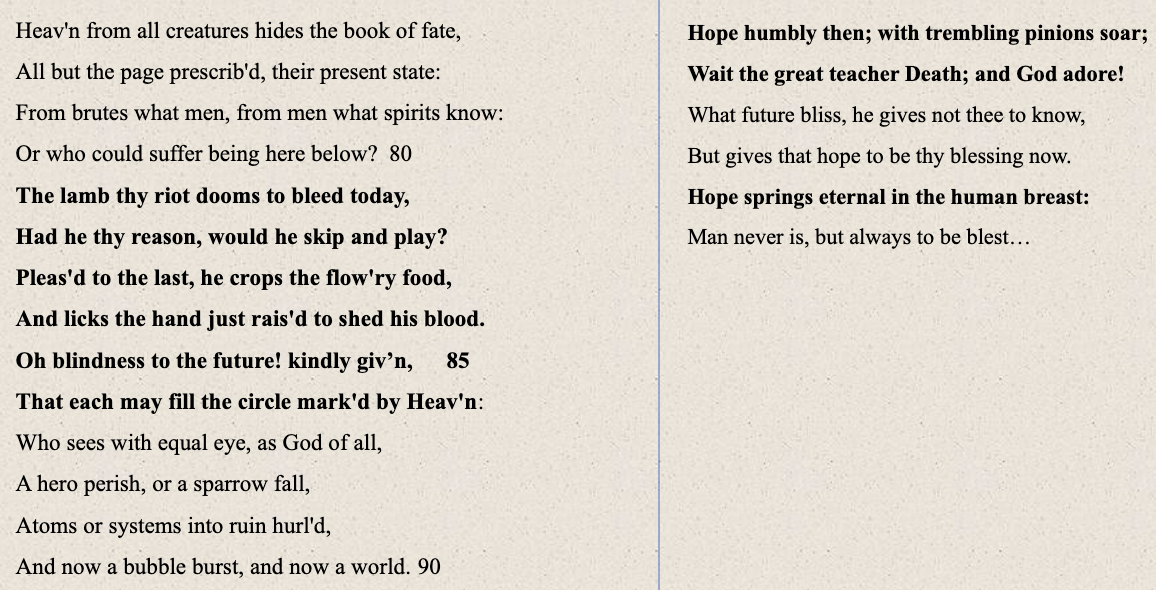
- 1—Alexander Pope, "An Essay on Man"
- neoclassical - 2—Phillis Wheatley, “Thoughts on the Works of Providence”
- neoclassical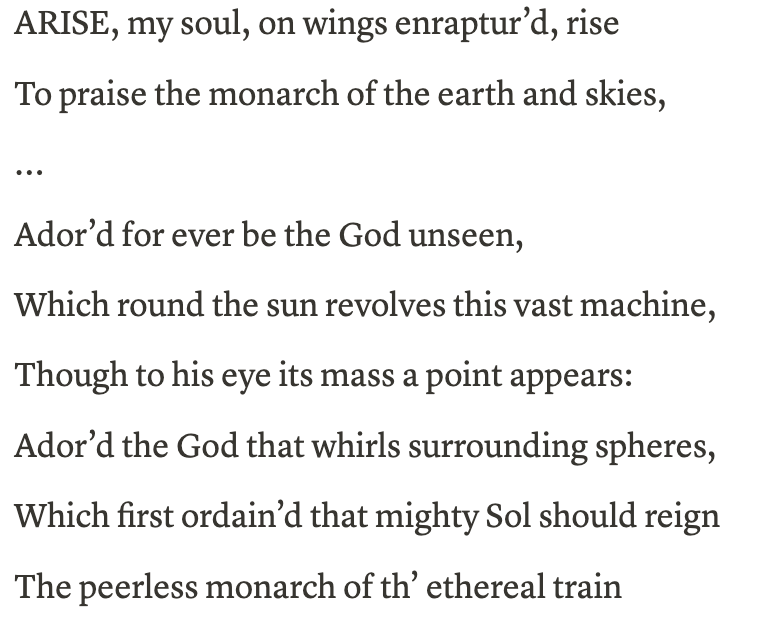
- 3—Thomas Gray, "Ode on the Death of a Favourite Cat"
- neoclassical
- didactic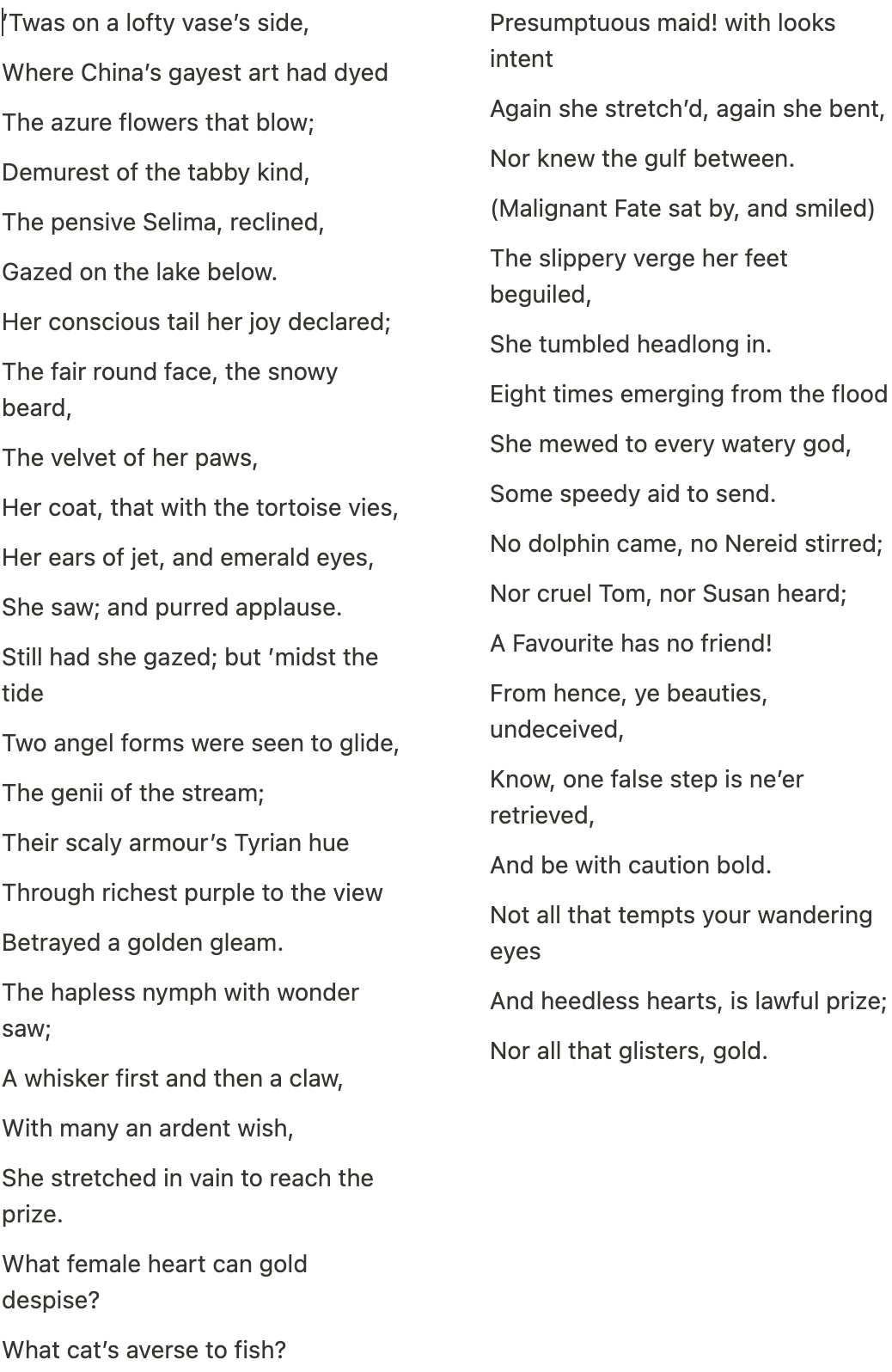
- 4—Thomas Gray, "Elegy Written in a Country Churchyard"
- neoclassical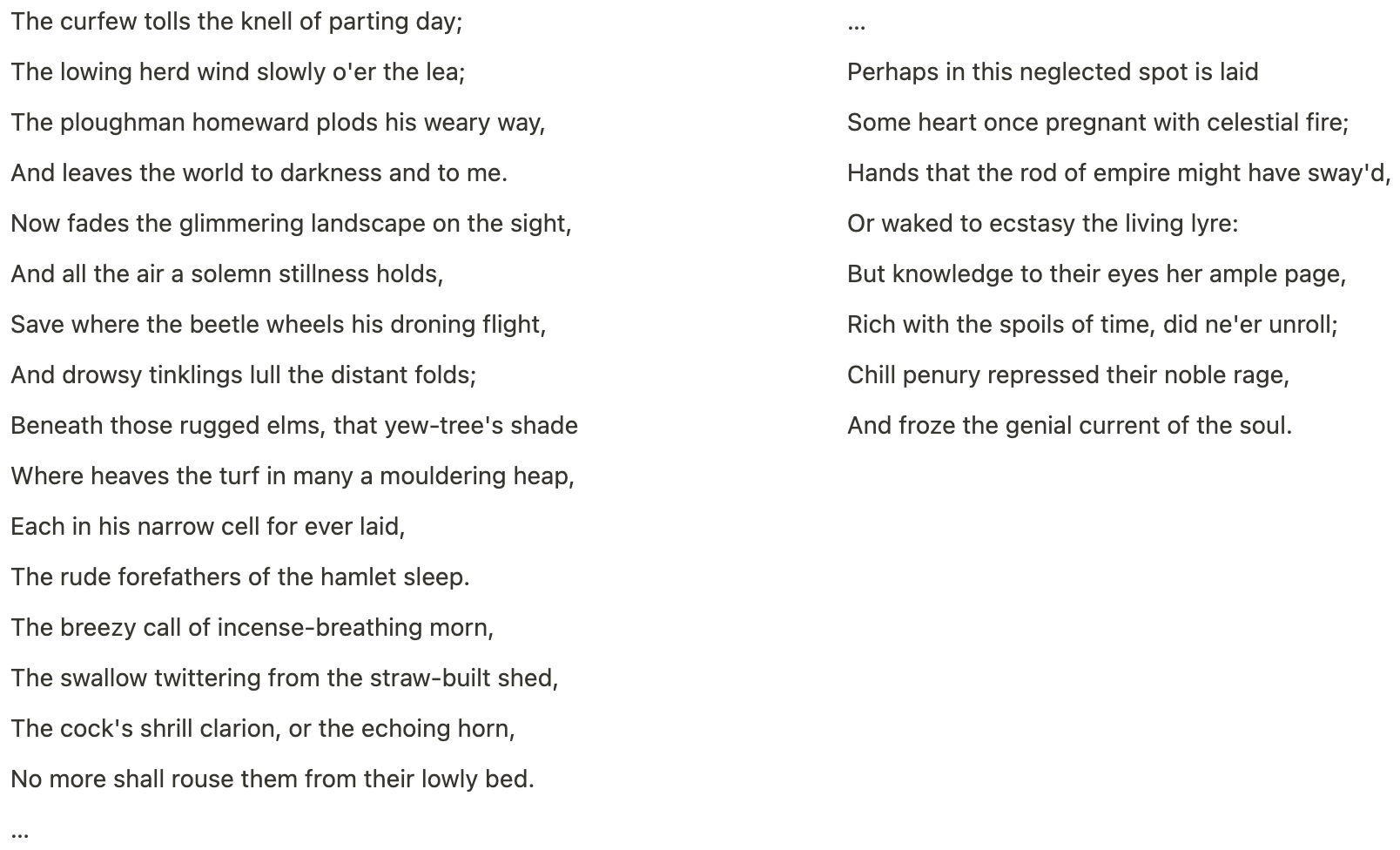
- 5—Anna Laetitia Barbauld
“The Mouse’s Petition"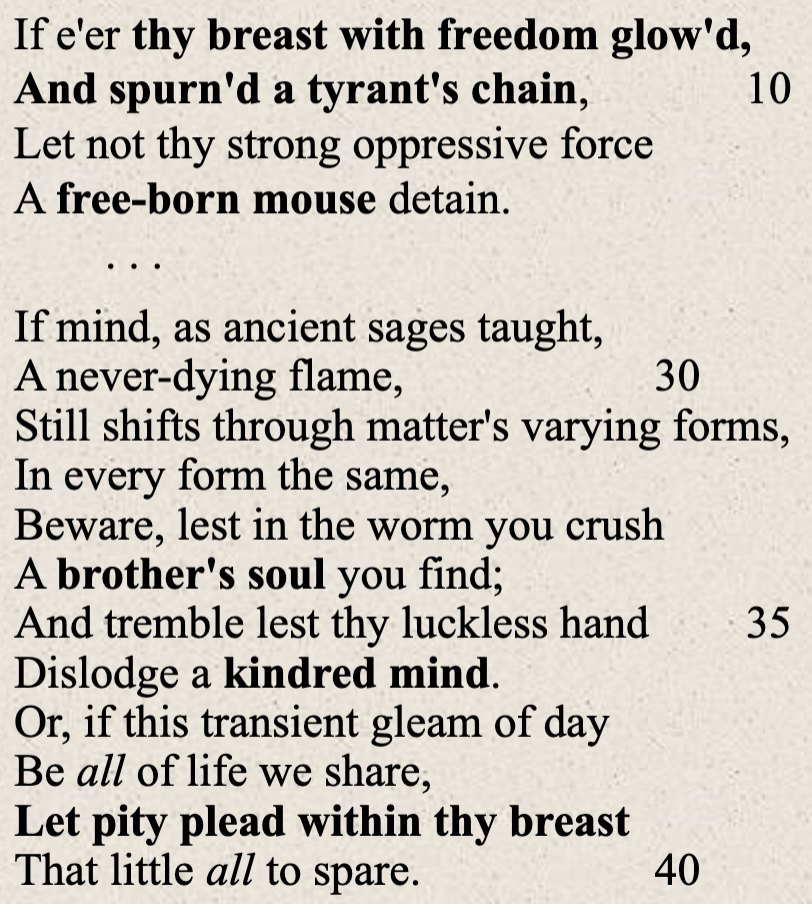
- 6—Robert Burns, "To A Louse"
- burns stanza
- epigrammatic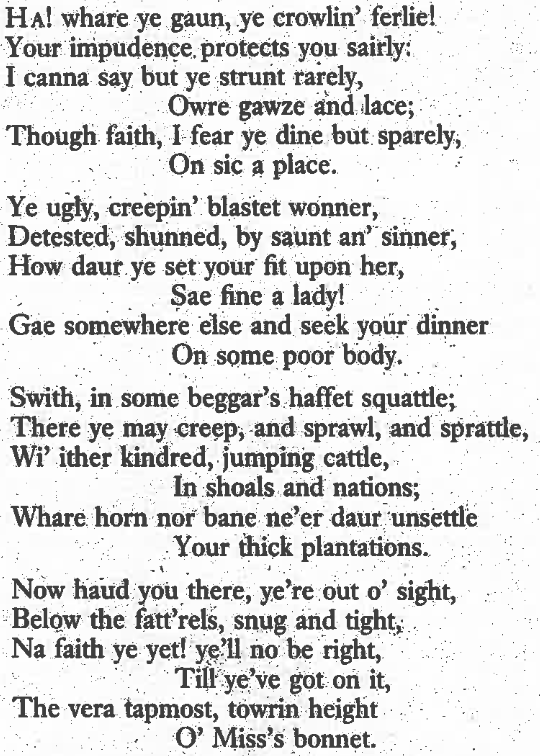
- 7—Robert Burns, "To a Mouse"
- burns stanza
- epigrammatic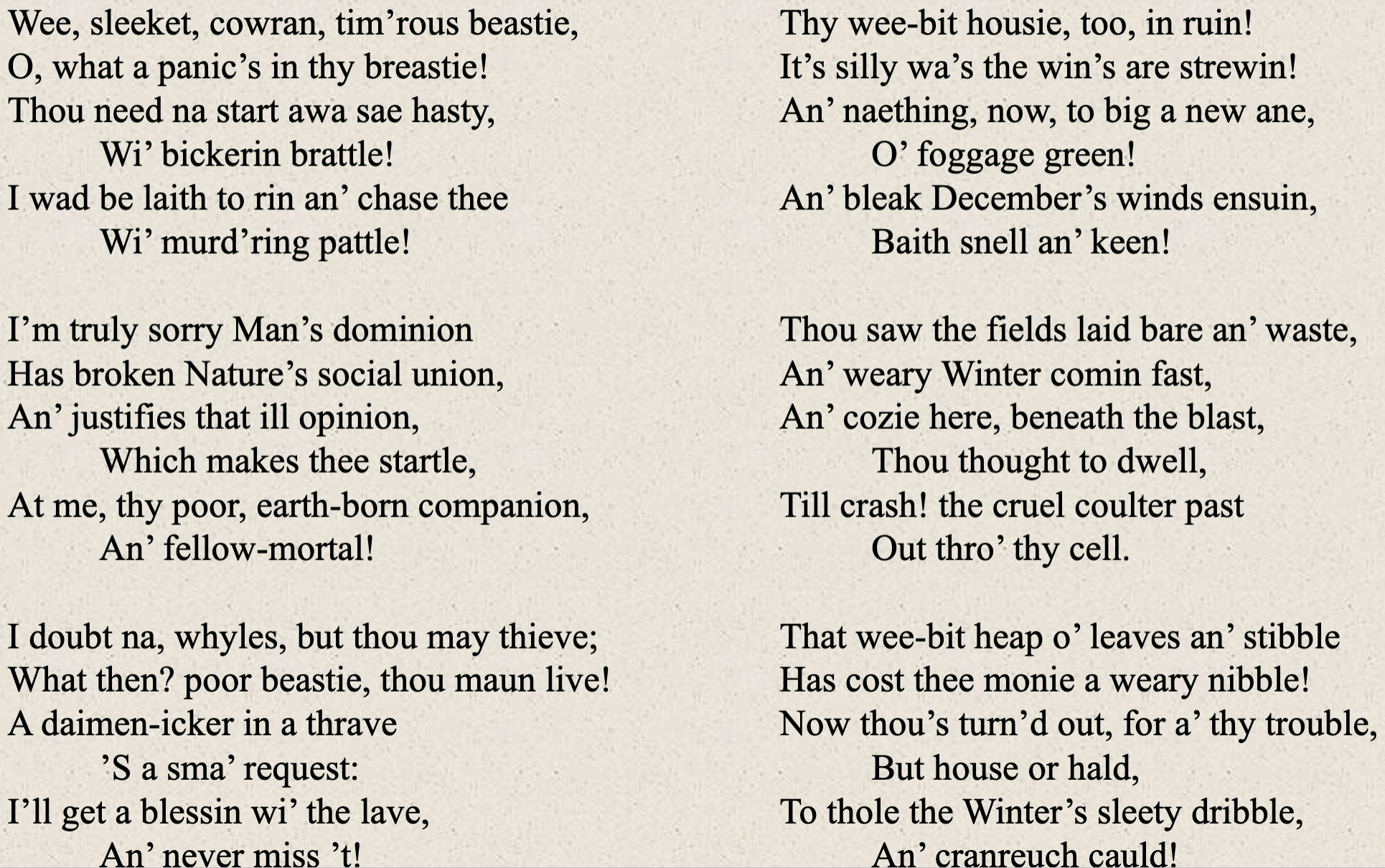
- 8—William Blake, “Introduction” to Songs of Innocence
- Romantic
- art with nature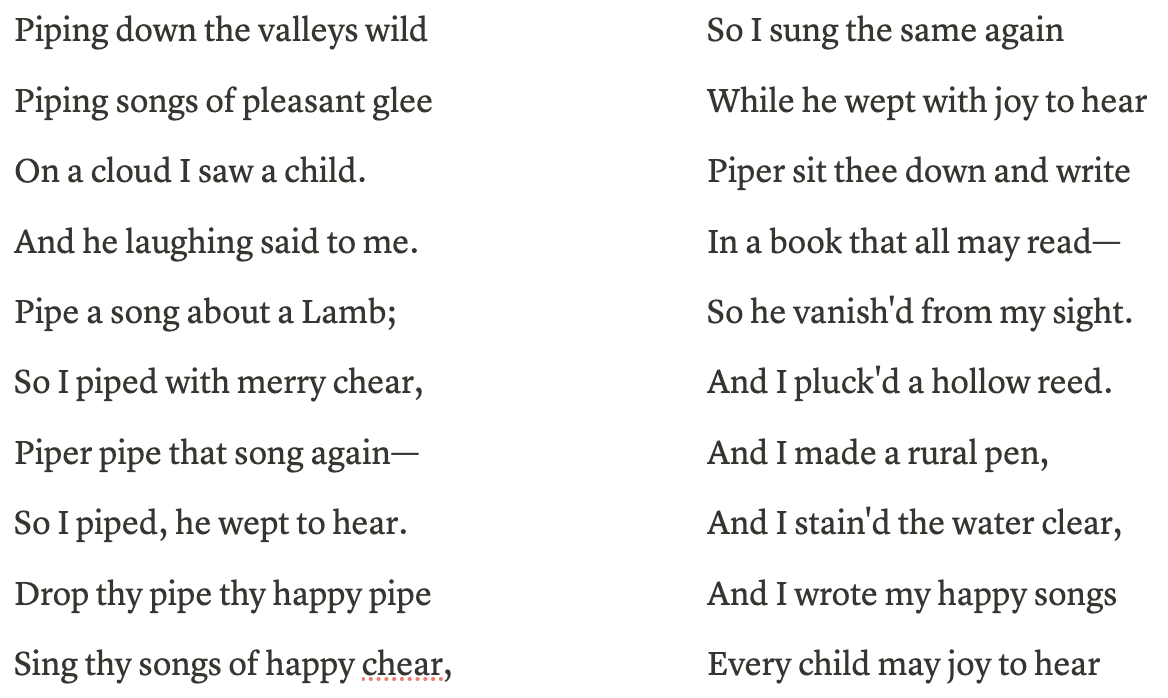
- 9—William Blake, "The Lamb"
- Romantic
- moving from symbolism to emotional encounters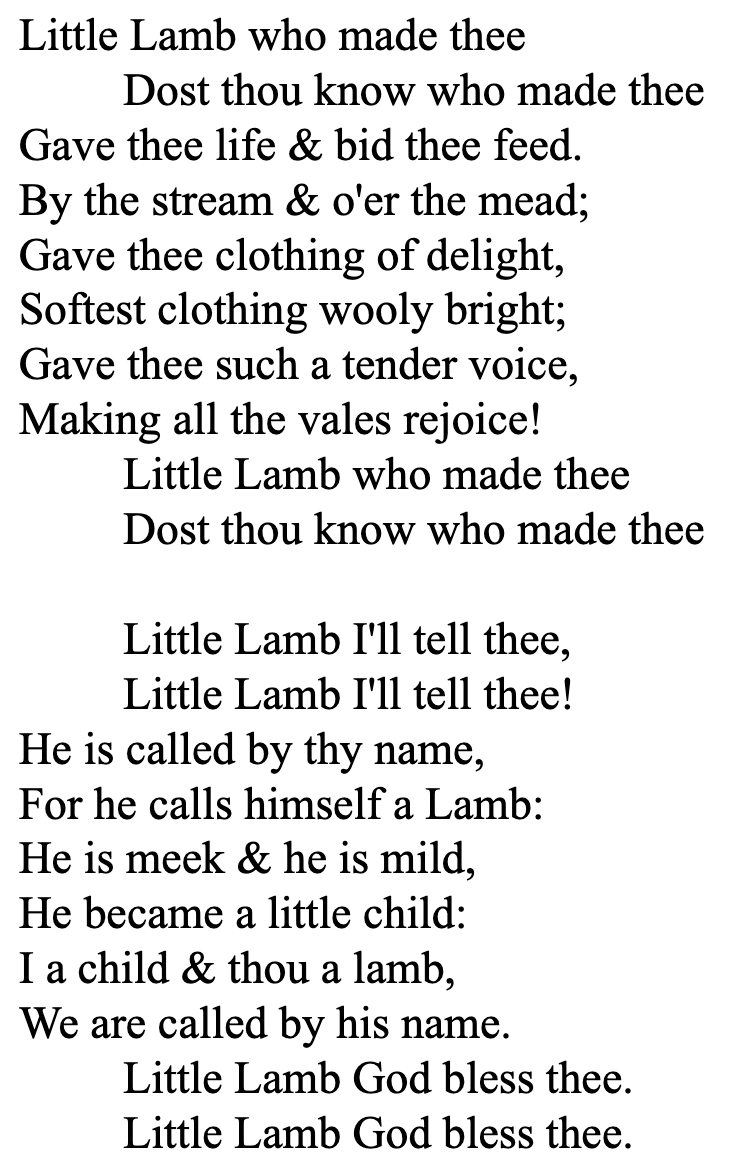
- 10—William Blake, "The Tyger"
- Romantic
- moving from symbolism to emotional encounters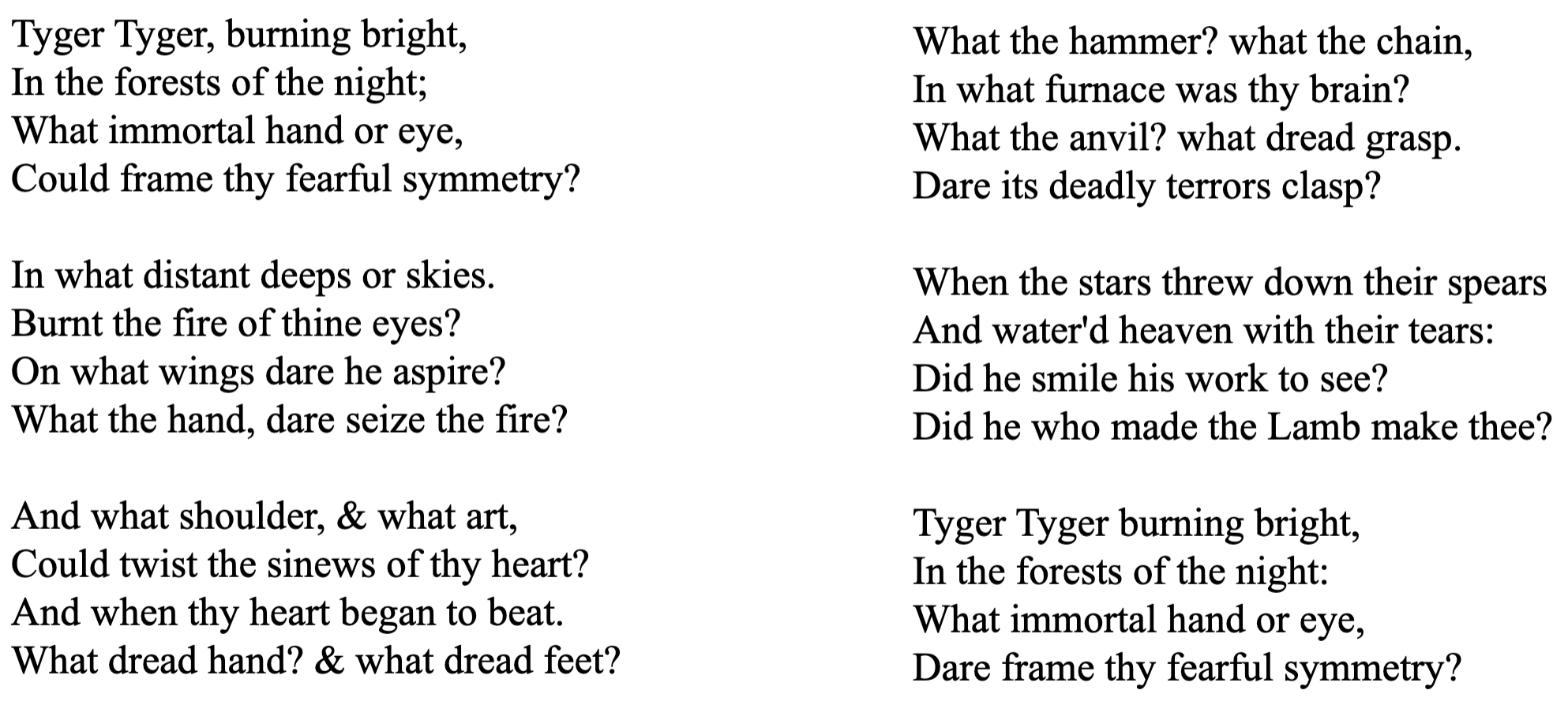
- 11—William Blake, "The Marriage of Heaven and Hell"
- Romantic
- the creation as a fall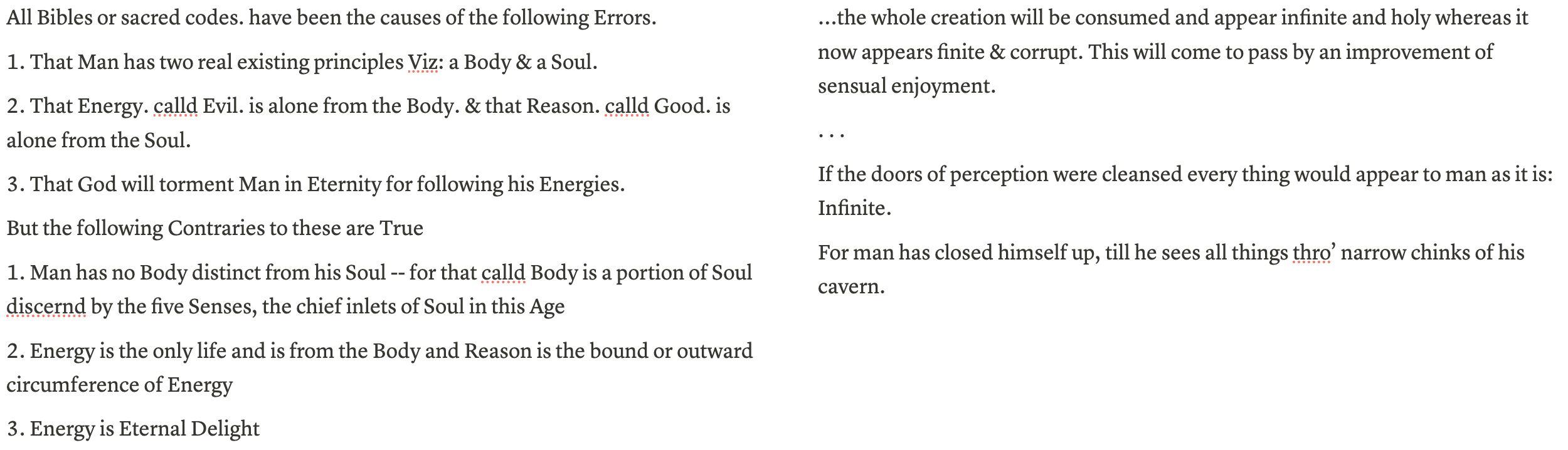
- 12—William Blake, "The Chimney Sweeper"
- Romantic
- epigrammatic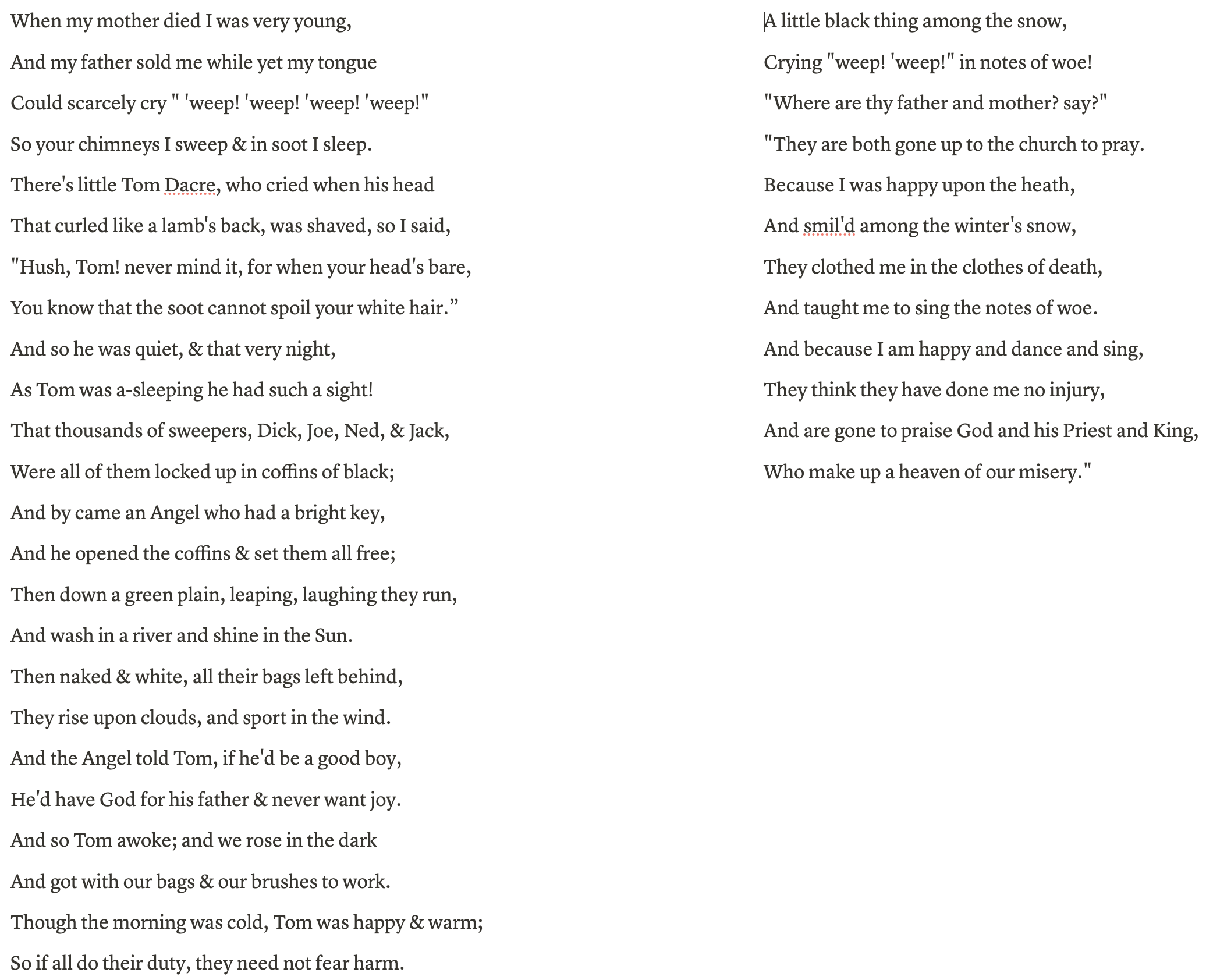
- 13—Samuel Taylor Coleridge, “The Eolian Harp”
- Romantic
- poet as instrument
- inspiration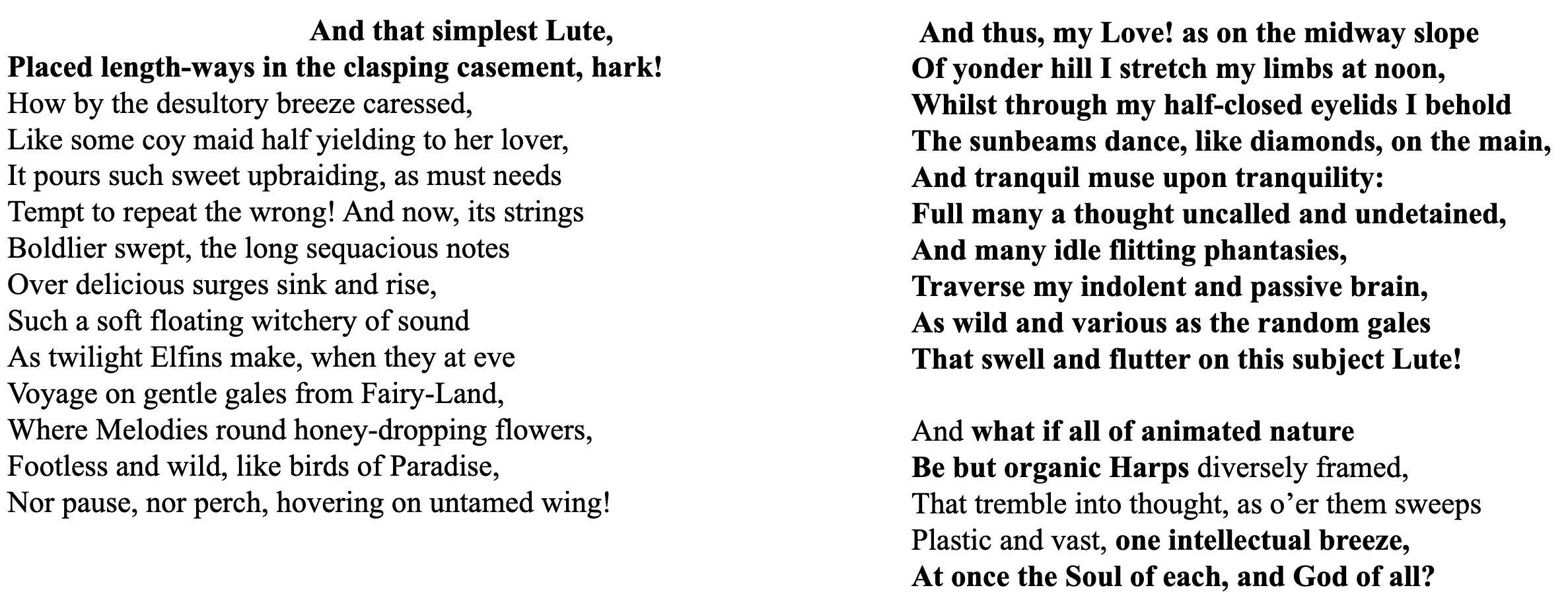
- 14—William Wordsworth, "Lines Written at a Small Distance from my House"
- Romantic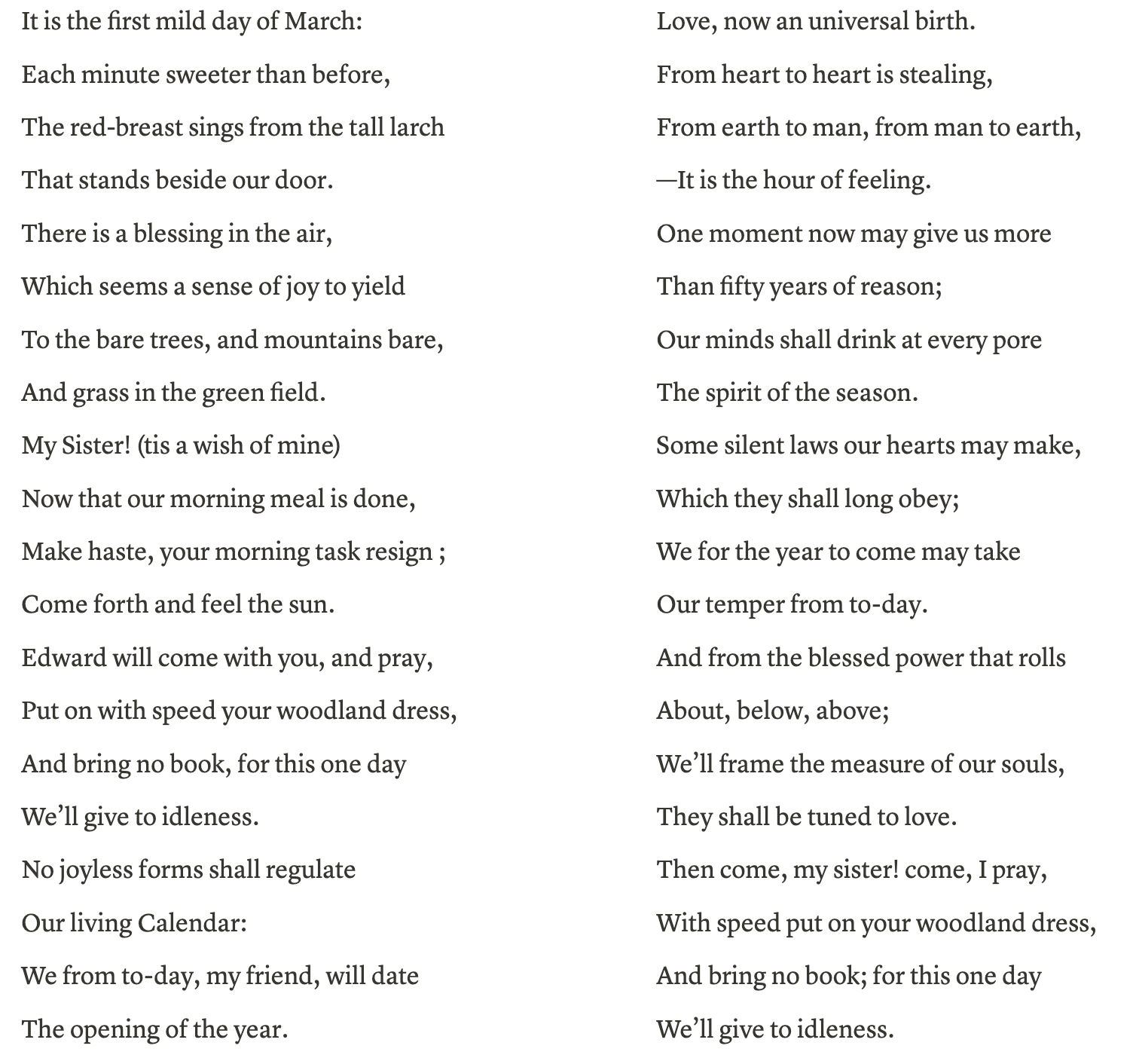
- 15—William Wordsworth, “Preface” to Lyrical Ballads
- Romantic
- instances of expansion (via poetry)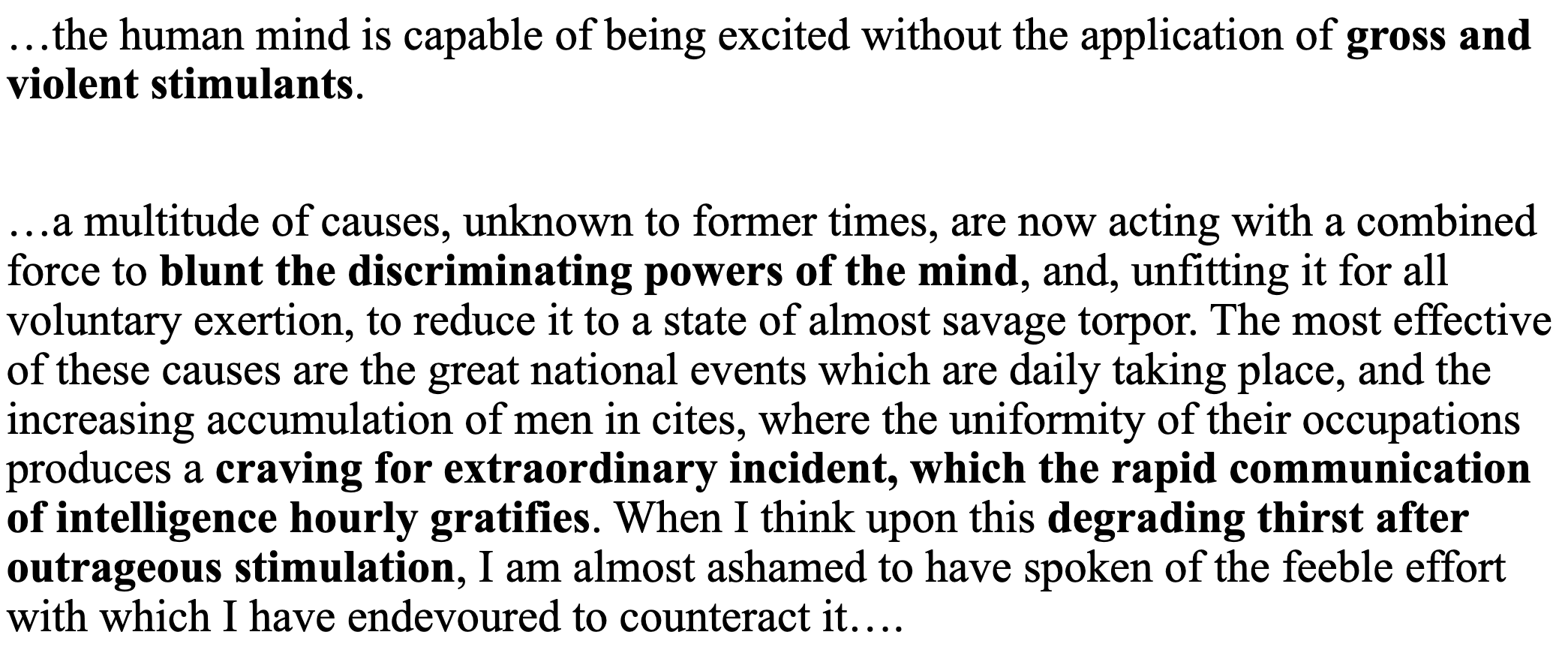
- 16—William Wordsworth, “Lines Written a Few Miles Above Tintern Abbey”
- Romantic
- inspiration
- nature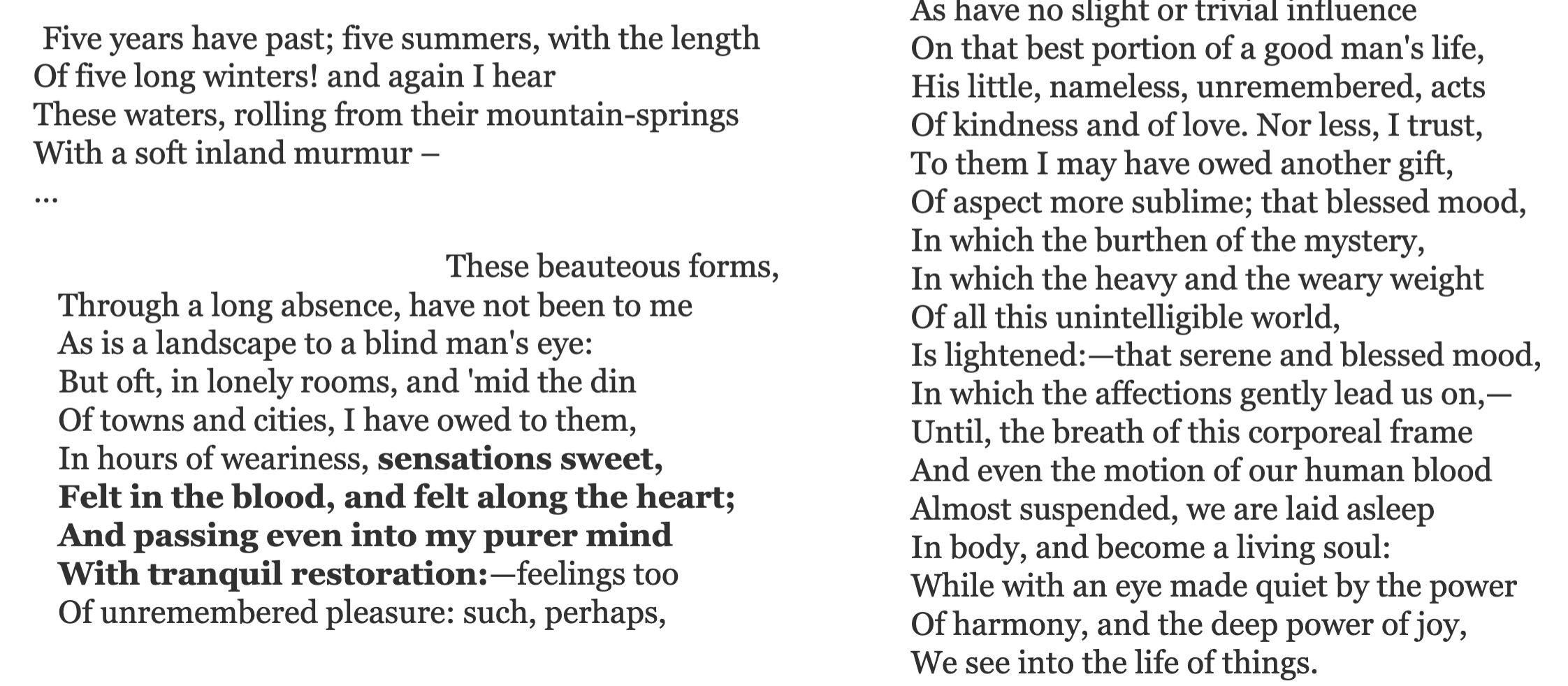
- 17insertLord Byron, “Darkness”
- Romantic
- inspiration
- nightmares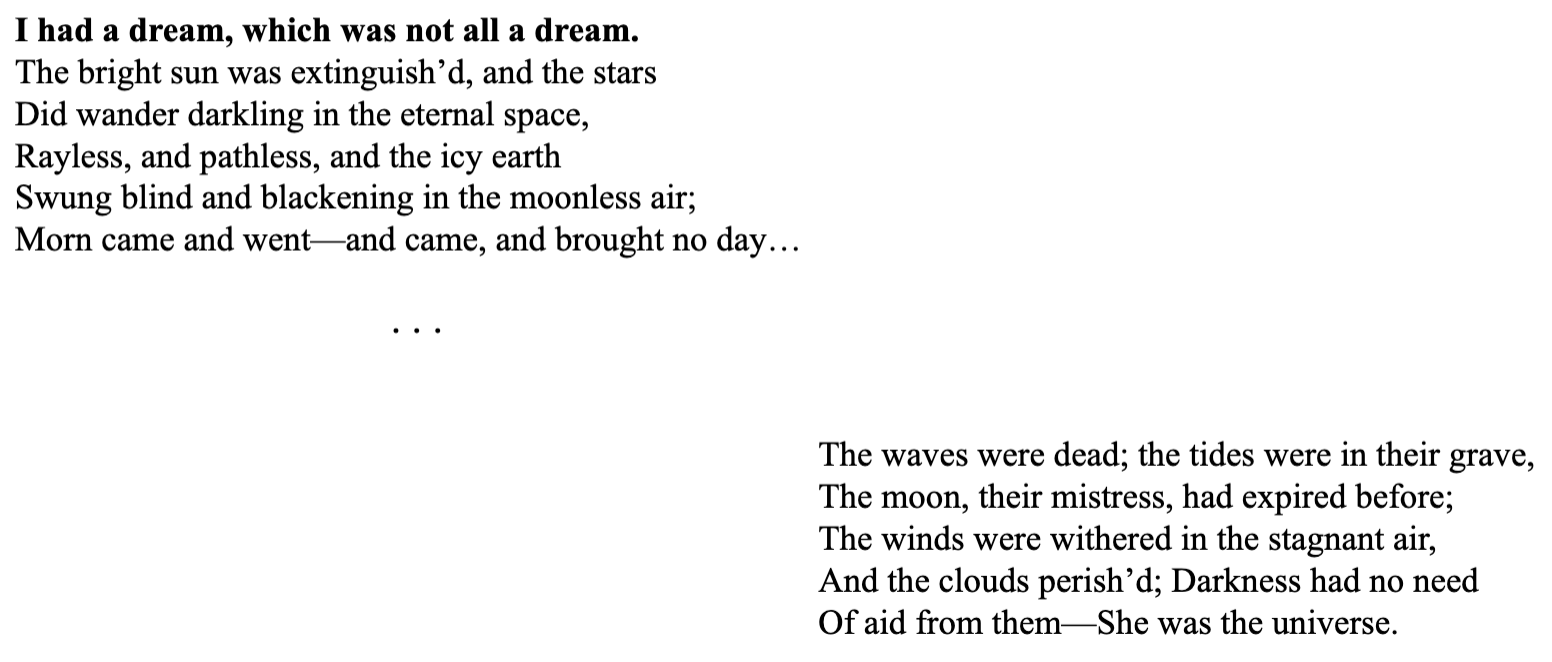
- 18insertPercy Bysshe Shelley, “Ozymandias”
- Romantic
- presence of the past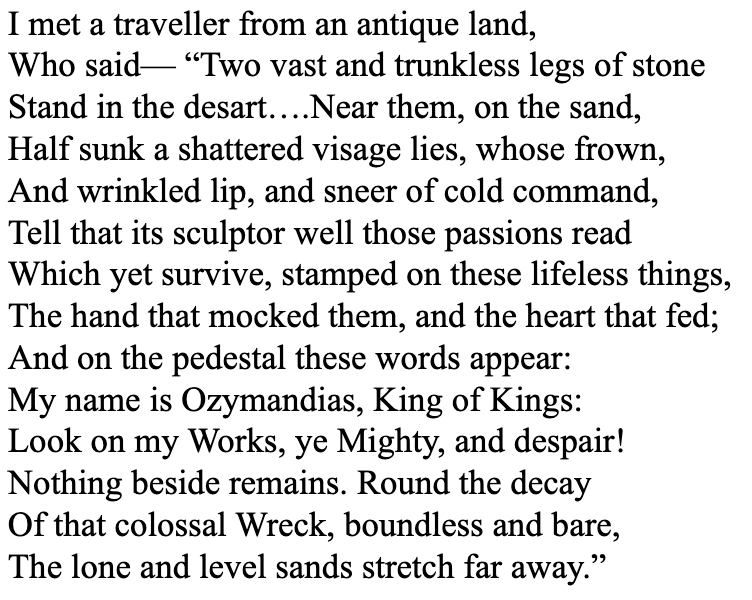
- 19—Percy Bysshe Shelley, “Ode to the West Wind”
- Romantic
- inspiration
- poet as instrument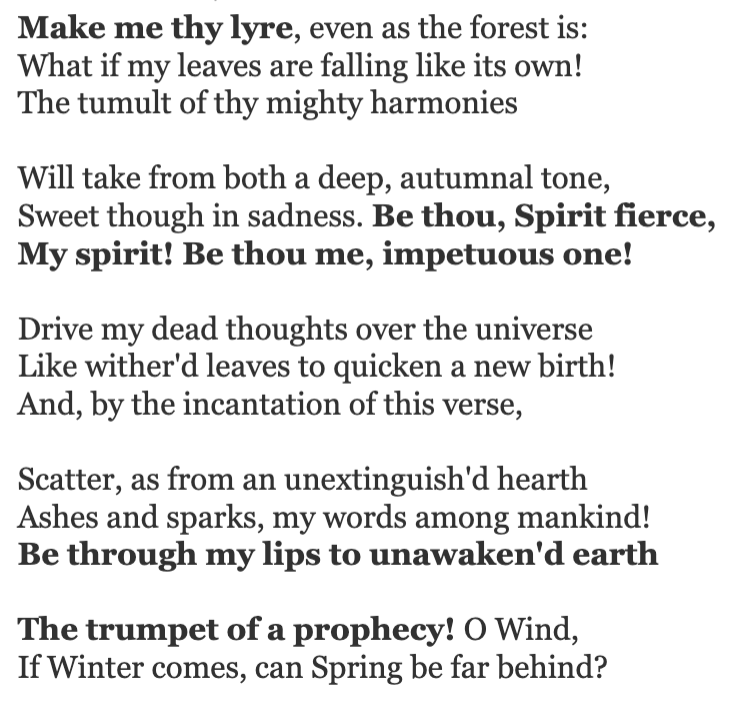
- 20—Percy Bysshe Shelley, excerpt from “A Defence of Poetry”
- Romantic
- inspiration
- poet as instrument
- role of art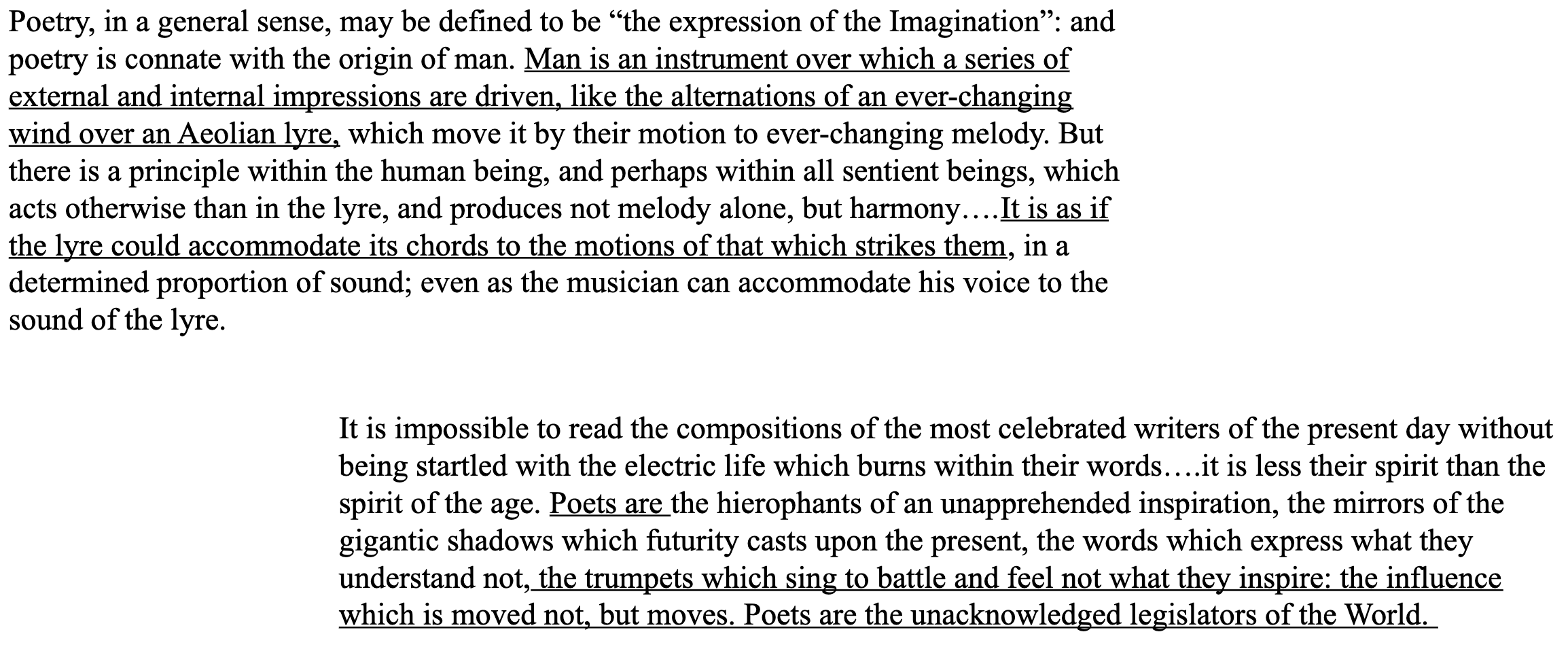
- 21insertJohn Keats, “Ode on a Grecian Urn”
- Romantic
- mortality, time
- frozen in happy moment (?)
- presence of the past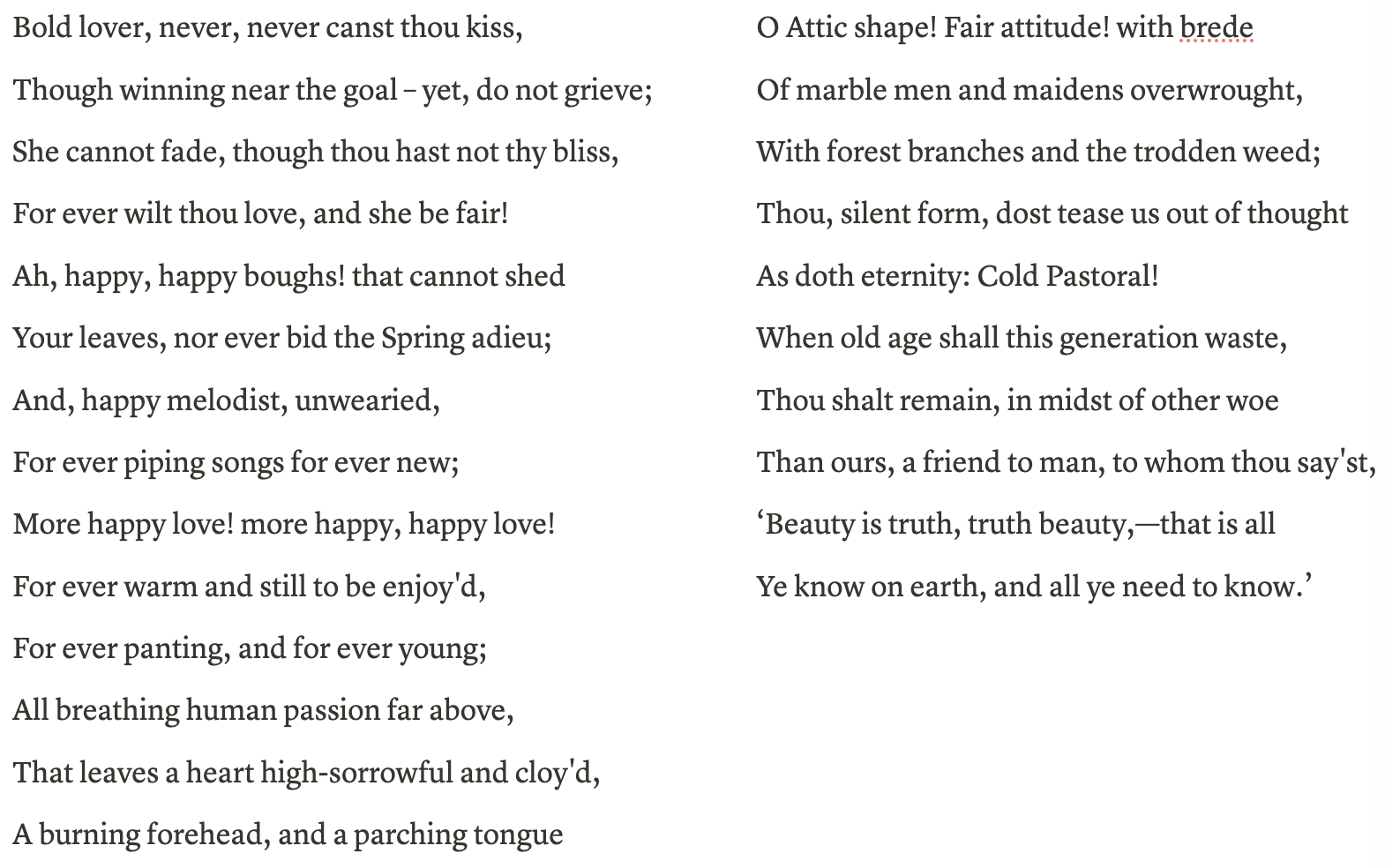
- 22insertJohn Keats, "Bright Star”
- Romantic
- mortality, time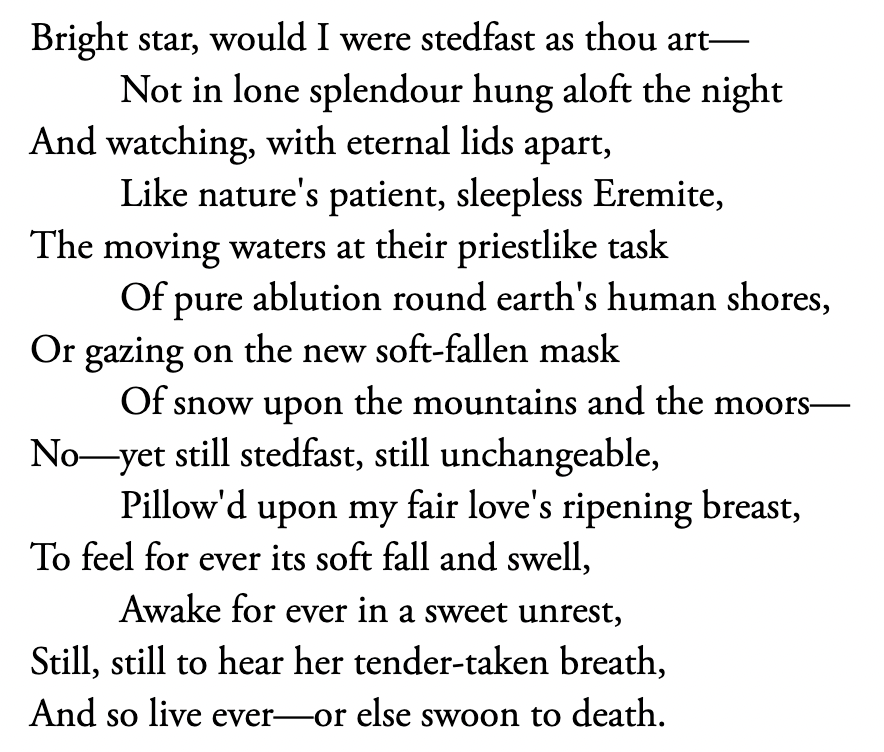
- 23insertFelicia Hemans, “The Image in Lava”
- Romantic
- mortality, time (similar questions as Keats' "Grecian Urn")
- presence of the past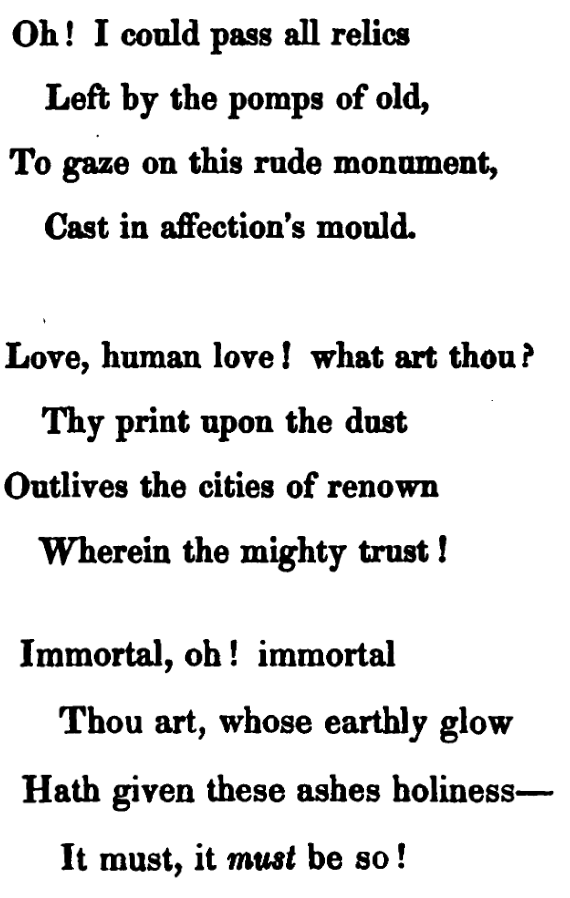
- 24insertMary Shelley, "Frankenstein, or the Modern Prometheus"
- the Sublime
- contrasted w cramped spaces in the novel (ex; the hovel)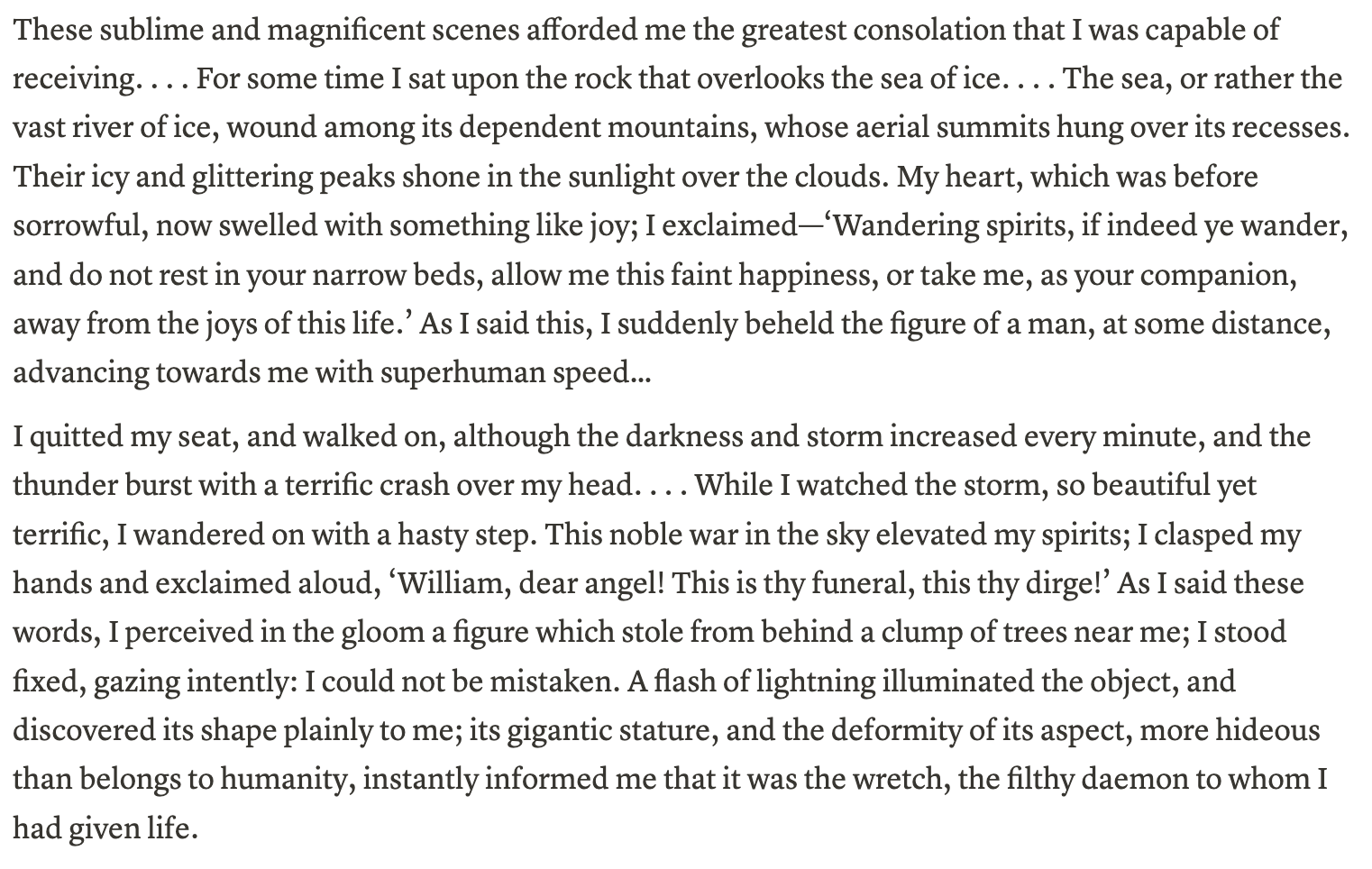
- 25insertMary Shelley, "Frankenstein, or the Modern Prometheus"
- the domestic / the desire for the domestic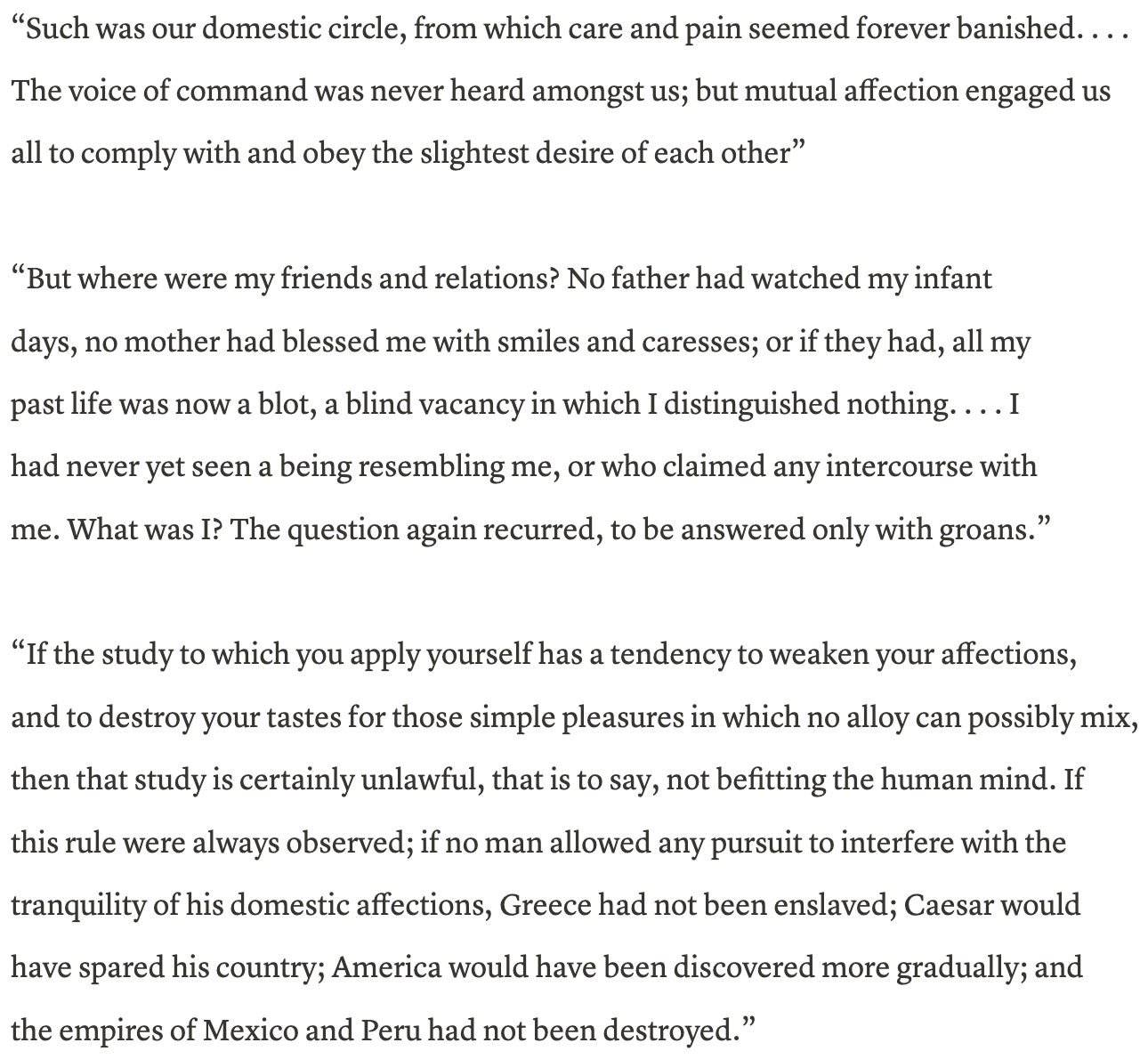
- 26insertMary Shelley, "Frankenstein, or the Modern Prometheus"
- isolation
- sympathy (or lack thereof)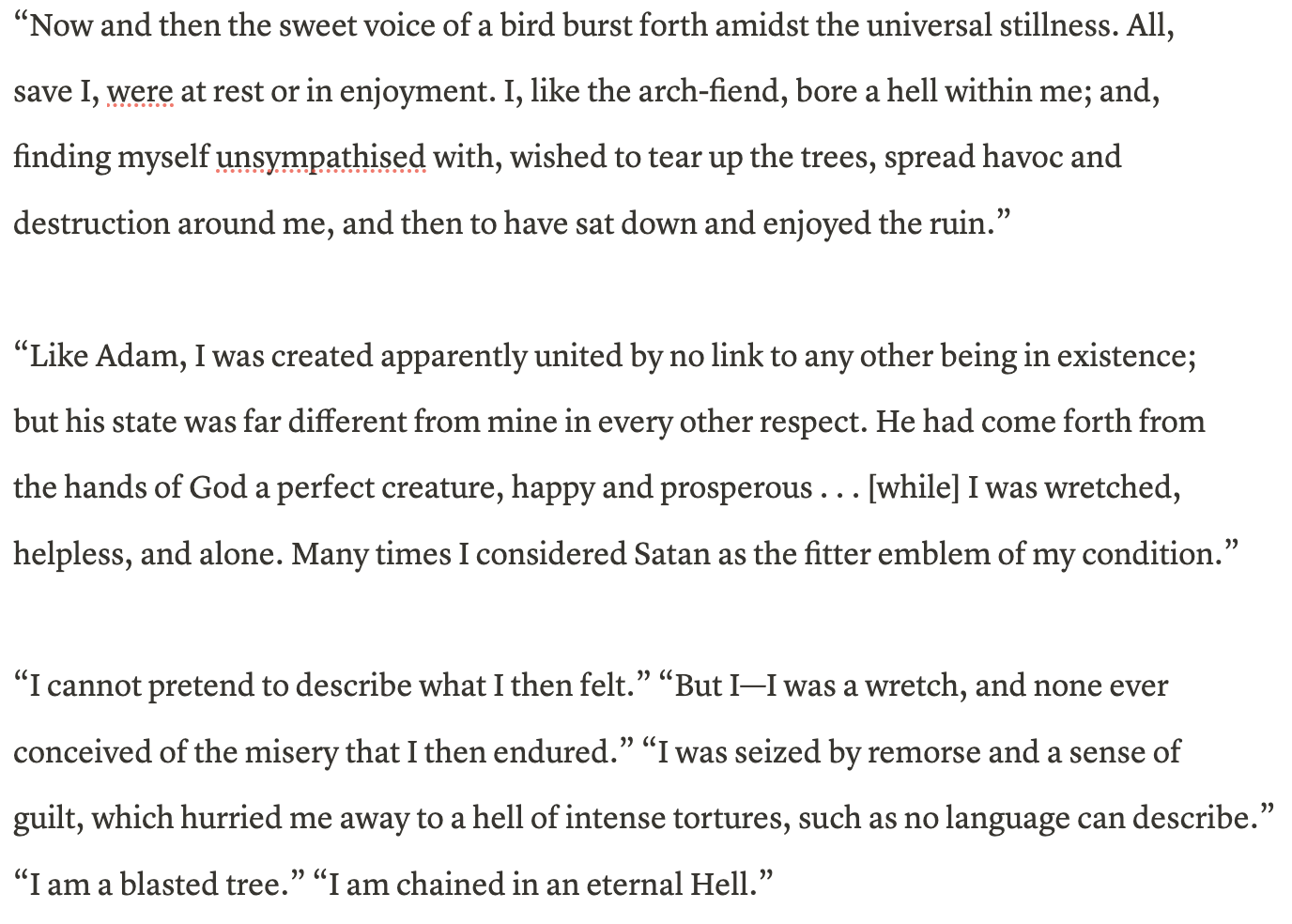
- 27—Mary Shelley, "Frankenstein, or the Modern Prometheus"
- myths and acts of creation
- parallel to potential horrors of Romantic inspiration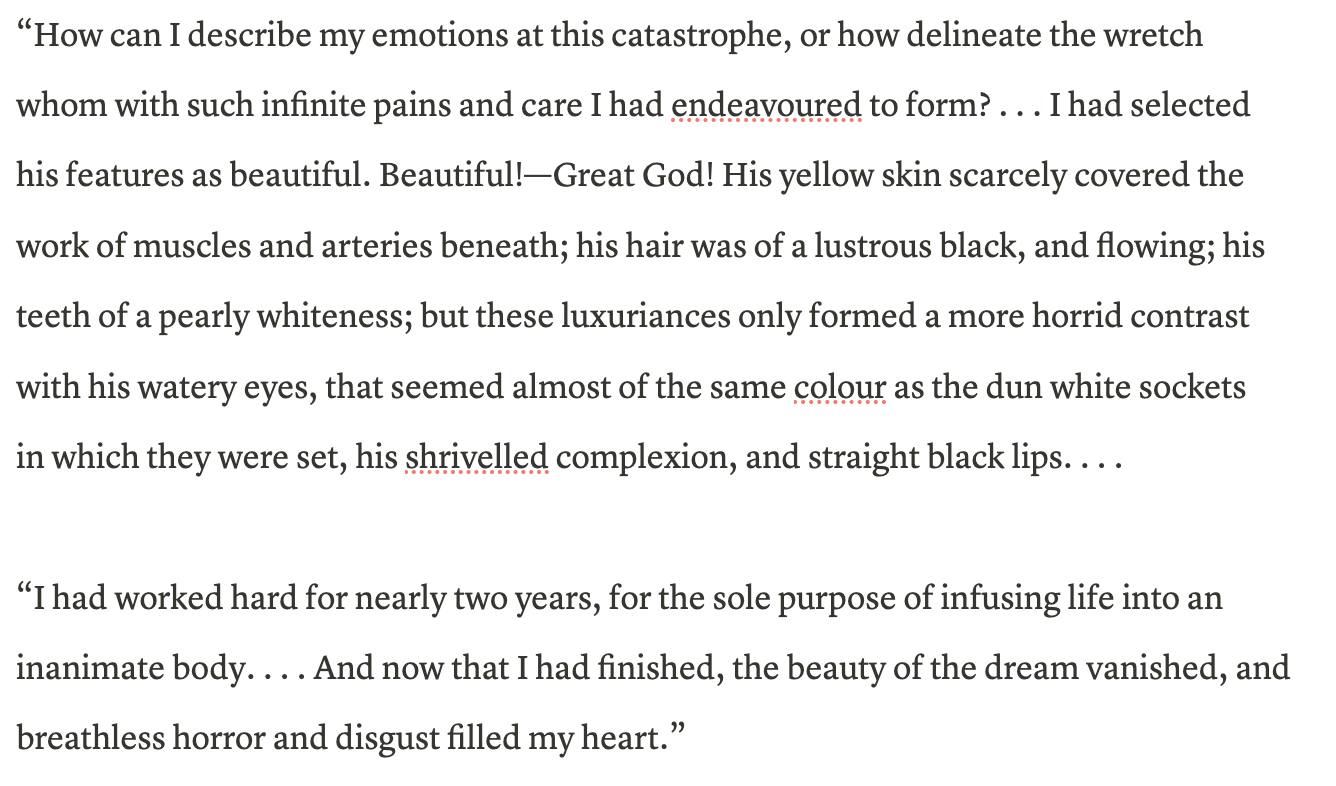
- 28insertNathaniel Hawthorne, “The Minister’s Black Veil”
- symbolic ambiguity
- we all have hidden sin; our own black veils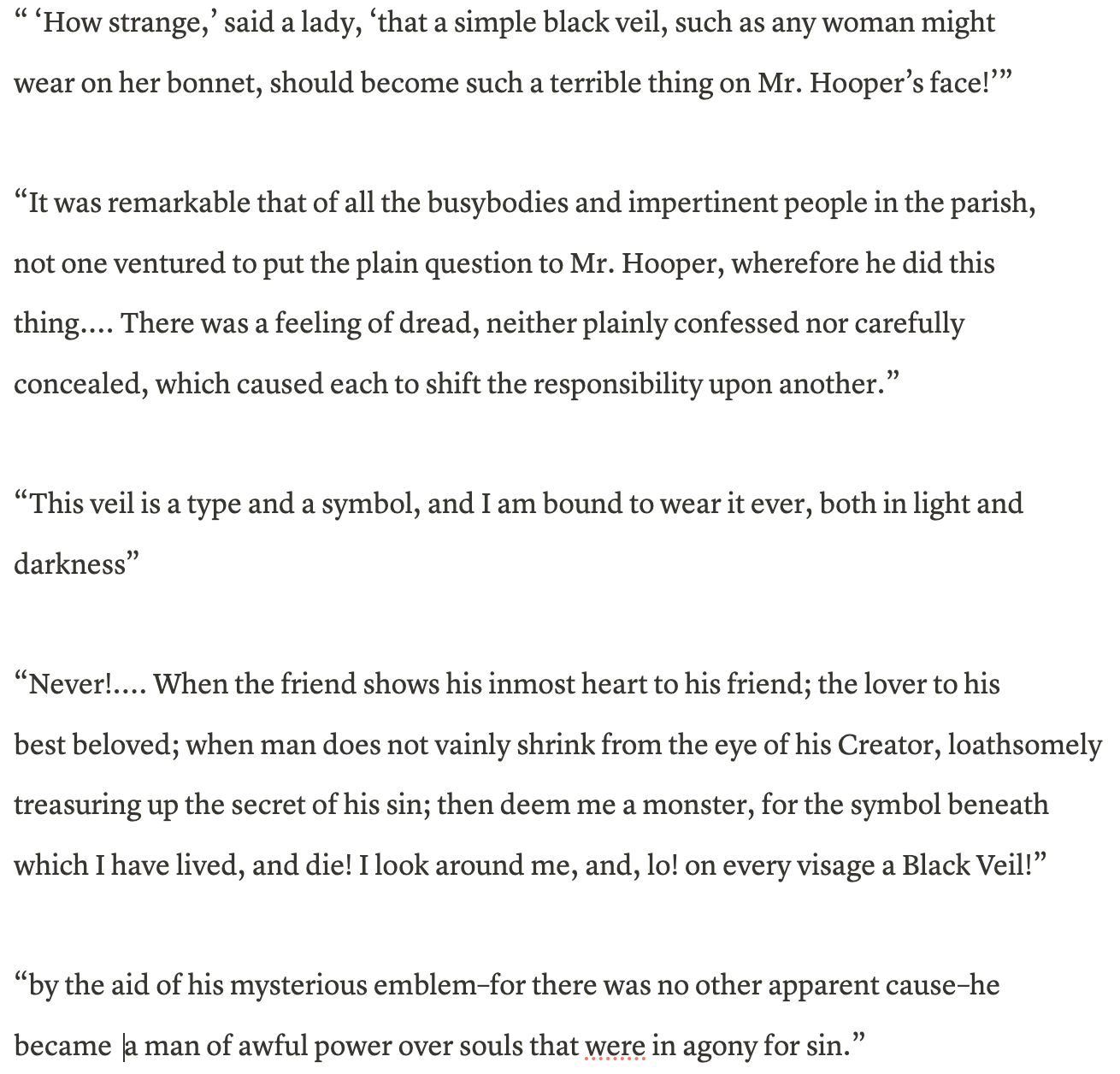
- 29insertNathaniel Hawthorne, “The Birthmark”
- symbolic ambiguity
- had she been otherwise imperfect, mark = less noticeable
- disability studies perspective
- 30slides not posted? anyone have specific passages they remember being discussed?Edgar Allan Poe, “The Man of the Crowd”
- 31slides not posted? anyone have specific passages they remember being discussed?Edgar Allan Poe, “The Black Cat”
- 32slides not posted? anyone have specific passages they remember being discussed?Walt Whitman, “Edgar Poe's Significance,” from Specimen Days
- 33insertHerman Melville, "Benito Cereno"
- settler colonial setting
- cognitive dissonance of the White Northerner
- gothic language
- 34insertHerman Melville, "Benito Cereno"
- 19th century racism
- cognitive dissonance of the White Northerner
- 35insertHerman Melville, "Benito Cereno"
- Babo's Theatre and African political strategy
- Haitian revolution
- 36insertHerman Melville, "Benito Cereno"
- how is history written?
- limits of the archive, the violence that produces it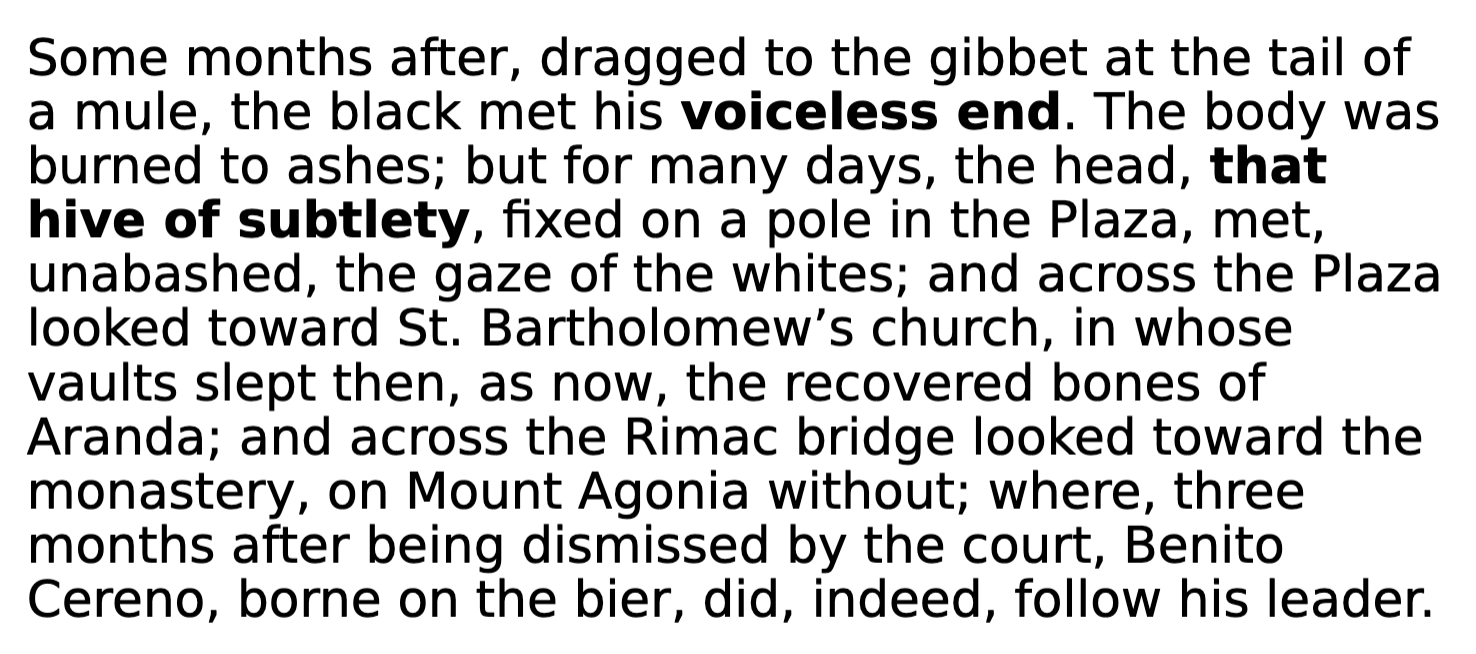
- 37excerpts not on slides; review textFrederick Douglass, "Narrative of the Life of Frederick Douglass, an American Slave"
- 38insertRobert Browning, “Porphyria’s Lover”
- Victorian poet
- first person
- male desire is affected by power and possessiveness in objectification of women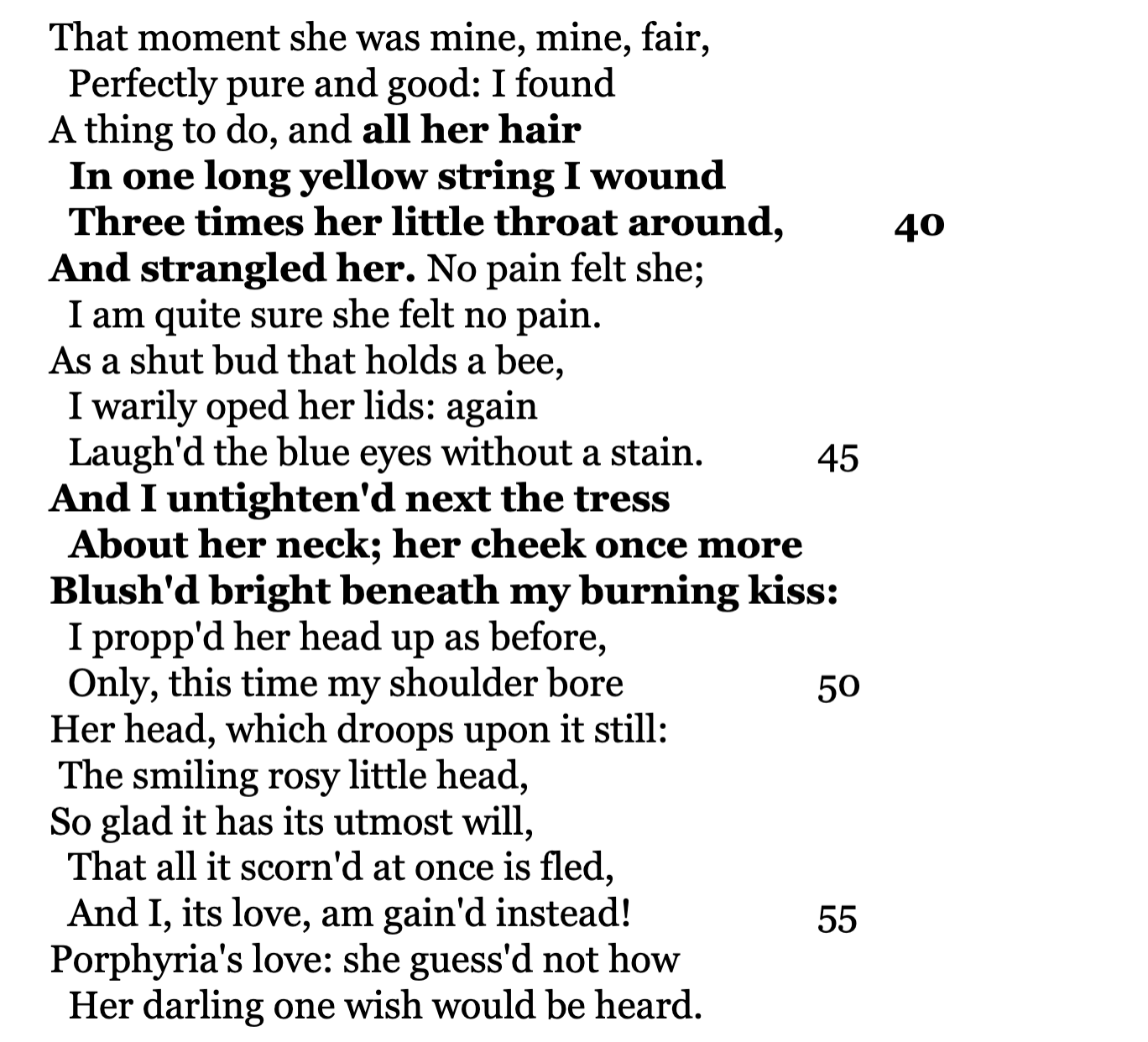
- 39insertRobert Browning, “My Last Duchess”
- Victorian poet
- first person
- male desire is affected by power and possessiveness in objectification of women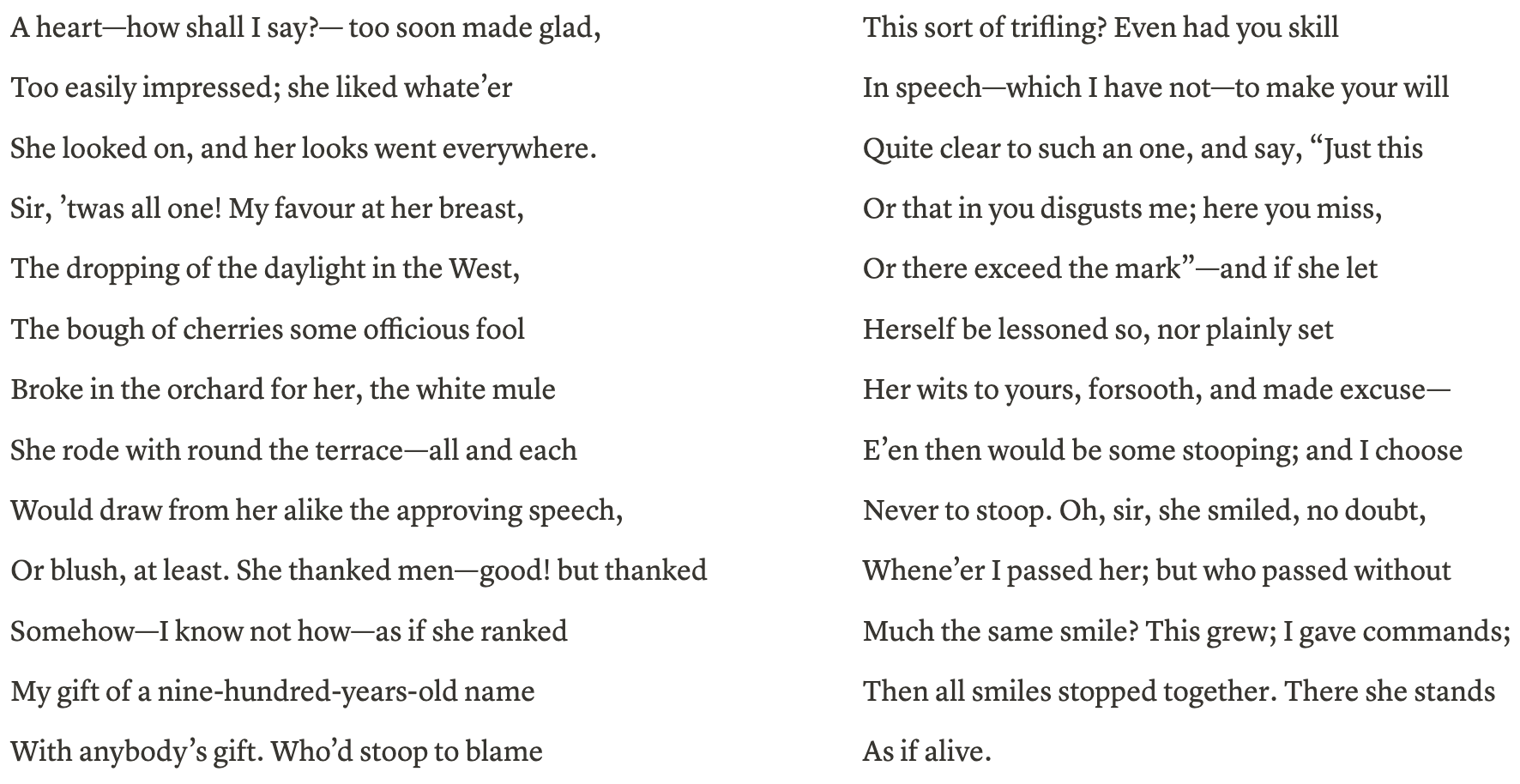
- 40insertChristina Rossetti, “Goblin Market”
- Victorian poet
- sisterhood
- female desire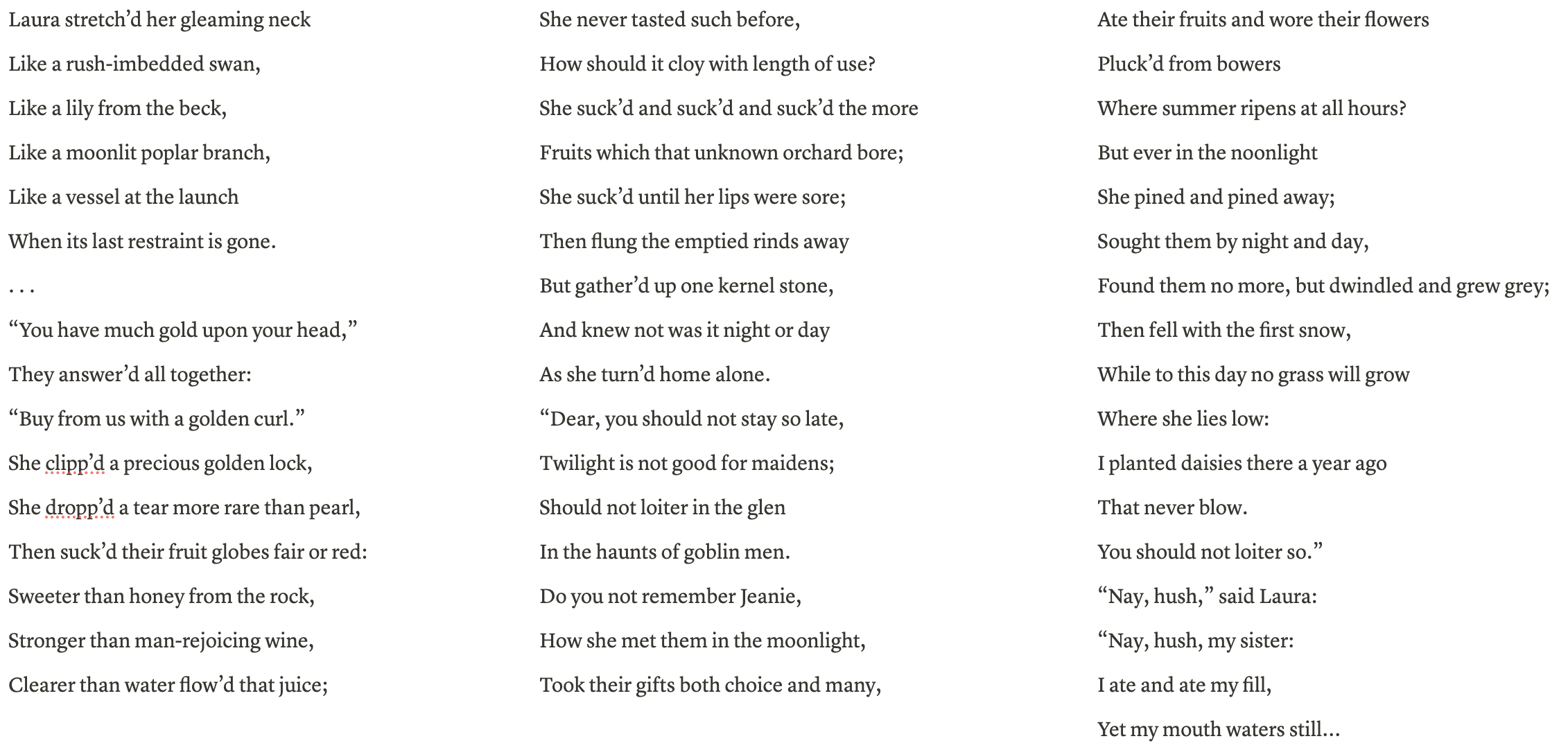
- 41idk which dickinson excerpts to pulldickinson!
Information
- Description
- excerpts referenced in lecture slides
- Created by
- Grace Gent
- Views
- 39
- Tags
- Rating