
Flashcards
Permafrost (BIO 215T)
Cards in this deck (42)
- 1what is permafrostground (soil or rock) that remains at a temperature of 0C or lower for at least two consecutive years
- 2what is the active layer1. the soil just below the ground surface above permafrost
2. thaws and refreezes every year - 3importance of permafrost1. stores organic carbon
2. regulating moisture and nutrient cycles - 4what is thermokarstlandform caused by the thawing of ice-rich permafrost
- 5thermokarst formation1. driven by permafrost degradation due to rising temperatures
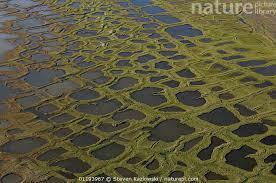
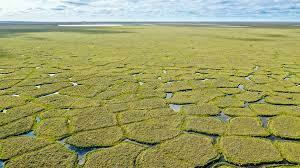
2. ground subsidence and formation of lakes and wetlands - 6what is polygonal patterned ground1. surface features that form through repeated freeze-thaw cycles
--> polygons, circles, stripes, and other geometric patterns on the ground - 7importance of polygonal patterned ground1. microhabitats where moisture and nutrients can be trapped
2. contributes to local vegetation patterns
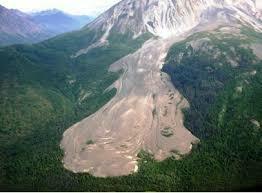
3. contributes to carbon cycling - 8what are rock glaciersperiglacial landforms affected by climate change
- 9what is periglacialarea past the treeline right before glaciers
- 10what are rock glaciers formed ofcoarse debris + interstitial ice (or ice cores)
- 11what type of movement do rock glaciers docreeping movement
- 123 types of rock glaciers1. active
2. inactive
3. relict - 13features of active rock glacier1. interstitial ice
2. surface displacement
3. instability - 14features of inactive rock glaciers1. interstitial ice
2. static - 15features of relict rock glaciers1. iceless
2. static - 16influence of climate change on rock glaciersraising air temperature --> changes in snow cover --> ground temperature warming --> intense effect on rock glaciers
- 17climate change effects on rock glaciers1. destabilized behaviors
2. changes in morphology
3. increasing deformation rate and surface speed
4. reduction in activity (after initial acceleration) - 18permafrost degradation and rock glaciers deformationpermafrost degradation --> increased rock glacier deformation --> increase in mass movement and frequency
- 19what is the limiting factor on vegetation development on rock glaciersphysical disturbances
- 20displacement depth within rooting zones affects which rock glacier type(s)active glaciers
- 21displacement depth exceeding rooting zones affect which rock glacier type(s)active glaciers
- 22surface stability affect which type(s) of rock glacierinactive and relict glaciers
- 23vegetation adaptations to displacement depth within rooting zones1. creeping shoots
2. extension growth
3. caespitose life form
4. cushion plants - 24vegetation adaptations to displacement depth exceeding the rooting zonesfloating patches of continuous vegetation cover
- 25vegetation adaptations to surface stability1. dense and continuous vegetation cover
2. subalpine and alpine succession - 26permafrost thaw causespermafrost thaw --> water and air become available --> microbes that digest organic matter "wake up" --> methanogenesis, fermentation, and nitrification
- 27methanogenesis isthe release of CH4
- 28fermentation isthe release of CO2
- 29nitrification is[biogas] + nitrous oxide -NO2
- 30what are methanotrophsmicrobes that oxidize methane
- 31what are methanogensmicrobes that produce methane
- 32temperature impact on methanogens and methanotrophswarmer temperatures increases methanogenesis more than methanotroph activity
- 33competition between methanogens and methanotrophsmethanogens might outcompete methanotrophs for resources
- 34methanogens outcompeteing methanotrphs1. might limit their population
2. might become less effective at oxidizing methane
--> reduces their ability to balance emissions - 35what are nitrifiersthey convert ammonia (NH3) to nitrite (NO2) and then to nitrate (NO3)
- 36denitrifiersreduce nitrate (NO3) to nitrite (NO2) then to nitrous oxide (N2O) and then to nitrogen as a gas (N2)
- 37thermokarst and climate change1. landscapes will expand (in ice-rich areas)
2. methane and NO2 emissions expected to increase
--> contributing to greenhouse gas emissions - 38polygonal patterned ground and climate change1. trap water and nutrients influencing local vegetation growth
2. thawing polygons release carbon - 39rock glaciers and climate change1. increase species richness but reduces pioneer species
2. vegetation changes reflect permafrost stability and microhabitat shifts
3. hydrological consequences (quantity and quality)
4. destabilization and hazard for villages - 40—thermokarst
- 41—rock glaciers
- 42—polygonal patterned ground
Information
- Description
- permafrost formation, ecological impacts, climate change etc.
- Created by
- Riley Kelly
- Views
- 10
- Rating