
Mind map
Adaptations
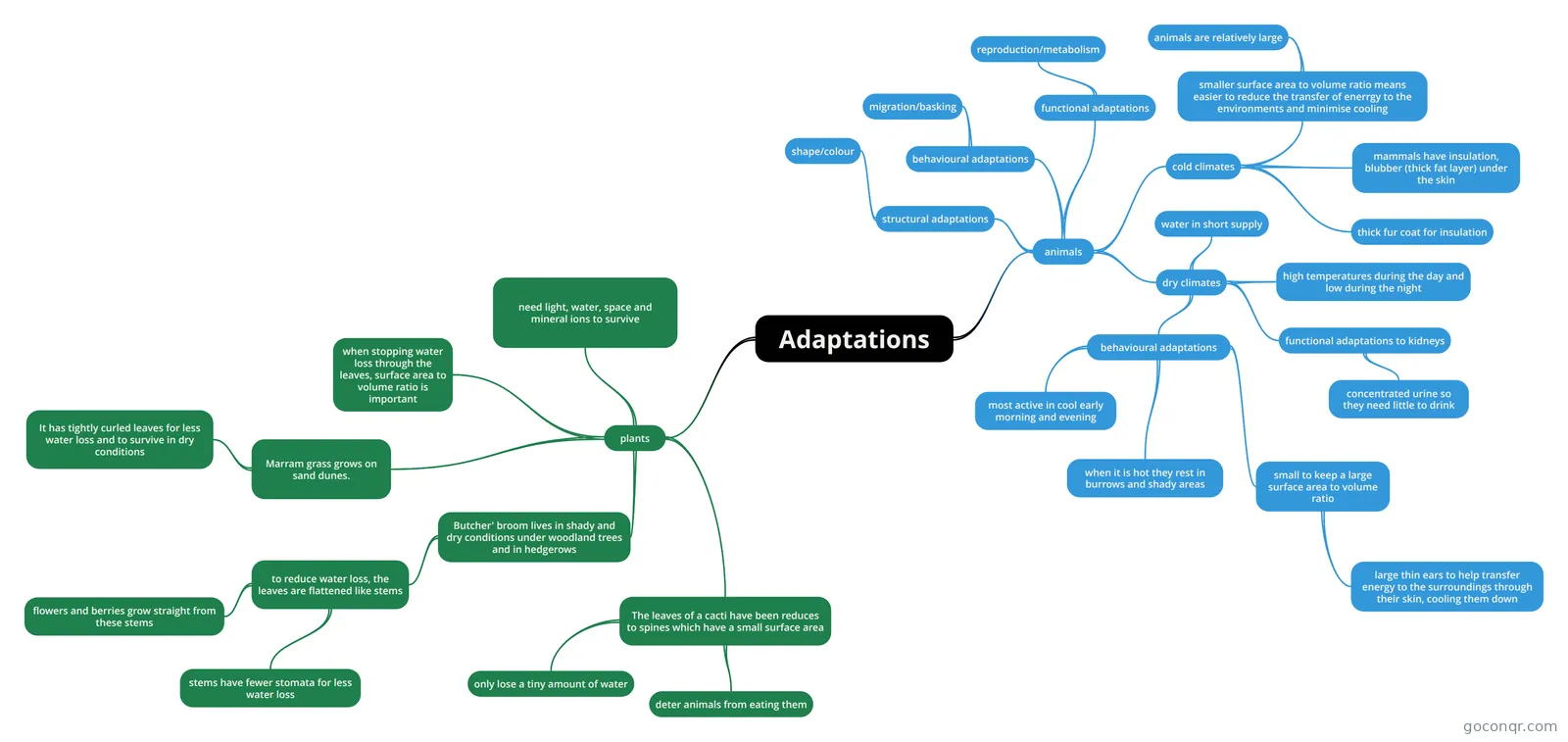
Mind map: Adaptations
Map content
Adaptations
plants
- need light, water, space and mineral ions to survive
- when stopping water loss through the leaves, surface area to volume ratio is important
- Marram grass grows on sand dunes.
- It has tightly curled leaves for less water loss and to survive in dry conditions
- Butcher' broom lives in shady and dry conditions under woodland trees and in hedgerows
- to reduce water loss, the leaves are flattened like stems
- flowers and berries grow straight from these stems
- stems have fewer stomata for less water loss
- to reduce water loss, the leaves are flattened like stems
- The leaves of a cacti have been reduces to spines which have a small surface area
- only lose a tiny amount of water
- deter animals from eating them
animals
- structural adaptations
- shape/colour
- behavioural adaptations
- migration/basking
- functional adaptations
- reproduction/metabolism
- cold climates
- smaller surface area to volume ratio means easier to reduce the transfer of enerrgy to the environments and minimise cooling
- animals are relatively large
- mammals have insulation, blubber (thick fat layer) under the skin
- thick fur coat for insulation
- smaller surface area to volume ratio means easier to reduce the transfer of enerrgy to the environments and minimise cooling
- dry climates
- high temperatures during the day and low during the night
- water in short supply
- functional adaptations to kidneys
- concentrated urine so they need little to drink
- behavioural adaptations
- most active in cool early morning and evening
- when it is hot they rest in burrows and shady areas
- small to keep a large surface area to volume ratio
- large thin ears to help transfer energy to the surroundings through their skin, cooling them down
- structural adaptations
Information
- Description
- Mind Map on Adaptations, created by Hibba Tariq on 21/06/2020.
- Created by
- Hibba Tariq
- Views
- 0
- Rating