
Mind map
Part 2 - Ch 6: Functionalism: The Normal and the Pathological
Map content
Part 2 - Ch 6: Functionalism: The Normal and the Pathological
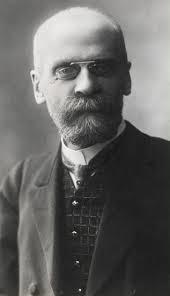
by Emile Durkheim
- one of the founders of the functionalist approach to sociology
- crime, in certain cases, grows out of the living organism
- abnormal forms of crime: when its rate is unusually high
- the existence of criminality is normal provided that is attains and does not exceed, for each social type a certain level, which it is perhaps not impossible to fix in conformity with the preceding rules.
- abnormal forms of crime: when its rate is unusually high
- crime, in certain cases, grows out of the living organism
- Integrates deviance into his overarching view of society
- If society can be compared to a living organism, then all of its social institutions must contribute to is continuing existence.
- Deviance is not an illness or pathology of the system, but rather something that contributes to society's positive functioning.
- punishing and curing criminals cannot be regarded as the objective of society
- If we lived in a "society of saints", we would have to redefine acts now considered acceptable as deviant.
- one of the founders of the functionalist approach to sociology
Crime is present in all societies of all types
There is no society not confronted with the problem of criminality
the form of criminality changes, the acts are not the same everywhere, everywhere and always have been men who drew upon themselves penal repression
if the rate of criminality (in relation to the yearly # of crimes & the population) declined, it might be that crime, while still normal, is losing it's character of normality
- This is not substantiated
- The movement is actually in the opposite direction
- Criminality has increased everywhere
to classify crime among the phenomena of normal sociology is to affirm that it is a factor in public health, an integral part of all healthy societies
crime is normal because a society exempt from it is utterly impossible
- Crime consists of an act that offends certain very strong collective sentiments
- crime would not thereby disappear; it would only change its form, for the very cause which would thus dry up the sources of criminality would immediately open up new ones....
- the sentiments they offend would have to be found without exception in all individual consciousness
- they must be found to exist with the same degree as sentiments contrary to them
- Crime consists of an act that offends certain very strong collective sentiments
Imagine a society of saints, a perfect cloister of exemplary individuals
- Crimes, properly so called, will there be unknown, but faults which appear venial to the layman will create there the same scandal that the ordinary offense does in ordinary consciousness
- If, then, this society has the power to judge and punish, it will define these acts as criminal and will treat them as such.
- the perfect and upright man judges his smaller failings with a severity that the majority reserve for acts more truly in the nature of an offense.
- acts of violence against persons were more frequent than they are today, because respect for individual dignity was less strong.
- As this has increased, these crimes have become more rare; and also, many acts violating this sentiment have been introduced into the penal law which were not included there in primitive times
- acts of violence against persons were more frequent than they are today, because respect for individual dignity was less strong.
- the perfect and upright man judges his smaller failings with a severity that the majority reserve for acts more truly in the nature of an offense.
- If, then, this society has the power to judge and punish, it will define these acts as criminal and will treat them as such.
- Crimes, properly so called, will there be unknown, but faults which appear venial to the layman will create there the same scandal that the ordinary offense does in ordinary consciousness
Why should not even the most feeble sentiment gather enough energy to prevent all dissent?
- The moral consciousness of the society would be present in its entirety in all the individuals, with a vitality sufficient to prevent all acts offending it--the purely conventional faults as well as the crimes.
- But a uniformity so universal and absolute is utterly impossible; for the immediate physical milieu in which each one of us is placed, the hereditary antecedents, and the social influences vary from one individual to the next, and consequently diversify consciousness.
- It is impossible for all to be alike, if only because each one has his own organism and that these organisms occupy different areas in space.
- hat is why even among the lower peoples, .where individual originality is very little developed, it nevertheless does exist
- It is impossible for all to be alike, if only because each one has his own organism and that these organisms occupy different areas in space.
- But a uniformity so universal and absolute is utterly impossible; for the immediate physical milieu in which each one of us is placed, the hereditary antecedents, and the social influences vary from one individual to the next, and consequently diversify consciousness.
- The moral consciousness of the society would be present in its entirety in all the individuals, with a vitality sufficient to prevent all acts offending it--the purely conventional faults as well as the crimes.
since there cannot be a society in which the individuals do not differ more or less from the collective type, it is also inevitable that, among these divergences, there are some with a criminal character.
- What confers this character upon them is not the intrinsic quality of a given act but that definition which the collective conscience lends them.
- If the collective conscience is stronger, if it has enough authority practically to suppress these divergences, it will also be more sensitive, more exacting, and, reacting against the slightest deviations with the energy it otherwise displays only against more considerable infractions, it will attribute to them the same gravity as formerly to crimes. In other words, it will designate them as criminal.
- What confers this character upon them is not the intrinsic quality of a given act but that definition which the collective conscience lends them.
Crime is, then, necessary; it is bound up with the fundamental conditions of all social life and by that very fact it is useful, because these conditions of which it is a part are themselves indispensable to the normal evolution of morality and law....
Aside from this indirect utility, it happens that crime itself plays a useful role in this evolution.
- Crime implies not only that the way remains open to necessary changes but that in certain cases it directly prepares these changes.
- Where crime exists, collective sentiments are sufficiently flexible to take on a new form and crime sometimes helps to determine the forn they will take.
- How many times, indeed, it is only an anticipation of future morality-a step toward what will be!
- According to Athenian law, Socrates was a criminal, and his condemnation was no more than just. However, his crime, namely, the independence of his thought, rendered a service not only to humanity but to his country. It served to prepare a new morality and faith which the Athenians needed, since the traditions by which they had lived until then were no longer in harmony with the current conditions of life. Nor is the case of Socrates unique; it is reproduced periodically in history. It would never hav been possible to establish the freedom of thought we now enjoy if the regulations prohibiting it had not been violated before being solemnly abrogated. A that time, however, the violation was a crime, since it was an offense against sentiments still very keen in the average conscience. And yet this crime was useful as a prelude to reforms which daily became more necessary.
- Liberal philosophy had as its precursors the heretics of all kinds who were justly punished by secular authorities during the entire course of the Middle Ages and until the eve of modern times.
- According to Athenian law, Socrates was a criminal, and his condemnation was no more than just. However, his crime, namely, the independence of his thought, rendered a service not only to humanity but to his country. It served to prepare a new morality and faith which the Athenians needed, since the traditions by which they had lived until then were no longer in harmony with the current conditions of life. Nor is the case of Socrates unique; it is reproduced periodically in history. It would never hav been possible to establish the freedom of thought we now enjoy if the regulations prohibiting it had not been violated before being solemnly abrogated. A that time, however, the violation was a crime, since it was an offense against sentiments still very keen in the average conscience. And yet this crime was useful as a prelude to reforms which daily became more necessary.
- How many times, indeed, it is only an anticipation of future morality-a step toward what will be!
- Where crime exists, collective sentiments are sufficiently flexible to take on a new form and crime sometimes helps to determine the forn they will take.
- Crime implies not only that the way remains open to necessary changes but that in certain cases it directly prepares these changes.
From this point of view the fundamental facts of criminality present themselves to us in an entirely new light.
- Contrary to current ideas, the criminal no longer seems a totally unsociable being, a sort of parasitic element, a strange and unassimilable body, introduced into the midst of society. On the contrary he plays a definite role in social life.
- Crime, for its part, must no longer be conceived as an evil that cannot be too much suppressed.
- There is no occasion for self-congratulation when the crime rate drops noticeably below the average level, for we may be certain that this apparent progress is associated with some social disorder...
- With the drop in the crime rate, and as a reaction to it, comes a revision, or the need of a revision in the theory of punishment.
- If indeed, crime is a disease, its punishment is its remedy and cannot be otherwise conceived; thus, all the discussions it arouses bear on the point of determining what the punishment must be in order to fulfil this role of remedy.
- If crime is not pathological at all, the object of punishment cannot be to cure it, and its true function must be sought elsewhere.
- If indeed, crime is a disease, its punishment is its remedy and cannot be otherwise conceived; thus, all the discussions it arouses bear on the point of determining what the punishment must be in order to fulfil this role of remedy.
- With the drop in the crime rate, and as a reaction to it, comes a revision, or the need of a revision in the theory of punishment.
- There is no occasion for self-congratulation when the crime rate drops noticeably below the average level, for we may be certain that this apparent progress is associated with some social disorder...
- Crime, for its part, must no longer be conceived as an evil that cannot be too much suppressed.
- Contrary to current ideas, the criminal no longer seems a totally unsociable being, a sort of parasitic element, a strange and unassimilable body, introduced into the midst of society. On the contrary he plays a definite role in social life.
Images and files in the map
Information
- Description
- Ch 6: Functionalism: The Normal and the Pathological
- Created by
- missylew69
- Views
- 794
- Tags
- Rating