
Mind map
Plastic Processes
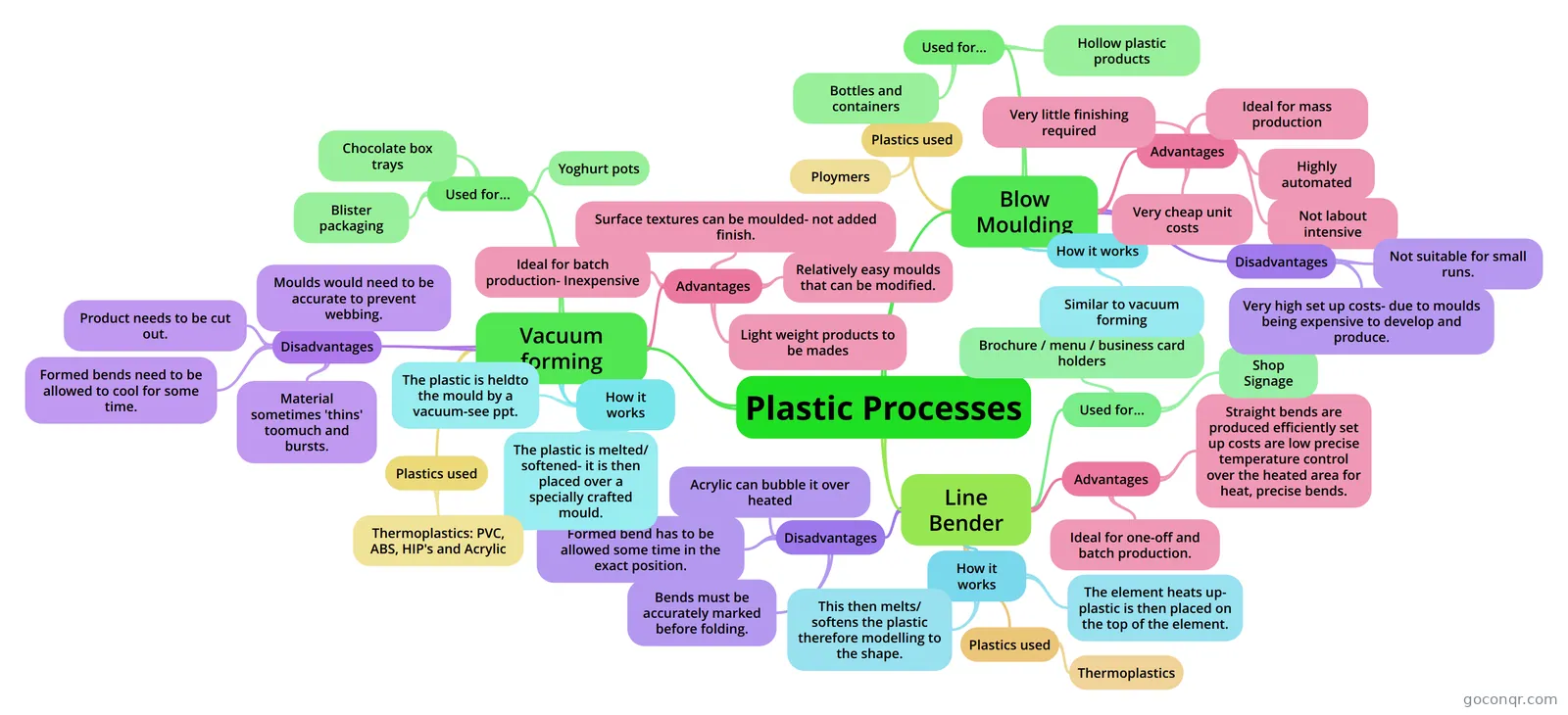
Mind map: Plastic processes
Map content
Plastic Processes
Line Bender
- How it works
- The element heats up- plastic is then placed on the top of the element.
- This then melts/ softens the plastic therefore modelling to the shape.
- Advantages
- Ideal for one-off and batch production.
- Straight bends are produced efficiently set up costs are low precise temperature control over the heated area for heat, precise bends.
- Disadvantages
- Bends must be accurately marked before folding.
- Acrylic can bubble it over heated
- Formed bend has to be allowed some time in the exact position.
- Plastics used
- Thermoplastics
- Used for...
- Brochure / menu / business card holders
- Shop Signage
- How it works
Vacuum forming
- How it works
- The plastic is melted/ softened- it is then placed over a specially crafted mould.
- The plastic is heldto the mould by a vacuum-see ppt.
- Advantages
- Light weight products to be mades
- Relatively easy moulds that can be modified.
- Surface textures can be moulded- not added finish.
- Ideal for batch production- Inexpensive
- Disadvantages
- Material sometimes 'thins' toomuch and bursts.
- Moulds would need to be accurate to prevent webbing.
- Product needs to be cut out.
- Formed bends need to be allowed to cool for some time.
- Plastics used
- Thermoplastics: PVC, ABS, HIP's and Acrylic
- Used for...
- Blister packaging
- Yoghurt pots
- Chocolate box trays
- How it works
Blow Moulding
- How it works
- Similar to vacuum forming
- Advantages
- Very cheap unit costs
- Highly automated
- Not labout intensive
- Ideal for mass production
- Very little finishing required
- Disadvantages
- Very high set up costs- due to moulds being expensive to develop and produce.
- Not suitable for small runs.
- Plastics used
- Ploymers
- Used for...
- Bottles and containers
- Hollow plastic products
- How it works
Information
- Description
- Graphics Mind Map on Plastic Processes, created by 08stuart_ki on 10/05/2013.
- Created by
- 08stuart_ki
- Views
- 70
- Tags
- Rating