
Mind map
Volcanoes
Map content
Volcanoes
Formation of a volcano
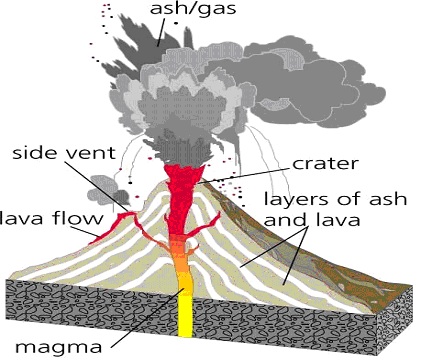
- 1. Hot liquid rock called magma reaches the surface of the ground through a narrow vent in the earth's crust.
- 2. It erupts violently, blasting lava, ash and boiling mud into the air.
- 3. This material collects around a vent in a cone shape.
- 4. Repeated lava flows add to this cone-shaped mass of material.
- 5. Together the repeated ash and lava layers build up to form a cone-shaped mountain.
Positive effects of volcanoes
- 1. New land is created for farming and living space, e.g. Iceland.
- 2. Minerals are created by volcanic activity. Lava soils are rich in minerals. Good for growing crops.
- 3.Geysers(hot spring) can be formed and help heat glasshouses for production of food. E.g. Iceland.
- 4. Dormant or extinct volcanoes are major centres of tourism. e.g Vesuvius in Italy.
Negative effects of volcanoes
- 1. When snow-capped volcanoes erupt, large mud flows are created, which often cover villages and towns.
- 2. Gases from volcanoes may kill people who live nearby.
- 3. Ash and lava flows can destroy towns causing death.
- 4. Giant tidal waves are created by volcanoes at sea. When they reach land they can kill people especially in low-lying places such as deltas.
Types of volcano
- Active
- Erupting regularly, e.g. Mount Helens in California.
- Dormant
- Has not erupted in a long time. May erupt again.
- Extinct
- Has not erupted over thousands of years. Will most probably not erupt again.
- Active
Keywords
- Magma
- Geyser
- Vent
- ash
- Crater
- Pacific Ring of Fire
Largest earthquake and volcano zone is called the Pacific Ring of Fire. It lies around the edge of the Pacific Ocean.