Mind map
F212 - Biological Molecules
Map content
F212 - Biological Molecules
Water
- Water is a polar molecule.
- It can form hydrogen bonds
- Properties of Water
- Solvent
- Metabolic processes rely on chemicals being able to react together
- Liquid
- Movement of materials requires a liquid transport medium
- Cohesion
- creates surface tension and makes long, thin water columns very stong
- Solvent
- More Properties of Water
- Freezing
- Water below a frozen surface becomes insulated and less likely to freeze
- Thermal Stability
- Large bodies of water have fairly stable temperatures. Evaporation of water can col surfaces by removing heat
- Metabolic
- Water takes part as a reactant in some processes.
- Freezing
- Water is a polar molecule.
Proteins
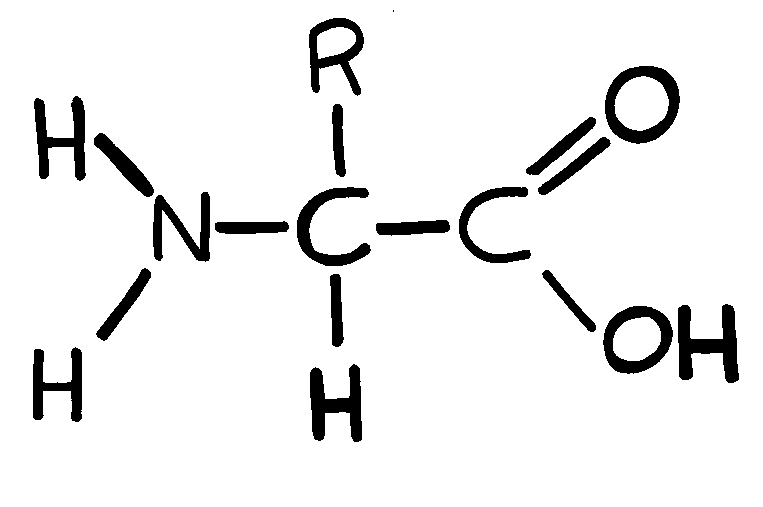
- Amino Acids
- Structure
- Peptide Bonds
- Synthesis
- The –OH from one amino acid and the –H from another are removed to make water, and the C and the N join together via a peptide bond
- Hydrolysis
- A water molecule is used to break the peptide bond. The –H joins back to the N, and the –OH back to the C
- Synthesis
- Structure
- Structure of Proteins
- Primary
- The unique sequence of amino acids
- Secondary
- Coiling of pleating parts of the polypeptide
- β-pleated sheet
- α-helix
- Coiling of pleating parts of the polypeptide
- Tertiary
- overall '3D' structure
- Hydrogen Bonding, Ionic Bonding, Hydrophobic Bonds, Disulfide Bridges
- overall '3D' structure
- Quarternary
- more than one polypeptide chain
- e.g. Haemoglobin - four polypeptide chains
- more than one polypeptide chain
- Primary
- Collagen
- Three polypeptide chains with hydrodgen bonds and cross links - the cross links are staggered to make the molecule stronger.
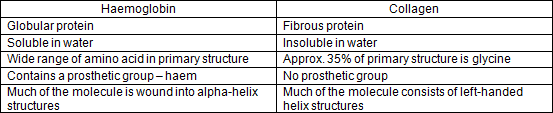
- Haemoglobin vs. Collagen
- Amino Acids
Carbohydrates
- Glucose
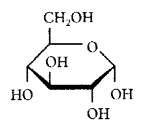
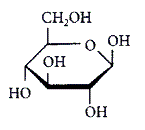
- Alpha / Beta
- OH below plane / OH above plane
- Alpha / Beta
- Glycosidic Bonds
- Synthesis
- The –OH from one glucose and the –H from another are removed to make water, and the O and the C join together via a glycosidic bond
- Hydrolysis
- A water molecule is used to break the glycosidic bond. The –H joins back to the O, and the –OH back to the C4
- Synthesis
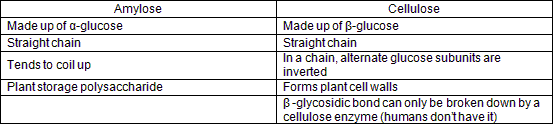
- Amylose vs. Cellulose
- Structure of Glycogen
- Mostly 1,,4/ 9% are 1,6
- Relating Structure to Function
- Glucose
- Simplest sugar - used in respiration
- Amylose
- insoluble in water - doesn't affect ψ
- Glycogen
- Many branches means it can be hydrolysed easily
- Cellulose
- very strong and arrangement of macrofibrils allows water to move in and out easily and determines how a cell can grow or change shape
- Triglyceride
- compact energy store, insoluble in water - doesn't affect ψ
- Cholseterol
- Small, thin molecules - fit into the lipid bilayer giving strength and stability
- Phospholipid
- Part hydrophilic/part hydrophobic - idea for cell membranes
- Glucose
- Triglyceride
- Glycerol,three fatty acids
- Phospholipid
- Glycerol , two fatty acids ,phosphate
- Glucose
Colorimetry
- Chemical Tests
- protein (biuret) test
- pale blue to lilac
- reducing sugars - Benedict's test
- add Benedict’s, heat to 80˚C - blue to orange-red
- non-reducing sugars - Benedict's test
- If RS is - boil with HCl, cool and neutralise with NaHCO3. repeat Benedict’s test.
- starch (iodine) test
- yellow to blue-black
- lipids (emulsion) test
- Mix the ethanol, pour into water - emulsion forms if a lipid is present
- protein (biuret) test
- Determining concentration of glucose in a solution
- Perform Benedict's test on the solution until there is no further colour change.
- Cool and filter solution
- Take filtrate and test using a colorimeter
- Low reading for absorbance means higher conc. of reducing sugar.
- High reading for absorbance means lower conc. of reducing sugar
- Take filtrate and test using a colorimeter
- Cool and filter solution
- Perform Benedict's test on the solution until there is no further colour change.
- Chemical Tests