
Mind map
Xerophyte Adaptations.
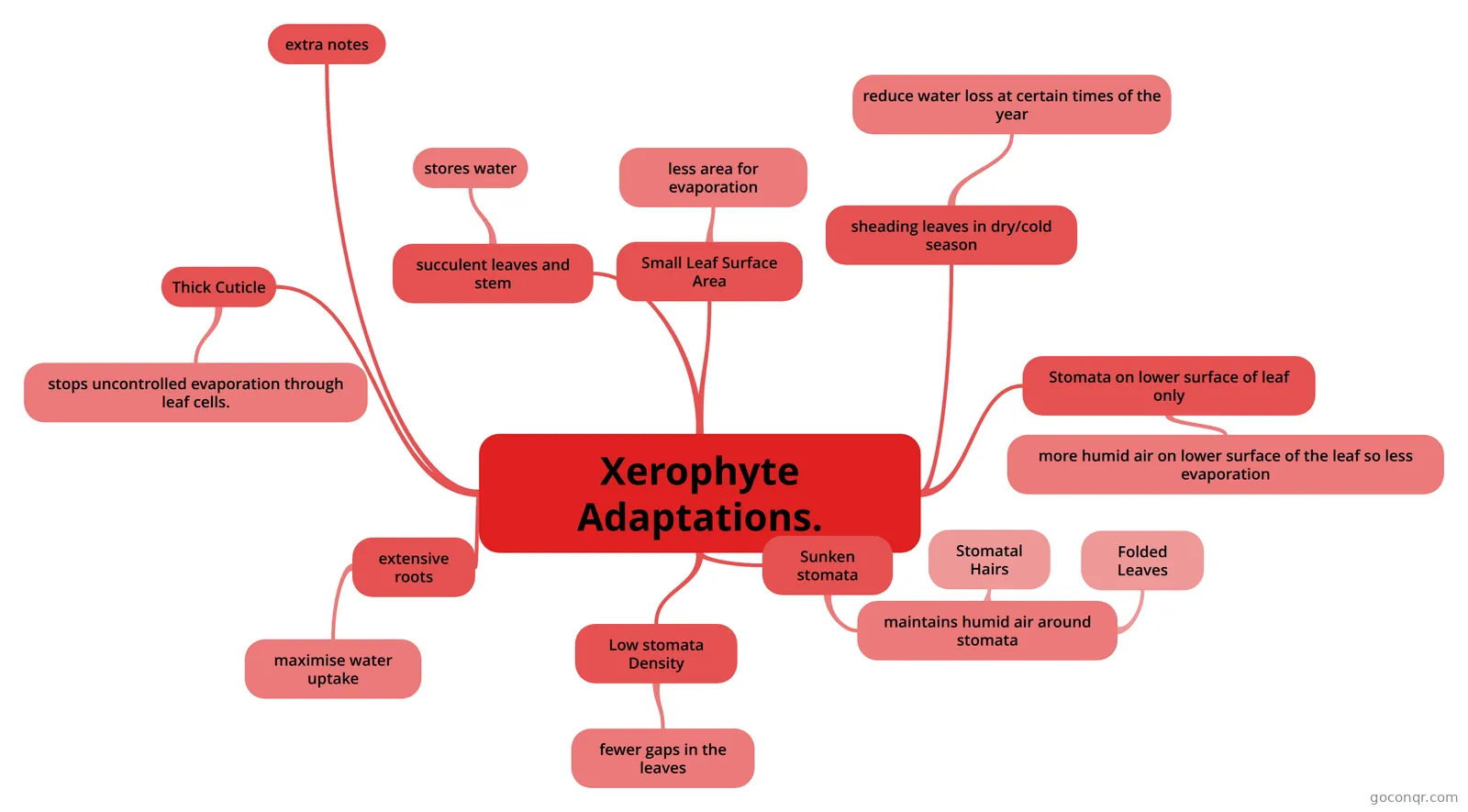
Mind map: Xerophyte adaptations
Map content
Xerophyte Adaptations.
Low stomata Density
- fewer gaps in the leaves
Small Leaf Surface Area
- less area for evaporation
Stomata on lower surface of leaf only
- more humid air on lower surface of the leaf so less evaporation
Thick Cuticle
- stops uncontrolled evaporation through leaf cells.
sheading leaves in dry/cold season
- reduce water loss at certain times of the year
Sunken stomata
- maintains humid air around stomata
- Stomatal Hairs
- Folded Leaves
- maintains humid air around stomata
succulent leaves and stem
- stores water
extensive roots
- maximise water uptake
extra notes
- Xerophytic plants are plants that have adapted to harsh environments, to store water, increase their water uptake and to further limit their water loss through transpiration. To reduce transpiration, xerophytic plants may have a particularly thick cuticle or a reduced surface to volume ratio (which slows the rate of diffusion). They may also have rolled up leaves, hairy leaves or have their stomata in pits; all of these modifications trap the escaping water vapor close to the lower epidermis reducing transpiration due to the reduction in the water potential gradient.
Information
- Description
- Biology Mind Map on Xerophyte Adaptations., created by keira.hall on 18/04/2013.
- Created by
- keira.hall
- Views
- 147
- Tags
- Rating