
Mind map
Electrolysis
Map content
Electrolysis
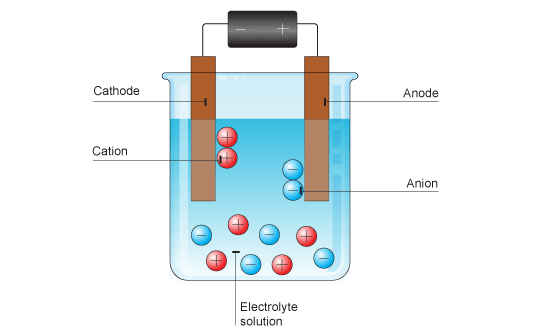
Electrolysis-When a compound is split up using electrical energy. An electrical current is made to pass through a solution of the compound.
Electrolysis of water produces Hydrogen and Oxygen
Calcium can be created through electrolysis of seawater
Electrolysis of hydrochloric acid produces hydrogen gas at the negative electrode (the cathode) and chlorine gas at the positive electrode.
Chlorine is important for the manufacture of poly(chloroethene) and of bleach.
The 2 electrodes used in electrolysis have opposite charges.
Negative ions are attracted to the positive electrode and the positive ions are attracted to the negative electrode. In this way the ions in the solution separate and move to opposite electrodes.
Gases produced at the electrode are less dense than liquid so bubble up. Gases can be captured when they displace water from an upturned container.
Electrolysis of hydrochloric acid produces an equal volume of gas at each electrode. There are equal amounts of chlorine and hydrogen in hydrochloric acid (HCl).
Twice as much hydrogen as oxygen is produced when water is electrolysed. This tells us that there is twice as much hydrogen as oxygen in water (H2O).
Images and files in the map
Information
- Description
- Triple Science:Chemistry Unit 1-Electrolysis
- Created by
- Georgia Mealings
- Views
- 338
- Tags
- Rating