
Notes
Biology iGCSE Notes
Content of the notes (5)
Page 1
Section 1
a)
Movement
Respiration
Sensitivity
Homeostasis
Growth
Reproduction
Excretion
Nutrition
The Kingdoms
Plants
Animals
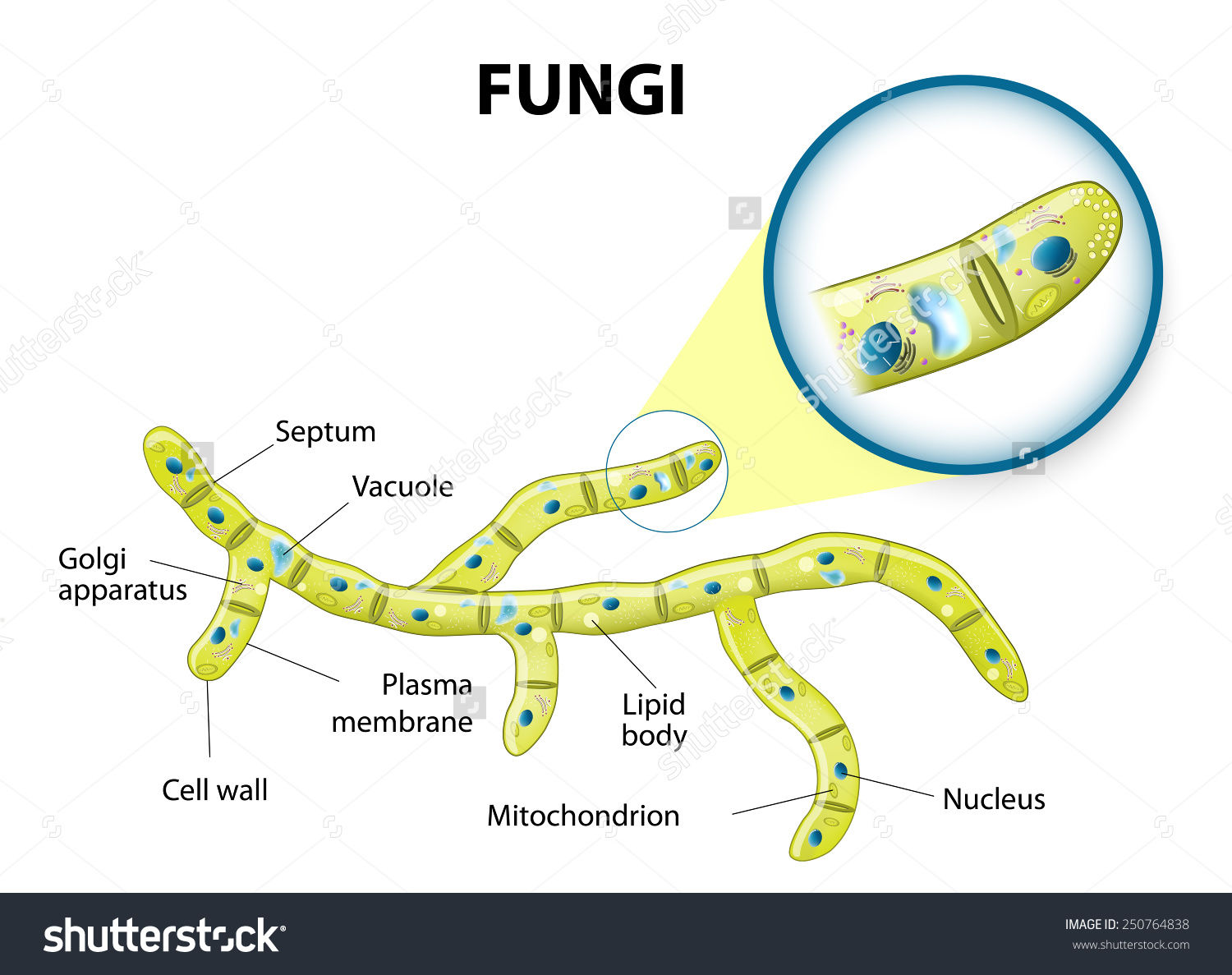
Fungi
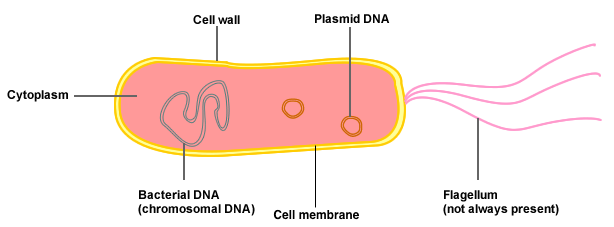
Bacteria
Protoctists (The waste men)
Plants - store carbohydrates as starch/sucrose
Animals - store carbohydrates as glycogen
Fungi - store carbohydrates as glycogen
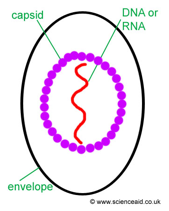
Virus - Not a kingdom
Pathogen - A micro-organism that causes diseases
Can be fungi, bacteria, virus or protoctists
Page 2
Section 2
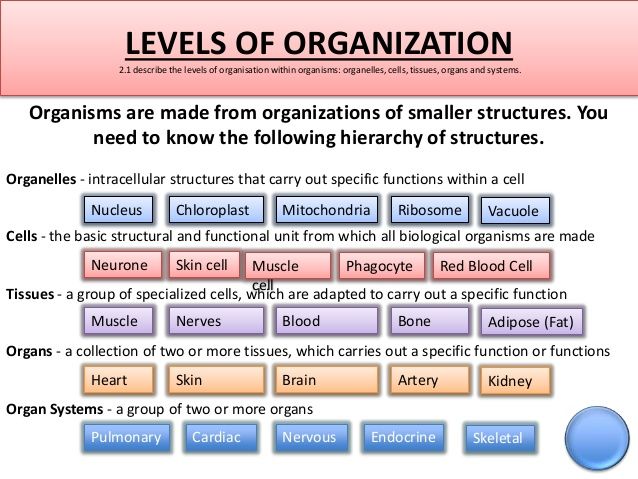
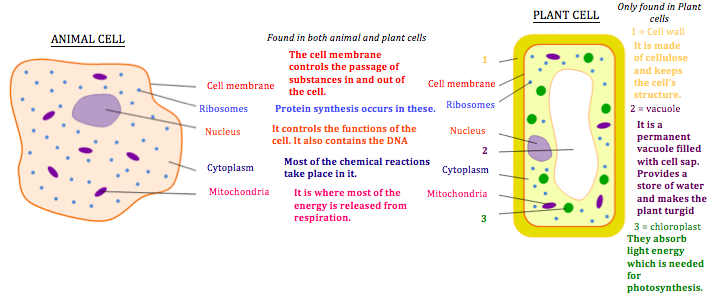
a) organelles - cells - tissues - organs - systems - (organism)
c) Biological molecules
Carbs = C,H,O
Proteins = C,H,O,N
Lipids = C,H,O
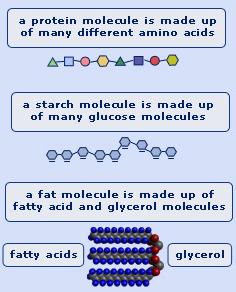
Carbs (starch or glycogen) - made from simple sugars (glucose & fructose)
Proteins - made from amino acids
Lipis - made from 1 glycerol molecule + 3 fatty acid molecules
Tests
Glucose - 4cm3 of sample + 1cm3 of Benedict's Solution in a test tube
Heat in a water bath at 50C for 2-3 mins
Turns light blue to brick red
Starch - 5cm3 of sample in a test tube
Add drops of Iodine solution
Turns golden brown to blue/black
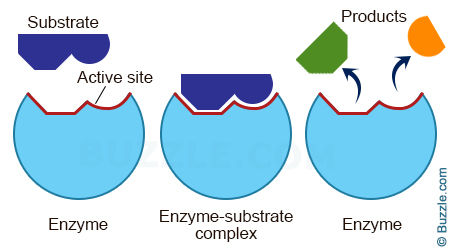
Low temperature = Inactive enzyme. Substrate and enzyme collide less often
Optimum temperature = Lots of kinetic energy, colliding more and enzyme is most active
Over optimum temperature = Active site shape changes. No longer complementary to substrate. Enzyme denatures
pH - As it changes (high or low) the shape of the active site also changes ∴ less collisions successful
Experiment
Place separate boiling tubes with fixed volumes of starch and amylase into different temperature water baths
Wait 5 mins for solutions to reach temperature
Mix the starch and amylase and immediately do step 4
Every 1 min transfer a small sample using a pipette into a spotting tile well and add iodine solution. Will immediately turn blue/black
Record colour. When the iodine turns golden brown no starch is present because all the starch has been digested by enzymes.
Compare results to see at which temperature the iodine turned golden brown first. Rate = volume of starch/time taken to go golden brown
d) Osmosis, diffusion, active transport
Rate affected by SA:V ratio, temperature and concentration gradient
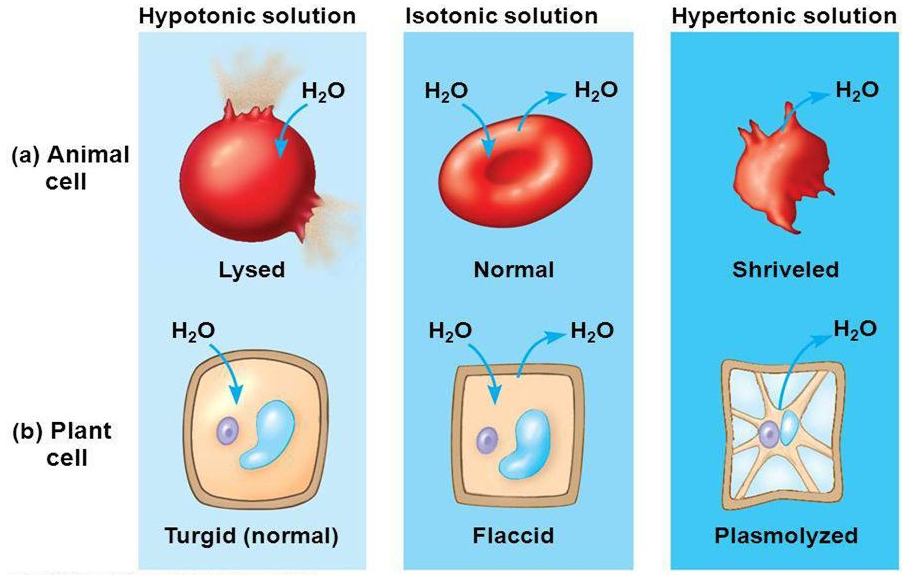
Plants cells are usually turgid because the cell wall is much stronger than the cell membrane. It keeps leaves firm and plant upright if it has no wood
Plant cells can plasmolyse & Animal cells can shrivel
Think : Hyper = lose energy = lose water
Remember - Iso/Hypo/Hyper tonic to the cell
e) Nutrition
Flowering Plants
magnesium ions - for chlorophyll
nitrate ions - for amino acids (to make protein)
Hydrogencarbonate indicator:
Yellow = High CO2
Orange = Normal CO2
Purple = Low CO2
h) Transport
Flowering Plants
Xylem - Water and minerals
Phloem - Sucrose and amino acids
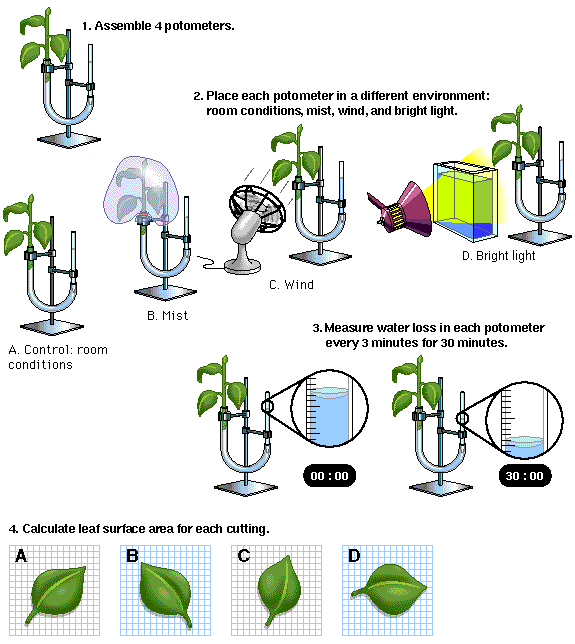
More light so stomata open, so more water is lost
Humans
Hepatic artery/vein = Liver
Hepatic portal vein = Digestive system to liver
Renal artery/vein = Kidney
Pulmonary circuit - Heart to lungs
Systemic circuit - Heart to body
Double circulatory system: More efficient
Allows higher levels of activity as oxygen + glucose can be pumped to muscle cells quicker
Respiration needs to take place quickly to maintain body temperature of 37C
Single cell organisms have a high SA:V ratio so can supply the demand
Multicellular organisms have a low SA:V ratio. & skin does not allow much diffusion
i) Excretion
Flowering Plants
Excrete O2 and CO2 through stomata
Humans
The Kidney carries out excretion AND osmoregulation
Ultrafiltration in glomerulus. Glomerular filtarte is what gets past into the Bowman's Capsule
Selective reabsorption (uses active transport) in proximal convoluted tubule of glucose,amino acids and some water
Urine contains water,urea and salts
Negative feedback. ↓Little water - ↑ADH - Collecting duct permeability↑ - ↑ water reabsorbed in blood
Urinary system = Kidneys → Ureters → Bladder → Urethra
j) Co-ordination and response
Flowering Plants
Photo,Geo,Hydro tropism. +ve = towards, -ve = away the direction of stimulus.
Humans
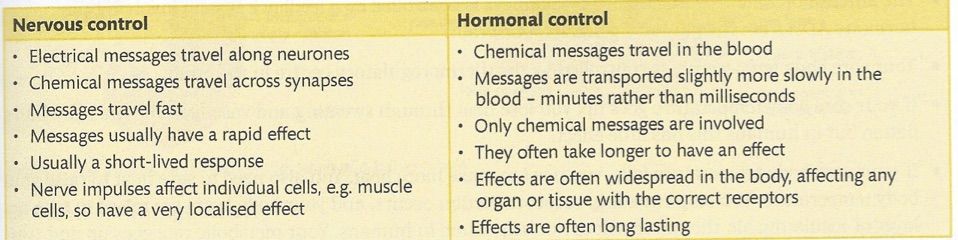
Stimulis → receptor → coordination → effector → response
Accommodation - Focusing of the lens by the changing of its shape. (depending on object's distance)
First think of what the suspensor ligaments do (contract or relax), then remember the ciliary muscles do the opposite
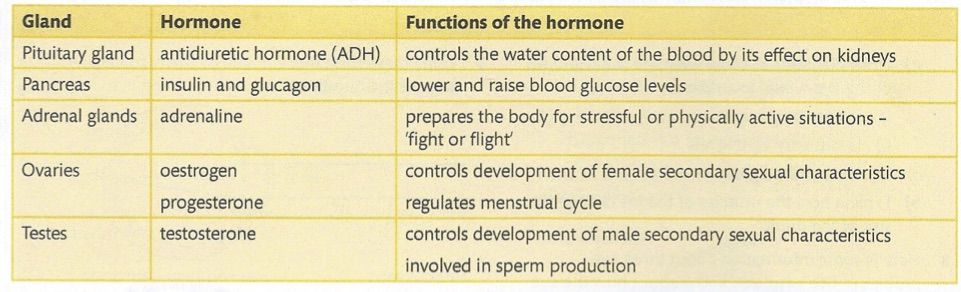
ADH - Pituitary gland, permeability of collecting duct
Insulin/Glucagon - Pancreas. Change blood glucose level
Adrenaline - Adrenal glands. Fight or flight
Oestrogen/Progesterone - Ovaries. Regulates menstrual cycle/Secondary sexual characteristics
Testosterone - Testes. Secondary sexual characteristics
Page 3
Section 3
a) Reproduction
Flowering Plants
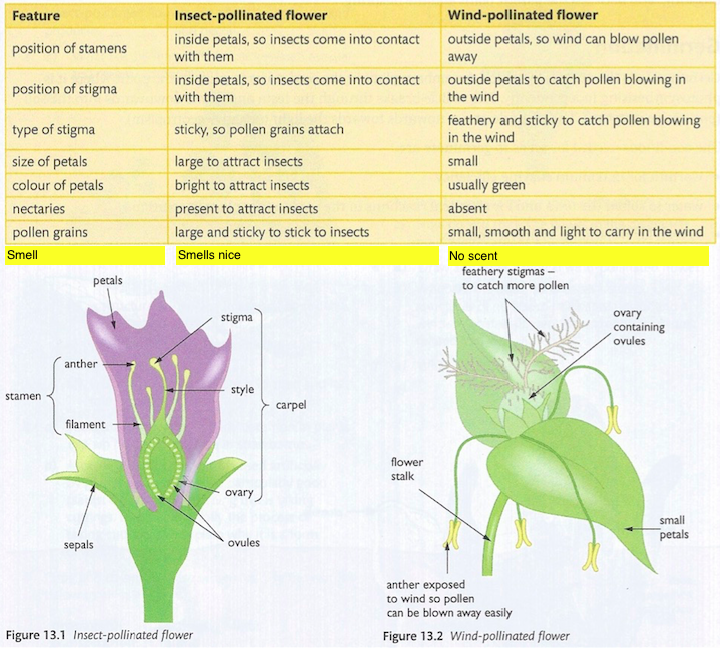
Asexual reproduction by runners (natural) and cuttings (artificial)
Germination needs O2, H2O and the correct temperature
Humans
Placenta allows. O2, Glucose, Minerals to diffuse, and amino acids by active transport M→F
CO2,Urea to diffuse, Water by osmosis F→M
Bloods don't mix as blood type could be different so mother's body sees it as a pathogen and kills it
Mother's blood pressure to high for the weak foetus
Placenta takes over from empty follicle and produces progesterone to maintain uterus lining
Amniotic fluid in amniotic sac protect foetus from bombs and jolts and keeps the temperature constant
b) Inheritance
Adenine - Thymine & Guanine - Cytosine
XX = Female, XY = Male
Mitosis - 2 identical diploid cells (occurs during growth,repair,closing,asexual reproduction)
Meiosis - 4 different haploid gametes (occurs during gamete formation)
Ionising radiation (gamma,X-rays, UV rays) & chemical mutagens (chemicals in tobacco) increase the incidence of mutations
Selection pressure,survival of the fittest,variation within the natural population, genes, inherited, beneficial mutation,rare/random,adaptation,evolution,reproduce/mate
Page 4
Section 4
a) The organism in the environment
Population - All the organisms of the same species living in an ecosystem at a particular time
Community - All the populations of different organisms interaction with their habitat
Habitat - A place where specific organisms live
Ecosystem - A community of organisms interacting with each other and their habitat/environment
Quadrats. Populations size - Count no. of species in square. Repeat and avg. Multiply avg. by area of field.
Quadrats. Distribution of organisms - Place quadrants in different locations. Compare the density/no. of species
b) Feeding Relationships
Only 10% of energy transferred because:
Some parts of the organism are not eaten (roots)
Some of the food is indigestible (Bones,cellulose)
Some of the food absorbed forms excretory products (urea)
Most of the food is used for respiration, movement, active transport. Little is left for growth or protein
c) Cycles
H2O - evapouration, transpiration, condensation, precipitation
C - respiration, photosynthesis, decomposition, combustion
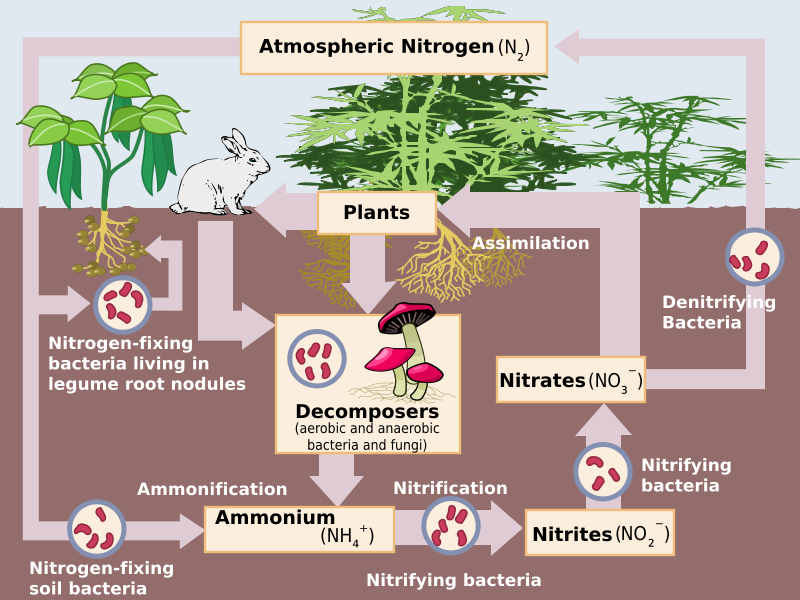
d) Human influences on the environment
SO2 = Sulphuric acid. Acid rain (SO2 & NOx) = Acidification of water and sea ∴ kills aquatic life and trees, erodes limestone buildings
CO = Binds to haemoglobin. Asphyxiation
Greenhouse gases = Water vapour, CO2, nitrous oxides (NOx), Methane (CH4), CFCs (refrigerator coolants)
Global warming= Polar ice caps melt, Sea level rise, Changes in rainfall (drought/floods), Extinction of polar species
Deforestation = leaching, soil erosion, disturbance of water cycle (less transpiration, more drought/flooding), disturbances of the balance of O2 and CO2 in atmosphere (less trees & trees burnt)
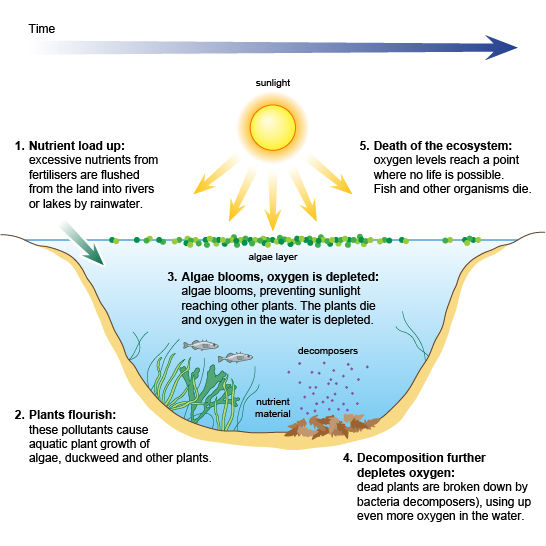
Leached nitrates from fertilisers = algal blooms develop, sun blocked, plants die, ↓O2, fish die, (NO3 supply stops so algal blooms die), lots of decomposition by fungi/bacteria, Biological Oxygen Demand (BOD) ↑, everything dies. EUTROPHICATION
Sewage - Contains lots of bacteria/micro-organisms + nutrients, bacteria decompose sewage, bacteria respire, BOD ↑, fish die (∴ nutrients ↑,algal blooms, eutrophication)
Detergents,fertilisers and sewage can cause eutrophication
Page 5
Section 5
a) Food production
Pesticides : +ve = Very effective. Kill all the pests. -ve = Expensive, pests can become resistant, cause env. damage as some remain in soil and food chain, kills other organisms too
Biological control : +ve = Cheap. Self regulating as predator won't kill itself + reproduces. -ve = does not kill ALL the pests. Predator may enter the wild and affect biodiversity
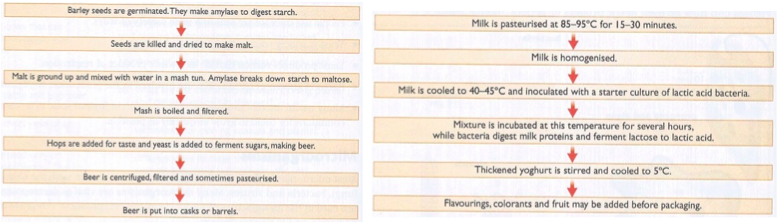
CO2 production by yeast experiment - Add sucrose solution + oil layer (blocks air) andplace in different temp water baths. Collect Co2 over water in measuring cylinder to measure rate. Use limewater to test
Lactobacillus bulgaricus
Fermenter: aseptic conditions = Sterile. Filter air and sterilise the fermenter
Intraspecific predation - Fish of the same species eat each other. Separate different age, gender & feed often
Interspecific predation - different species eat the fish
b) Selective breeding
Selective breeding - Individuals
with desired
characteristics are bred together to produce offspring that express both
desired characteristics.
Plants - Higher yields, more nutritional to humans, resistant to diseases and pests, hardier to survive in harsher climates and conditions for longer year production
Animals - More meat/eggs/milk, more fur/higher quality fur, more offspring, resistant to diseases
c) Generic modification
Restriction enzymes - Cutting + Ligase enzymes - Sticking
Recombinant DNA - DNA from 2 different organisms that has been recombined
Transgenic Organism - The organism that receives the new gene from a different species
GM Plants are : Increased resistance to pests,pathogens,heat,drought, high salt. Extended shelf lives,contain more vitamins, higher yields, easier to eat/process
-ve = Could be more vulnerable to change in conditions or diseases as they are GM
d) Cloning
Micropropagation/tissue culture - Explants, Sterile, tissue culture, grown in vitro, clones, hormones + nutrients (optimum growing conditions), agar medium, controlled conditions (temp., light, humidity)
+ve = Large numbers produced rapidly, planted all year round, species that are hard to grow can be reproduced, GM only small no. of plants but then introduced into thousands quickly, plants can be stored easily
-ve = Plants could be vulnerable to change in conditions or a new disease
Dolly the Sheep - Diploid nucleus from body/stem/udder cell electrically zapped with enucleated egg cell, divided by mitosis to form an embryo, implanted into surrogate mother
transgenic animals - Can produce antigens of a specific bacteria/virus for vaccines given to people, grow human antigens on their organs for transplant as body is less likely to reject them, sheep produce milk with specific proteins for humans needed to treat diseases like cystic fibrosis
Information
- Description
- GCSE Biology Note on Biology iGCSE Notes, created by Noushi 9 on 28/03/2016.
- Created by
- Noushi 9
- Views
- 140
- Rating