
Test Study Guide
Slides in this set (21)
-
- > Be able to visually identify and order the pyramids
- > Be able to explain why you placed the pyramids in that order
- - Use examples of architectural techniques to help explain
- > The six pyramids you must know:
- - Djoser step pyramid
- - 3 pyramids from Snefru
- - Giza (all 3 considered one - Menkaure, Khufu, and Khafre)
- - Senusret the 3rd
- Pictures and descriptions on the next few slides
-
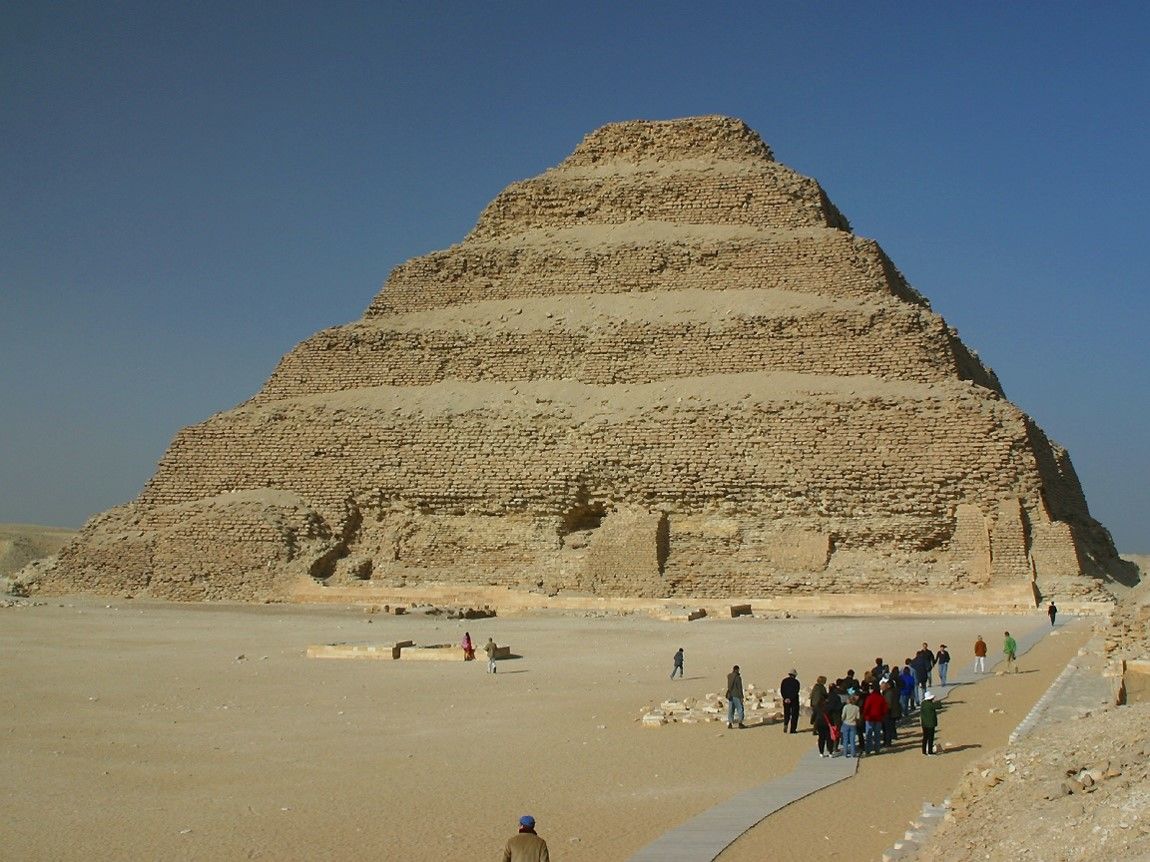
- > This pyramid came first as it was the first pyramid constructed by adding levels on top of a mastaba.
- >Built by Imhotep
- > 200 feet tall
- > 3 expansions
-
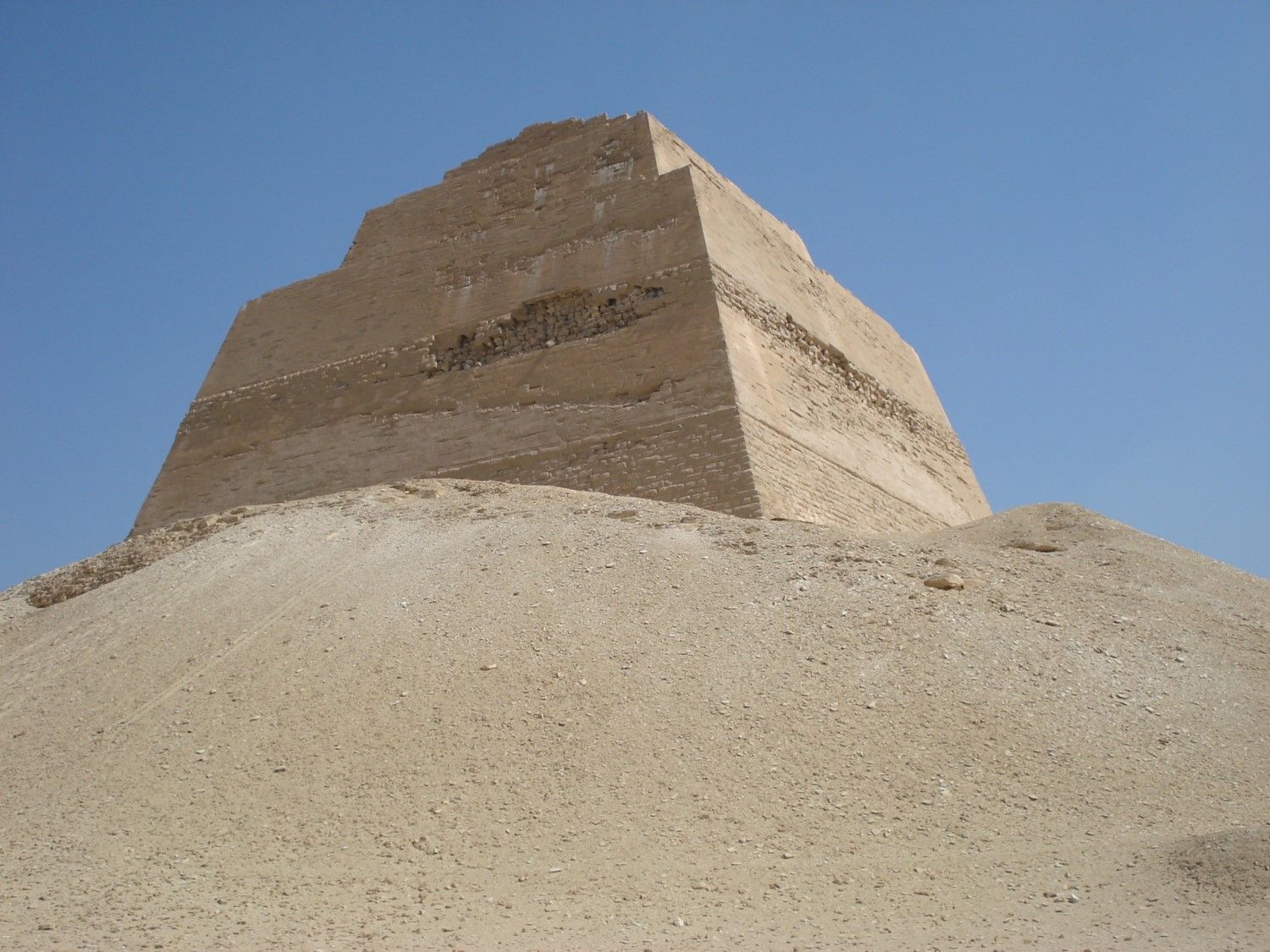
- Caption: Snefru Meidum: 307 ft. tall when built -- started with a core and had 3 vertical extensions -- first flat sided pyramid
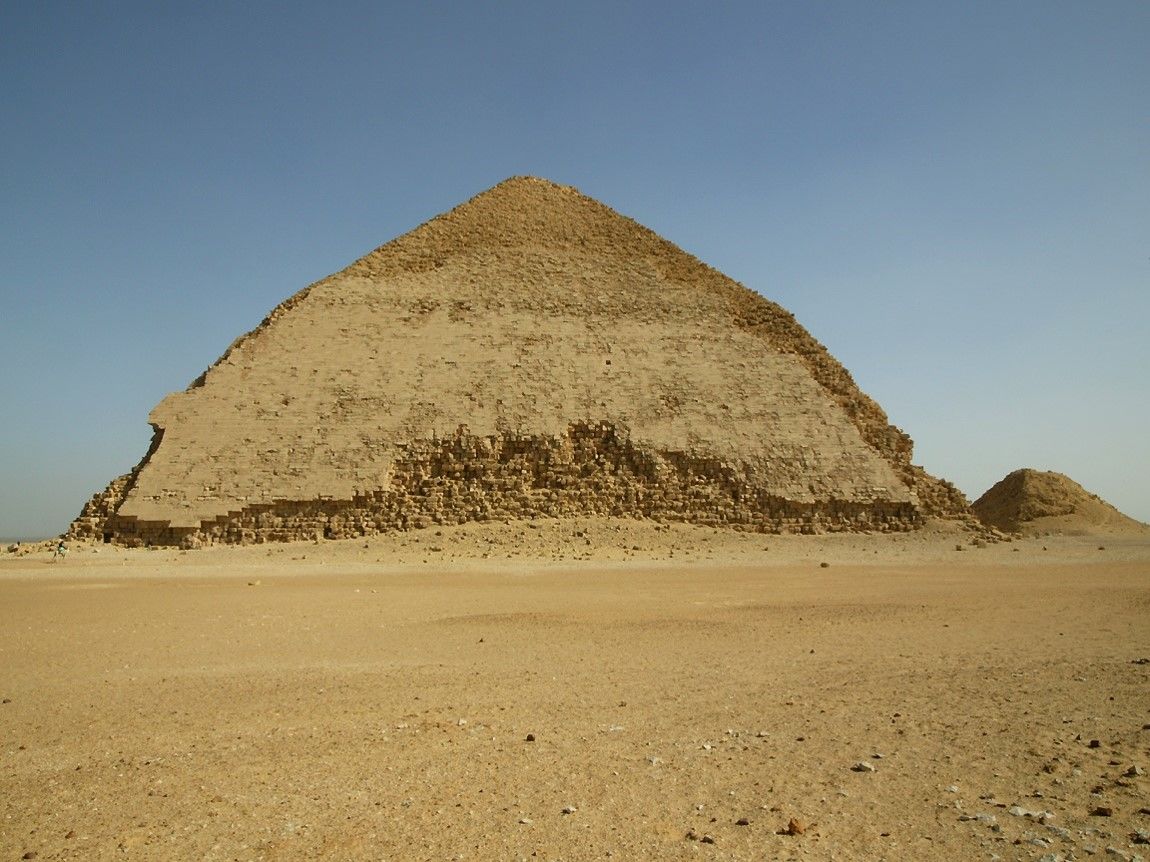
- Caption: Snefru bent: 332 feet tall -- 54 to 43 degree change in angle --
-
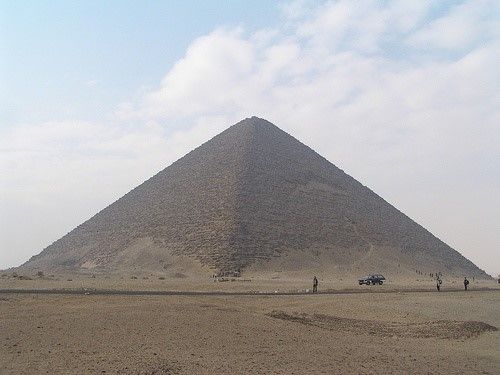
- Caption: Snefru Red: 341 feet tall -- starts at 43 degree angle -- first complete true pyramid
-
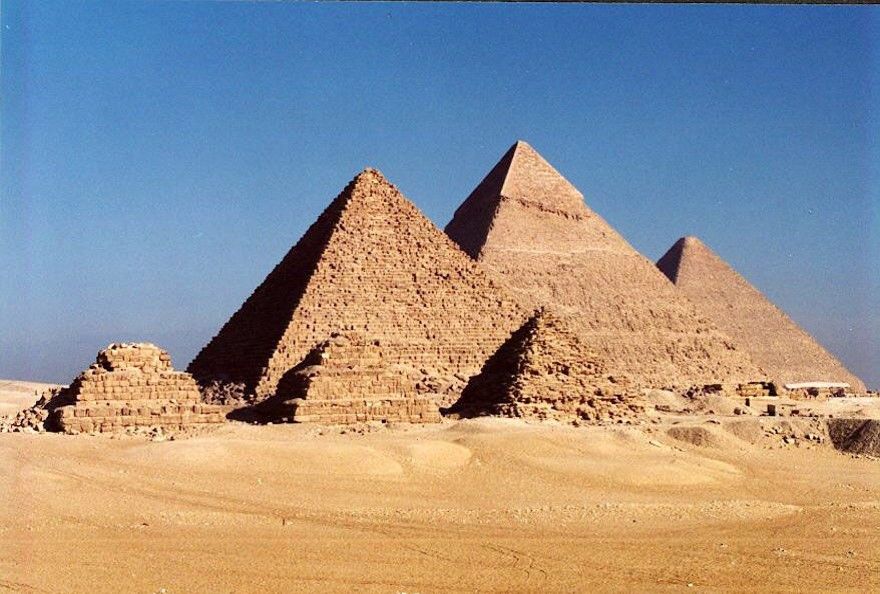
- > All had connecting temples and causeways in which the body was transported in the pyramid for burial.
- > Khufu: largest pyramid -- 481 feet tall
- > Khafre: 471 feet tall -- built on higher ground to appear bigger to out-do his father Khufu.
- > Menkaure: 218 feet tall -- half red limestone (more expensive than white limestone) -- top covered in 6 in. thick gold -- smaller pyramid, but more expensive.
-
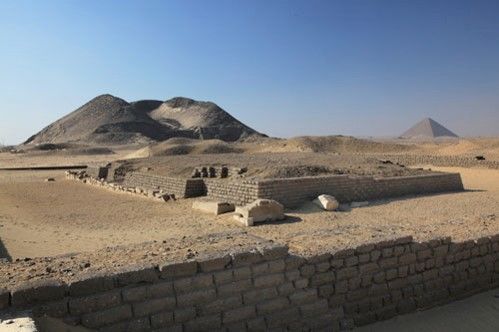
- > This pyramid was built in the Middle Kingdom which is defined by the cheaper building: limestone base, the rest of the pyramid is mud-brick encased in limestone.
-
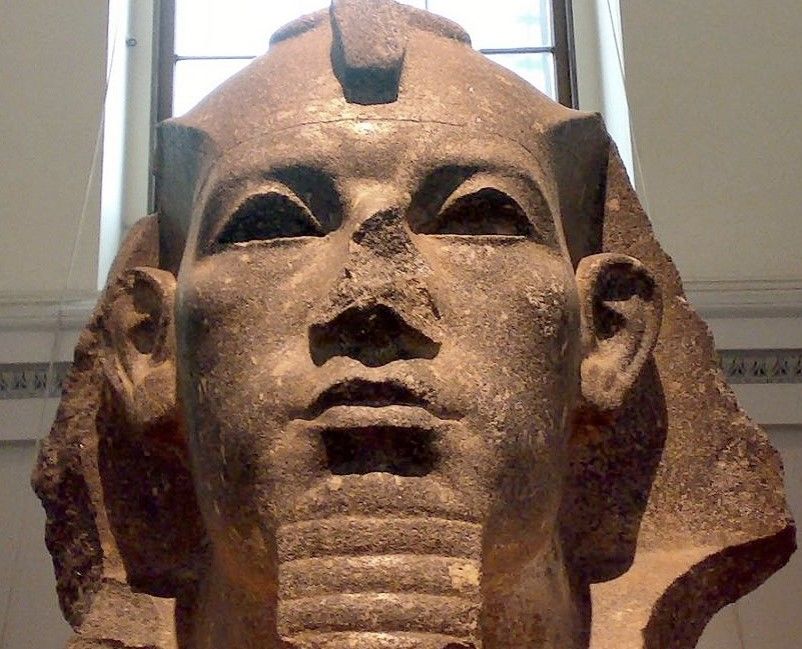
- > Amenemhap III and Senusret III
- - Describe the features and explain why they look like that.
-
- > Amenemhap III : King from 1842-1797 BC
- - 6 ft. 8 in.
- - very serious
- - eyes turned down
- - tight lips
- - big neck
- - strong jaw
- - high cheek bones
- > Supposed to look at him from below (he is looking down, not straight ahead)
-
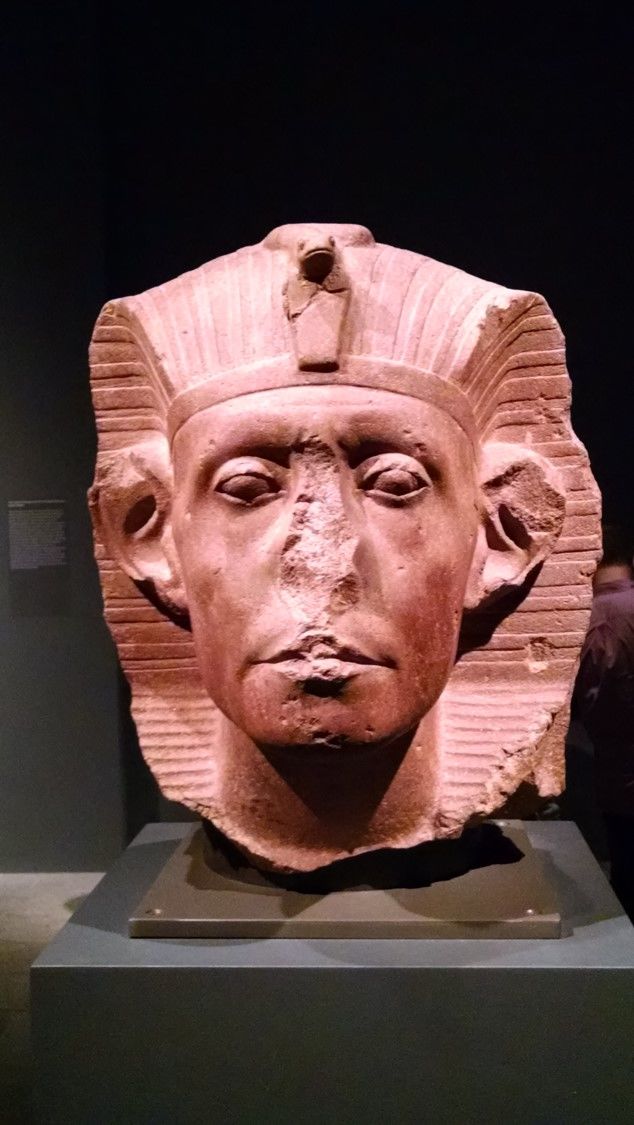
- > Senusret III: King from 1878-1841 BC
- - 6 ft. 6 in.
- - Down turned eyes
- - bags under eyes
- - one furrow above eyebrows
- - pessimistic
- - frowning
- > Made to appeal to regular people
-
3. 1st Intermediate Period Art
- > Problems during this time with the art?
- > Why do these Problems occur?
-
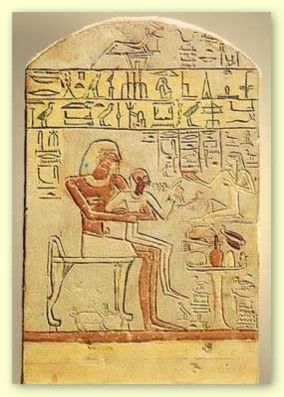
- Problems:
- > Issues with the art that appear:
- - blank space
- - sloppy hieroglyphs
- - pessimistic art
- > See picture: inaccurate depictions (knees stacked wrong, floating offerings, no end to the feet on the child, child's legs start at chest, chair legs are different lengths, fat dog doesn't look like dog, sitting forward in chair)
-
- Explanations:
- > Pepi II vs. the nomarchs (local rulers)
- - the nomarchs start to go their own way as Pepi II gets older
- - the art under the rule of these nomarchs is less dictated by the king and becomes more loose and inaccurate.
-
- > Within the 1st Intermediate Period, the important Southern Style is introduced when Montuhotep II begins to conquer town by town leaving priests there to take over the workshops.
- > The Improvements that are seen:
- - neat hieroglyphs
- - detailed paintings
- - fuller bodies
- - art gets better in general
-
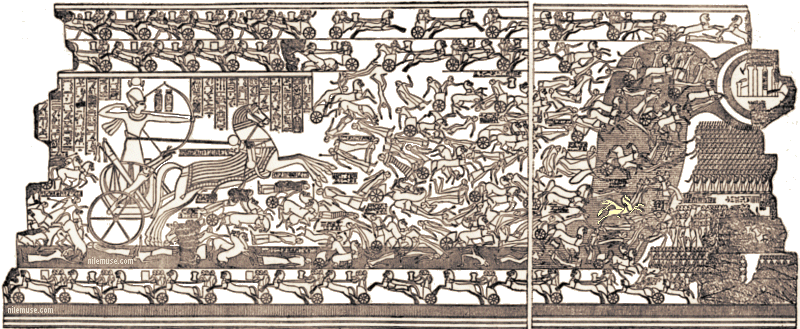
- > Scenes -- Chaos -- Scale
-
- > The king (Kadesh) is portrayed larger than anyone else in the picture.
- - Exaggeration: Kadesh killed 35 people
- - Probable reality: Kadesh killed 4 or 5 people
- > All around Kadesh is chaos, yet the king maintains a stoic and calm face.
-
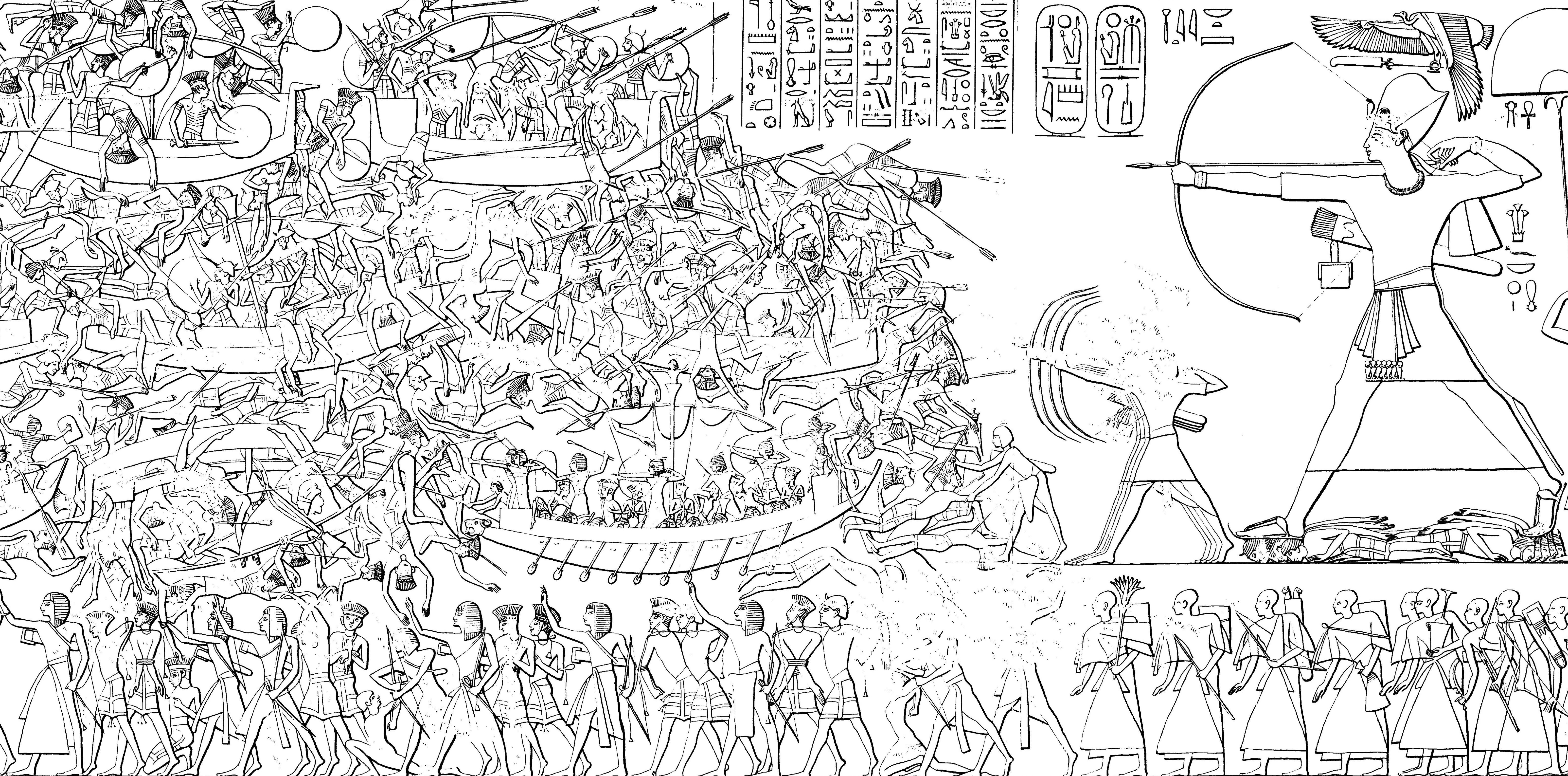
- > The King Ramses III is larger than anyone in the picture.
- > Ramses III is battling a tremendous army in chaos (boats overturned -- people jumping overboard), yet he remains stoic and calm.
- > Ramses III lures the sea peoples closer to shore where an ambush consisting of many archers jump up from behind walls to attack the sea people.
-
- > Identify the changes under Akhenaten and the issues with theses changes
- > Identify the aspects that were traditional.
-
- > Changes and issues
- - Every god except for the Aten is banned (in terms of worshiping)
- - The capital is moved from Thebes to Akhetaten
- > Sever style changes:
- - The grid goes from 18 to 20
- - elongated face
- - pudgy belly (not fit)
- - skinnier body
- - slimmer arms
- - hips and stomach wider and larger
- - deliberate feminizing of the body to appear androgynous as the Aten has no gender (appears pregnant -- all life goes through him).
- > Traditional aspects
- - crook and flail
- - kilt
- - headdress (upper and lower Egypt)
- - mile titles
- - hieroglyphs
- - religious propaganda
-
- > What changes about her image?
- > What stays traditional?
-
- > Changes/traditions:
- > The male parts are traditional, the female parts are what changed -- her statues became more feminine over time.
- - original: flat chest, large (beard, hands, feet, and knees), male royal kilt, Nemis headdress (male), male pronoun hieroglyphs -- female hips and face
- - middle: male headdress, kilt and titles/pronouns, bare chested -- female breasts, no beard, more slender arms
- - final: more feminine than masculine -- wearing a dress, female breasts, and female body
-
- > What is their function in the afterlife?
- > Where do they go?
Information
- Description
- Art Slide Set on Test Study Guide, created by casey soles on 03/10/2017.
- Created by
- casey soles · Oct 2017
- Updated
- Apr 6, 2018
- Views
- 48
- Tags
- Rating