
Macromolecules
Slides in this set (11)
-
- Molecules present in living organisms.
- Most are organic molecules - containing carbon
- Carbon, Oxygen, hydrogen, and nitrogen make up >96% of human's body mass
-
- Large molecules made of smaller subunits joined together
- 4 Basic Molecules: Carbohydrates, Lipids, Proteins, Nucleic Acid
-
- Except for lipids, macromolecules exist in 2 forms
- Monomer - simplest unit
- Polymer - Large molecule made of repeating monomers
- Polymers become monomers by adding water
- Monomers become polymers by removing water
- *Dehydration Synthesis: Used to join monomers to make polymers
- *Hydrolysis: Used to break polymers to make monomers
-
Let's explore the 4 Macromolecules
- The structure
- a. Elements needed
- b. Monomer
- c. Polymer
- 2. Function
- 3. Examples
-
- Carbohydrates
- Elements included: Carbon, Hydrogen, Oxygen (C6 H12 O6)
- Monomer: Monosaccharide - means one sugar
- Polymer: Polysaccharide - means many sugars
- Disaccharide - means two sugars
- Functions:
- Provides short term energy
- Primary source of energy
- Structural Support
- Found in shells, exoskeletons, and cell walls.
- Examples:
- Sugars and starches
- Pasta, bread, rice, milk, fruits, and vegetables
- If it ends in "ose", it is a sugar
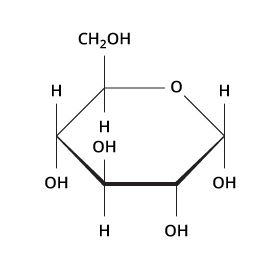
- Caption: Monomer of Carbohydrate or a Monosaccharide
-
- Lipids
- Elements included: Carbon, Hydrogen, Oxygen
- Monomer: Lipid (Glycerol heads and fatty acid chains)
- Polymer: Lipids do not form polymers
- Functions:
- Long term energy storage
- More efficient energy than carbohydrates
- Water barrier/insulator
- Cell membrane made of phospholipids
- Examples
- Fats and Oils
- Triglycerides
- Waxes
- Steroids
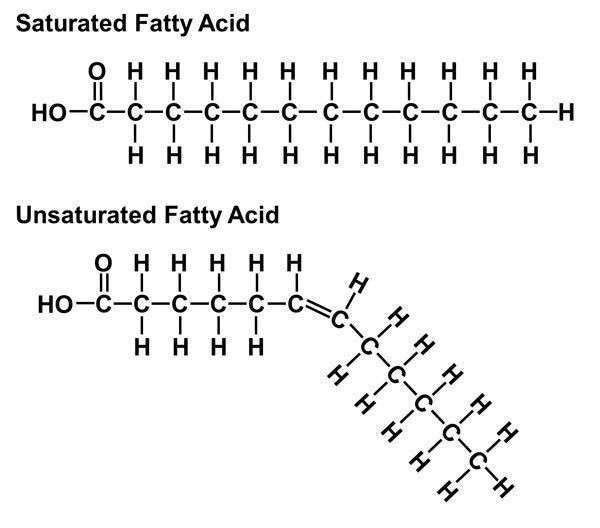
- Caption: Monomer of Lipid
-
- Proteins
- Elements needed: Carbon, Hydrogen, Oxygen, Nitrogen, and SOMETIMES sulfur
- Monomer: Amino acid
- Polymer: Polypeptide - proteins are chains of amino acids held together by a peptide bond
- Functions:
- Building and connecting living things such as collagen, that forms bone, tendons, and cartilage
- Takes part in chemical reactions such as enzymes
- Source of energy
- Examples:
- Meats
- Nuts
- Eggs
- Beans
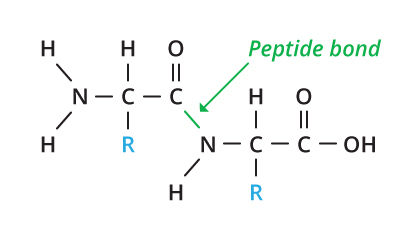
- Caption: Polypeptide
-
- Nucleic Acid
- Elements needed: Carbon, Hydrogen, Oxygen, Nitrogen, Phosphorous
- Monomer: Nucleotide - consists of a phosphate group, a sugar, and a nitrogenous base
- Polymer: Many nucleotides
- Functions:
- Carry genetic material
- Energy Carrier
- Examples:
- DNA
- RNA
- ATP
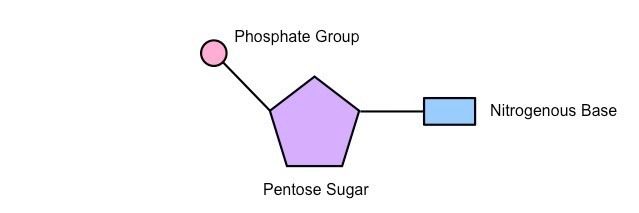
- Caption: Monomer of Nucleic Acid or a Nucleotide
-
- Chemical Reactions form new substances by breaking and forming chemical bonds
- Chemical reactions change the way molecules are arranged
- Reactants: present at the beginning of the reaction
- Products: substances formed by the chemical reaction
- Example: Combustions
- CH4 + 2O2 -> 2H2O
- Reactants -> Products
- Enzymes' quaternary structure helps them function
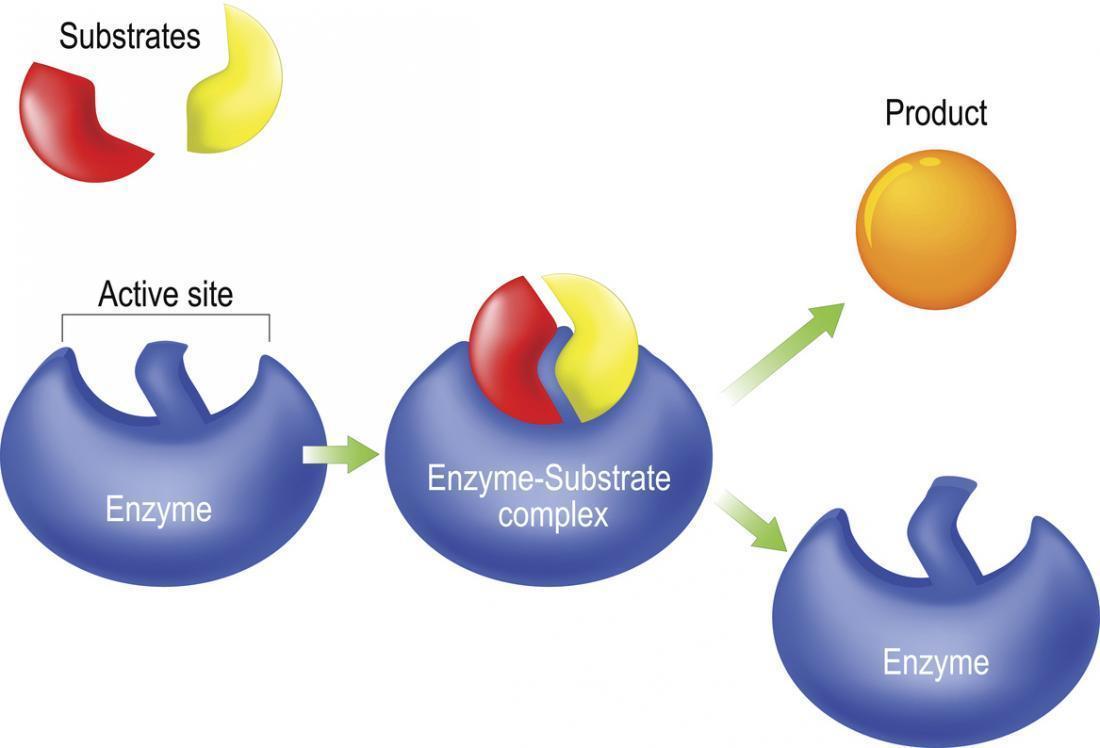
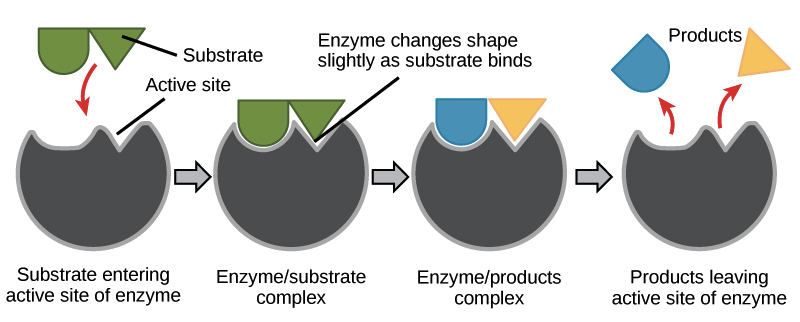
- Active site* that complements the substrate/reactant
- Speeds up chemical reactions - Catalyst
- Chemical reactions happen no matter what. Enzymes do not cause reactions, but they speed things up.
- * Has to match the reactants
-
- Step 1: Substrates bind to an enzyme at certain places called active sites.
- Step 2: The enzyme brings substrates together and weakens their bonds.
- Step 3: The catalyzed reaction forms a product that is released from the enzyme.
-
- Activation Energy: Energy it takes for a reaction to occur
- Enzymes lower the activation energy
- If enzymes quaternary structure is denatured (altered), it cannot function
- Change in temperature
- Change in pH
- Substrate (reactant) concentration also has an effect on enzyme activity.
Information
- Description
- A brief summary of the macromolecules, their structure, and function.
- Created by
- Savannah Reynolds · May 2019
- Updated
- May 6, 2019
- Views
- 650
- Tags
- Rating