
Notes
Science 9: Unit 1 - Biodiversity Notes
Content of the notes (8)
Page 1
Science 9: Unit 1 - Biodiversity
Topic 1.1 - Variety of Life on Earth
Biodiversity refers to the variation in nature and how the interactions between living things are vital.
All living things have these five characteristics:
- Ability to reproduce
- Made up of cells
- Need energy
- Grow and develop
- Have adaptations to survive
Elements of Biodiversity:
Species: A group of organisms that are similar and can reproduce with each other
Ecosystem: The interactions of living things in a certain place Eg. Deserts, forests
Genetic Diversity: Genetic varieties of a species Eg. Size or shape of an animal in a species
Species Diversity: Number of species in an ecosystem
Ecosystem Diversity: Variation among landscapes and communities
There is more diversity at the equator because of the warmer and calmer climates.
Classifying Organisms:
All organisms are classified by Kingdom, Phylum, Class, Order, Family, Genus, Species
Remember it using "Killing People 'Cause Orphans Froze Grandma Stephanie"
Eg. A Dog
K: Animalia
P: Chordata
C: Mammalia
O: Carnivora
F: Canidae
G: Canis
Species: Canis Familiaris
The five Kingdoms: Plantae, Animalia, Monera, Protista, Fungae
Page 2
Science 9: Unit 1 - Biodiversity
Topic 1.2 - Relationships between Species
Competition:
Intra-species Competition -
Competition between organisms of the same species
Interspecies Competition -
Competition between organisms of different species
Population: A group of the same species in the same area
Community: A group of populations of different species
Niche: Describes the inter-relationships of a species
- Broad Niche: Can eat many things to survive, high population, little density, "Generalists"
- Narrow Niche: Only has adaptations to eat few things to survive, low population, high density, "Specialists", only in tropical regions
Resource Partitioning: Competing for resources by accessing it differently from the same source
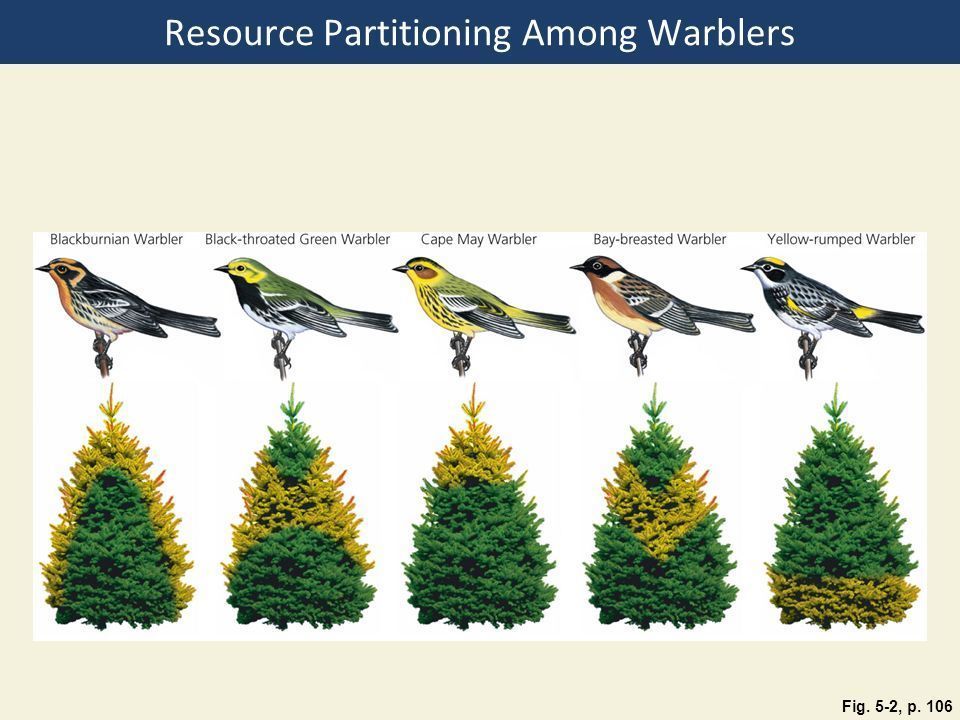
Symbiosis: Two or more organisms living in a long term relationship
- Mutualism - Both organisms benefit from the relationship
- Parasitism - One organism is harmed and the other is benefitted
- Commensalism - One organism is benefitted and the other isn't affected
Interdependence: When two organisms depend on each other Eg. Predator-prey relationships
Food Chain: One long string that demonstrates how organisms consume each other
Food Web: A mind map that demonstrates how organisms consume each other
Page 3
Science 9: Unit 1 - Biodiversity
Topic 1.3 - Variation within Species
Variation: The differences within a given species. Higher levels increase the chance of survival, as they can overcome disasters.
- Discrete: Refers to something that has a defined form, either/or Eg. Attached earlobes or not
- Continuous: There are a range of possible outcomes Eg. Height, shoe size
Variations in the environment aren't heritable but can change traits
Adaptations:
- Behavioural: Mental behaviours of a species Eg. Migrating birds
- Structural: Physical characteristics of a species to survive in a certain environment Eg. Giraffes grew longer necks
Natural Selection: The environment selects which species will live and which ones won't. Organisms that can adapt to new or different surroundings faster have a higher chance of surviving. Those who cannot adapt fast have a lower chance of surviving. Eg. Male giraffes battle each other with their necks to see who is the strongest. The strongest ones get to mate, which means that only the "strong" genes get passed to the next generation.
Traits: Characteristics of an organism Eg. Height, size, hair colour
- Heritable characteristics: Characteristics that are passed between generations Eg. Eye colour
- Non-heritable characteristics: Characteristics that are acquired and not passed between generations Eg. Piano skill
Page 4
Science 9: Unit 1 - Biodiversity
Topic 2.1 - Asexual and Sexual Reproduction
Asexual Reproduction: Involves only one parent, offspring are identical to that one parent.
- Budding: Smaller version of parent detaches and is clone of parent Eg. Yeast
- Binary Fission: A cell splits in two identical cells(only in one-cell organisms) Eg. Bacteria
- Spore Production: Similar to seeds but only made by one parent Eg. Mould
- Vegetative Reproduction: Doesn't involve a seed, such as cuttings, runners, grafting Eg. Potatoes, strawberries
Advantages - Only clone of parent, lots of offspring, less energy needed
Disadvantages - Exact clone(nothing new), can be wiped out easily, less variation
Sexual Reproduction: Reproduction with two individuals, offspring has a mix of genes from the parent.
In Plants -
- Gamete: Has 1/2 DNA, sperm(male) and egg(female) cell
- Fertilization: The union of the sperm and the egg(sperm penetrates egg)
- Zygote: After joining, it is the first cell of the new organism
- Cleavage: The process of dividing into many cells
- Embryo: Early development of multicellular lifeform
In Animals -
- Pollen: Contains male gametes, found in stamen
- Stamen: Has anther and filament
- Ovule: Contains female gametes, found in pistil/carpel
- Pistal/Carpel: Has stigma, style, ovary, ovule
- Pollination: Pollen is transferred from the anther to the stigma
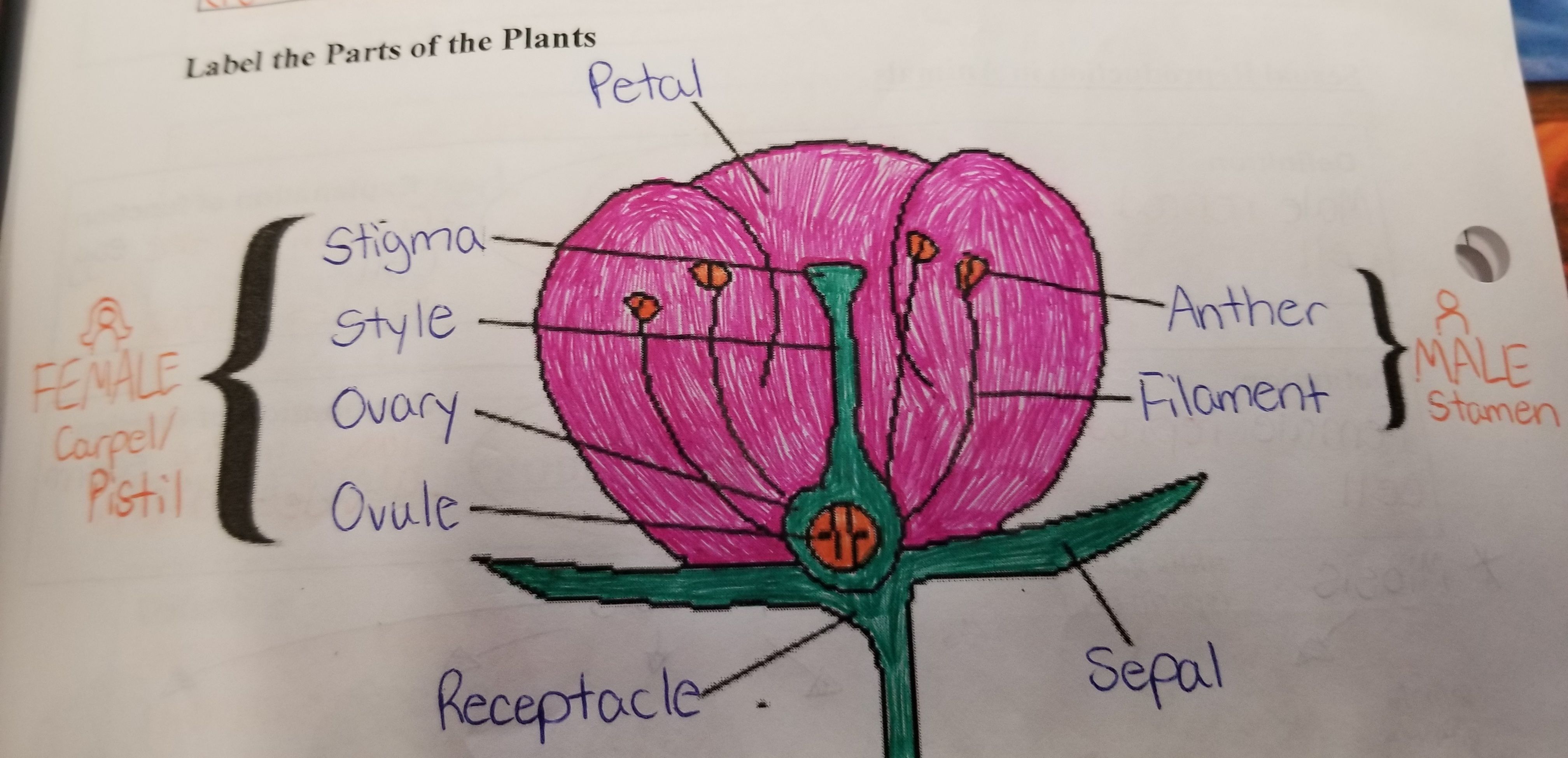
Cross Pollination: Pollen is passed between different plants
Cross Fertilization: Pollen produces long tube to the female parts of the plant
Advantages - Lots of variations
Disadvantages - More energy and time needed, limited offspring
Page 5
Science 9: Unit 1 - Biodiversity
Topic 2.2 - Transmitter of Genetic Code
Genetics: The study of how characteristics are passed from one generation to the next
DNA (Deoxyribonucleic acid): A molecular blueprint for a living thing. Found in the nucleus. Shaped like a helix. It is made up of four molecules:
- Adenine
- Thymine
- Guanine
- Cytosine
These molecules arrange themselves in different orders like an alphabet, called the Genetic Code.
Chromosomes: Packets of information that determine the traits of an organism. Humans have 46 pairs(23 individual)
Genes: A segment of DNA that are responsible for inheritable characteristics.
Alleles: Variations of possible DNA sequences in genes (Brown: Dominant, Blue: Recessive)
Mitosis: 1 division, ends with two new cells that are identical with all chromosomes. This happens in growth and repair cells.
Steps to Mitosis:
Prophase - DNA doubles
Metaphase - Lines up in middle
Anaphase - Pulls DNA apart and splits
Telephase - Two new cells
Advantages - Fast, No partner needed, Less energy needed
Disadvantages - Identical, less variation
Meiosis: 2 divisions, ends with four cells with random amounts of half DNA. Only happens in sex cells
Steps to Meiosis:
Prophase I - DNA doubles and mixes
Metaphase I - Lines up in middle
Anaphase I - Pulls DNA apart and splits
Telephase I - Two new cells
Prophase II - DNA doubles and mixes
Metaphase II - Lines up in middle
Anaphase II - Pulls DNA apart and splits
Telephase II - Two new cells
Advantages - More variation
Disadvantages - More energy and time needed, Requi
Page 6
Science 9: Unit 1 - Biodiversity
Topic 2.3 - Patterns in Inheritance
Dominant: Trait that is always expressed, not too common
Recessive: Trait that is only expressed if other recessives are there, always overpowered by the dominant, pretty common
Purebred(homozegeous): Parents were most likely from a long line of ancestors who only have all recessive or all dominant
Hybrid(heterozegeous): Have a mix of dominant and recessive traits
Phenotype: Observable traits resulting from genes
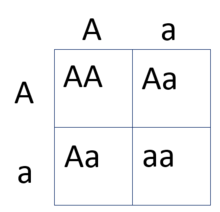
Genotype: Consists of two letters(capital = dominant) that represent an allele
Punnet Square: Tool used to predict certain genes
Incomplete Dominance: Results in a phenotype that is a blend of allele pairs (Red + Blue = Purple)
Codominance: Results in a phenotype that shows both traits (Red + Blue = Red and Blue)
Multiple alleles have more than 2 variations
Environmental factors can also affect DNA.
Page 7
Science 9: Unit 1 - Biodiversity
Topic 3.1 - Reduction and Conservation of Biodiversity
Biodiversity is being reduced on Earth. Due to many human activities(Habitat Destruction, Introduction of Non-native Species, and Over-hunting). Some natural causes can also affect things(Volcano eruptions, floods, fires, starvation, disease, overspecialization)
Threatened: The species is soon to become endangered
Endangered: The species are at risk of going extinct
Extirpation: The disappearance of a species from a certain area
Extinction: The disappearance of a species from the entire planet
Overspecialization: An organism has too little to rely on to survive Eg. Panda (bamboo is rare)
To Reduce our Biological Footprint we have In-situ Conservation and Ex-situ Conservation:
In-situ Conservation: The conservation of biodiversity within the species' natural habitat Eg. National Parks
Ex-situ Conservation: The conservation of biodiversity outside the species' natural habitat Eg. Zoo
Page 8
Science 9: Unit 1 - Biodiversity
Topic 3.2 - Selecting Desirable Traits
Biodiversity: is the process of intervention to get desirable results
- Clone: Producing populations of genetically identical individuals
- Artificial Insemination: Artificially joining the male and female gametes
- In-Vitro Fertilization: Male and female gametes are placed in a controlled environment and forced to fertilize
- Genetic Engineering: Directly altering the DNA of an organism
Information
- Description
- Use this to study for tests.
- Created by
- Riley Babuik · Jan 2020
- Updated
- Jan 19, 2020
- Views
- 589
- Tags
- Rating