
Notes
Separating and Analysing
Content of the notes (12)
Page 1
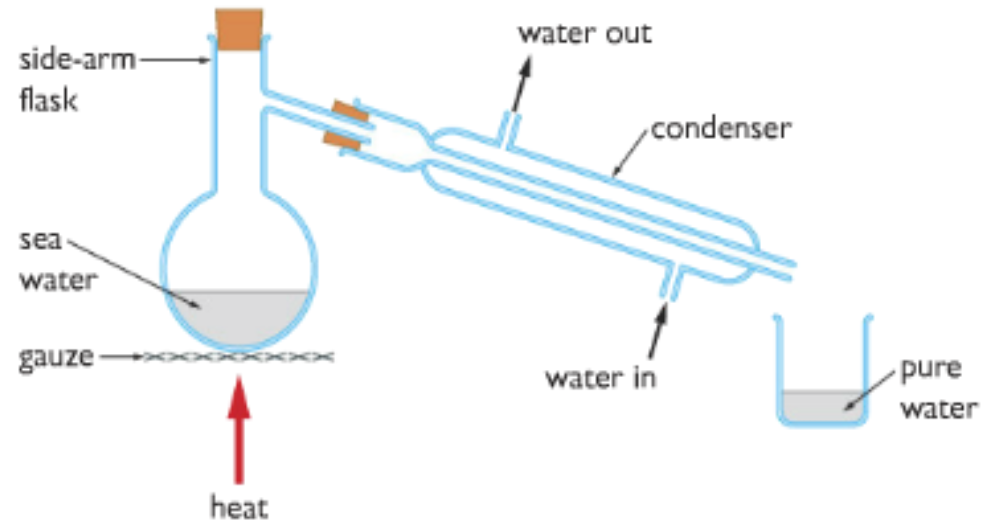
SIMPLE DISTILLATION:
E.G. pure water from salt water
Substance boils and is condensed back again to liquid by condenser
Unwanted substance remains in flask
Whether to use simple or fractional depends on differences between boiling points of two substances. If large i.e. >70, then use simple.
Page 2
FRACTIONAL DISTILLATION:
Used to separate liquids completely miscible with each other E.G. alcohol and water
Can separate by using different boiling points
Page 3
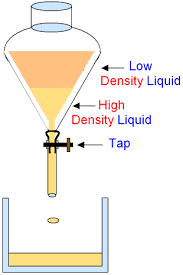
SEPARATING FUNNEL:
Immiscible substances E.G. petrol and water
Petrol floats on top of water
Separating funnel to run them off in two different beakers
Page 4
FILTRATION:
One component can pass through but other is caught by it
E.G. rock salt - if crush and mix with hot water, salt dissolves but impurities don't
Salt solution (filtrate) drips through filter paper and can be heated to remove water
Page 5
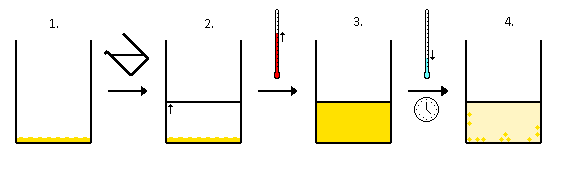
RECRYSTALLISATION:
Purify soluble substances contaminated with small quantities of other soluble substances
Impure solid dissolved in minimum amount of hot water or other suitable solvent
Allowed to cool again
Most solids less soluble in cool than hot so crystals formed again
Impurities stay in solution
Crystals filtered and washed on filter paper with cold water or other solvent
Allowed to dry
Page 6
PAPER CHROMATOGRAPHY:
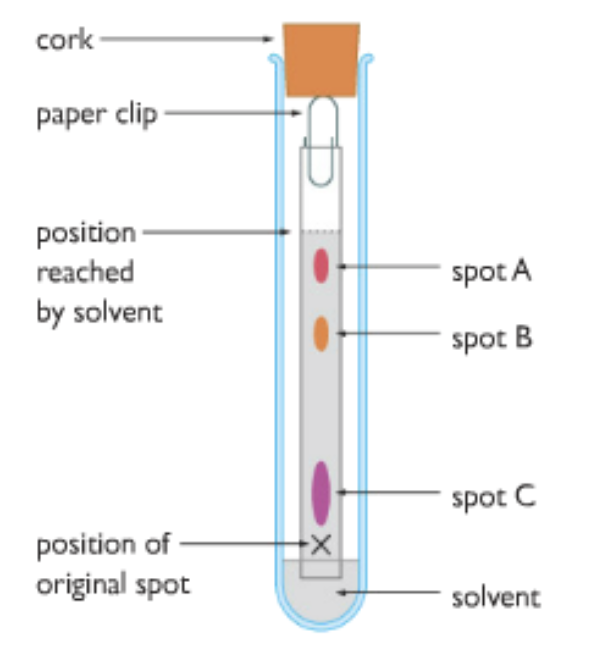
Example - spot of ink placed on chromatography paper
Paper hung in boiling tube containing some solvent
Solvent soaks up into paper
Paper in sealed tube stops solvent drom evaporating as travels up paper
Dyes that make up ink will differ in how strongly stick to paper and how soluble in solvent
Spot C barely moved so either not soluble in solvent or stuck firmly to paper or both
A moved almost as far as solvent so either very soluble or not attached to paper or both
Pattern you get = chromatogram
Ink minimum 3 different dyes but could be more
One of spots made up of two similar colour dyes that moved same distance - find by trying with different solvent
Page 7
COLLECTING AND IDENTIFYING GASES:
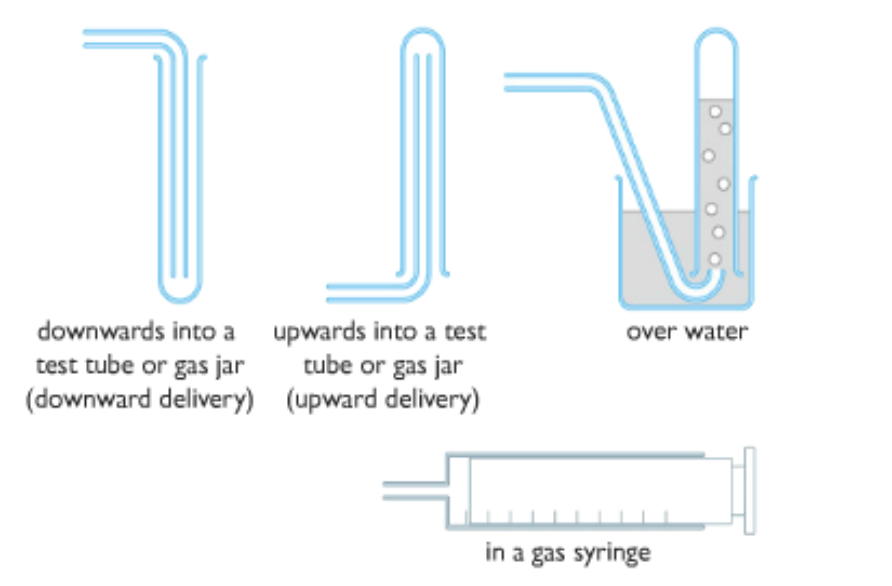
HYDROGEN:
Less dense than air so would go upwards
Almost insoluble in water
Over water or upwards into test tube or gas jar
Pops when lighted plaint held to mouth of tube
CARBON DIOXIDE:
Denser than air so would go downwards
Downwards into test tube or gas jar
Only slightly soluble in water so can be collected over water
Turns lime water milky or chalky
CHLORINE:
Denser than air
Downwards into test tube or gas jar
Too soluble to collect over water
Can collect over concentrated salt solution
Green gas - bleaches damp litmus paper
AMMONIA:
Less dense than air
Extremely soluble in water
Upwards into test tube or gas jar
Damp red litmus paper blue
Page 8
TESTING FOR WTAER:
ANHYDROUS COPPER (II) SULFATE:
Water turns anhydrous copper (II) sulphate blue
Anhydrous copper (II) sulfate lacks water of crystallisation and is white so when water added, replaces water of crystallisation, blue
COBALT CHLORIDE PAPER:
When dry, paper blue
Water turns it pink
Page 9
FLAME TESTS:
Shows presence of certain metal ions in compound
Platinum/nichrome wire cleaned y dipping into concentrated HCl
Lithium - red
Sodium - orange
Potassium - lilac
Calcium - brick-red
Page 10
OTHERS:
Copper (II) hydroxide --> blue precipitate
Iron (III) hydroxide --> orange-brown precipitate
Iron (II) hydroxide --> green precipitate
Page 11
TESTING FOR SULFATES:
Make solution of suspected sulphate in pure water
Add enough dilute HCl to make acidic
Add barium chloride solution
Sulfate will produce white precipitate of barium sulphate
Add HCl to destroy other compounds which could produce white precipitate E.G. if carbonate present as barium carbonate white and insoluble
Page 12
TESTING FOR CHLORIDES, BROMIDES, IODIDES:
Make solution of suspected chloride, bromide, iodide in pure water
Add enough dilute HNO3 to make it acidic
Add silver nitrate solution
Acid added to remove substances which could produce precipitates with silver nitrate solution
Chloride - white precipitate of silver chloride
Bromide - pale cream precipitate of silver bromide
Iodide - yellow precipitate of silver iodide
Information
- Description
- IGCSE Chemistry (Chemistry) Note on Separating and Analysing, created by Aarushi Jain on 12/11/2016.
- Created by
- Aarushi Jain · Nov 2016
- Updated
- Nov 13, 2016
- Views
- 0
- Rating