
Notes
OCR A CHEMISTRY AS UNIT F321 - created from Mind Map
Content of the notes (1)
Page 1
Module 1 of the Unit F321 which is built on the foundations of GCSE work covered in Year 11.
ATOMS
IONS
ISOTOPES
MOLES
ACIDS AND BASES
REDOX
PRACTICAL SKILLS NEEDED FOR F321
PERIODICITY
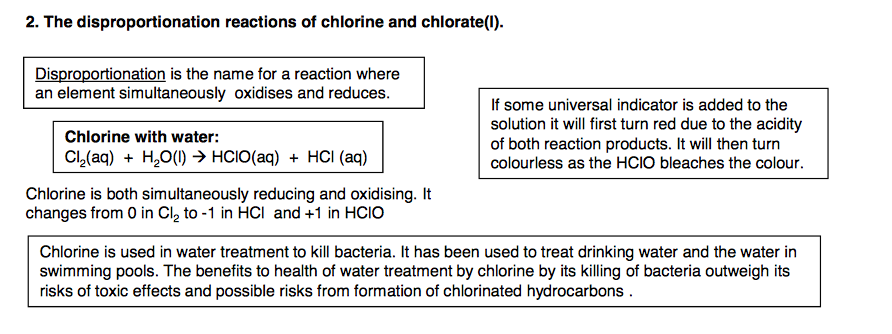
the trend in reactivity of Group 7 elements down the group: decreasing ease of forming negative ions, in terms of atomic size, shielding and nuclear attraction;
ATOMIC STRUCTURE
atoms are made up of protons, neutrons and electrons
protons and neutrons are located in the nucleus
electrons have a charge of negative 1-
electrons are located in energy levels
protons have a positive 1+ charge
neutrons have no charge
protons have a mass of 1
neutrons have a mass of 1
the atomic mass of an atom is the mass of both neutrons and protons in the nucleus
electrons have a mass of 0.0005
the atomic number of an atom is the number of electrons in the element and also the number of protons
however an ion is an atom that has lost or gained electrons to complete its outer shell
an energy level is sometimes known as a shell
these shells hold electrons in orbitals
each orbital can hold only 2 electrons of opposite spin
an orbital is as a region that can hold up to two electrons, with opposite spins
s-orbitals are spherical and hold 2 electrons
p-orbitals are dumbbell shaped and hold 2 electrons, but there are three p-orbitals in each shell so they hold six all together
d and f orbitals don't need to be known about until A2, but d holds 10 electrons and f holds 14
an orbital must be full before another can be filled
the order of relative energies of the orbitals goes as follows; 1s 2s 2p 3s 3p 4s 3d 4p 4d
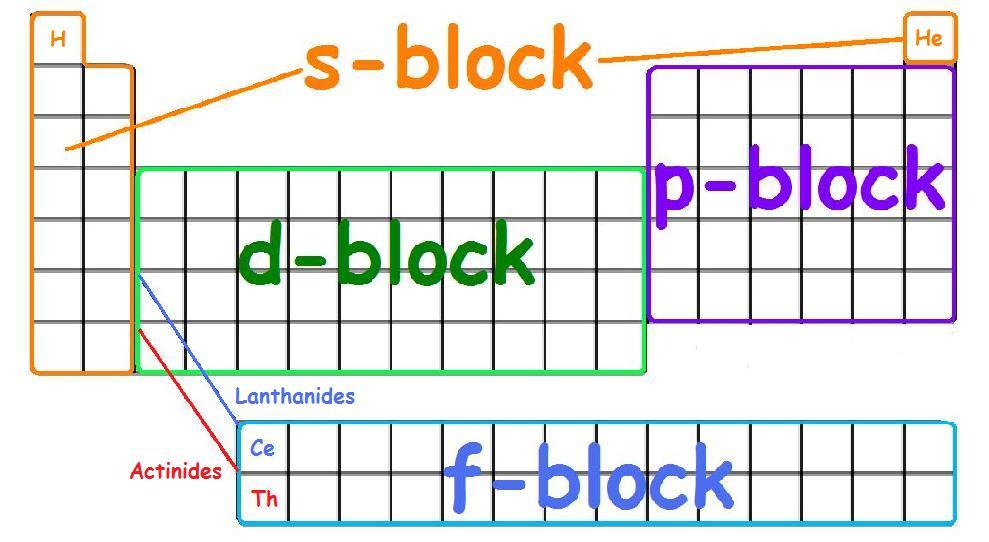
elements in the periodic table are in certain blocks due to the orbital that is in their outer shell
ELECTRON STRUCTURE
4s is slightly more energised than 3d
BONDING STRUCTURE
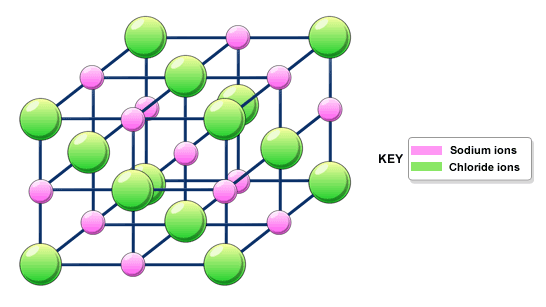
ionic bonding is electrostatic attraction between oppositely- charged ions
dot and cross diagrams are used to show ionic bonding with ionic charges outside the brackets
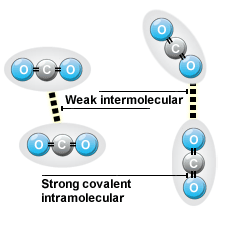
covalent bond is a shared pair of electrons between non metals
the shape of a simple molecule is determined by repulsion between electron pairs surrounding a central atom
METALLIC BONDING
you can predict the charges of elements as ions by their position in the periodic table
dot and cross diagrams showing the shared electron pair(s) can be used
single covalent is like the bonds in H20, HCl, etc
dative covalent is where only one element shares electrons with the other.
multiple covalent bonds exist in molecules like O2 etc.
electronegativity is the ability of an atom to attract the bonding electrons in a covalent bond
a permanent dipole may arise when covalently-bonded atoms have different electronegativities, resulting in a polar bond
intermolecular forces within permanent dipole covalent bonds are stronger than temporary or induced or no dipole
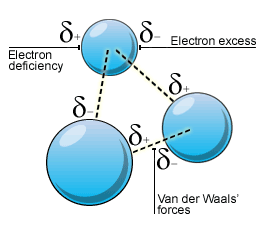
van de waals forces exist in covalent bonds
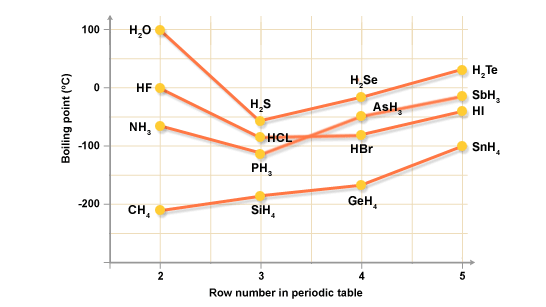
hydrogen bonds can form between hydrogen and elements such as oxygen and other high electronegative elements. these bonds are very strong.
water is anomalous in its properties because of the hydrogen bonds between hydrogens and oxygens in the molecule, such as the density of ice compared to water is lesser because the bonds are able to slide together and it has high freezing and boiling points due to the strong forces in hydrogen.
lone pairs of electrons repel more than bonded pairs
the shapes of these molecules are either: tetrahedral (like CH4), trigonal planar (like BF3), etc etc. there are lots of shapes but these are most common
bond angles in tetrahedrals are typically 90 degrees
bond angles in trigonal planars are typically 120 degrees
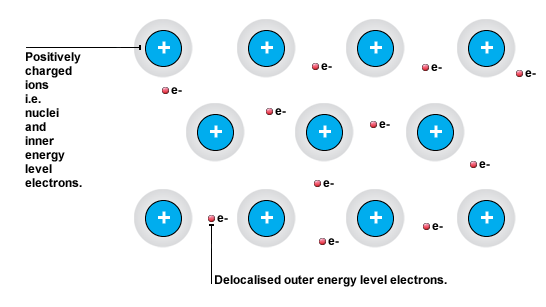
metallic bonding as the attraction of positive ions to delocalised electrons
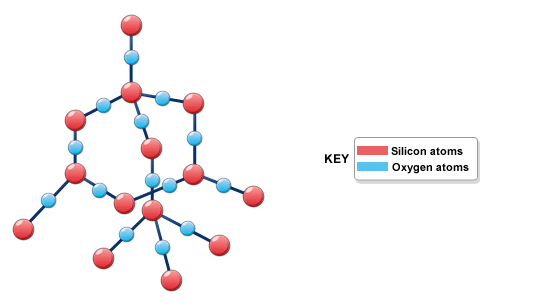
structures are either: giant ionic lattices with strong ionic bonding, giant covalent lattices such as graphite or diamond, giant metallic lattices, or simple molecular lattices
The melting points of polar substances are higher than the melting points of non-polar substances with similar sizes.
The boiling points of ammonia, water and hydrogen fluoride are higher than predicted due to the presence of hydrogen bonding between the molecules.
ions are formed when an atom takes part in an ionic reaction
an ionic reaction is the reaction between a non-metal and a metal where electrons are lost and gained in order to create ions
first ionisation energy is the energy required to remove 1 electron from each atom of 1 mole of gaseous atoms to form positive +1 ions
successive ionisation energy is the energy required to remove 1 electron from each atom of 1 mole of gaseous ions
first ionisation energies decrease down a group as one goes down a group, the outer electrons are found in shells further from the nucleus and are more shielded so the attraction of the nucleus becomes smaller
ionisation energies are influenced by nuclear charge, electron shielding and the distance of the outermost electron from the nucleus
the higher the nuclear charge, the higher the ionisation energy
the higher the electron shielding, the lower the ionisation energy
the higher the atomic radii the lower the ionisation energy
there is a general increase in first ionisation energy because as one goes across a period the electrons are being added to the same shell , electrons pulled closer to nucleus and same shielding effect. The number of protons increases, however, making the effective attraction of the nucleus greater.
isotopes are atoms of the same element with the same number of protons but a different number of neutrons and have similar chemical properties but are not identical
the isotope carbon-12 is used as the standard measurement of relative mass
relative isotopic mass is the mass of an isotope compared to the mass of 1/12th of the isotope carbon-12
relative atomic mass is the weighted mean mass of all isotopes of an element compared to the mass of 1/12th of the mass of the isotope carbon-12
to calculate the weighted mean mass of all isotopes you take all isotopes of an element, add them together and divide by the amount of isotopes there are. usually to the 1 or 2 dp
relative molecular mass is the ratio of the average mass of one molecule of an element or compound to one twelfth of the mass of an atom of carbon-12
The relative formula mass of a substance is the weighted average of the masses of the formula units relative to 1/12 of the mass of a carbon-12 atom
the mole is the amount of a substance which contains as many particles as there are in 12g in carbon-12
the Avagadro constant is 6.02 x 10^23
this is the number of atoms in 1 mole
Avagadro's Law states that equal volumes of gases at the same temperature and pressure contain an equal number of particles
molar mass is the mass of a substance which contains 1 mole e.g. CH4= (12x1) + (1x4) = 16.0gmol-1
molar volume states that 1 mole of gas always occupies a volume of 24dm3 or 24000cm3 at room temperature and pressure (RTP)
mole questions will always involve one of these:
moles (mol) = mass (g) divided by molar mass (gmol-1)
moles= volume in cm3 or dm3 divided by molar volume (24dm3 or 24000cm3)
concentration= moles divided by volume
empirical formula is the simplest whole number ratio of the atoms of each element present in a compound
molecular formula is the actual number of atoms of each element in a compound
calculate empirical and molecular formulae, using composition by mass and percentage compositions
REMEMBER TO ALWAYS BALANCE EQUATIONS !!!!!!
use the terms concentrated and dilute as qualitative descriptions for the concentration of a solution.
an acid is a H+ ion donor, and it is this ion that makes it acidic
a base is a H+ acceptor
common acids: hydrochloric, sulfuric acids (HCl, H2SO4, etc.)
a salt is produced when the H+ ion of an acid is replaced by a metal ion or NH4+;
ACIDS REACT WITH CARBONATES TO FORM A SALT, CARBON DIOXIDE AND WATER
ACIDS REACT WITH ALKALIS TO FORM A SALT AND WATER
ACIDS REACT WITH BASES TO FORM A SALT AND WATER
water of crystallisation is necessary for the maintenance of some crystal structures. Anhydrous means a crystal without water and hydrated means a crystal with water
you can calculate the formula of the salt within a hydrated crystal by taking the mass of the whole crystal and the mass of the water to se what the mass was to begin with, and can from there work out the ratio of water to compound etc.
REMEMBER HOW TO CARRY OUT A TITRATION AS IT WILL BE MENTIONED IN THE EXAM AND IS PART OF YOUR COURSEWORK !!!!
common bases are: metal oxides, metal hydroxides and ammonia
a base readily accepts H+ ions from an acid
an alkali is a soluble base that releases OH– ions in aqueous solution;
common alkalis: sodium hydroxide, potassium hydroxide and aqueous ammonia
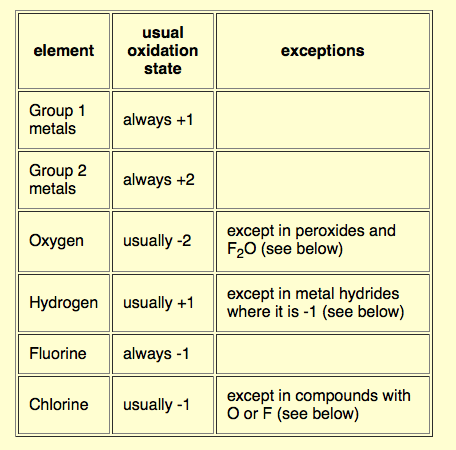
Oxidation state shows the total number of electrons which have been removed from an element (a positive oxidation state) or added to an element (a negative oxidation state) to get to its present state.
Oxidation involves an increase in oxidation state
Reduction involves a decrease in oxidation state
The oxidation state of an uncombined element is zero.
The sum of the oxidation states of all the atoms or ions in a neutral compound is zero.
The sum of the oxidation states of all the atoms in an ion is equal to the charge on the ion.
The more electronegative element in a substance is given a negative oxidation state. The less electronegative one is given a positive oxidation state. Remember that fluorine is the most electronegative element with oxygen second.
x Making up a standard solution. x NaOH or Na2CO3/HCl titration. x NaOH/H2SO4 to illustrate difference in stoichiometry. x Titration involving a dilution – citric acid in lime juice cordial. x Determination of the percentage of water of crystallisation in a hydrated salt. x Determination of the relative atomic mass of an unknown metal by gas collection. x Determination of the concentration of lime water. x Determination of the relative formula mass of washing soda by titration. x Reactions of the bases, alkalis and carbonates with acids. x Preparation of salts from an acid and a base, eg copper(II) sulfate, ammonium sulphate. x Reactions of metals with acids.
x Reactions of some Group 2 metals with oxygen and water. x Action of water on Group 2 oxides and testing pH of resulting solutions. x Thermal decomposition of Group 2 carbonates. x Halogen displacement reactions. x Testing for the presence of halide ions in solution using silver nitrate.
Elements are arranged in increasing atomic number in the periodic table
Elements in Groups have similar physical and chemical properties The atoms of elements in a group have similar outer shell electron configurations, resulting in similar chemical properties
Periodicity is a repeating pattern across different periods
GROUP 2
HALOGENS
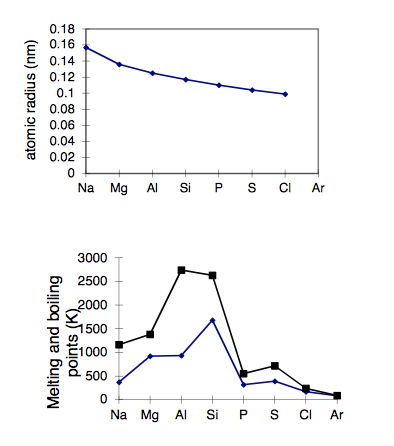
Atomic radii decrease as you move from left to right across a period, because the increased number of protons create more positive charge attraction for electrons which are in the same shell and have similar shielding
IN GROUP 3
For Na, Mg, Al- Metallic bonding : strong bonding – gets stronger the more electrons there are in the outer shell that are released to the sea of electrons. A smaller positive centre also makes the bonding stronger. High energy is needed to break bonds.
Si is Macromolecular: many strong covalent bonds between atoms high energy needed to break covalent bonds– very high mp +bp
Cl2 (g), S8 (s), P4 (S)- simple Molecular : weak van der waals between molecules, so little energy is needed to break them – lowmp+bp
S8 has a higher mp than P4 because it has more electrons (S8 =128)(P4=60) so has stronger v der w between molecules
PERIOD 2
Ar is monoatomic weak van der waals between atoms
Similar trend in period 2 Li,Be metallic bonding (high mp) B,C macromolecular (very high mp) N2,O2 molecular (gases! Low mp as small v der w) Ne monoatomic gas (very low mp)
Atomic radius increases down the Group. As one goes down the group the atoms have more shells of electrons making the atom bigger
Down the group the melting points decrease. The metallic bonding weakens as the atomic size increases. The distance between the positive ions and delocalized electrons increases. Therefore the attractive forces between the positive ions and the delocalized electrons weaken.
The outermost electrons are held more weakly because they are successively further from the nucleus in additional shells In addition, the outer shell electrons become more shielded from the attraction of the nucleus by the repulsive force of inner shell electrons
Reactivity of group 2 metals increases down the group
The reactivity increases down the group as the atomic radii increase there is more shielding. The nuclear attraction
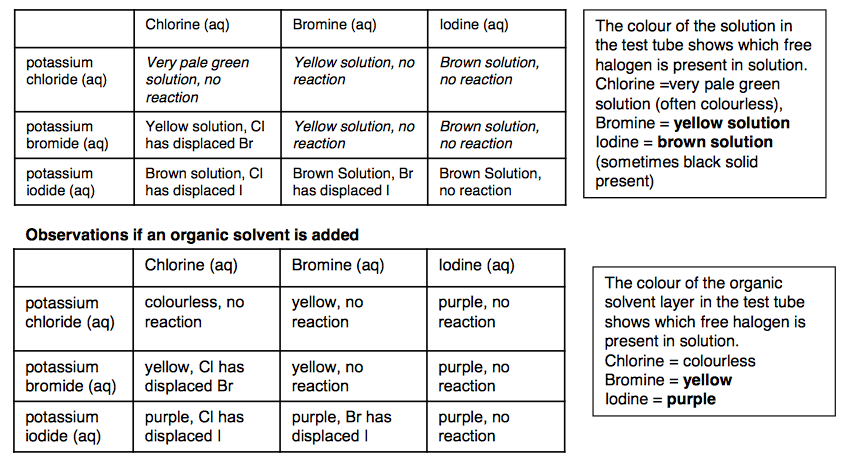
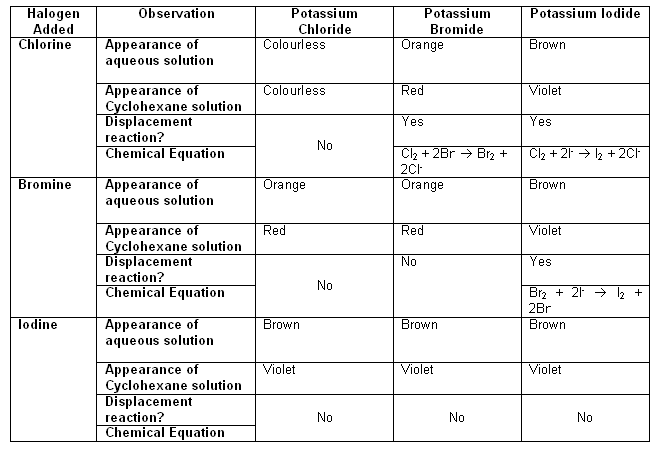
A halogen that is more reactive will displace a halogen that has a lower reactivity from one of its compounds
The reactivity of the halogens decreases down the group as they less easily accept electrons.
Chlorine will displace both bromide and iodide ions; bromine will displace iodide ions
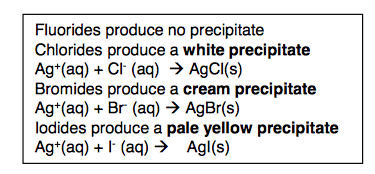
silver nitrate test
Chlorine is more reactive than bromine because it will gain an electron and form a negative ion more easily than bromine. The is because an atom of chlorine is smaller than bromine and the outermost shell of chlorine is less shielded than bromine so the electron to be gained is attracted more strongly to the nucleus in chlorine than bromine.
This reaction is used as a test to identify which halide ion is present. The test solution is made acidic with nitric acid, and then Silver nitrate solution is added dropwise.
Information
- Description
- A level Chemistry Note on OCR A CHEMISTRY AS UNIT F321 - created from Mind Map, created by Iyobel Kibreab on 30/05/2017.
- Created by
- Iyobel Kibreab · May 2017
- Updated
- May 30, 2017
- Views
- 3
- History
-
- Created by becks_lilly · May 30, 2017
- Copied by Iyobel Kibreab · May 30, 2017
- Copied to Note by Iyobel Kibreab · May 30, 2017
- Rating
More on Moles and Quantitative Chemistry