
Democracy mind maps
289 mind maps by 229 users · Page 1 of 8
This Democracy mind maps page gathers user-made maps on electoral systems, participation and political theory. It is for school students, university students and professional candidates practising comparisons, as well as teachers seeking study material. There are over 280 maps by more than 220 users, spanning school and university study. Explore a map that fits your topic.
Select topic
- Democratic principles and features24
- Theories of democracy12
- Types of democracy107
- Democratic institutions and constitutions6
- Elections and electoral systems21
- Referendums30
- Political participation26
- Pressure groups7
- Representation and inclusion8
- Democracy in the UK15
- Democratization and democratic backsliding13
- Challenges and alternatives to democracy15
- Democracy around the world16
- Democracy and international relations20
Mind maps
-
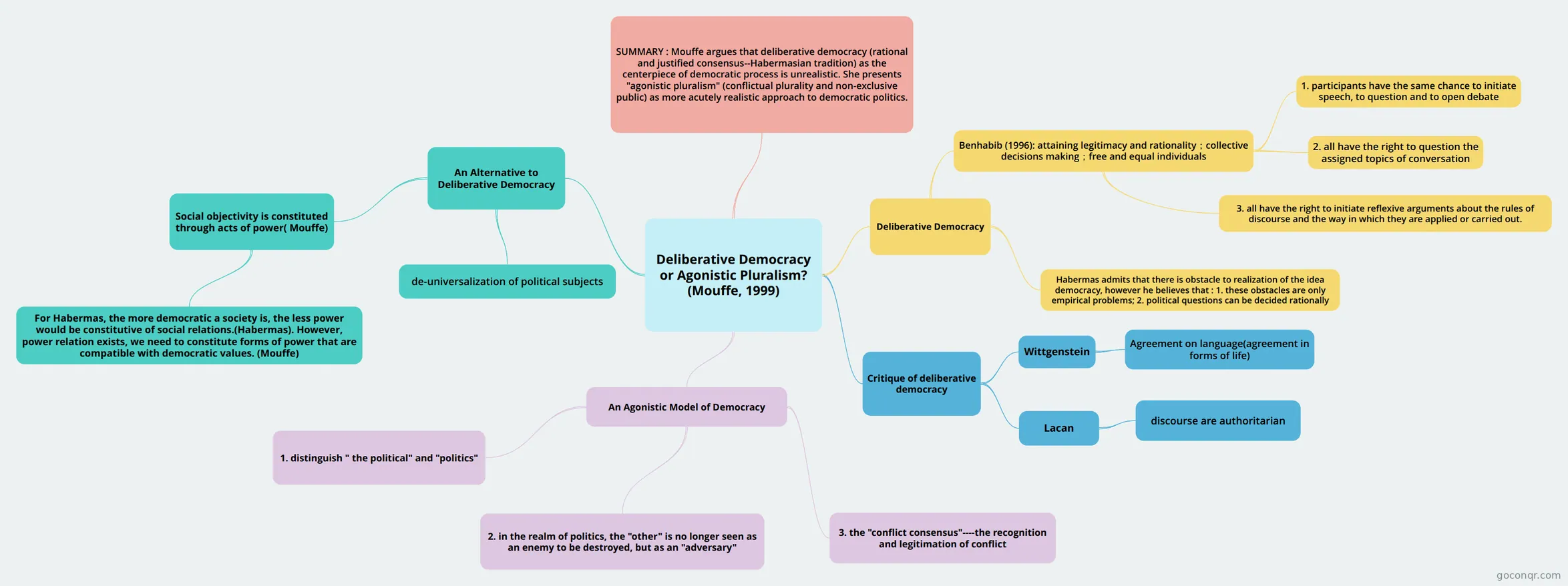 Deliberative Democracy or Agonistic Pluralism? (Mouffe, 1999)
-
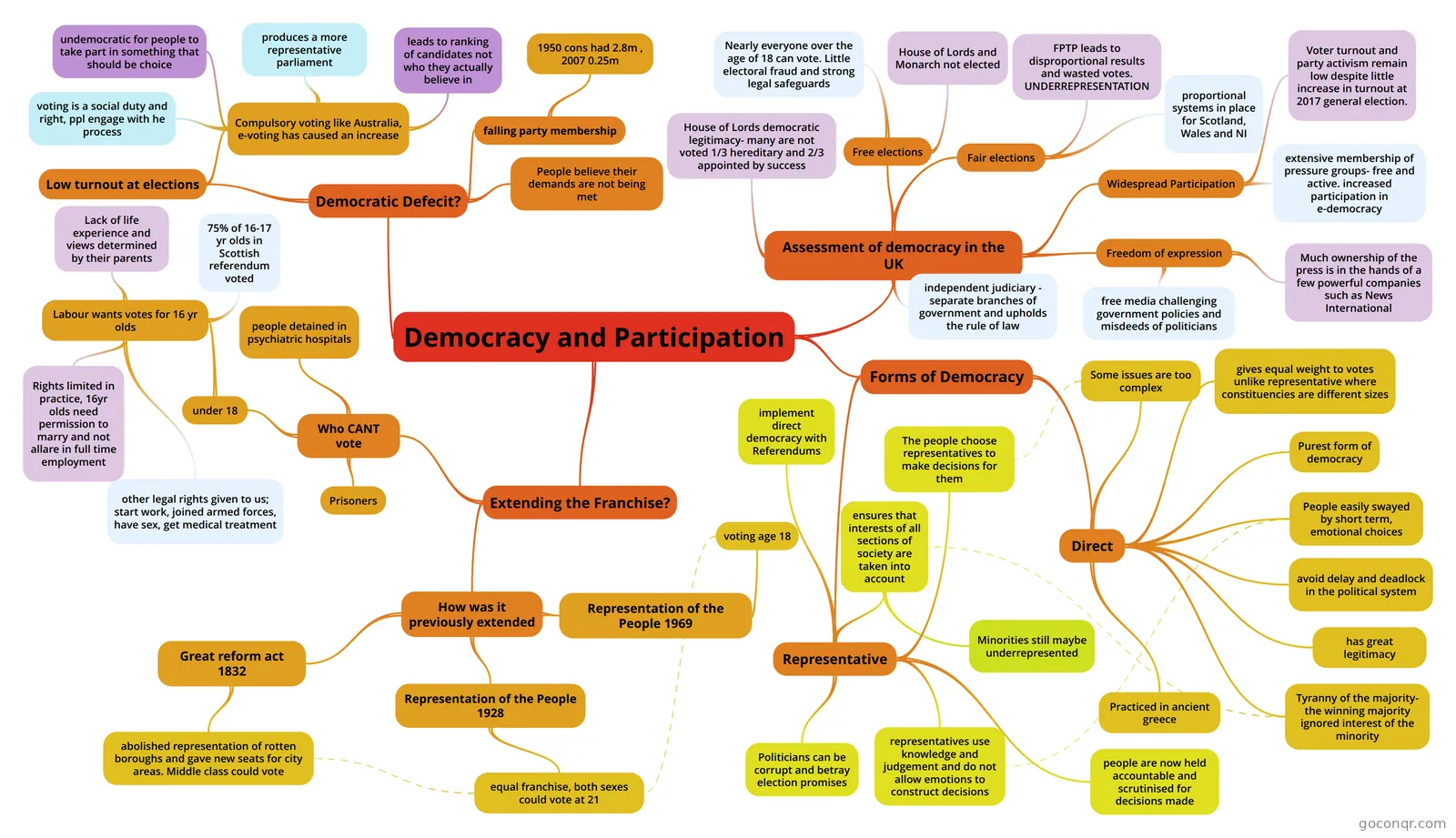 Democracy and Participation
-
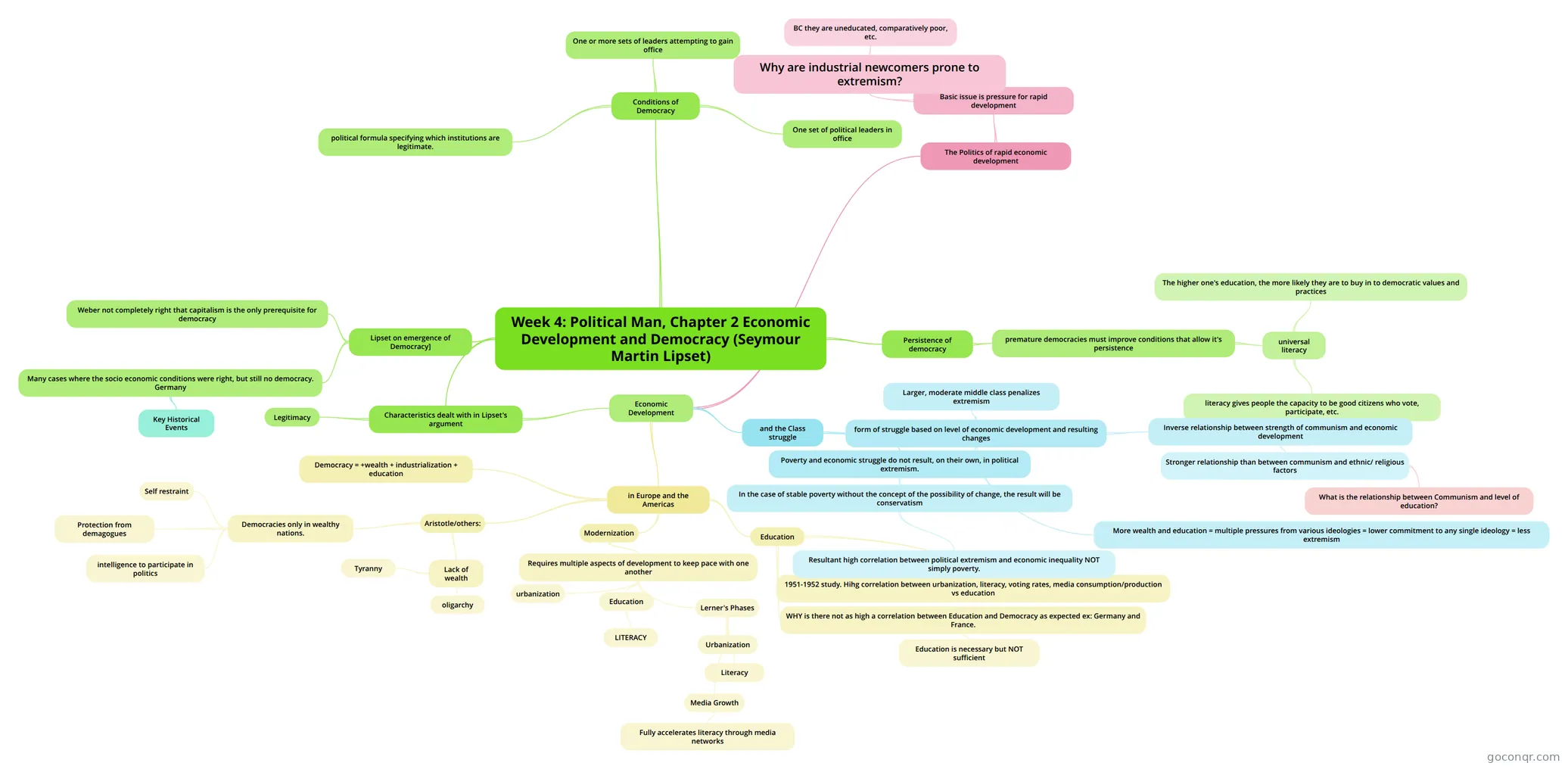 Week 4: Political Man, Chapter 2 Economic Development and Democracy (Seymour Martin Lipset)
-
Democracy Mind Map about 'Democracy' for AS Government and Politics, special regard to AQA GOVP1.
-
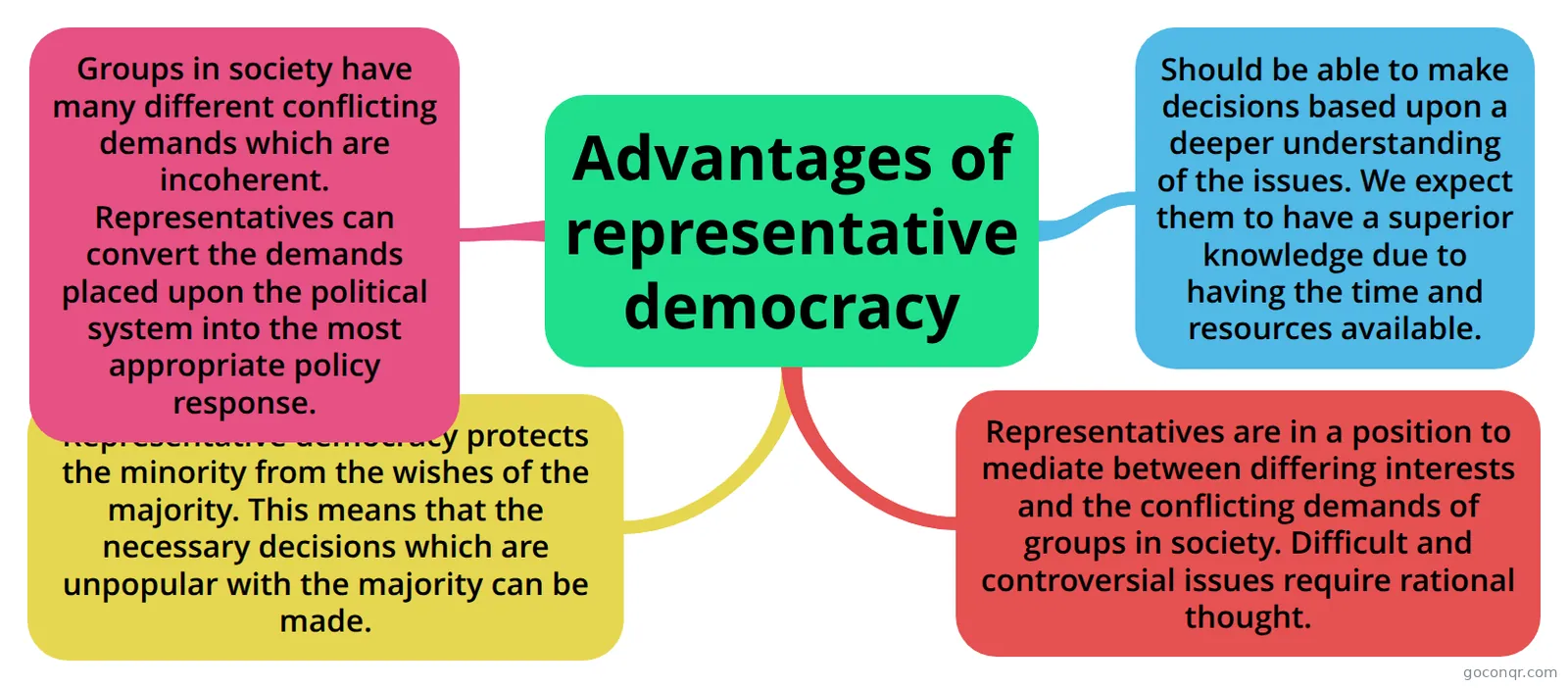 Advantages of representative democracy
-
Direct Democracy
-
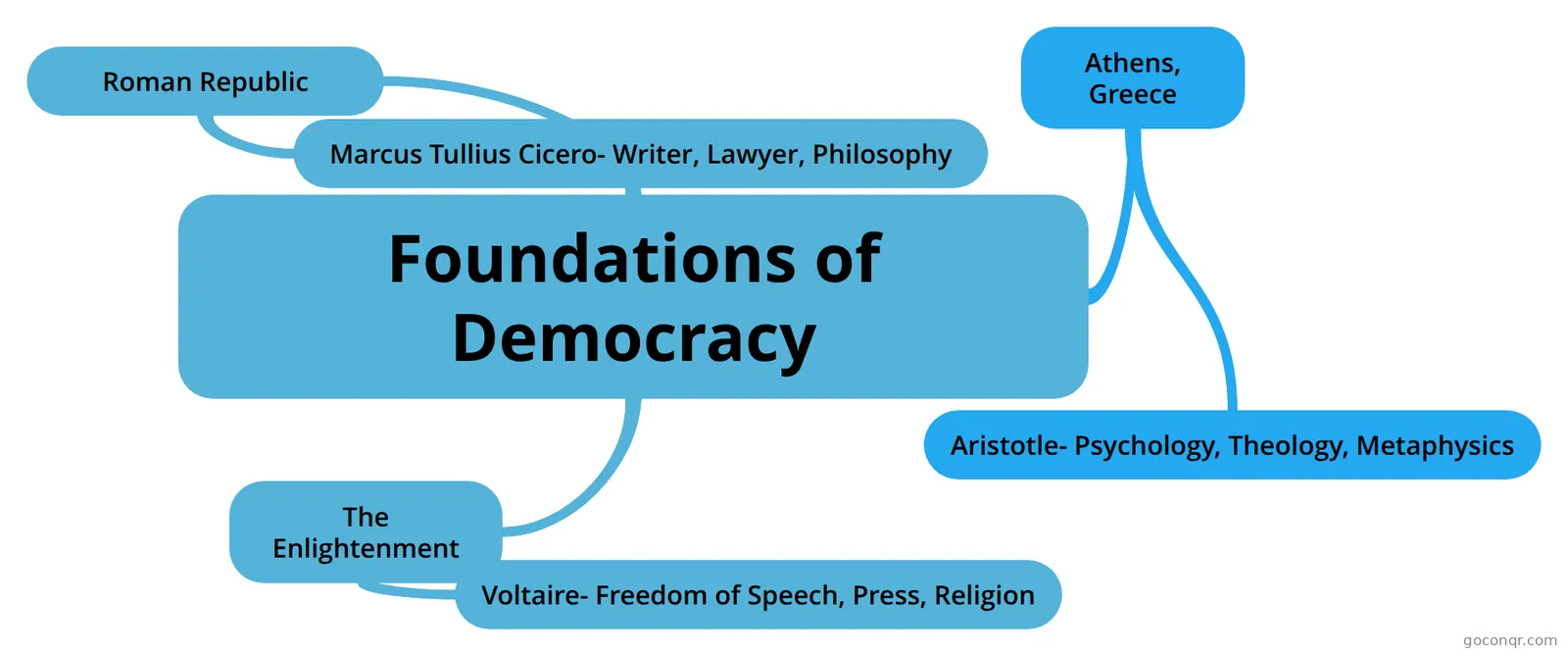 Foundations of Democracy Foundation of Democracy
-
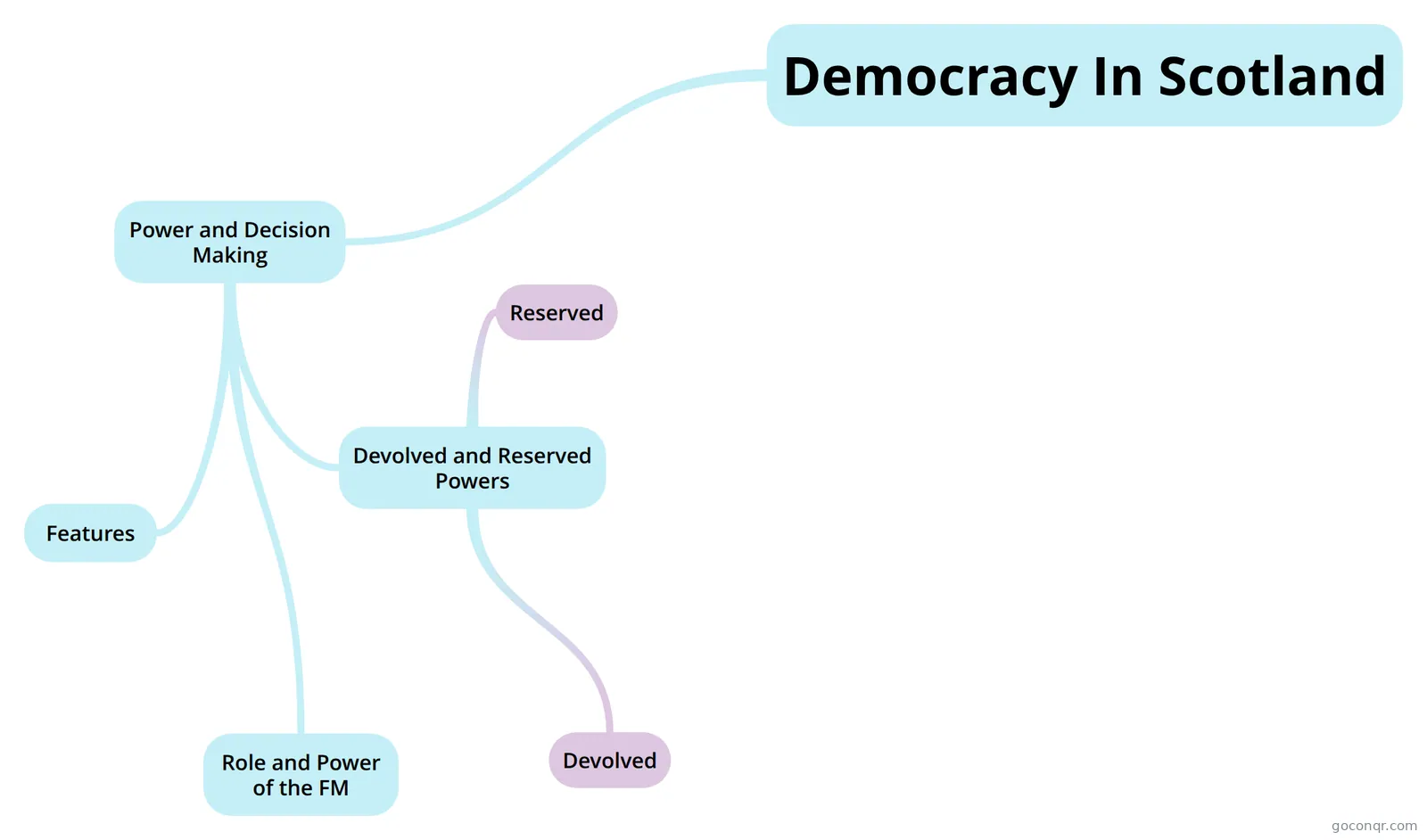 Democracy In Scotland Mind Map
-
Indian Democracy Mind Map for Indian Democracy
-
 Government and Politics Unit 1- Democracy
-
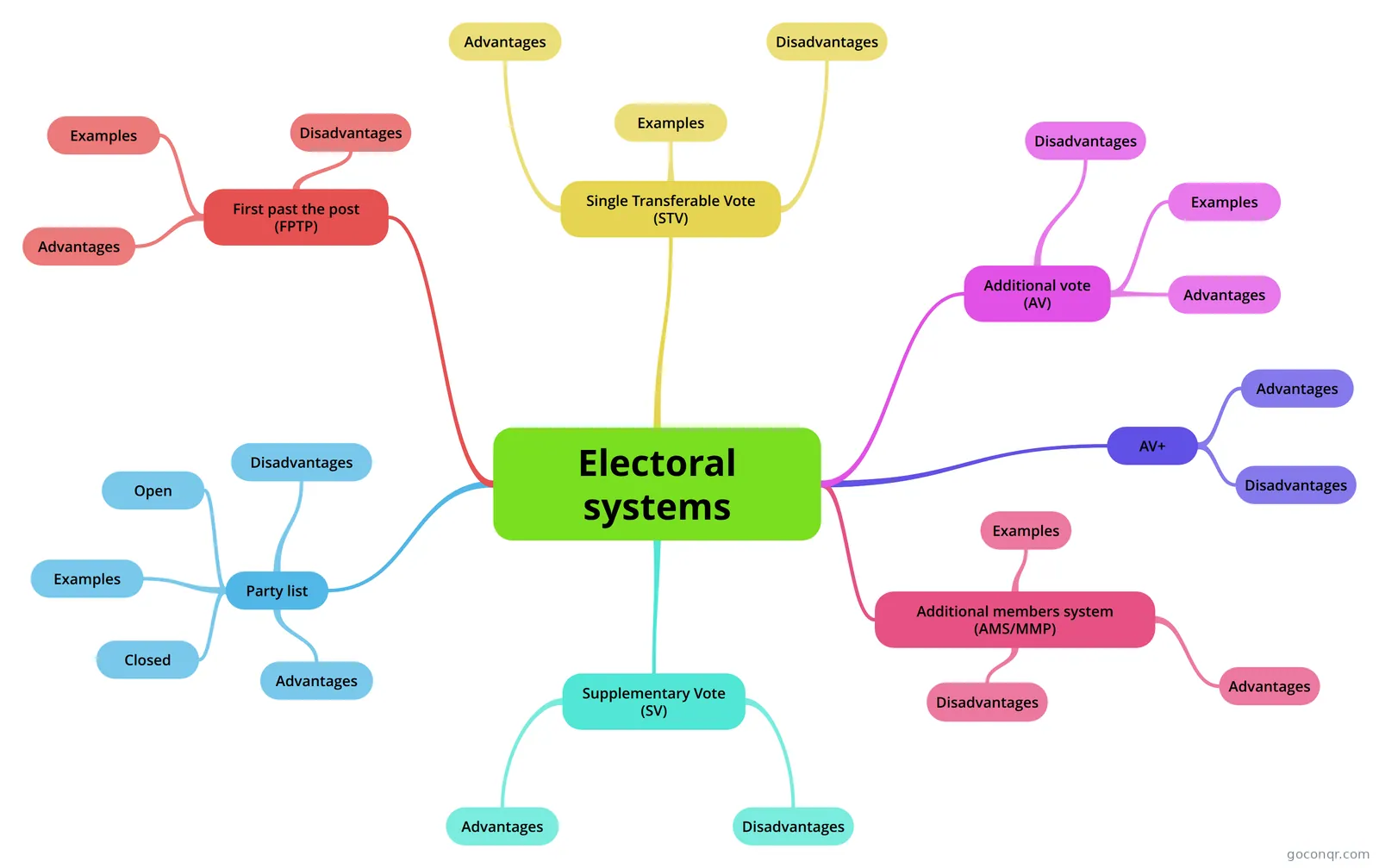 Electoral systems
-
To what extent is political ignorance a practical and theoretical threat to contemporary democracies? [Concept mind map 3]
-
Unit 4: Economic determinants of democracy and dictatorship.
-
Illiberalism in Hungary in Spite of International Organizations
-
voting behaviour models
-
165ISS Exam Plan
-
Why was Panama able to successfully institutionalize democracy after the US intervention?
-
(1) To what extent are UK elections democratic?
-
“Asia’s Challenged Democracies” & “The Quality of democracy in Asia-pacific”
-
Schumpeter
-
Government and Politics Unit 1- Democracy
-
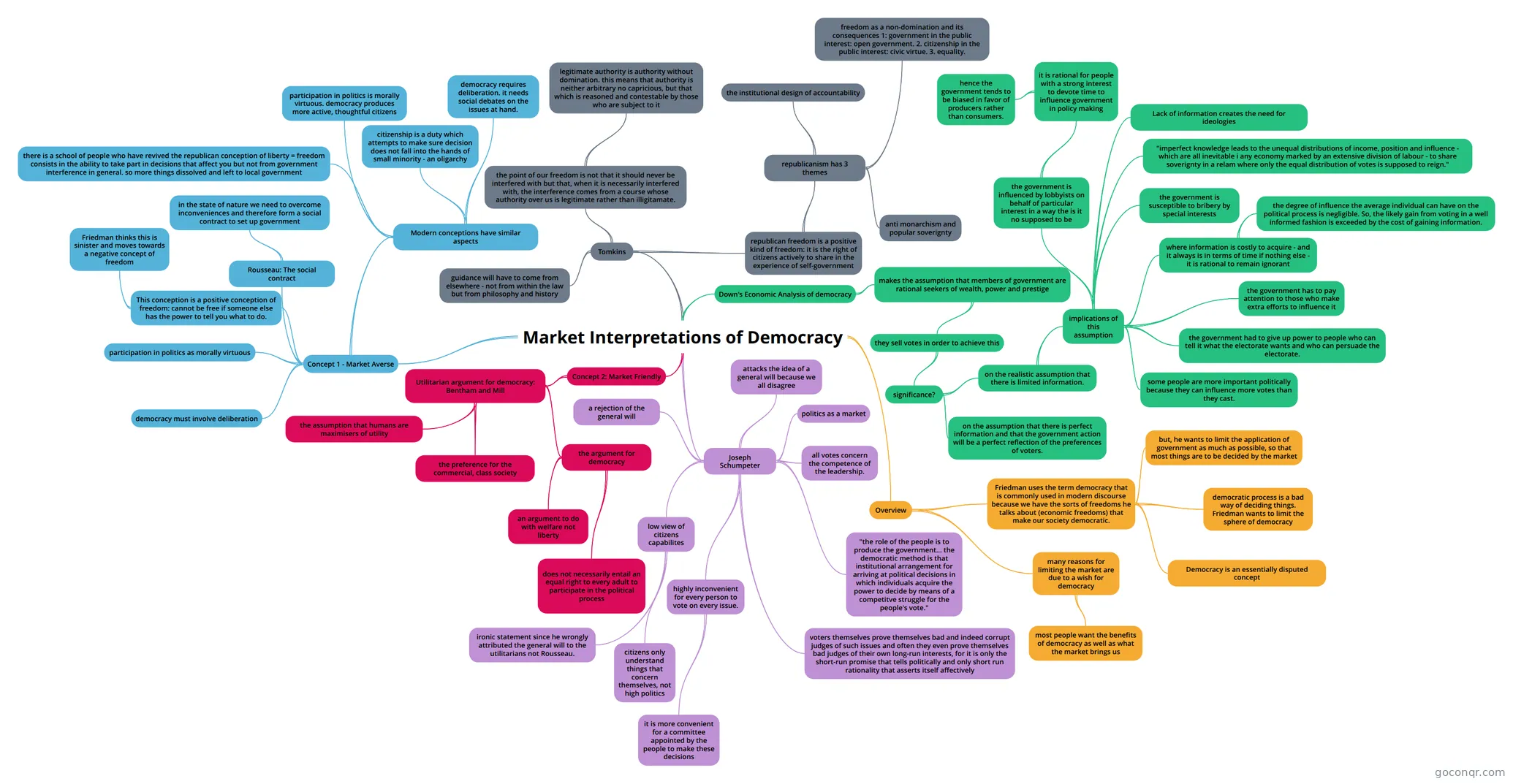 Market Interpretations of Democracy Joint Seminar in Philosophy and Law, Revision Mind Map for Market Interpretations of Democracy
-
To what extent is political ignorance a threat to democracy? (preliminary mind map)
-
Democracies in Asia
-
Asia's challenged Democracies and The Quality of democracy in Asia Pacific
-
1_Democracy
-
How might we compare and contrast the democratic backsliding in Venezuela with the democratic backsliding in Turkey?
-
Participation and Democracy
-
Deliberative Democracy or Agonistic Pluralism? (Mouffe, 1999)
-
Modern Studies
-
Nature of Democracy
-
Alternatives to Democracy & Educational Applications
-
Democracy and participation
-
LECTURE 5: ELECTIONS, REFERENDUMS AND DIRECT DEMOCRACY
-
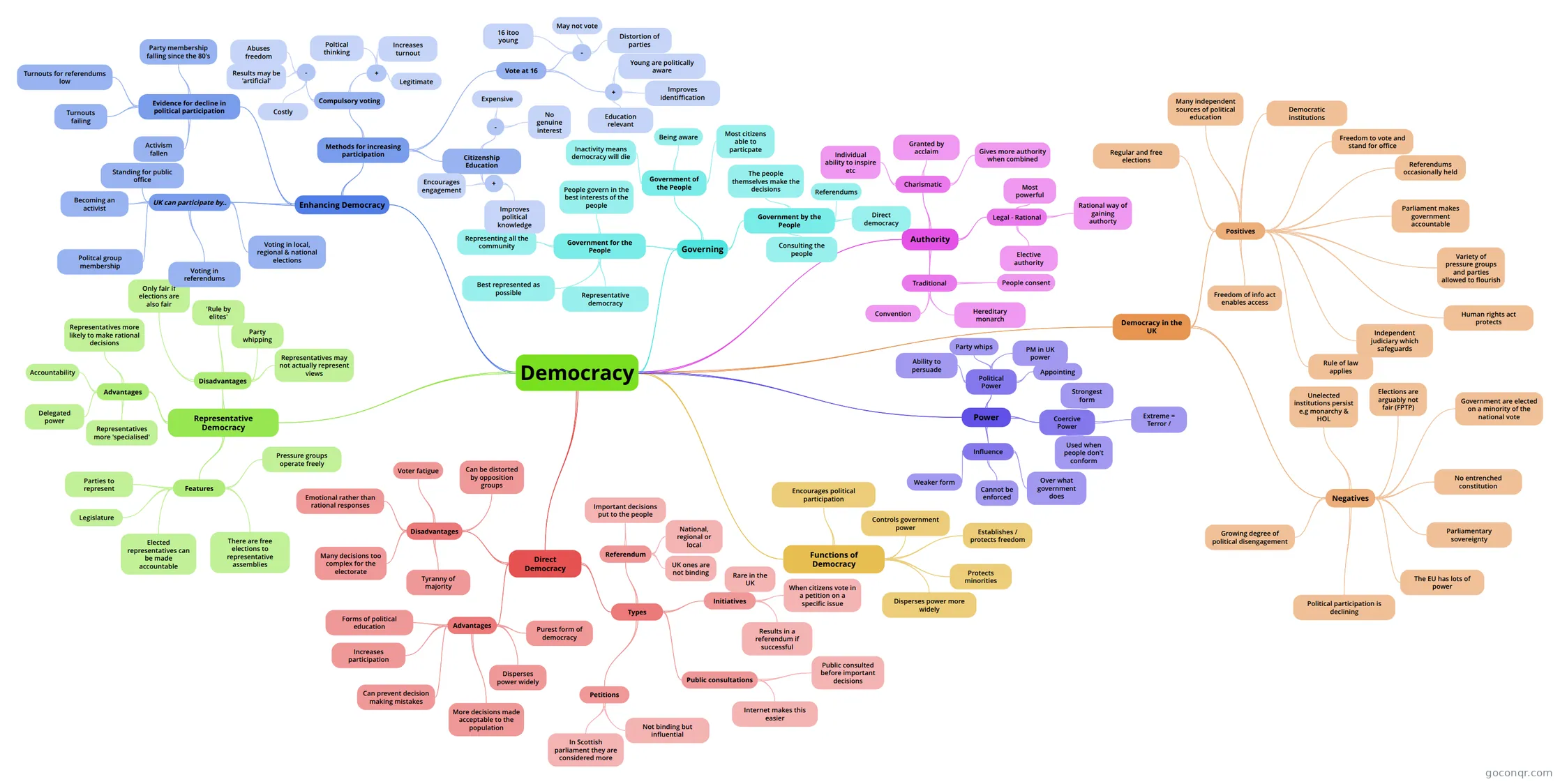 Democracy
-
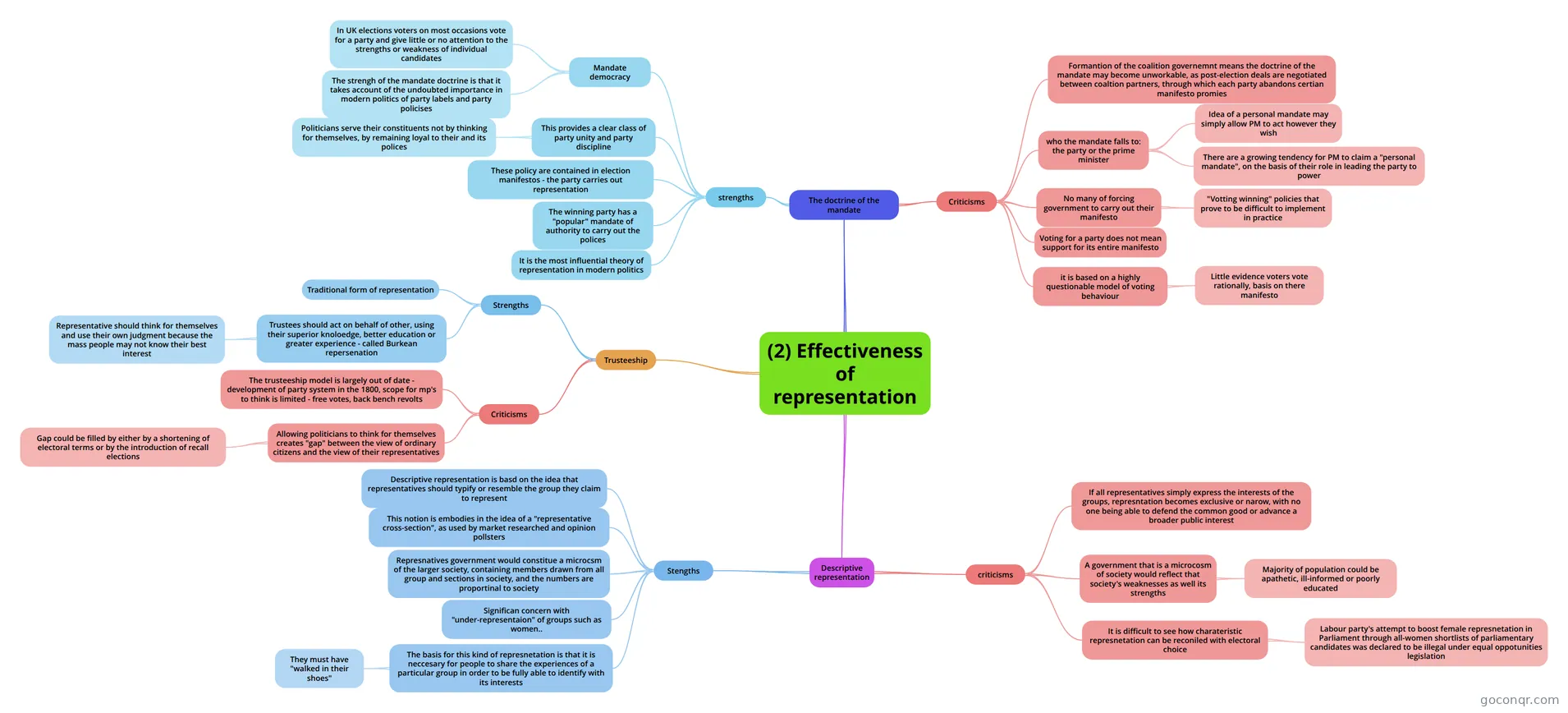 (2) Effectiveness of representation
-
Politics
-
Direct Democracy is good in theory; however, it is often bad in practice. Discuss
-
To what extent do pressure groups enhance democracy?
-
Should Britain use Referendums?
More Democracy resources
About democracy mind maps
GoConqr OriginalUsing democracy mind maps
Electoral systems is a useful starting point if you want to compare voting systems: its branches list first past the post, party list and other approaches. For a different focus, Democracy and Participation sets out forms of democracy and ideas about participation. The map on political ignorance explores arguments about its potential threat to contemporary democracies.
Other maps take a closer look at economic development and democracy, or compare deliberative democracy with an alternative. These give you a way to follow a particular argument through its connected ideas rather than reading isolated terms.
Turn branches into questions
Work through one branch at a time, then cover it and try to recall its main points and connections. Revisit the map where your explanation needs more detail. If you want to test your recall or review terms in a different format, switch to a quiz or flashcards on the Democracy unit page.
Choose a map and trace the links that matter to your revision.
Frequently asked questions
Which mind map should I start with?
Try “Electoral systems” if you want to compare voting systems. Its branches include first past the post, party list and the single transferable vote. If participation is your focus, “Democracy and Participation” is another place to begin, with branches on forms of democracy.
What topics do the mind maps cover?
The maps cover direct and representative democracy, electoral systems, referendums and political participation. They also include theoretical arguments and wider cases, such as economic development and democracy, political ignorance, and illiberalism in Hungary. You can choose a topic that matches the area you are revising.
Are these mind maps free to use?
Yes. Every resource listed here is free to open and study without an account. The maps were made by GoConqr users, not by GoConqr. A free account also lets you save quiz scores and make your own quizzes, mind maps, flashcards and notes.