
Democracy
60 resources created by 50 users
This Democracy page on GoConqr gathers community-made mind maps, flashcards, quizzes and notes, from direct and representative democracy to electoral systems, referendums and digital democracy. It's built for school students, university students and professional candidates revising a topic or filling gaps, and for teachers after ready-made material. There are over 400 resources here, including more than 10 quizzes and over 280 mind maps, with A-level Politics among the exams mentioned. Pick a mind map, try a quiz to find your gaps, then build your own revision set.
Top Democracy resources
-
45 cardsModern Studies - Democracy in Scotland/UK. Electoral System: FPTP - General Info
-
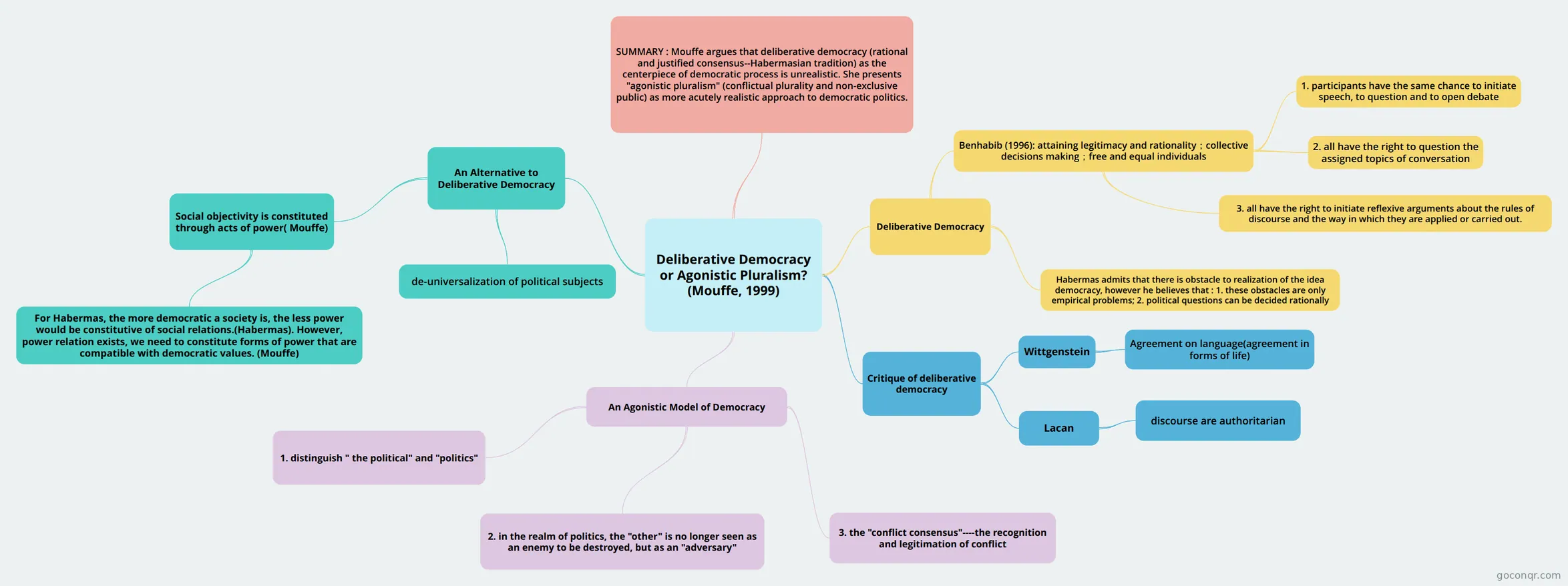 Mind map Deliberative Democracy or Agonistic Pluralism? (Mouffe, 1999)
-
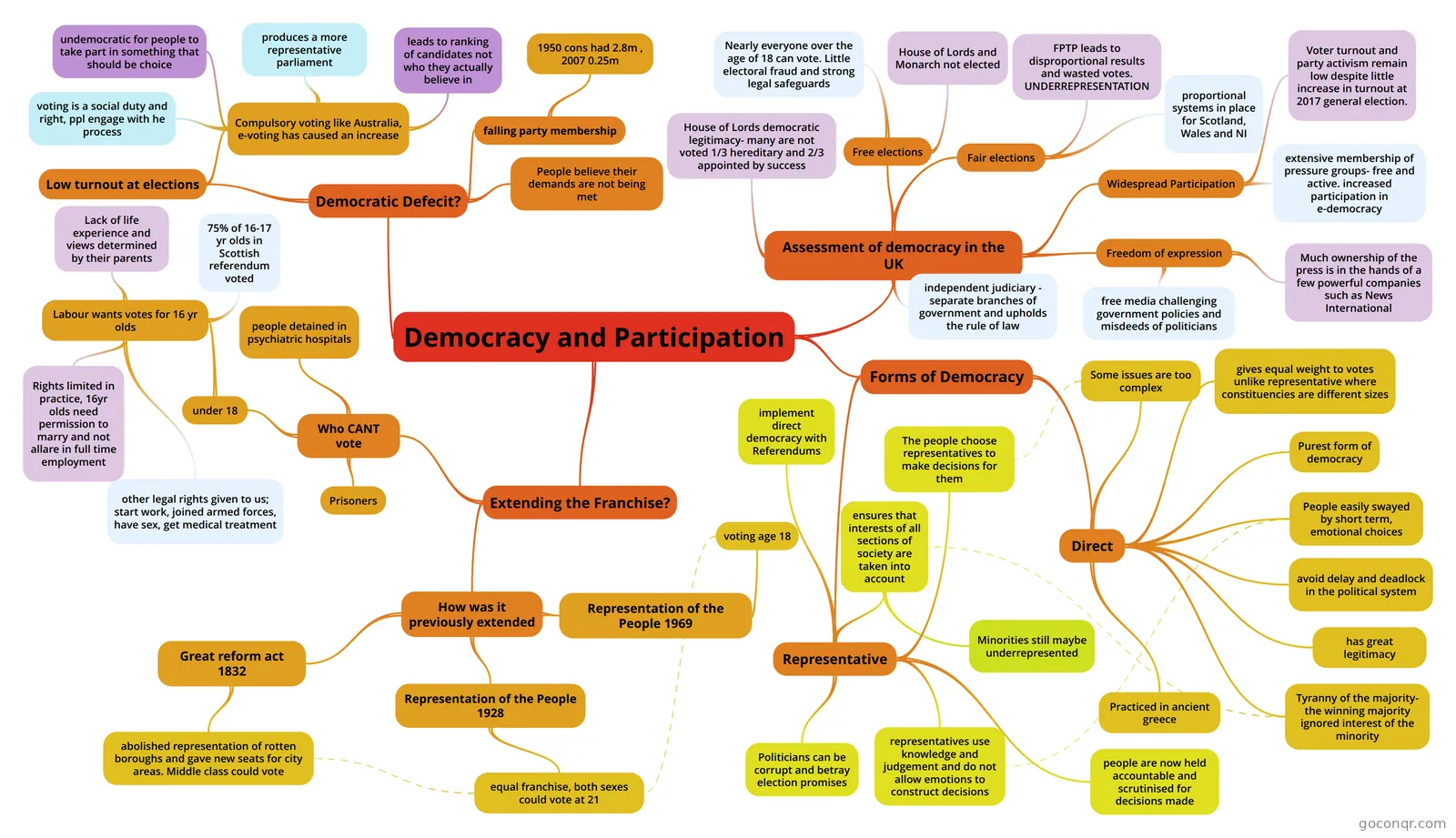 Mind map Democracy and Participation
-
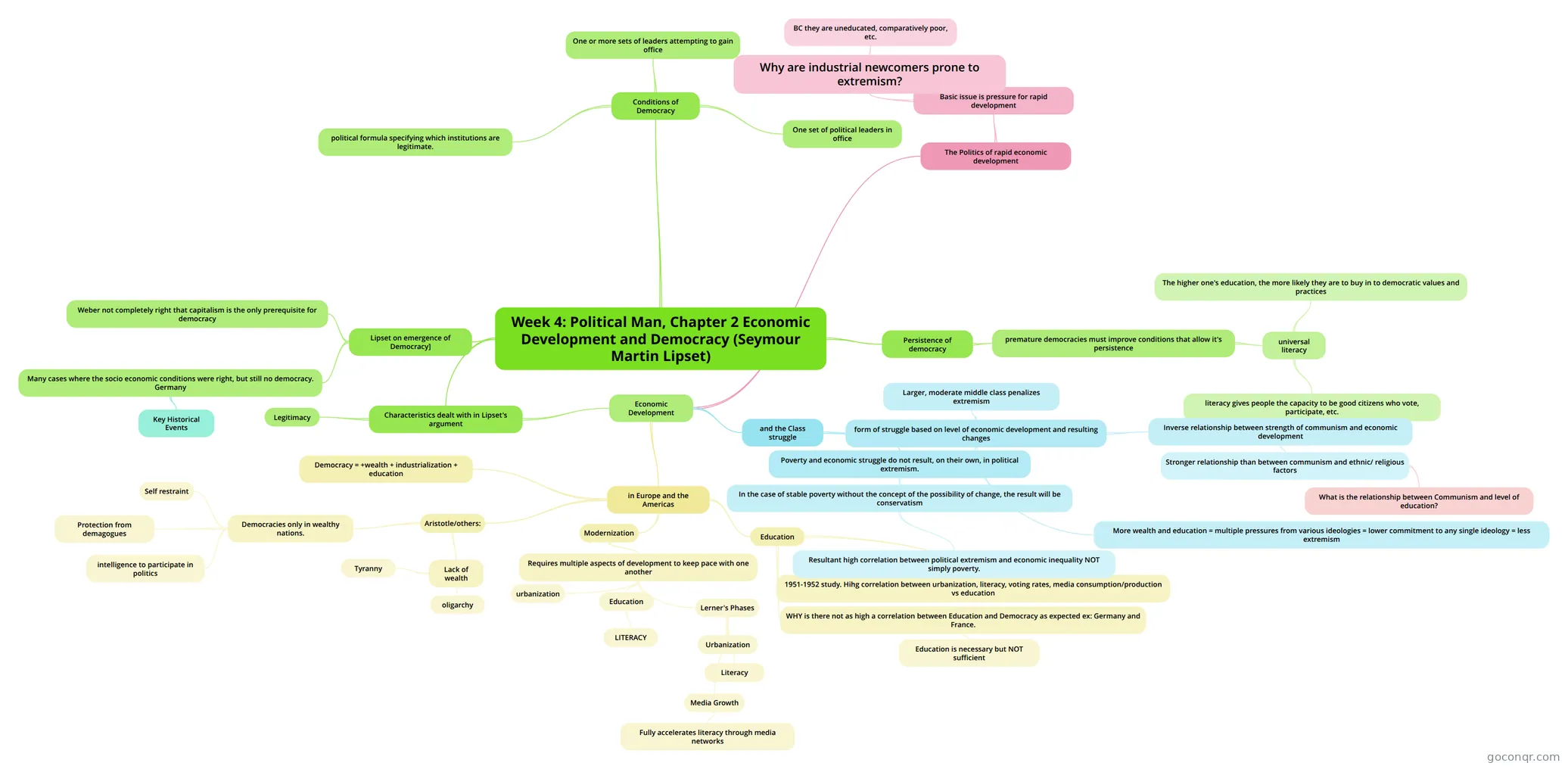 Mind map Week 4: Political Man, Chapter 2 Economic Development and Democracy (Seymour Martin Lipset)
-
Mind map Democracy Mind Map about 'Democracy' for AS Government and Politics, special regard to AQA GOVP1.
-
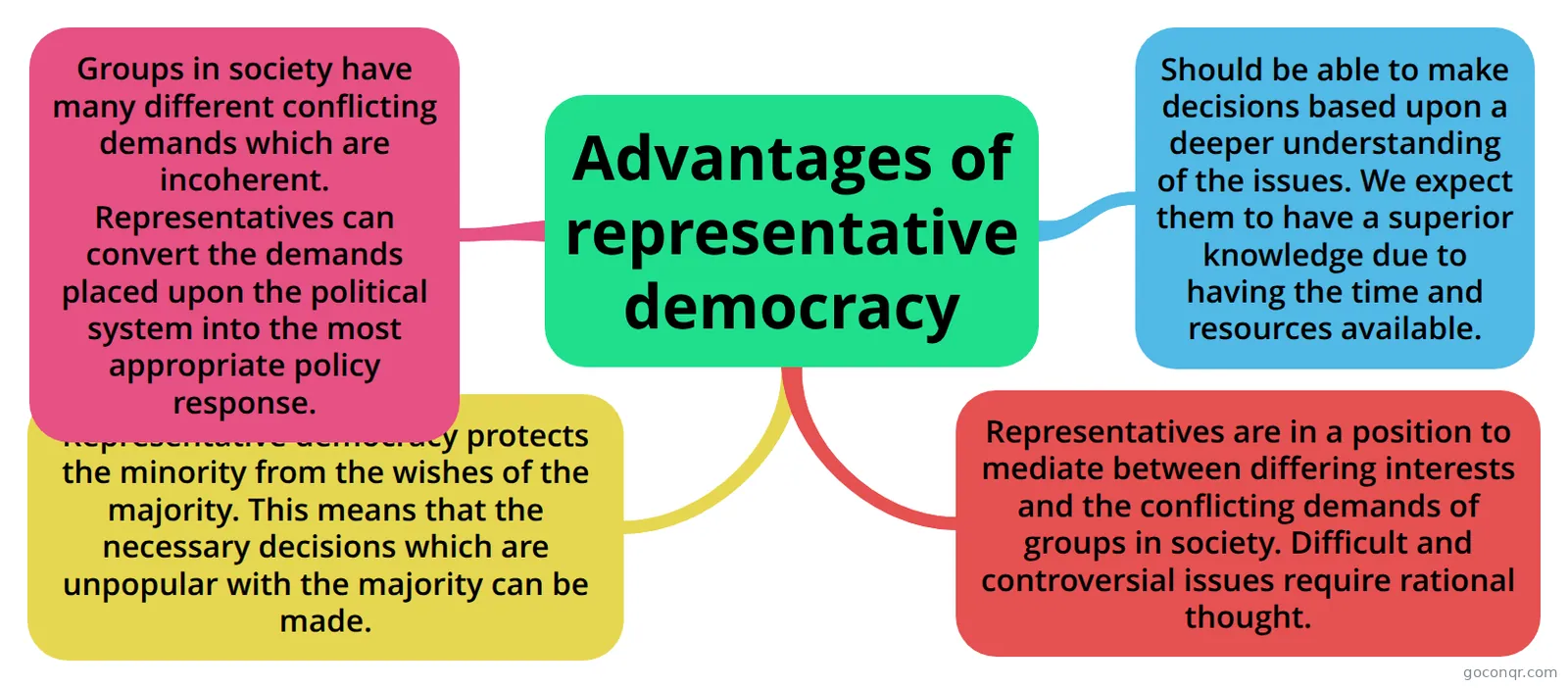 Mind map Advantages of representative democracy
-
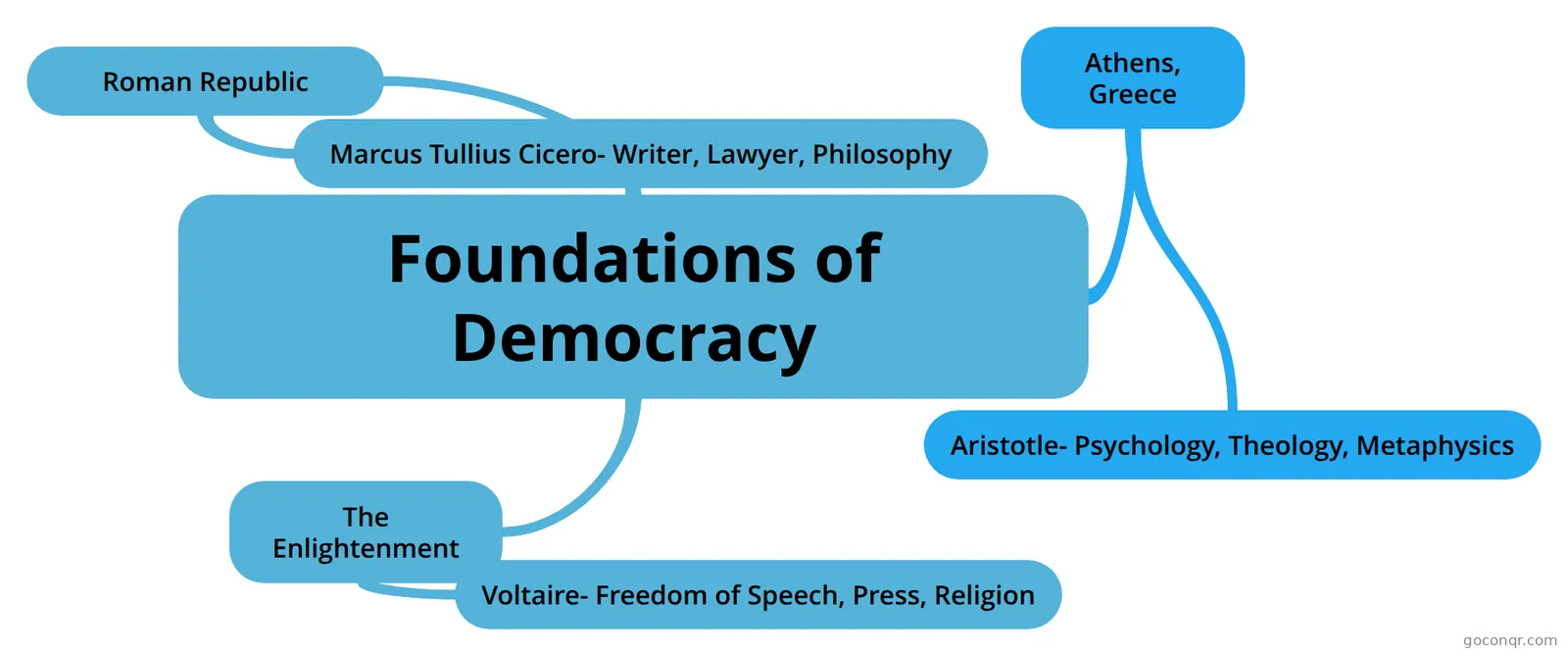 Mind map Foundations of Democracy Foundation of Democracy
-
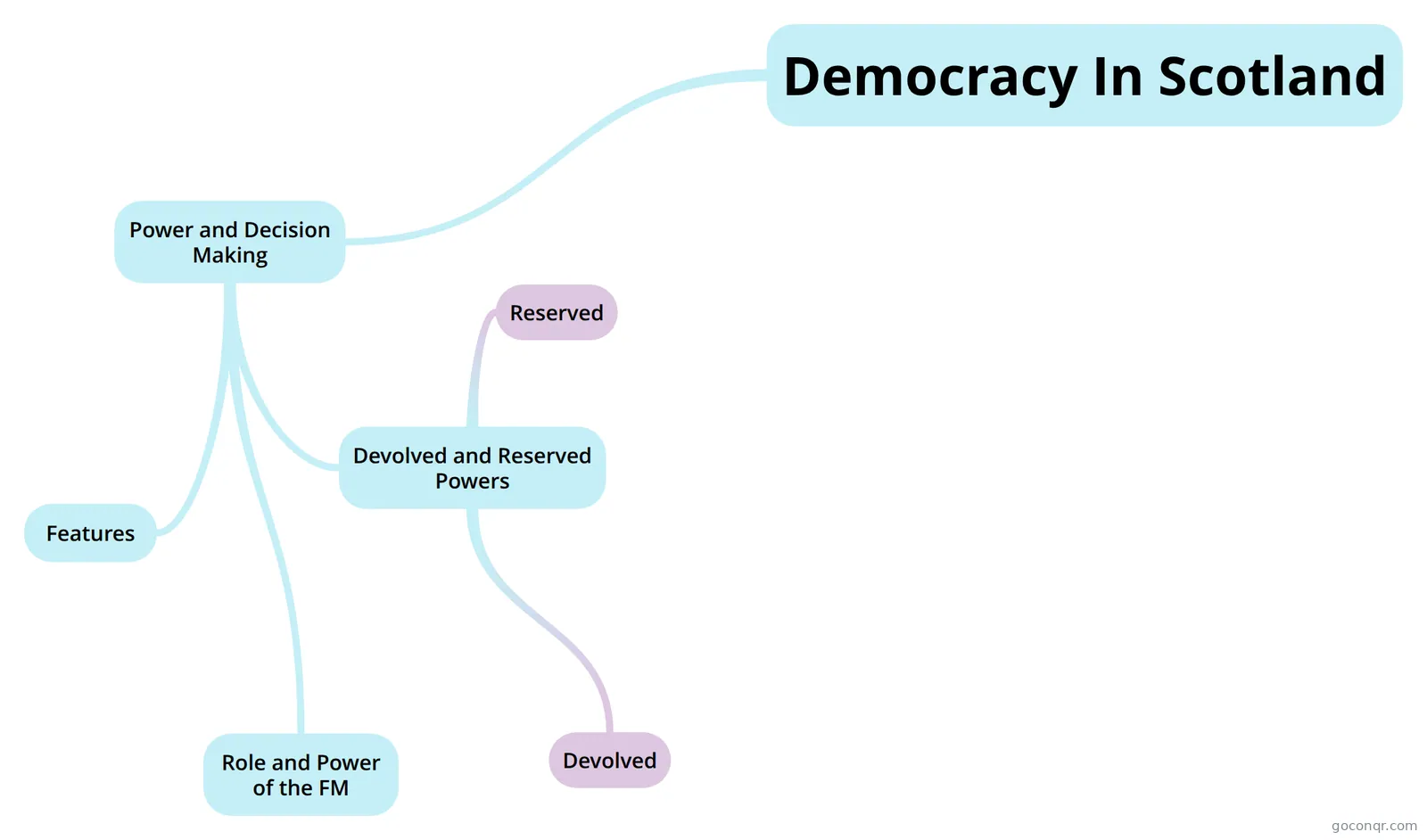 Mind map Democracy In Scotland Mind Map
Quizzes
Mind maps
See all 40 mind maps-
Deliberative Democracy or Agonistic Pluralism? (Mouffe, 1999)
-
Democracy and Participation
-
Week 4: Political Man, Chapter 2 Economic Development and Democracy (Seymour Martin Lipset)
-
Democracy Mind Map about 'Democracy' for AS Government and Politics, special regard to AQA GOVP1.
-
Advantages of representative democracy
-
Foundations of Democracy Foundation of Democracy
-
Democracy In Scotland Mind Map
-
Indian Democracy Mind Map for Indian Democracy
Flashcards
See all 18 flashcards-
45 cardsModern Studies - Democracy in Scotland/UK. Electoral System: FPTP - General Info
-
36 cardsExam revision flashcards Sources of power (2)
-
21 cardsDemocracy in Scotland & UK What are 4 of the rights enforceable in UK courts from the European Convention on Human Rights by the UK Hu...
-
13 cardsDemocracy key concepts
-
13 cardsPeople, Politics and Participation What is democracy?
-
14 cardsRepresentative democracy
-
7 cardsAdvanatages of Referendum They are a form of direct democracy
-
8 cardsDemocracy and Participation: Key Terms Flashcards
Slides
More Political science topics
About Democracy
GoConqr OriginalWhat the Democracy resources cover
This page is mostly mind maps, with flashcard decks, quizzes, notes and a few slide sets alongside them. The core ideas come first: what democracy means, how it began, and the types people compare. The mind map Foundations of Democracy looks at Athens, the Roman Republic and the Enlightenment. Direct Democracy and Advantages of representative democracy set the two main models side by side.
UK and institutions
Many resources deal with how democracy works in practice in the UK. You will find maps on referendums, elections, pressure groups, political participation and digital democracy. The Electoral systems mind map lists first past the post, the single transferable vote, party list and more. The slide set Edexcel- AS Politics- Democracy in the UK covers representative democracy, and the flashcard deck Modern Studies - Democracy in Scotland/UK. goes through the arguments for and against FPTP.
Theory and wider cases
For university-level reading, the page includes Deliberative Democracy or Agonistic Pluralism? (Mouffe, 1999), which contrasts Benhabib's view of legitimacy with an alternative. There is also a map on Lipset's Political Man and economic development, one on illiberalism in Hungary, and a map on political ignorance as a threat to democracies. Quizzes reach further, with titles on Latin America and Sweden.
A sensible order to work in
- Start with the plain mind map called Democracy to fix the key terms.
- Move to Types of Democracy, then direct and representative democracy.
- Look at electoral systems, referendums and participation.
- Finish with theory maps if your course asks for it.
Using maps and quizzes together
Read a map first, then close it and take a quiz such as Democracy Test or The Concept of Democracy. Any question you miss tells you which branch to reopen. Flashcards then help you memorise definitions and examples. This unit sits in the Comparative Government and Institutions strand of Political science, so the comparisons between systems are worth your time.
Choose one mind map today, test yourself on it, and then make a short set of your own to keep.
Frequently asked questions
Which resource should I open first?
Begin with the mind map called Democracy, which gives a definition and the Greek origin of the word. Then try Types of Democracy and the Democracy Test quiz. That order takes you from basic terms to a first check of what you remember, before you move on to electoral systems.
What do the mind maps on this page cover?
There are over 280 of them. They cover direct and representative democracy, electoral systems, referendums, pressure groups, participation and digital democracy. Some go further into theory, such as Mouffe on deliberative democracy, Lipset on economic development, and illiberalism in Hungary.
Are the resources free to use?
Yes. Every resource listed here is free to open, study and take, with no account needed. They were made by GoConqr users rather than by GoConqr itself, so it is worth checking them against your own course materials. A free account lets you save quiz scores and make your own sets.
Which levels and exams do these resources suit?
Most are aimed at secondary students, and A-level Politics is mentioned among the listed resources. Around a third are university level, including theory-heavy maps and quizzes. School students, university students, professional candidates and teachers can all find something useful.
Are there resources on voting systems?
Yes. The Electoral systems mind map lists first past the post, party list, single transferable vote and others. There are also flashcards on voting systems and a deck on the arguments for FPTP, plus a quiz on turnout statistics for practice.
What if I can't find the topic I need?
Try the neighbouring topics first, such as participation, pressure groups or referendums, as they often cover related points. If a gap remains, you can build your own mind map, flashcards or notes on it and use them for revision.